

choosing a sofa
How to Choose a Sofa: Size, Fabric, Frame and Budget Without the Regret
By Cal Hewitt, (updated )

Affiliate disclosure. If you buy through a link on this page, PlushPick may earn a commission at no extra cost to you. That never changes which products are named or what is said about them. As an Amazon Associate I earn from qualifying purchases. How this works
Choose a sofa in this order: fit, then feel, then fabric, then price. Tape the sofa's published width and depth onto the floor and keep 18 to 24 inches of walking room around it, then measure every door, hallway, elevator and stairwell on the delivery route, including the sofa's diagonal depth. After that, compare seat depth and seat height against how your household actually sits, read the exact cover's care instructions and published abrasion figure, and line up the sofas you are considering by what each price includes. A sofa that clears the doorway and suits the people sitting on it almost never becomes a regret.
That order matters because the two failures that cost the most money happen before anyone forms an opinion about the color. The first is a sofa that cannot physically get into the room. The second is a sofa that gets in, looks right in photos, and feels wrong under you by the end of the first month. Both are preventable with a tape measure and twenty minutes.
Key Takeaways
Fit comes first
Tape the published width and depth on the floor, then keep 18 to 24 inches of walking room around the furniture.
Diagonal depth decides the doorway
The corner to corner measurement, not the overall width, tells you whether a sofa can come in on end.
Seat beats size
Seat depth and seat height tell you how a sofa will feel; overall dimensions only tell you where it will sit.
Cover care beats fiber reputation
Get the cleaning instructions and abrasion figure published for that exact cover, in that exact color.
Price is a comparison, not a band
IKEA's KIVIK sofa in Tallmyra white and black is $949 on ikea.com as of September 2026, which gives you one real spec sheet to measure other quotes against.
What should you measure before you fall in love with a sofa?
Start with the room, not the listing. Write down the sofa's published width and depth for the exact configuration you would buy, then lay that rectangle out on the floor with painter's tape. If you have no sense yet of whether the number you are looking at is big or small, the sofa dimensions chart sets out what real two-seat, three-seat and sectional listings actually measure. A metal tape measure works better than a cloth one here, because it stays straight across a rug.
The full route survey, including the diagonal depth measurement that decides a doorway, is in how to measure a sofa so it fits through the door.
Once the rectangle is down, walk around it the way you actually move through the room. Crate and Barrel's furniture measuring guide says to leave 18 to 24 inches of walking room around furniture. Pottery Barn publishes tighter numbers for the seating group itself: about 18 inches between the sofa and the coffee table, and about 3 feet between the sofa and another chair. The Google answer that appears above the search results gives a wider range, 18 to 36 inches of open walkway around the sofa. Those are layout habits from people who arrange rooms for a living rather than measured requirements, so treat them as a starting point and let the tape on your own floor settle any argument.
Include the things a floor plan forgets. Door swings, radiators, outlets you still need to reach, the window you open in summer, and the piece of furniture you are keeping. If the taped rectangle blocks a path you use every day, the sofa is too big for that room even though it technically fits.
You will also see the advice to pick a sofa that takes up about two thirds of the wall length behind it. It is a proportion that keeps a wall from looking lopsided, and it is fine as a sanity check before you shortlist.
Hover or tap a row to highlight it.
| What you are leaving room for | Published figure | Published by |
|---|---|---|
| Walking room around furniture | 18 to 24 inches | Crate and Barrel |
| Sofa to coffee table | 18 inches | Pottery Barn |
| Sofa to another seat | About 3 feet (36 inches) | Pottery Barn |
| Open walkway around the sofa | 18 to 36 inches | Google's AI overview for this search |
How do you know a sofa will actually get through the door?
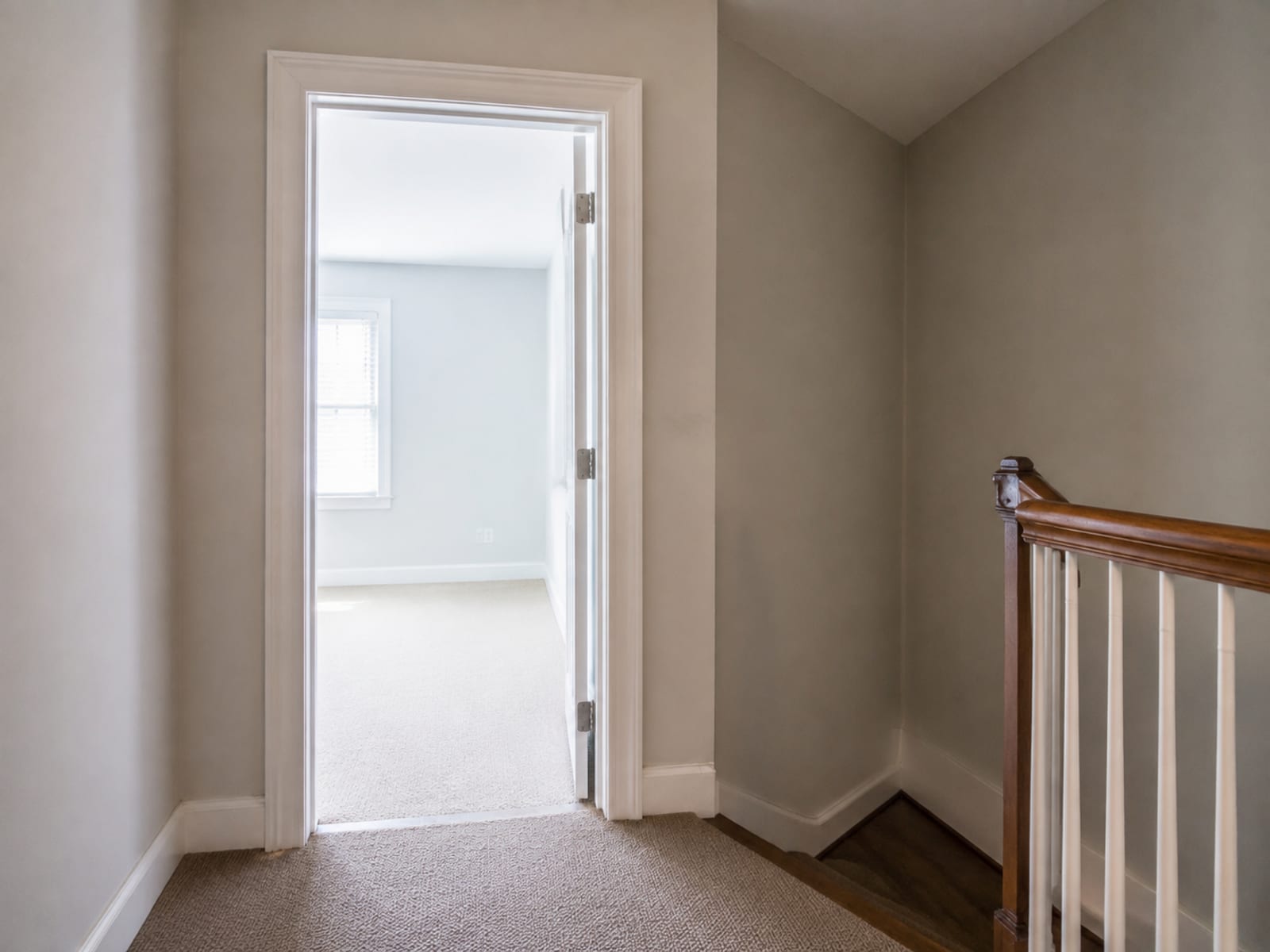
Measure the whole route, not the front door. That means the internal width and height of every entrance, hallway, elevator and stairwell between the truck and the room, plus the turns. At a stair turn, write down the ceiling height, the stair width and the corner to corner clearance, because that is where a sofa gets stuck.
Then run the comparison on paper. Pottery Barn's delivery measuring guide puts it in two parts: the sofa's width has to be less than the entry width, and the sofa's diagonal depth has to be less than the height available when the crew turns it on end. Diagonal depth is the corner to corner measurement of the sofa's side profile with the pillows off, and it is the number most people never look up. A sofa narrower than your doorway can still fail the route if it cannot be turned.
This is where format matters more than style. One shopper on the r/furniture board, posting as bFunk3, asked for sofas that ship in pieces after an older leather three seater barely made it through a narrow row house doorway. A commenter there, Its_Just_A_Typo, said recliners with removable backs had arrived in boxes as small as 28 inches. That is one person's experience rather than a published spec, but it points at the right question: if the route is tight, shop for models whose components ship and travel separately, and then check the published carton dimensions, because those have to clear too.
If the paper comparison is close, hand the problem to the retailer's delivery team rather than improvising a lift with a friend. Crate and Barrel lists room placement, assembly and packaging removal as part of in home delivery, and it requires someone 18 or older to sign for the piece. Ask, in writing, what the crew will and will not do on a stairwell before you order.
The measuring pass, start to finish
- 1
Record the exact configuration
Copy the width, depth, height, seat dimensions and diagonal depth for the specific arm, chaise and cover you would buy, not a similar floor model.
- 2
Tape the footprint
Mark the published width and depth on the floor and keep 18 to 24 inches of walking room, including door swings and outlets.
- 3
Set the seating relationships
Put the coffee table edge about 18 inches from the sofa and another seat about 3 feet away when that is the grouping you want.
- 4
Measure the route end to end
Record internal height, width and diagonal clearance at every entrance, hallway, elevator and stairwell, plus ceiling height and corner to corner room at each turn.
- 5
Run the pass or fail
Width under the entry width, diagonal depth under the clearance for an on end turn. If nothing clears on paper, change the model or the format.
- 6
Check the cover and construction
Read the care instructions for that cover and note the abrasion figure with the test method whenever the maker publishes both.
- 7
Place the sofa after the TV, not before
In a TV room, choose the display first, then set the seating distance the display maker publishes.
Which seat measurements decide whether a sofa feels right?
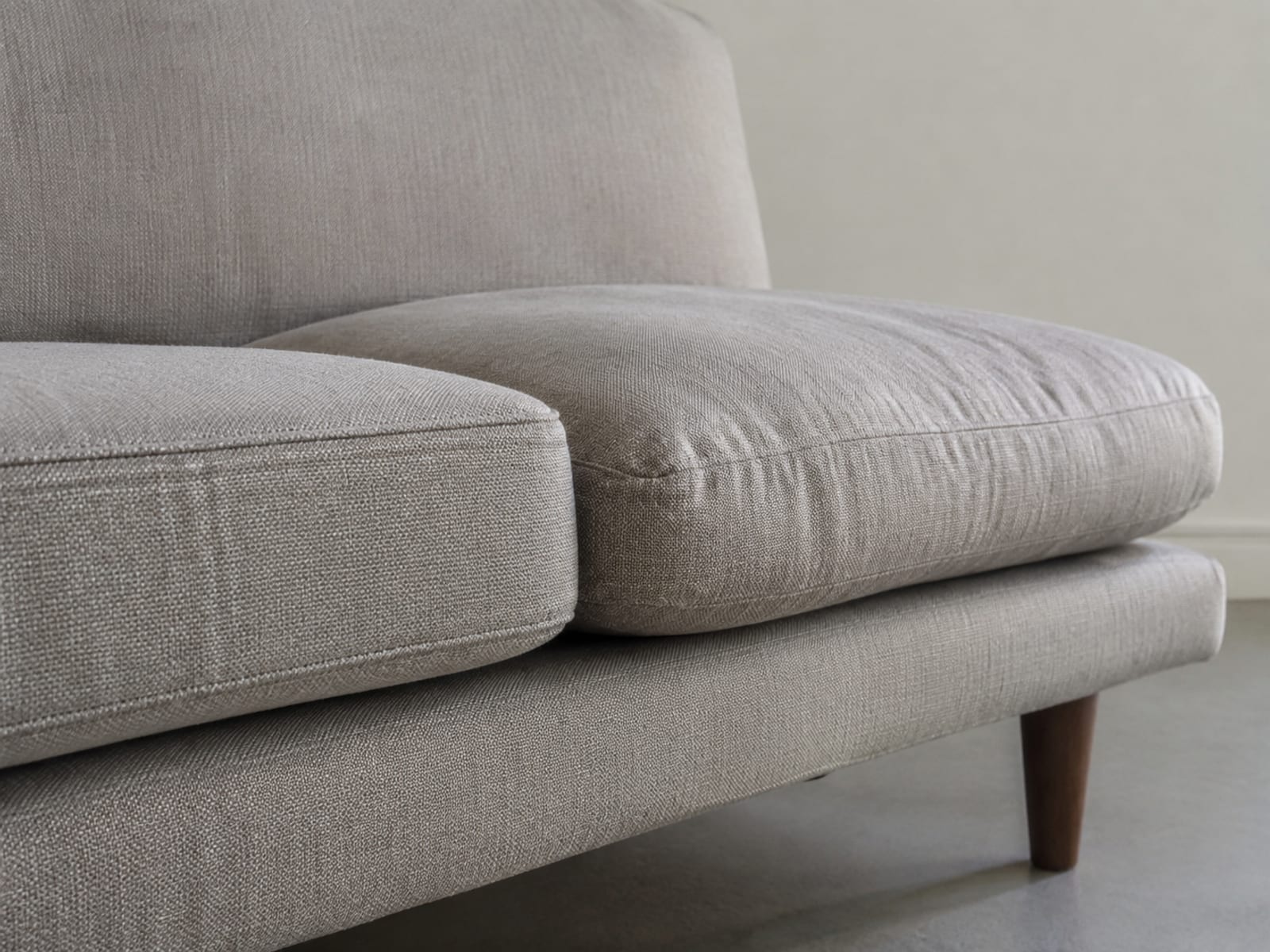
Overall dimensions tell you where a sofa goes. Seat dimensions tell you how it will feel, and they are printed right there on most product pages. IKEA's KIVIK sofa in Tallmyra white and black is a useful yardstick because it publishes all of them: 89 3/4 inches wide, 37 3/8 inches deep and 32 5/8 inches high overall, with a seat 70 7/8 inches wide, 23 5/8 inches deep and 17 3/4 inches high.
Those two seat numbers do most of the work. IKEA's own sofa guide says a deep, low seat suits a relaxed position, a higher and narrower seat suits sitting upright, and a high back supports the neck and shoulders. So, think about how your household actually uses the room. A seat around 23 to 24 inches deep is lovely for lying down with a blanket and awkward for someone who wants their feet flat on the floor while they eat dinner in front of a screen.
Height is the one that catches people out later. A shopper posting as WavingOrDrowning asked for a higher seat because their household and regular visitors included a very tall person, a very heavy person and someone with bad knees. In that thread, a commenter using the name cherylcarolcherlen described shopping for seats 19 inches or higher and swapping the legs to add about 3 inches. That is one shopper's fix rather than an ergonomic standard, but the underlying move is sound: leg height is often the cheapest adjustment on the whole sofa, and it changes how easy the piece is to stand up from.
If anyone in the house is very tall or carries more weight, look for the maker's own load statement rather than guessing. IKEA says its strength and durability testing simulates typical use by people up to 242 pounds. That is a test condition, not a certified weight limit for one person on one cushion, and it is still more information than most listings give you.
What fabric actually holds up to kids and pets?
If an animal is the deciding factor, the fabrics that survive claws, hair and accidents are compared separately, because claws and spills turn out to be different properties.
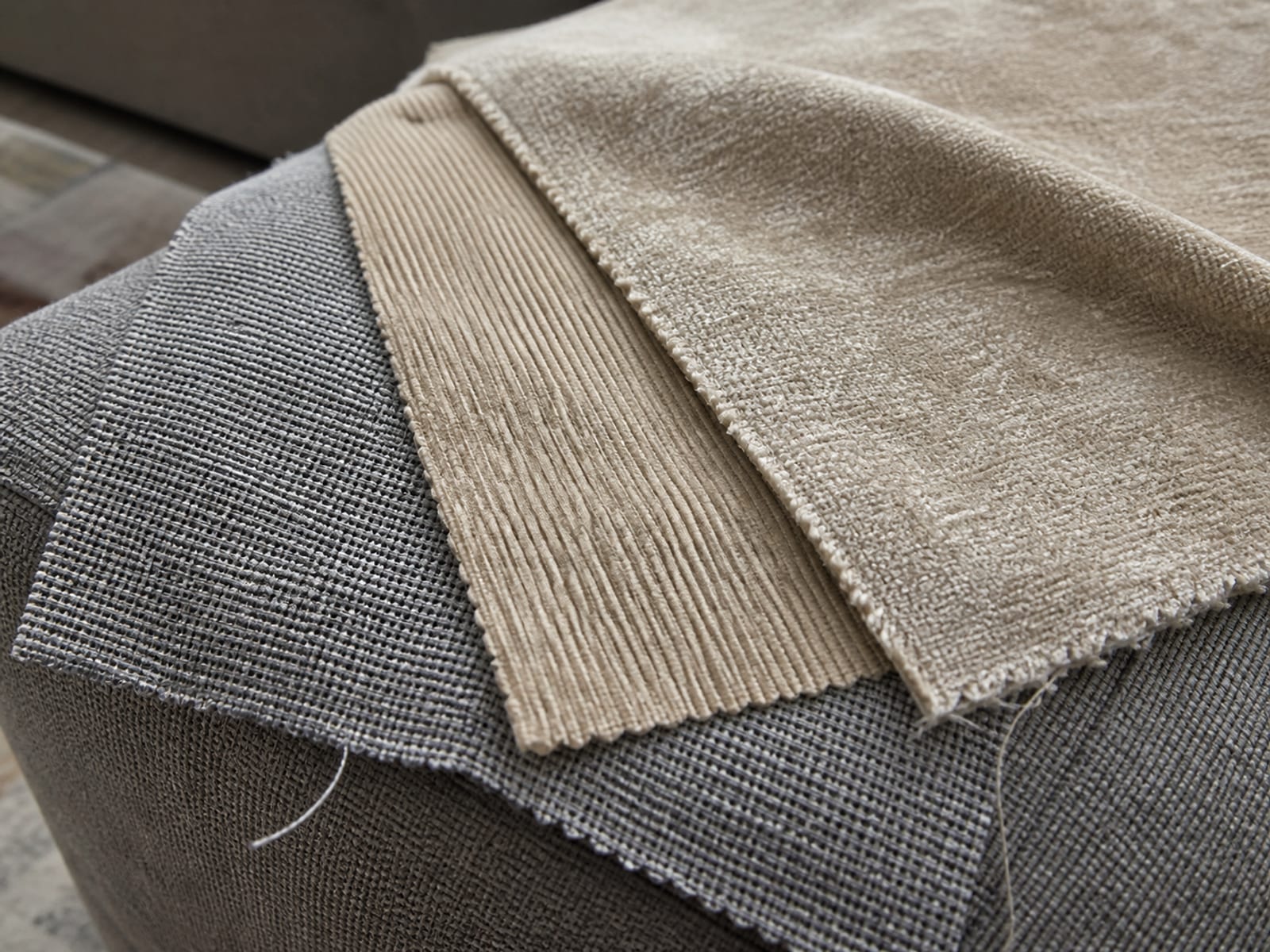
Ask for the cleaning instructions and the abrasion figure for the exact cover in the exact color, and let the fiber's reputation come second. On leather the equivalent question is the hide grade, and most listings never print it. When a shopper posting as matt-ta asked which couch material survives children and clawed pets, the replies contradicted each other. One person had wiped pet hair off velvet with no trouble; another described microfiber marking with water. Both can be true, because performance belongs to the specific fabric and finish, not to the category name. The letter on that cover's care tag is what decides your options later, and cleaning a fabric couch by hand follows from the letter rather than from the fibre.
If you are still working out which kind of piece you want, the two kinds of couch name separates the words that change the price from the ones that only change the look. Two things on a product page settle more than any thread. The first is whether the cover comes off and what you are allowed to do with it once it does. KIVIK's Tallmyra cover is removable and can be machine washed warm on a normal cycle, washed separately and not tumble dried. Removable and machine washable are not the same promise, so read the wording. The shade itself has published figures behind it too, set out in how to read a cover's lightfastness before you pick a color. Where a cover does come off, check whether a spare is available before you commit, because washing the only one you own means losing the sofa for a day; for the three-seat KIVIK, replacement covers are sold separately.
The second is the abrasion figure. IKEA lists 30,000 cycles for that cover and says 15,000 cycles and up suits everyday home furniture. The product page does not name the test machine, which matters, because the two common lab methods are not interchangeable. ASTM D4157 is the oscillatory cylinder method behind Wyzenbeek double rubs; ASTM D4966 is the Martindale method, and ASTM notes its results vary between labs enough that they should not be used as shipment acceptance testing. A number without its method cannot be lined up against another store's number, so when you compare two sofas, compare the pairs: count and method together. How much of it you actually need is a separate question, and the published home benchmark for upholstery wear sits lower than most hangtags imply.
What are you paying for inside the sofa?
The parts you cannot see are the ones that decide whether the seat still holds its shape in year five, and good listings publish them. KIVIK gives a full parts list: a steel pocket spring unit in the seat, high resilience polyurethane foam at 2.2 pounds per cubic foot plus polyurethane foam at 2.0 pounds per cubic foot, and polyester fiber back cushions. Foam density is mass per volume, which is not the same as firmness and is not a promise about lifespan, but it is a real number you can compare across two listings that both bother to print it. The same two specifications come back years later if a seat goes flat, since ordering a replacement foam core is quoted in density and firmness together.
You will also see a flammability label. California Technical Bulletin 117-2013 is a smolder resistance test for the materials in upholstered furniture, and the California bureau that publishes it says the standard does not prescribe flame retardant chemicals, manufacturing methods or specific materials. The CPSC says furniture made, imported or reupholstered on or after June 25, 2021 has to comply with that test method under the federal upholstered furniture standard. So, the label tells you the piece met a smolder test, and nothing more than that.
Hover or tap a row to highlight it.
| Specification | Published figure |
|---|---|
| Overall size | 89 3/4 in wide, 37 3/8 in deep, 32 5/8 in high |
| Seat | 70 7/8 in wide, 23 5/8 in deep, 17 3/4 in high |
| Seat foam | High resilience polyurethane 2.2 lb/cu ft plus polyurethane 2.0 lb/cu ft |
| Seat support | Steel pocket spring unit |
| Cover | Removable, machine wash warm on a normal cycle, wash separately, do not tumble dry |
| Abrasion | 30,000 cycles, test method not named on the product page |
| Durability testing | Simulates typical use by people up to 242 lb |
| Price | $949 on ikea.com as of September 2026 |
Does a more expensive sofa buy you anything real?
Treat price as a comparison between named products and what each one includes, not a band you are trying to land in. Dividing the price by the published seat count makes two very different sofas comparable, and what a seat costs across four real configurations puts some numbers behind that. Once you have two or three shortlisted, put their published numbers side by side: seat depth, seat height, diagonal depth, foam density, cover care, abrasion figure with method, frame material, warranty terms and the return window. A dearer sofa that publishes none of those is not obviously better than a cheaper one that publishes all of them.
Then price the parts that arrive after the sofa does. Delivery into the room, assembly, packaging removal, a spare cover, a professional clean when something goes wrong on the fabric, and the cost of getting the piece back out if you return it. Those figures move by retailer, by route and by fabric, so ask the store's service desk and a local insured upholstery or cleaning business for a dated written quote rather than assuming.
For a fixed reference point while you compare, IKEA's KIVIK sofa in Tallmyra white and black is $949 on ikea.com as of September 2026, with the seat, foam, spring and cover figures above attached to that price. Whatever else you are looking at, you can ask what the extra money is buying against that list, item by item.
Can you sleep on a sofa bed every night?
Only if the product publishes how it sleeps, not just how it sits. A seating sofa with a thin fold out pad is a guest solution; a piece designed for regular sleeping tells you its mattress arrangement and its bed dimensions up front. Whether the seat and the bed are one surface or two is the first thing that decides which of those you are looking at.
IKEA's BRIMNES daybed with two drawers and two Ågotnes firm mattresses shows what that looks like in print. Closed, it is 76 3/4 inches long, 40 1/2 inches wide and 22 1/2 inches high, so it clears a small room where a full sectional would not. Pulled out, it opens to a bed 76 3/8 inches wide. The two twin mattresses stack for a single bed and go side by side only when it is pulled out as a double, and their comfort filling is polyurethane foam at 1.5 pounds per cubic foot. It was $427 at the IKEA Family promotional price, or $477 regular, on ikea.com as of September 2026, with the promotion stated to run to September 7, 2026.
Read that stacking detail closely, because it is exactly the sort of thing that surprises people on night one. Two twin mattresses stacked is a firm single sleep surface. Two of them side by side is a double with a seam down the middle. Either can be fine for nightly sleeping; neither is a mattress you would choose blind.
Where should the sofa sit in a room built around a TV?
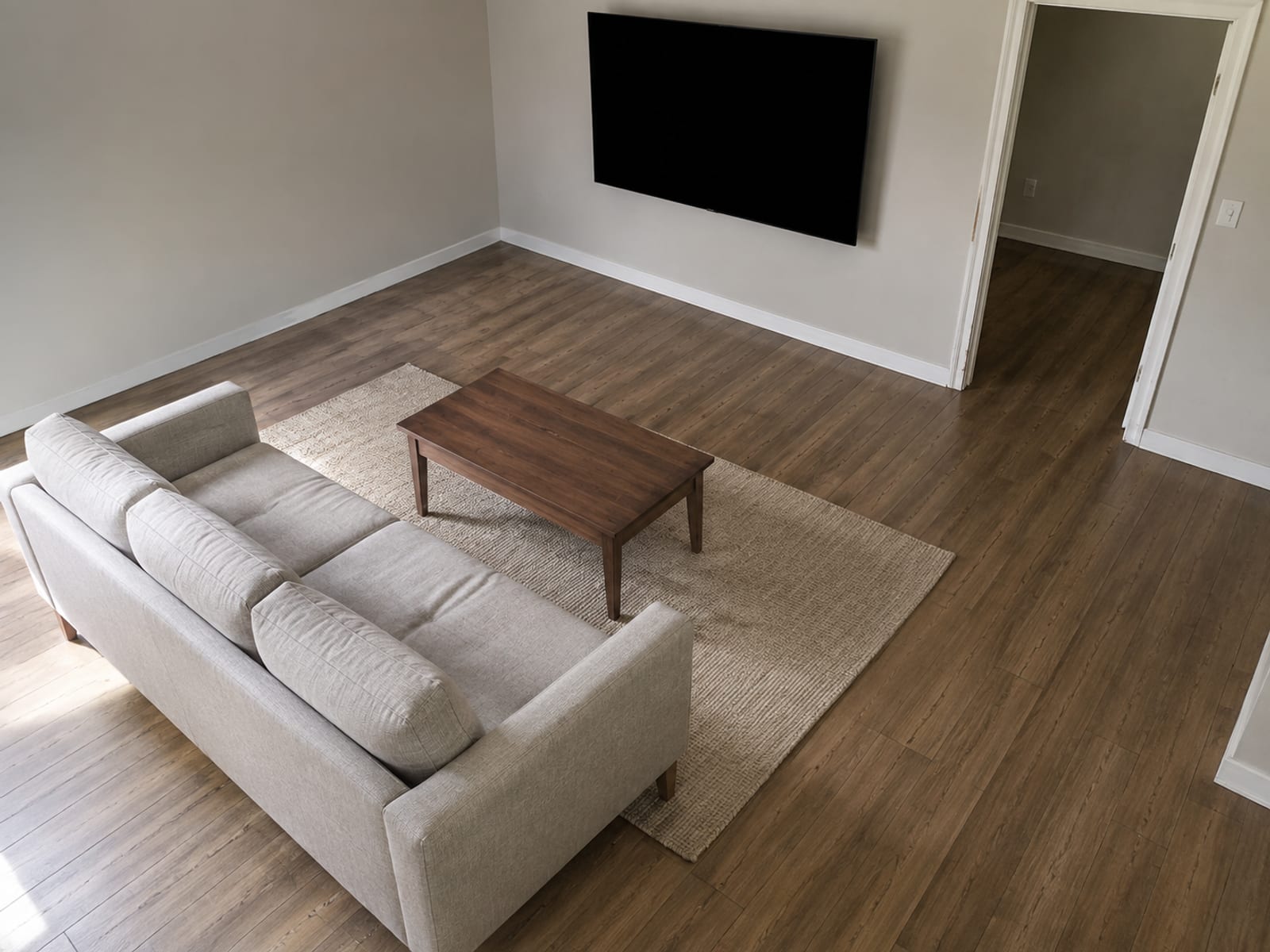
Pick the display first, then place the seating, because the screen sets the distance and the sofa follows. Samsung's published 4K guidance is the display diagonal in inches divided by 10, read as feet, so a 50 inch set sits within about 5 feet. The same guidance keeps the viewing angle within 15 degrees up or down and 40 degrees left or right of the screen.
Formulas differ between models and goals, though. A Samsung buying guide for larger sets puts a 98 inch 4K TV anywhere from 6 to 12 feet away and offers a quick rule of about 1.2 times the diagonal. So, use the current documentation for the display you actually own, name the formula you used, and never let a TV distance rule decide the size of the sofa. Those are two separate measurements that happen to meet in the same room. And when you come to place them, the distance to measure is screen to eyes rather than wall to wall, which is shorter than most people's tape suggests.
Will it get through the door?
1. A sofa is 89 3/4 inches wide and 37 3/8 inches deep, and your entryway is 32 inches wide. Which measurement tells you whether the crew can bring it in turned on end?
Pick an answer to begin.
Frequently asked questions
What is the 2/3 rule for couches?
It means picking a sofa that takes up about two thirds of the length of the wall behind it, which is the answer Google currently shows at the top of this search. It is a proportion designers use to keep a wall balanced, not a measured requirement, and Pottery Barn publishes a different two thirds rule that applies to a coffee table being about two thirds the length of your sofa.
Does a high rub count mean a sofa will last a certain number of years?
No. ASTM, which publishes the abrasion test methods, says laboratory abrasion resistance is only one of several factors in real world wear and should not be used to predict a specific in use lifespan without supporting data. Use the count to compare two fabrics tested the same way, then decide on the cleaning code and the cover's removability.
Can I compare a Martindale number to a Wyzenbeek number?
Not directly. Wyzenbeek double rubs come from the oscillatory cylinder method in ASTM D4157 and Martindale cycles come from ASTM D4966, which are different machines and different motions, so there is no conversion between them. Ask the retailer which method produced the number, and if nobody can tell you, treat it as unlabeled.
Does a TB 117-2013 label mean the sofa is full of flame retardants?
No. California's bureau says its performance standard does not prescribe flame retardant chemicals, manufacturing methods or specific materials, and TB 117-2013 is a smolder resistance test for upholstery materials. The CPSC says furniture made, imported or reupholstered on or after June 25, 2021 must comply with that test method.
Should a sofa be lighter or darker than the carpet?
Either can work, and the room decides it more than any rule does. Pottery Barn's styling guidance is that light shades open up a space while dark colors can overpower a small room, and it adds that easy to clean fabric matters more once kids and pets are in the picture. With a busy household, choose the cover you can wash and then pick the shade you like.
Sofa spec words, in plain English
Tap a term to see what it means.
Seat depth. The inside horizontal depth of the seat, front edge to back cushion. KIVIK publishes 23 5/8 inches.
You already have the hard part in hand: a tape measure, a taped rectangle on the floor and a short list of numbers to ask for. Get the doorway and the seat right and the rest of it, the color, the arm shape, the throw pillows, is the fun part of the decision rather than the risky part. If you want more of this kind of plain checking before you spend, PlushPick has guides on sectionals, sofa beds, recliners and accent chairs that pick up where this one leaves off, including what a modular sofa is and how it differs from a sectional.
Cal Hewitt
Writer at PlushPick. I compare sofa specs, comfort, durability, and value so you can buy with clearer expectations.
About Cal and how the guides are researchedThe latest
 "Best-of"Best Furniture Protectors for Pets, by What They Actually Cover
 "Best-of"Best Pet-Friendly Sofa Fabrics: Claws, Hair and Spills
 "Best-of"Best Sofas for Small Spaces: Narrow Doesn't Mean Shallow
 "Best-of"Best Recliner Covers for Dogs: What Actually Stays On
 AnswerSofa vs Sectional: Which One Fits Your Room and Life
 AnswerHow to Measure a Sofa So It Fits Through the Door