Best Couch Cushion Replacement Foam, by Density and Firmness
The best couch cushion replacement foam grades from four foam retailers, each with its published density, ILD firmness and life estimate, plus how to measure.
By Cal Hewitt,
Affiliate disclosure. If you buy through a link on this page, PlushPick may earn a commission at no extra cost to you. That never changes which products are named or what is said about them. As an Amazon Associate I earn from qualifying purchases. How this works
For seat cushions that get sat on every day, order foam at about 2.8 pounds per cubic foot and choose the firmness as a separate figure: The Foam Factory's HD36-HQ at 35 ILD for a medium seat, or its Lux-HQ at 50 ILD for a firm one. Density is the number tied to how long the seat holds its shape, and ILD is the number that describes how it feels when you sit down. The Foam Factory sells each firmness at 1.8 and at 2.8 pounds per cubic foot, and its own typical-life estimate goes from 7 years at the lower density to 16 years at the higher one, with the firmness unchanged.
At a glance
Key Takeaways
Two figures describe a foam
Density in pounds per cubic foot, and firmness as ILD or IFD. Order by both.
Same feel, longer life
The Foam Factory's 35 ILD seat foam comes at 1.8 and 2.8 lb/cu ft, with typical-life estimates of 7 and 16 years.
The highest density among the picks
Foam By Mail's Qualux Firm at 3.1 lb/cu ft and 65 ILD, with a 12 to 18 year estimate.
High resilience has published thresholds
At least 2.5 lb/cu ft, 60 percent resilience and a 2.4 support factor.
CertiPUR-US certifies foam, grade by grade
Confirm the specific grade you order, since a company's other foams may not be covered.
Price comes from your own measurements
Cut-to-size sellers quote once you enter the shape and dimensions.
How these were judged
Each pick is a foam grade or insert with a published density and a published firmness, or, for a maker's own insert, a published price for a named configuration. Where a retailer states a typical life, a certification or a warranty position, that is included beside the grade. None of the cut-to-size sellers lists a price without dimensions, so the price you see will be for your own cushion, and the section on measuring covers how to get that right.
If you are not yet sure the foam is what failed, the guide to fixing sagging couch cushions works out whether it is the foam, the fiber wrap or the deck underneath. Everything below assumes the answer was the foam.
Best for an everyday seat with a medium feel: The Foam Factory HD36-HQ, 2.8 lb/cu ft, 35 ILD
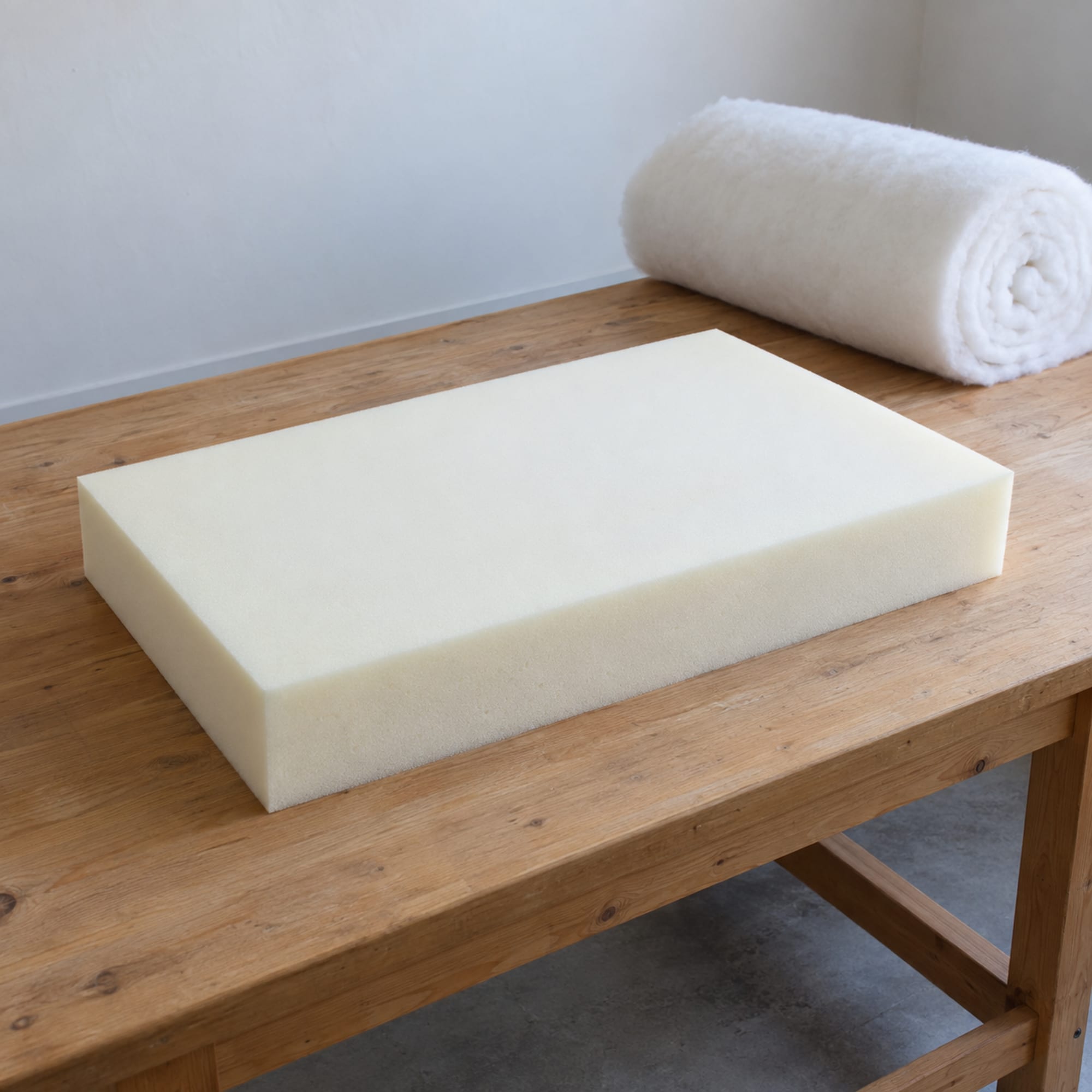
HD36-HQ is the grade I would start with for the cushions a household actually lives on. The Foam Factory publishes it at 2.8 pounds per cubic foot with an ILD of 35, which the retailer describes as medium, and gives it a typical life of 16 years.
Its sibling grade, HD36-R, has the same 35 ILD at 1.8 pounds per cubic foot, and The Foam Factory puts its typical life at 7 years. That pair shows what density does on its own, because only one number changes between them. Both are made to the same firmness; the difference is how long the seat keeps it.
The Foam Factory states CertiPUR-US certification for this foam family on its foam types listing, and a polyester fiber wrap is available as an option. Its published lifespans are the retailer's own estimates rather than a warranty, and neither a warranty term nor return terms for a custom cut appear on the grade listing, so ask for both before you order.
Best firm seat for the long run: The Foam Factory Lux-HQ, 2.8 lb/cu ft, 50 ILD
Lux-HQ is the same density as HD36-HQ with a firmer feel. The Foam Factory lists it at 2.8 pounds per cubic foot and 50 ILD, describes 50 ILD as firm, and gives the same 16-year typical life. It is listed in thicknesses from 1 to 8 inches.
A firmer seat suits a cushion that is thin, a sofa used for upright sitting, or someone who finds a soft seat hard to get out of. Owners in an r/upholstery thread about sitting on HD36 and Lux cushions compare how the two grades sit, and owners who have swapped their foam report replacements that felt firmer than they expected. If you are torn between 35 and 50, the fiber wrap covered further down softens the surface without changing the core.
For a still firmer seat, The Foam Factory's Super Max is published at 2.8 pounds per cubic foot and 70 ILD, which the retailer calls very firm, also with a 16-year typical life. The Lux-R grade is 50 ILD at 1.8 pounds per cubic foot and a 7-year typical life.
Best in-between firmness: FoamOrder EverFlex V44, 2.8 lb/cu ft, 44 ILD
FoamOrder's EverFlex V44 sits between The Foam Factory's medium and firm grades at 44 ILD, with the same 2.8 pounds per cubic foot density. That makes it a reasonable order when 35 sounds soft for your household and 50 sounds like more than you want.
FoamOrder builds custom cushions in named shapes, including square, rectangle, T-cushion, L-cushion, trapezoid and wedge, and offers optional wraps such as cotton batting and zippered cotton cases on its replacement cushion pages. A CertiPUR-US statement for V44, a typical-life figure, a warranty and custom-cut return terms were not on the listing, so those are the questions to put to FoamOrder before ordering.
Best for the highest published density: Foam By Mail Qualux Firm, 3.1 lb/cu ft, 65 ILD
Qualux Firm carries the highest density of any pick, 3.1 pounds per cubic foot, at a firm 65 ILD, and Foam By Mail names ASTM D3574 as the test behind its figures. Its published life estimate is 12 to 18 years. Foam By Mail stated free shipping on qualifying orders over $100 within the contiguous United States as of September 2026.
Qualux Firm's published support factor is 2.10, which is below the 2.4 in the high-resilience definition covered later, so treat it as a dense conventional foam rather than HR. And the product sheet states the foam is sold without warranty unless otherwise stated, which is worth knowing before you pay for a custom cut. At 65 ILD this is a firm seat; it suits someone who wants the cushion to stay level under them, and a fiber wrap softens the surface without changing that.
Best for choosing an exact firmness: FoamOnline High-Density Foam, 1.80 to 1.85 lb/cu ft
FoamOnline's high-density foam is the pick when you want to set the firmness closely. It is published at 1.80 to 1.85 pounds per cubic foot, with 25 percent ILD options from 18.9 plus or minus 3 up to 85.9 plus or minus 3, and FoamOnline states that it passes CertiPUR-US. Custom thicknesses and shapes are offered.
The density is the trade. FoamOnline describes this foam for average-quality sofas and chair cushions and gives it a typical life of about 6 years, which lines up with The Foam Factory's 7 years for its own 1.8 grades. For a guest room sofa, a reading chair or a cushion that sees light use, that can be the right amount of foam for the money. For the family's main seat, a 2.8 grade from the picks above holds its feel for much longer by the retailers' own figures.
Best for outdoor and window seats: The Foam Factory Dryfast, 1.8 lb/cu ft, 60 ILD
Dryfast is The Foam Factory's outdoor polyurethane, published at 1.8 pounds per cubic foot and 60 ILD, with a typical life of 5 to 8 years. It is the grade to look at for porch furniture, a patio sofa or a window seat near a door, which are among the situations owners describe when they replace foam instead of furniture.
FoamOrder also sells an outdoor foam at 1.8 pounds per cubic foot in 25, 33 and 45 ILD, which gives a softer outdoor seat than Dryfast's 60. Neither listing states CertiPUR-US certification for its outdoor grade, so ask the seller if that matters to you.
Best if you own a Lovesac Sactional: Lovesac Sactionals Seat Cushion Insert, Lovesoft
When the maker still sells its own inserts, that is the simplest route, because the size and shape are already right. Lovesac sells a Sactionals Seat Cushion Insert, and the Lovesoft configuration was $225 on lovesac.com as of September 2026, with other insert configurations on the same page. Its density and firmness were not listed with the price, so ask Lovesac for both if you are comparing it with a custom cut.
Pottery Barn does the same for some outdoor collections. Its Kostas outdoor replacement cushions ran from $199 to $1,299 on potterybarn.com as of September 2026, with the sofa replacement cushion at $1,299, and the listing states polyurethane foam and polyester fibers inside. These are complete cushions made for one collection rather than foam you can fit to another sofa. If your sofa's maker has stopped selling cushions, a cut-to-size grade from the picks above is the way through.
The picks side by side
The table below lines up the published figures, so you can choose a density and a firmness separately.
Hover or tap a row to highlight it.
| Grade | Density (lb/cu ft) | Firmness (ILD) | Seller's life estimate | CertiPUR-US on the listing |
|---|---|---|---|---|
| The Foam Factory HD36-R | 1.8 | 35 | 7 years | Stated for the foam family |
| The Foam Factory HD36-HQ | 2.8 | 35 | 16 years | Stated for the foam family |
| The Foam Factory Lux-R | 1.8 | 50 | 7 years | Stated for the foam family |
| The Foam Factory Lux-HQ | 2.8 | 50 | 16 years | Stated for the foam family |
| The Foam Factory Super Max | 2.8 | 70 | 16 years | Not stated |
| FoamOrder EverFlex V44 | 2.8 | 44 | Not stated | Not stated |
| Foam By Mail Qualux Firm | 3.1 | 65 | 12 to 18 years | Not stated |
| FoamOnline High-Density | 1.80 to 1.85 | 18.9 to 85.9 | About 6 years | Stated as a pass |
| The Foam Factory Dryfast | 1.8 | 60 | 5 to 8 years | Not stated |
Read down the density column and the life estimates follow it: every grade at 2.8 or above that carries an estimate has a double-digit figure from its seller, and every grade near 1.8 sits between 5 and 8 years. Firmness moves independently across the same rows.
What density and ILD each measure
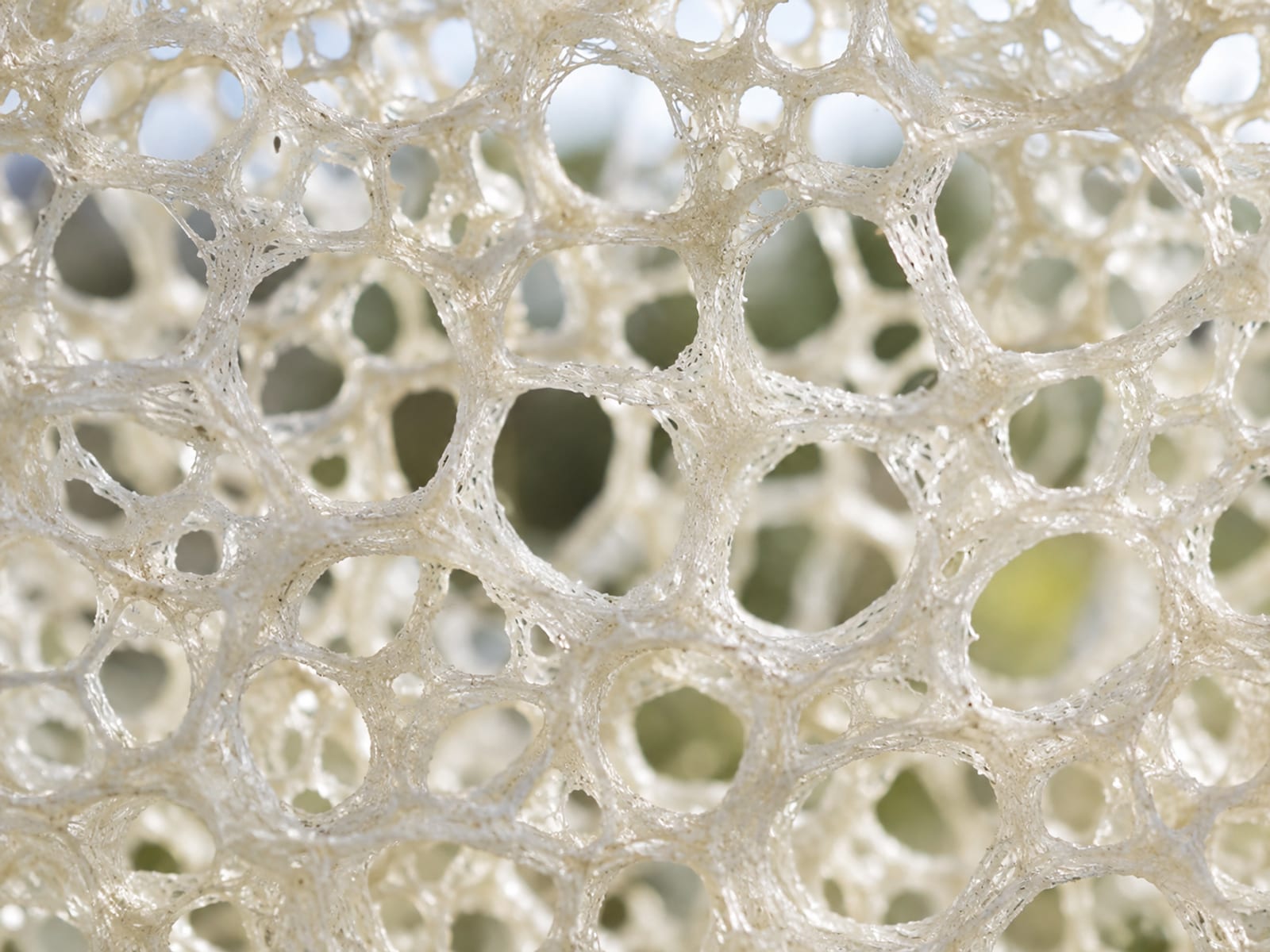
Density is the mass of foam in a given volume, published in the US as pounds per cubic foot and elsewhere in kilograms per cubic meter; one pound per cubic foot is about 16.02 kilograms per cubic meter. ILD and IFD are two names for the same firmness figure: the force it takes to press a foam sample down by a set amount, usually 25 percent of its thickness. The test method behind both is ASTM D3574, which uses a circular indenter and reports the force at 25 and at 65 percent indentation.
Soft, medium and firm are not standardized between retailers. The Foam Factory calls 35 ILD medium, 50 firm and 70 very firm, which is its own scale. When two sellers use the same word for different numbers, the number is the one to compare.
What high resilience means in figures
"High resilience" and "high density" both appear on foam listings as descriptions. HR has published thresholds, and a foam meets them or it does not. A published industry classification sets HR polyurethane at at least 2.5 pounds per cubic foot, at least 60 percent resilience and a support factor of at least 2.4. Sleep Foundation's summary of polyfoam grades puts 1.5 or lower as low grade, 1.5 to 2.4 as medium grade, and 2.5 or higher as HR grade, subject to those support and resilience requirements.
Among the picks, The Foam Factory's HQ grades meet the density threshold at 2.8, though the listing does not give their resilience or support factor. Qualux Firm is denser still at 3.1 but publishes a 2.10 support factor, below the HR line. So, if a listing calls a foam HR, ask for all three figures; if it says only "high density", ask for the density in pounds per cubic foot.
What CertiPUR-US covers on a foam order
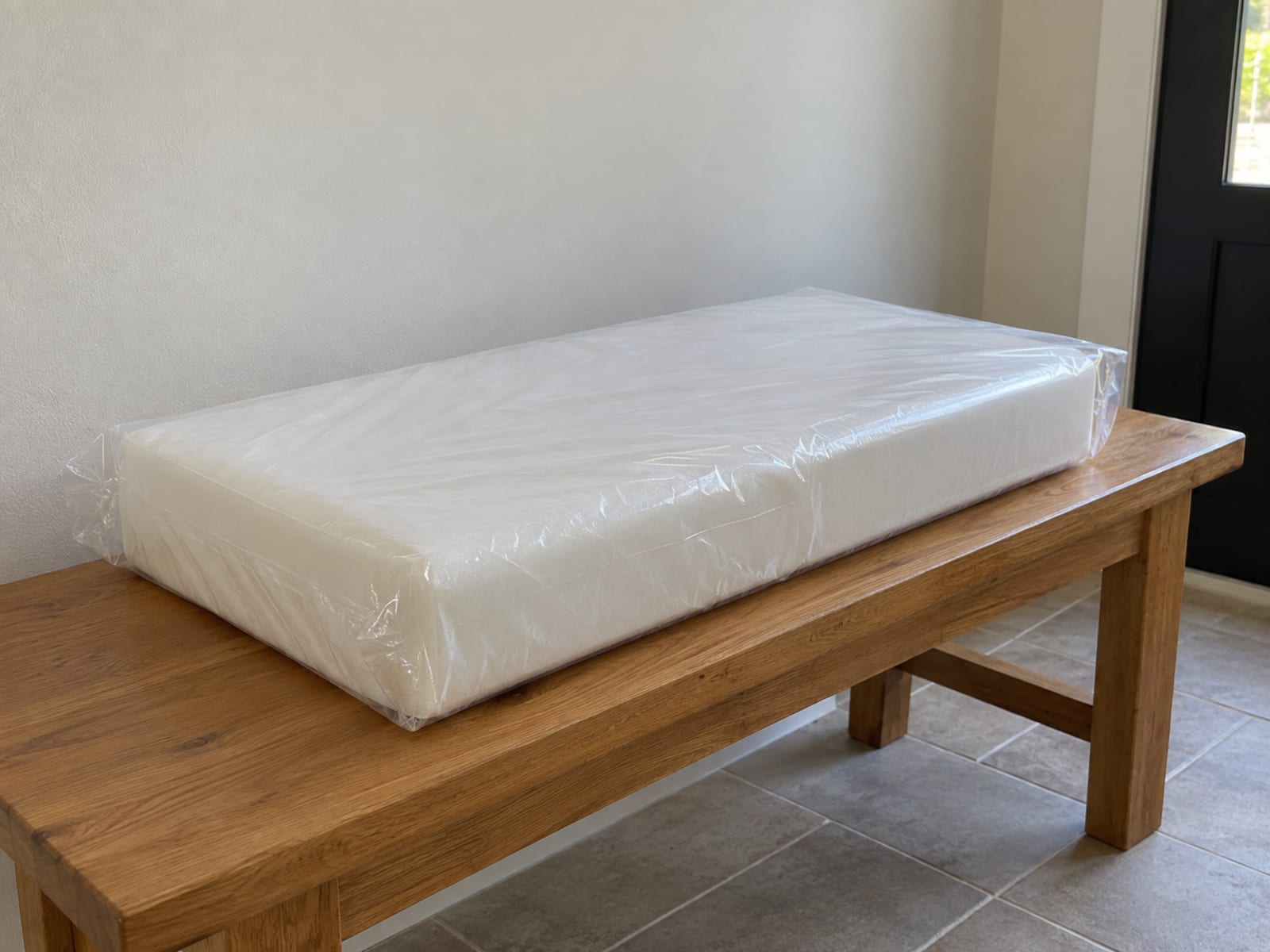
CertiPUR-US certifies flexible polyurethane foam against content restrictions, emissions limits and durability requirements, with laboratory checks behind it. It covers the foam. It does not certify a whole sofa, its cover, frame or suspension, and it says nothing about how comfortable a finished cushion will be.
For a replacement order, the practical point is that certification belongs to a product rather than to a company. A seller can be a certified company and still sell grades that are not covered. Check the CertiPUR-US listing of certified products and companies, or look for the certification mark on the documentation for the grade you are buying. Of the picks, The Foam Factory states certification for its HD36 and Lux family and FoamOnline states a pass for its high-density foam. FoamOrder states GOLS certification for its latex, which is an organic standard rather than CertiPUR-US.
Wraps, batting and softer top layers
A polyester or Dacron fiber wrap goes around the foam core before it goes into the cover. It softens the edges, fills the corners and gives a fuller, rounder cushion without changing the support underneath. The Foam Factory offers polyester fiberfill wrap as an option on custom couch cushions, and FoamOrder offers cotton batting wrap. The added thickness depends on the material, and none of these sellers gives one figure for it, so ask how much the wrap you choose adds before settling on the foam size.
A wrap also changes how the cushion goes into the cover. Owner reports in r/upholstery threads, including one comparing FoamOrder and Foam By Mail, describe fit going wrong in both directions: a core plus wrap too full to zip, and an undersized core that leaves the cover baggy.
For a softer seat surface, FoamOrder lists memory foam at 5 pounds per cubic foot and 13 ILD, and natural latex at 5 pounds per cubic foot in 25, 28, 31, 36 and 45 ILD. FoamOrder describes its memory foam as slow-contouring, and at 13 ILD it is far softer than any seat grade above; the sagging cushions guide covers where it fits in a seat. Latex at 36 or 45 ILD sits within the range of the seat grades above.
Measuring the cushion you have
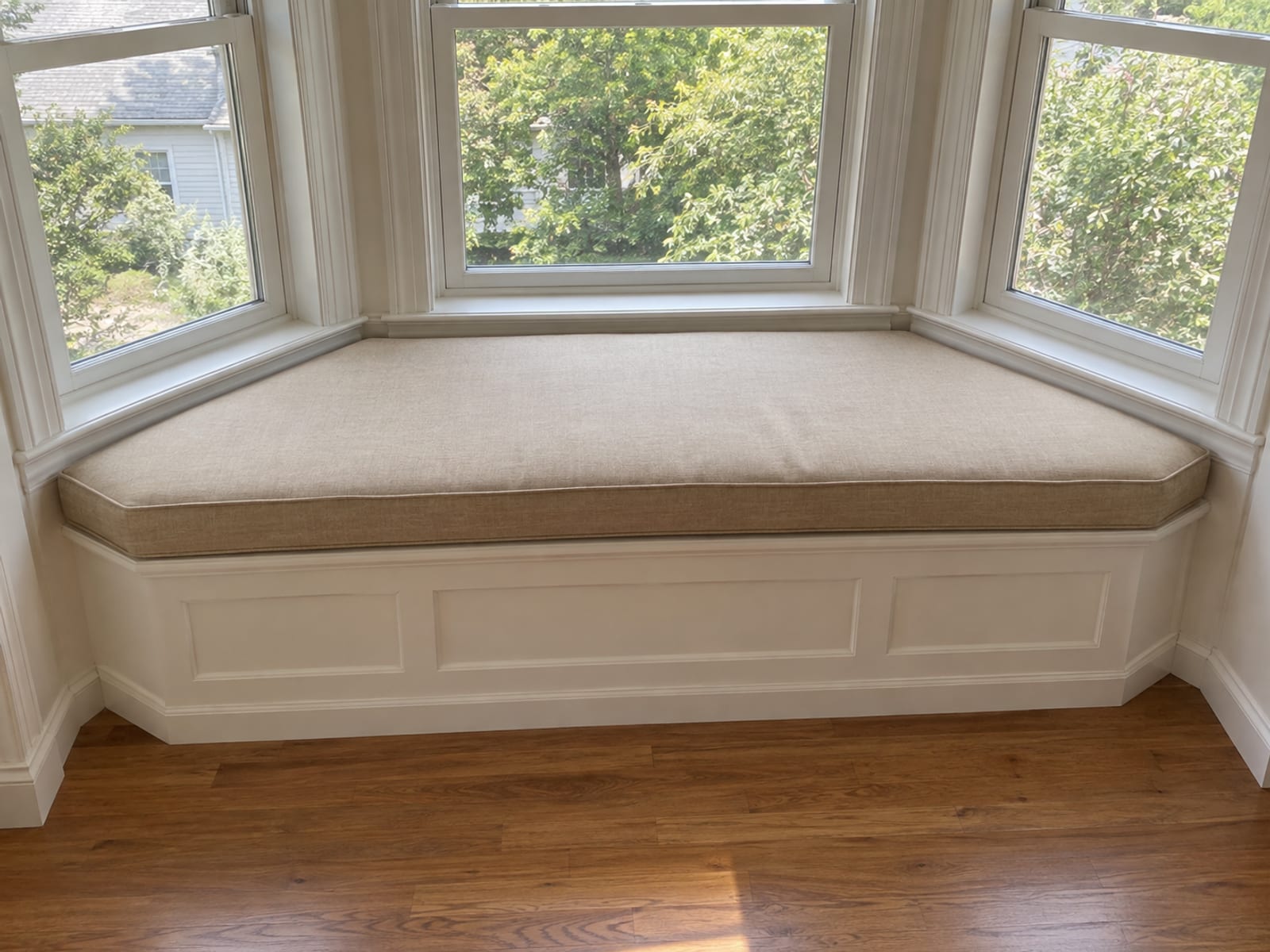
A flattened core no longer tells you the size the cushion should be, so measure the cover instead: width, depth and thickness. Retailers ask for those three figures and the shape. A square or rectangular seat cushion is the simple case; a T-cushion, the kind that widens in front of the arms, and an L-cushion need their shape chosen from the seller's list, and FoamOrder offers both. For a back cushion that tapers, measure the front edge and the back edge separately, since a trapezoid or wedge is ordered as its own shape rather than a block.
Thickness sets how high the seat sits and how easily the cover closes, so measure it twice. If you are adding a wrap, allow for it, and follow the seller's own measuring instructions on how much. The sagging cushions guide walks through the swap itself, from unzipping the cover to feeding in the new core.
To budget a set of seat cushions, enter one cushion's measurements on each seller's page and multiply: three cushions cost three times one cut, plus any wrap charge, plus shipping.
Questions to ask before a custom cut
A custom cut is made to your numbers, so the time to settle the terms is before you order.
- Density in pounds per cubic foot. "High density" on its own is not a figure.
- Firmness as ILD or IFD, with the test named. Foam By Mail names ASTM D3574 for Qualux Firm; ask others which method they use.
- CertiPUR-US for this grade. A company statement is not the same as the grade being listed.
- Cut tolerance. None of the sellers here publishes how close to your figures the cut will be, so ask.
- Returns on a custom cut. None of the grade listings here states them. Ask before you pay.
- Warranty. Foam By Mail's product sheet says Qualux Firm is sold without warranty unless otherwise stated; get any other seller's position in writing.
The life figures in the table are each seller's estimate rather than a promise, and a written answer to those six questions is what you can hold a seller to. For the rest of the sofa, how long each part of a couch should last sets new cushion foam against the frame and suspension it will sit on.
Ready to order?
1. Two foams are both 35 ILD. One is 1.8 lb/cu ft and one is 2.8. What changes between them?
2. A listing says "high resilience" and nothing else. What should you ask for?
3. Your old seat foam is flat. What do you measure?
Pick an answer to begin.
Frequently asked questions
What density foam is best for couch cushions?
For a seat in daily use, grades around 2.8 pounds per cubic foot carry the longest life estimates among the picks, 16 years for The Foam Factory's HQ grades. Foam at 1.8 is common for lighter use and carries estimates of about 6 to 7 years from the sellers that publish one.
Is HD36 the same as HD36-HQ?
They share a 35 ILD firmness at The Foam Factory. HD36-R is 1.8 pounds per cubic foot with a 7-year typical life, and HD36-HQ is 2.8 with a 16-year typical life.
What foam is used for back cushions?
The Foam Factory sells a super-soft foam at 1.2 pounds per cubic foot for back cushions, with a 5-year typical life. A back takes far less weight than a seat, so ask the seller which firmness they pair with that density for your cushion.
Does CertiPUR-US mean the foam will last longer?
The program includes durability among its requirements, alongside content and emissions, but it does not rate comfort or promise a lifespan. For expected life, compare the density and each seller's own estimate.
Replacement foam terms
Tap a term to see what it means.
Density. Pounds of foam per cubic foot. On a replacement order it is the figure the sellers' life estimates follow, 7 years at 1.8 and 16 at 2.8 for The Foam Factory's seat grades.
Once you have a grade in mind, the next step is the measuring tape and the cover you already own. PlushPick's guide to fixing sagging couch cushions takes it from there, through opening the cover and fitting the new core.
Cal Hewitt
Writer at PlushPick. I compare sofa specs, comfort, durability, and value so you can buy with clearer expectations.
About Cal and how the guides are researchedRelated
All guides- "Best-of"
Best Lift Chairs: Sizes, Positions and What Medicare Covers
The best lift chair fits the person: seat height, width and weight capacity for five chairs from Pride, Golden and La-Z-Boy, plus what Medicare covers.
- "Best-of"
Best Sofa Slipcovers, and How to Size One to Your Sofa
The best sofa slipcovers for a sofa you are keeping, from stretch covers to custom fits, with published size ranges, care lines and what each fit costs.
- "Best-of"
Best Couch for Families With Kids: Covers, Parts and Labels
The best couch for families with kids, judged on washable covers, replaceable parts and warranty terms, plus what the TB117-2013 tag and flame retardant line mean.
- "Best-of"
Best Sleeper Sofa Under $1,000, With Bed Sizes in Inches
Best sleeper sofa under $1,000: IKEA and Wayfair picks from $599 to $999 with published bed sizes, mattress type, seat numbers and return terms side by side.