

Affiliate disclosure. If you buy through a link on this page, PlushPick may earn a commission at no extra cost to you. That never changes which products are named or what is said about them. As an Amazon Associate I earn from qualifying purchases. How this works
Start with the color already in the room, take the actual swatch home and look at it in daylight and again under lamps, then check two numbers before you commit. The first is lightfastness, which is how well a cover holds its color under light: IKEA publishes level 5 on a 1 to 8 scale for the KIVIK Tallmyra cover and says 4 or higher suits home use. The second is the brightness of the wall the sofa has to live against, which Benjamin Moore records as LRV, light reflectance value, on a 0 to 100 scale. Neither number is on a product photograph, which is where most of this decision currently gets made.
Key Takeaways
Lightfastness is a published number
IKEA rates the KIVIK Tallmyra cover 5 on a 1 to 8 scale and says 4 or higher suits a home.
LRV gives your wall a value
Benjamin Moore's Alabaster OC-129 is 85.08 on a 0 to 100 reflectance scale, so a swatch beside it is competing with a lot of light.
The room decides before you do
A neutral room can carry a bold sofa; a room already holding strong color needs one that complements it.
Staying clean depends on whether the cover comes off
IKEA's KIVIK Tallmyra cover machine washes; its FRIHETEN Faringe cover cannot be removed at all.
A swatch lies under store lighting
Look at it against your own wall and floor, in daylight and at night, before anything else.
A replaceable cover is the real insurance
It turns a color you tire of into a purchase rather than a replacement.
Start with the color the room already has
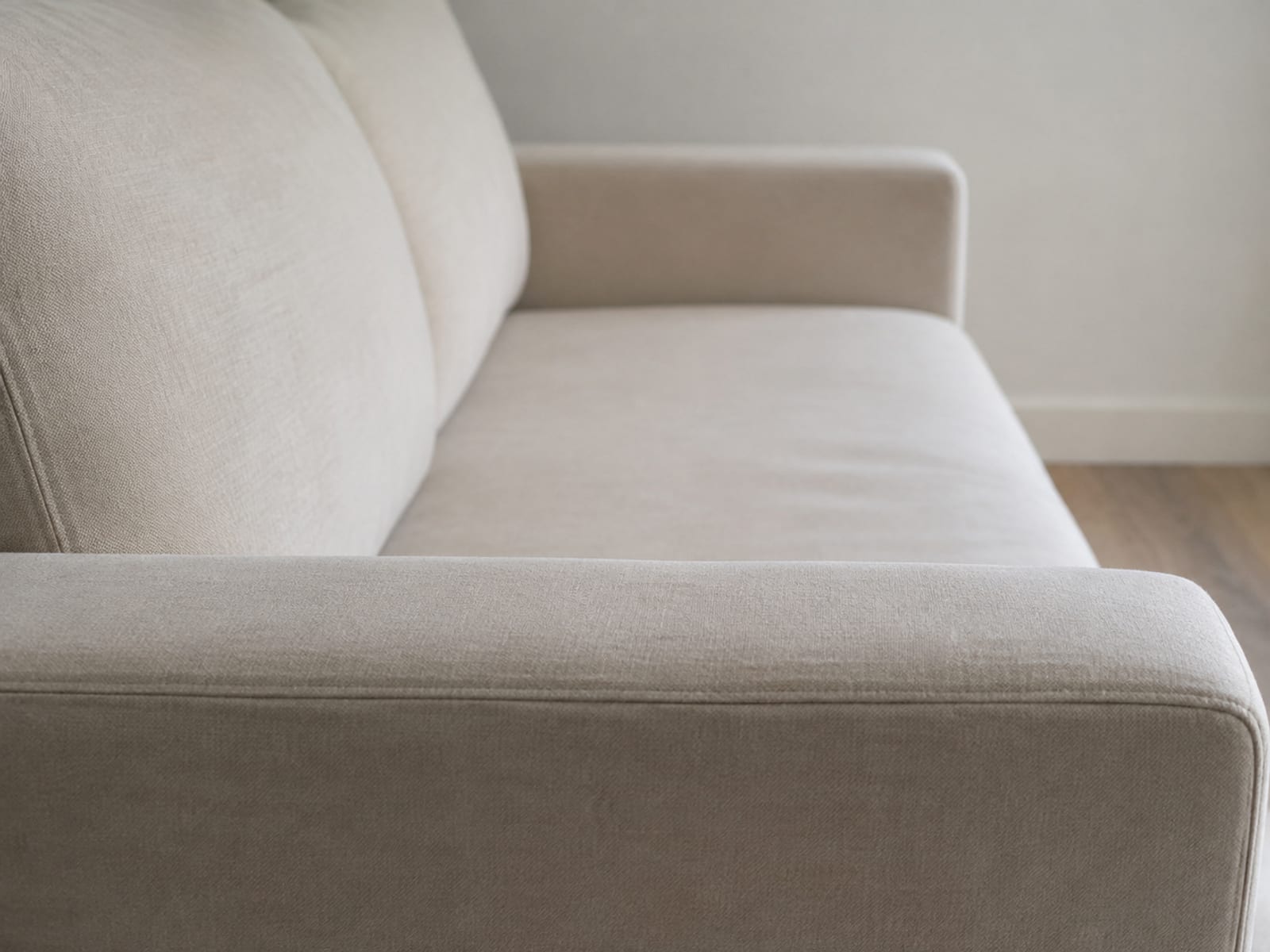
The sofa is usually the largest upholstered thing you will own, so it either agrees with the room or it argues with it, and the room was there first. Castlery's guidance in how to pick a sofa color is the clearest published version of the rule: a room with a neutral base can carry a bold focal sofa, while a room already holding strong colors in the walls, rug or art needs a sofa that complements rather than competes. That is editorial design advice rather than a measured law, and it is worth taking on those terms.
It names white, gray and beige as the flexible choices, and charcoal, navy, deeper tones and patterns as the more forgiving ones in a household that uses its furniture hard. The reason a neutral gets called flexible is narrow and practical: it lets you change cushions, throws and art without replacing the sofa underneath them.
You can see the real version of this problem in what people actually ask. One poster on r/DesignMyRoom had already bought flooring and bottle-green dining chairs and was choosing between cream, navy and green, with the live question being whether a green sofa had to match the chairs. Another was renting with white walls and light oak floors they were not allowed to paint, which makes the sofa and the textiles the only color they control. Neither of those is answered by a list of nice colors. Both are answered by looking at what is already fixed.
Why the swatch has to come home
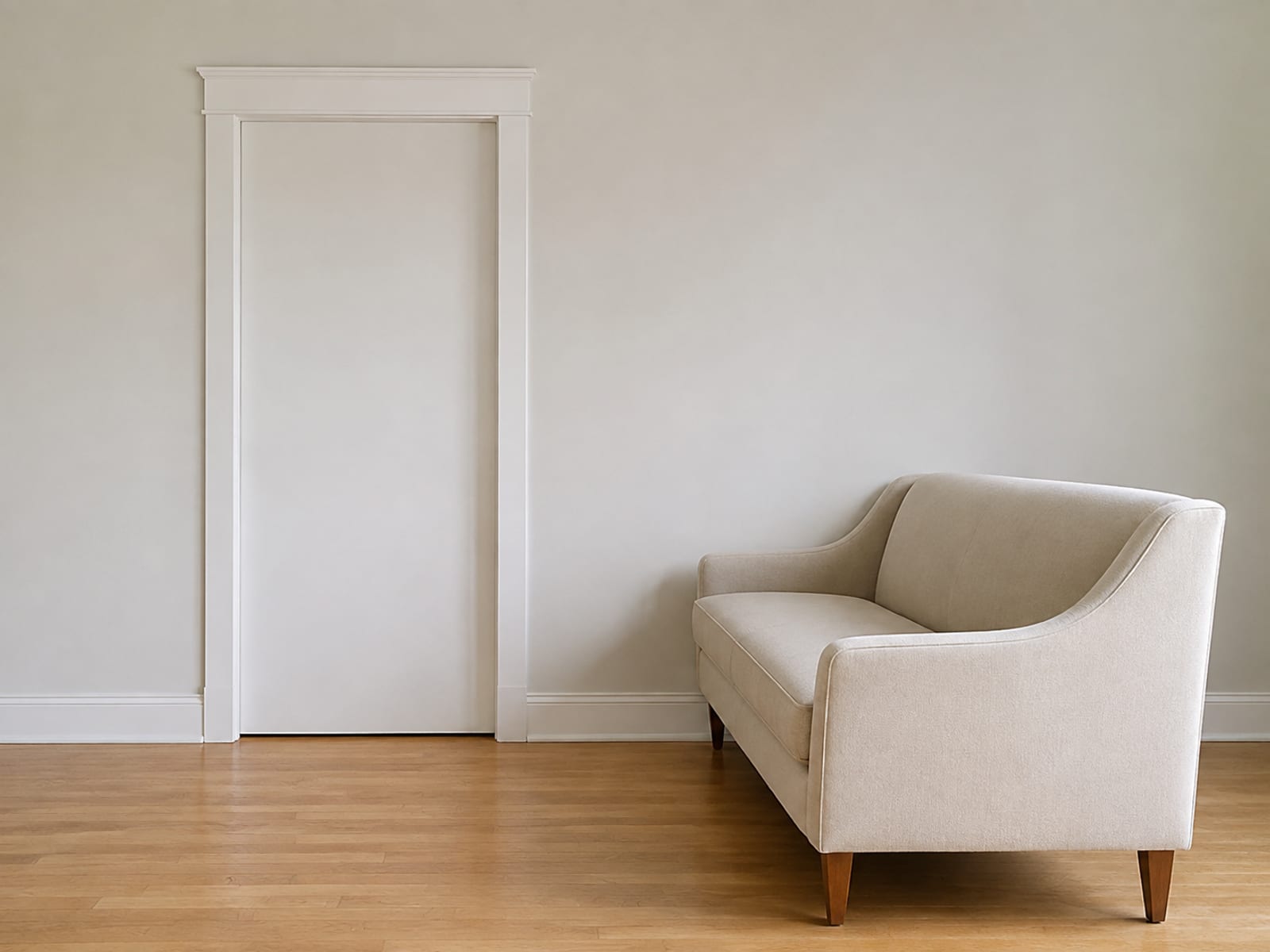
Order the swatch, and look at it in the room it is going to live in, twice: once in daylight and once under the lamps you actually use at night. A cover that reads warm cream at two in the afternoon can read yellow under a warm bulb at nine, and a phone screen will not tell you that.
The useful trick is to record how bright the wall is rather than guess. Benjamin Moore defines light reflectance value as the percentage of light a color reflects on a 0 to 100 scale, where 100 is pure white, and publishes Alabaster OC-129 at 85.08. A wall in that range is throwing a great deal of light back at whatever stands in front of it, and a pale sofa against it will read differently than the same sofa against a mid-tone wall. If your walls are painted, the LRV is on the paint maker's own color page. Write it down beside the swatch you are holding.
Hold the swatch against three things while you are there: the wall, the floor, and whatever is most likely to touch the sofa, whether that is a throw, jeans, a dog, or a child with a cup.
Will it still be that color in three years?
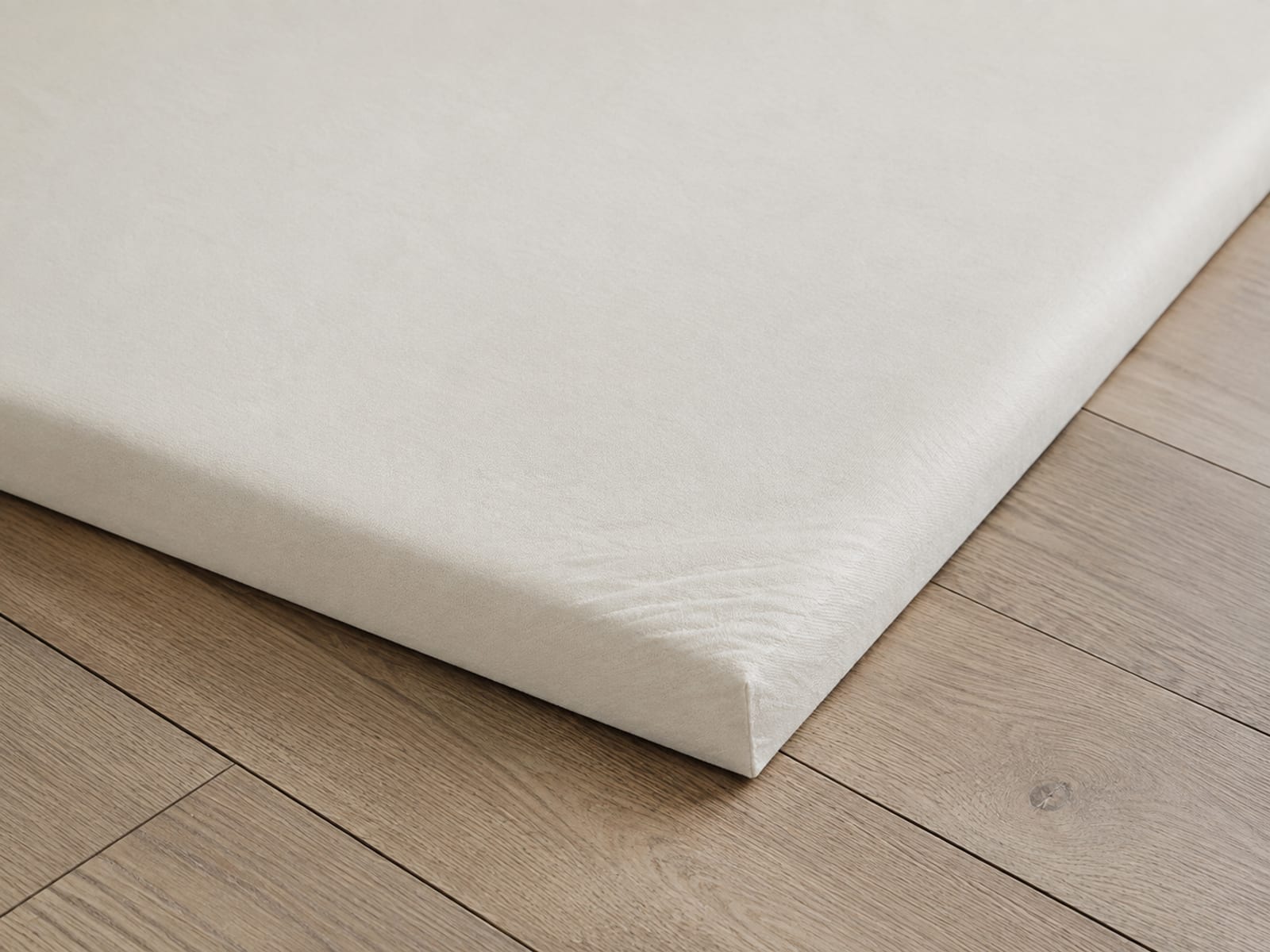
This is the part that has an actual number attached to it, and almost nobody looks for it. Lightfastness measures how well a fabric resists fading from light, which is a separate property from stain resistance and separate again from how tough the weave is. IKEA reports the KIVIK Tallmyra cover at level 5 on a 1 to 8 scale, and states that 4 or higher is suitable for home use. That is a maker publishing where its own cover sits on a scale, and it is the single most useful thing on the page for anyone choosing a color.
It matters most exactly where people worry most, which is a pale sofa in a bright room. A high-LRV wall and a big window mean more light hitting the cover for more hours of the day, and light is what the rating is about. If a listing publishes a lightfastness figure, read it before you fall for the shade. If it publishes nothing, that is worth knowing too, and it is a fair thing to ask a seller directly.
What nobody can honestly tell you is that a color will not fade at all. Fade-proof is not a claim any of this supports. A published level on a stated scale is, and it is the difference between a decision and a hope.
Hover or tap a row to highlight it.
| What it measures | Scale | A published example | What it does not tell you |
|---|---|---|---|
| Lightfastness | 1 to 8, higher is better | IKEA KIVIK Tallmyra at 5, with 4+ called suitable for home use | Anything about stains or wear |
| LRV, light reflectance value | 0 to 100, 100 is pure white | Benjamin Moore Alabaster OC-129 at 85.08 | How the sofa itself will behave |
| Abrasion | Cycles, method varies | IKEA KIVIK Tallmyra at 30,000 cycles, 15,000+ called suitable for daily home use | Whether the color holds |
| Care path | Words, not numbers | KIVIK Tallmyra machine washable; FRIHETEN Faringe not removable | How the color reads in your light |
What actually decides how a spill turns out?
A dark sofa does not clean itself and a light one is not doomed. What decides how a spill goes is whether the cover comes off and what the maker permits you to do with it, and two products from the same retailer show how far apart that can be.
The KIVIK in Tallmyra white/black has a removable cover IKEA says can be machine washed warm on a normal cycle, washed separately and not tumble dried. It was $949.00 on ikea.com as of September 2026, and the same listing publishes 89 3/4 inches of width by 37 3/8 deep by 32 5/8 high, a 23 5/8-inch seat depth, a 17 3/4-inch seat height, 30,000 abrasion cycles, foam at 2.2 and 2.0 pounds per cubic foot, and a 10-year limited warranty. One page, every number, including the lightfastness rating above.
The FRIHETEN sleeper sectional in Faringe light gray is the other answer. Its cover is not removable, and its care instructions permit vacuuming and wiping with a damp cloth and expressly rule out washing, bleaching, tumble drying, ironing and dry cleaning. Same retailer, opposite arrangement, and the color you choose changes nothing about either one.
So, if you are weighing a pale sofa in a household that spills, settle the cover question first: whether it comes off, and what each cleaning letter actually permits once it does.
What it costs to change your mind
A color you can replace is a different kind of decision from a color you cannot. Where a cover is removable, a spare is often available separately, which does two things at once: it means the sofa is still usable on the day the first one is in the wash, and it means a color you have grown tired of in four years is a purchase rather than a replacement. For the three-seat KIVIK specifically, aftermarket replacement covers are sold on Amazon, machine washable and cut for that frame.
That is the honest answer to the fear underneath this whole question. Nobody can promise you a color will still please you later. What can be arranged in advance is that being wrong costs a cover instead of a sofa. Sofas built around covers that come all the way off are the ones where that is designed in rather than lucky.
The measurement that comes before the color
None of this matters if the piece does not fit or cannot get in. Crate & Barrel's measuring guide asks for width, height and diagonal depth, and says the diagonal depth is what has to clear the doorway width. It also publishes 18 to 24 inches of walking room around the placed sofa.
Tape the rectangle on the floor before you order, leave that clearance on the traffic side, and check the route. The full version of that job is in how to measure a sofa and its delivery route, and it is worth doing first, because a color decision on a sofa that will not fit through the door is a decision about nothing.
Would you get this one right?
1. A listing publishes lightfastness 5 on a 1 to 8 scale. What does that tell you?
2. Your wall paint publishes an LRV of 85. What does that change?
3. A cover is described as removable. Can it go in the machine?
4. Which decides more about how a spill turns out, the color or the cover?
Pick an answer to begin.
Frequently asked questions
What is the best color to choose for a sofa?
There is no universal best, and the useful order is to let the room answer first. Where the walls, rug and art already carry strong color, a shade that complements them gives you a room rather than a competition; where the base is neutral, the sofa can be the color in the room. After that it is a question of light and care, which both have published figures behind them.
What color sofa never goes out of style?
No color can be verified to never date, and any page that promises one is guessing. The narrow, supportable version is that gray, beige and white are chosen for flexibility, because they let you change cushions, throws and art without replacing the sofa underneath. That is a practical reason rather than a forecast.
Will a light sofa fade faster than a dark one?
Fading is what the lightfastness rating measures, and it is published per cover rather than per shade, so the rating is the thing to compare rather than the lightness. A cover rated 5 on the 1 to 8 scale in a bright room is a more informed choice than a dark cover with no rating published at all. Where a sofa sits relative to a window does more than the color does.
What is the best color of sofa for a small living room?
A shade that harmonizes with the walls tends to read as less visual weight, though that is design opinion rather than a measured effect. The number that is not opinion is clearance: leave 18 to 24 inches of walking room around the piece, and check the diagonal depth against the doorway before the color enters the conversation at all.
The words behind a color decision
Tap a term to see what it means.
Lightfastness. Resistance to fading from light, on a 1 to 8 scale. IKEA publishes 5 for the KIVIK Tallmyra cover and calls 4 and higher suitable for home use.
Once the swatch has been home for an evening and the lightfastness rating is written down beside it, the shortlist usually settles itself. PlushPick keeps the published figures for these covers together, so the next time it comes down to two shades you have somewhere to check rather than another opinion to weigh.
Cal Hewitt
Writer at PlushPick. I compare sofa specs, comfort, durability, and value so you can buy with clearer expectations.
About Cal and how the guides are researchedThe latest
 "Best-of"Best Furniture Protectors for Pets, by What They Actually Cover
 "Best-of"Best Pet-Friendly Sofa Fabrics: Claws, Hair and Spills
 "Best-of"Best Sofas for Small Spaces: Narrow Doesn't Mean Shallow
 "Best-of"Best Recliner Covers for Dogs: What Actually Stays On
 AnswerSofa vs Sectional: Which One Fits Your Room and Life
 AnswerHow to Measure a Sofa So It Fits Through the Door