

Affiliate disclosure. If you buy through a link on this page, PlushPick may earn a commission at no extra cost to you. That never changes which products are named or what is said about them. As an Amazon Associate I earn from qualifying purchases. How this works
On a futon you sit on your mattress. On a sofa bed you sit on cushions and sleep on something else. That one structural difference explains almost everything else people compare between them: the price, the wear, the way it opens and what it does to the room when it is open.
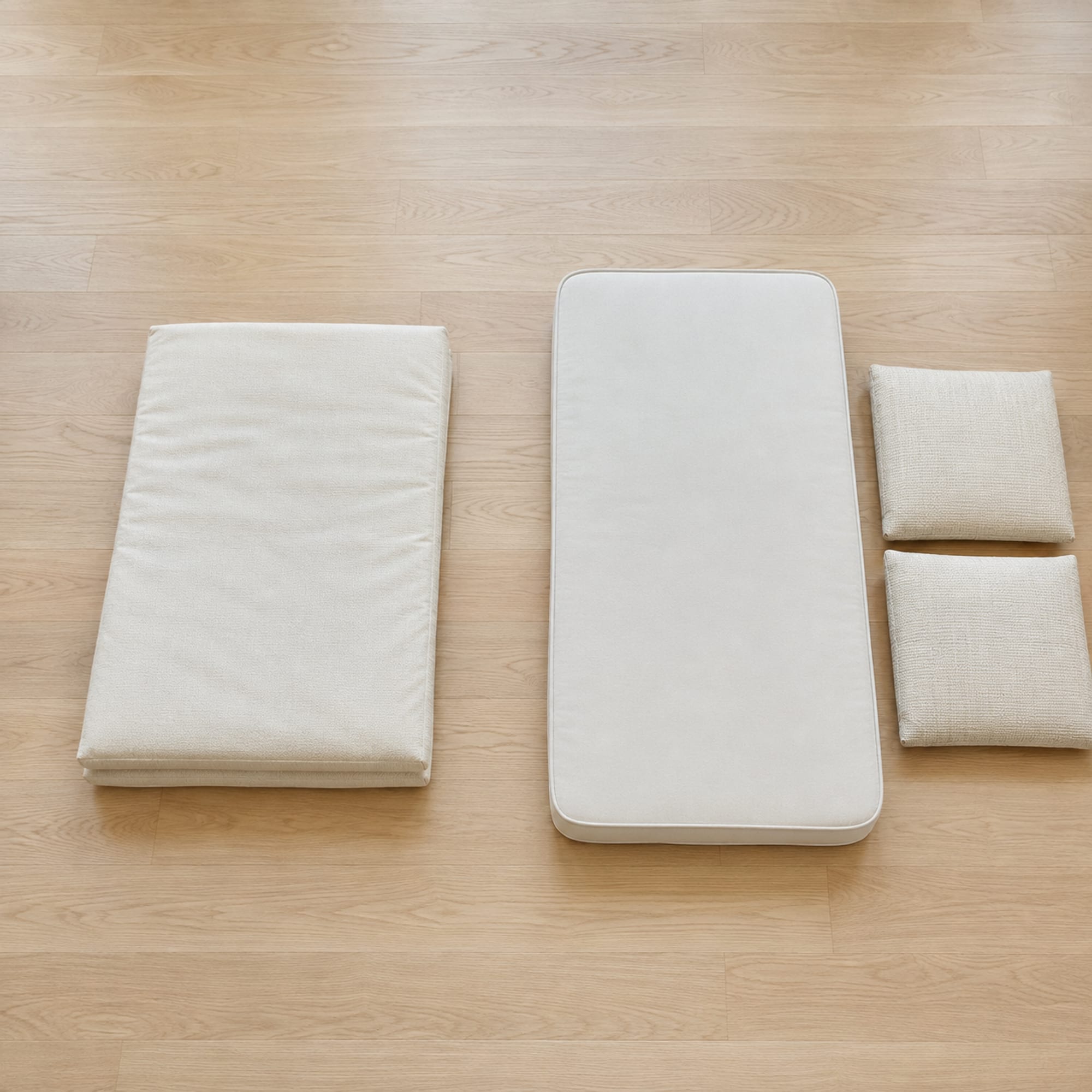
A futon is a frame plus one bendable mattress that is both the seat and the sleeping surface. A sofa bed is a broader category: some hide a separate mattress inside the frame, and some fold flat like a futon does. So, the comparison that matters is not which word is on the listing. It is whether the thing you sit on is also the thing you sleep on.
Key Takeaways
One surface or two
A futon's mattress is the seat and the bed. A sofa bed keeps them separate.
The prices are not comparing the same contents
A futon frame is sold without its mattress; a sleeper is sold with one.
$299.99 against $549
A frame at Futonland against a finished sleeper at IKEA, both read September 2026.
One surface takes double the wear
The futon mattress is sat on all day and slept on at night.
Opening it costs floor
One frame goes from 41.25 inches deep to 54 when it converts.
The load figures are not comparable
A frame limit, a test basis and a capacity are three different claims.
The price is not comparing the same contents
This is the trap, and it is worth knowing before anything else.
Strata's Reverso full wall-hugger futon frame was $299.99 at Futonland as of September 2026. That is a frame. Its mattress is a separate purchase, and the frame page says so.
IKEA's NYHAMN was $549 as of September 2026, and that figure includes the mattress, the cover and the frame.
Put those two numbers side by side and the futon looks like it costs half as much. It does not. It costs whatever the frame costs plus whatever you choose to put on it, and the mattress is the part that decides both how it sits and how it sleeps. Price the pair, or you are comparing a chassis with a car.
One surface does two jobs, and it wears like it
The futon's mattress takes the daily use and the nightly use. Somebody sits on it every evening, and then somebody sleeps on the same foam or cotton a few nights a month. A sofa bed splits that: the cushions take the sitting, and the sleeping surface spends most of its life folded away in the dark.
That is why futon mattresses get replaced more often than sofa cushions do, and it is also why the mattress choice on a frame purchase matters more than the frame choice. It is the part doing both jobs.
It cuts the other way too. Because a futon's sleeping surface is out in the room all the time, it airs, and it is the surface you already know the feel of. A pull-out mattress is a surprise you meet at eleven o'clock at night with a guest standing next to you.
How each one opens, and what it costs the room
The mechanisms are different work, and in a small room one of them opens where the other cannot.
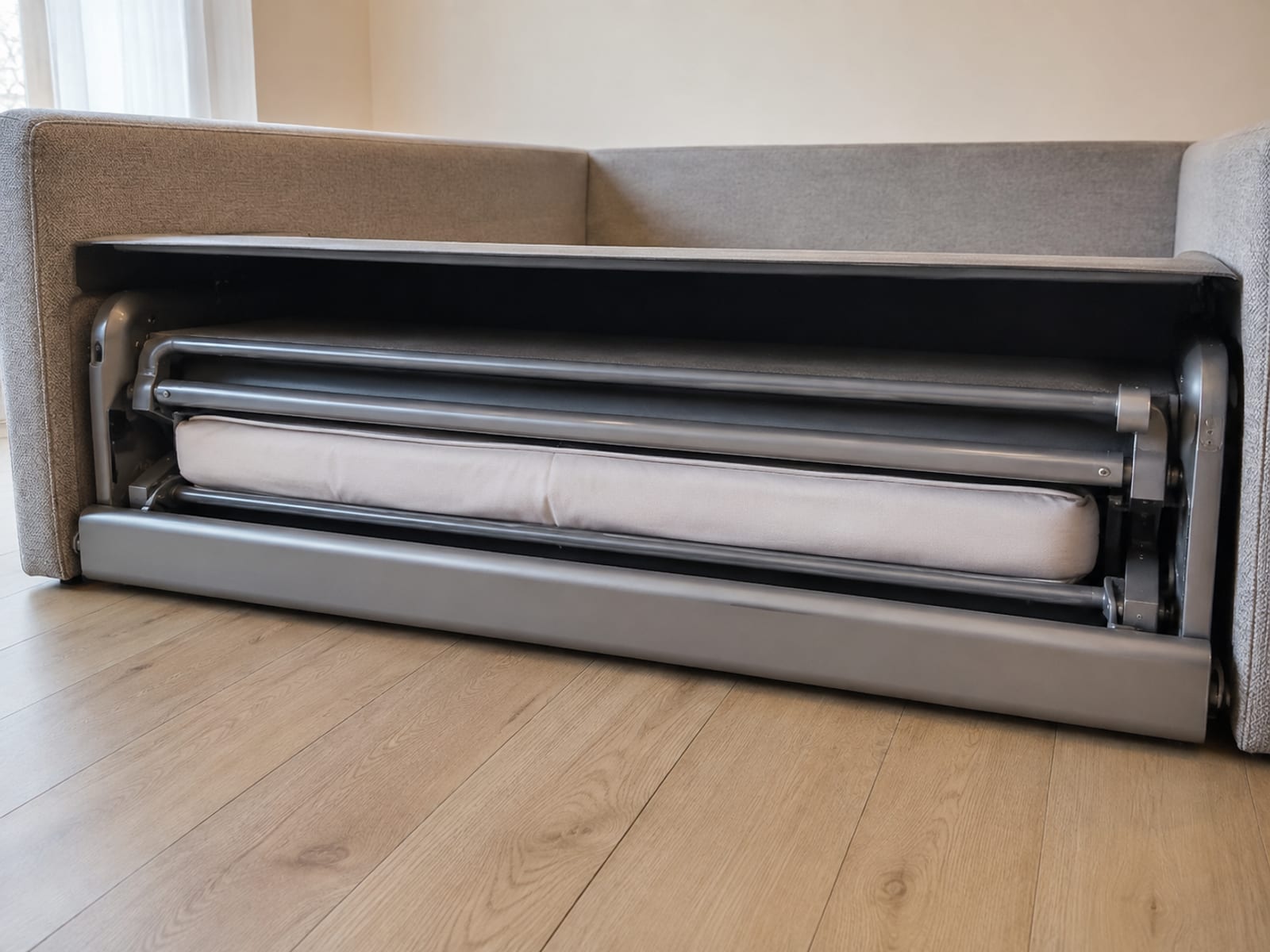
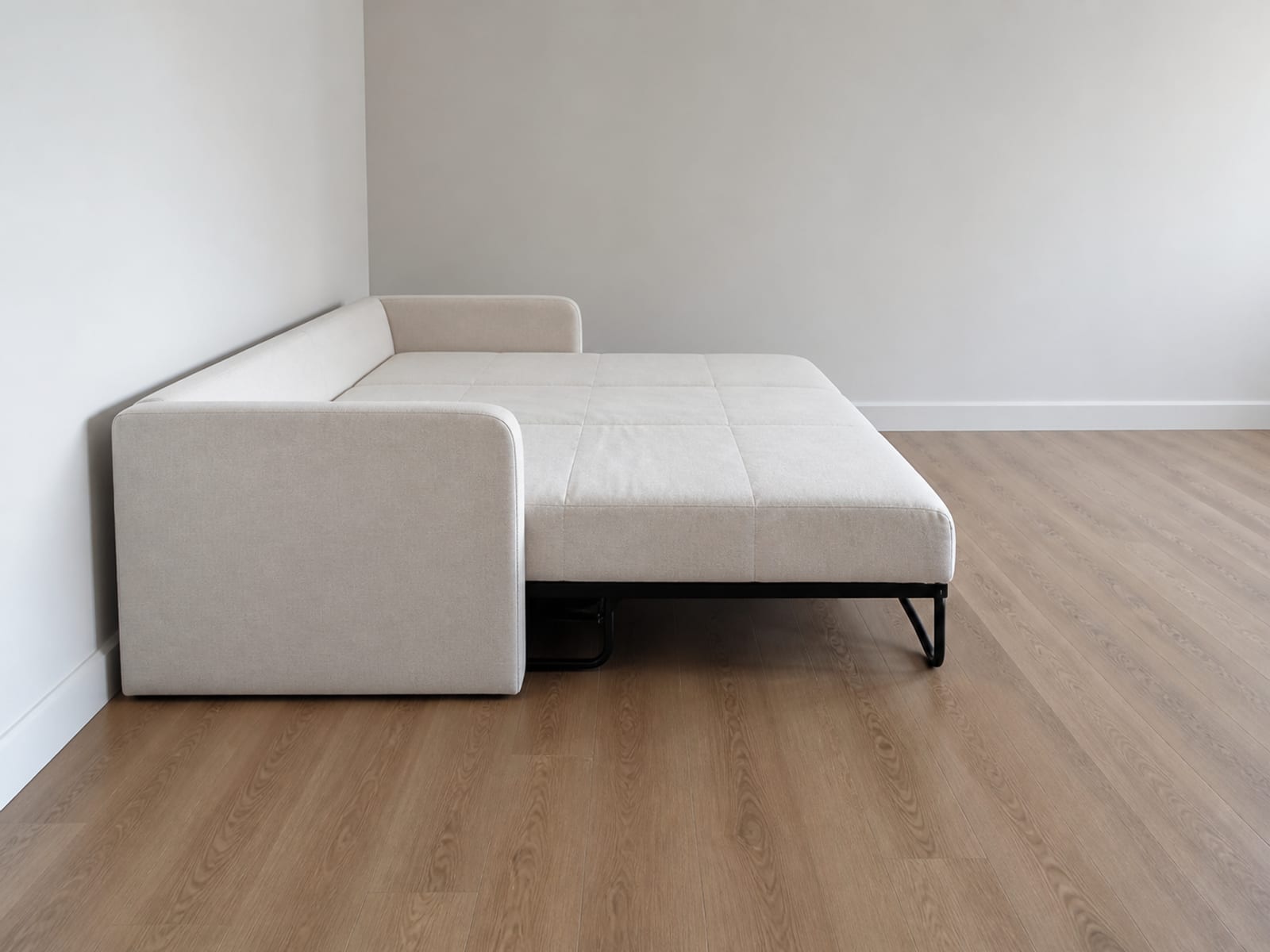
NYHAMN's is a click-clack: lift the underframe until it clicks, then fold the backrest down flat. There is no mattress to pull out from inside, because the seat is the bed. IKEA calls it a sleeper sofa, and the mechanism is the futon one.
Strata's wall-hugger frames convert without being pulled away from the wall, because the seat travels forward instead of the back travelling backward. In a room where the sofa lives against the only free wall, that is the difference between a bed you can open and one you cannot.
Then the floor. The Reverso is 41.25 inches deep sitting and 54 inches deep open, a change of 12.75 inches, and its open surface is 76.5 by 54 inches at 12 inches high. NYHAMN's bed is 55.125 by 78.75 inches. Monvane's one-seat 3-in-1 is 33.86 wide by 38 deep by 16.54 high and opens to roughly 75 by 38 inches, which Monvane states as a one-adult surface; it was $119.99 as of September 2026. Monvane is an affiliate partner here, which is worth holding against those figures.
The number to plan around is the open one. A piece that fits the room closed and blocks the only walking route open is a piece you will stop opening.
The load figures are three different kinds of claim
All three of these publish a number, and none of the three means the same thing.
Strata publishes a frame limit of 500 pounds for two people, 250 pounds each, which is a limit on the frame. IKEA says NYHAMN's strength and durability testing simulates use by people up to 242 pounds, which describes how it was tested rather than capping who may sit on it. Monvane publishes 300 pounds for its one-seat model, alongside describing the open surface as a one-adult one.
Lined up in a table those look like 500, 242 and 300, and a shopper would read them as a ranking. They are three different statements about three different products, and the only safe use of any of them is against the product it belongs to.
Which one is your room actually asking for
Three situations from real rooms, and they land differently.
A spare room that is mostly a spare room, with guests a few times a year, is the easiest case: the sleeping surface matters more than the seat, and the seat only has to be tolerable. A pull-out with a proper mattress or a slatted base earns its money here.
A one-room apartment where a bed means no couch is the hardest. One person in that position said plainly that they did not want to make and unmake a bed morning and night, which is the real cost of a convertible and the thing nobody puts on a spec sheet. If the answer is that it will stay open most of the time, you are buying a daybed, and that is worth admitting before you choose.
And a stair or a doorway can settle it on its own. One contributor using a sofa bed as a primary bed said a regular sofa and a queen mattress would not have fitted up the apartment stairs, which is why frames that ship in pieces exist at all. Strata's Denali ships in three boxes with a longest carton of 77 by 14 by 6 inches. Measuring the route rather than the room is the half hour that settles it either way.
Would you get this one right?
1. A futon frame is $299.99 and a sleeper sofa is $549. Which is cheaper?
2. On a futon, which surface takes the most wear?
3. A frame publishes 500 pounds for two people and a sleeper publishes testing up to 242 pounds. What can you conclude?
4. Why does a wall-hugger frame suit a small room?
Pick an answer to begin.
Frequently asked questions
Can you use a futon as a couch?
Yes, where the frame publishes a seating position, which most do. Strata's Reverso is listed as both a platform bed and a lounger and measures 76.5 by 41.25 by 25.75 inches sitting. What that does not tell you is whether the seat height suits you, so check that figure separately rather than assuming a seating position means a comfortable one.
Is a futon the same thing as a sofa bed?
In shop language they overlap, and in mechanism they sometimes are the same thing. IKEA calls NYHAMN a sleeper sofa and it folds flat like a futon rather than hiding a pull-out mattress. Read the conversion method and the open dimensions on the specific model instead of trusting either word.
Which one is more comfortable to sleep on?
It depends on the mattress rather than the category, which is the honest answer and also the useful one. On a futon you are choosing that mattress yourself, so the comfort is in your hands and in your budget; on a sleeper it arrives with the sofa, and the published construction is what you have to go on.
Is a futon better for a small room?
Often, for two reasons that have nothing to do with the mattress. A wall-hugger frame opens without moving away from the wall, and a frame that ships in boxes gets up a stairwell that an assembled sofa will not. Weigh those against the fact that the open depth still has to leave you a way past it.
The words that separate the two
Tap a term to see what it means.
Bendable mattress. The single pad on a futon that folds at the frame's hinge, serving as both the seat cushion and the sleeping surface. It is the reason a futon has one surface where a sofa bed has two.
Work out whether this piece is a sofa that occasionally sleeps or a bed that occasionally seats, then price the mattress and the frame together. PlushPick has the futons ranked on what the seat costs you and the sleeper sofas judged on the bed first, which are the two halves of that question.
Cal Hewitt
Writer at PlushPick. I compare sofa specs, comfort, durability, and value so you can buy with clearer expectations.
About Cal and how the guides are researchedThe latest
 "Best-of"Best Furniture Protectors for Pets, by What They Actually Cover
 "Best-of"Best Pet-Friendly Sofa Fabrics: Claws, Hair and Spills
 "Best-of"Best Sofas for Small Spaces: Narrow Doesn't Mean Shallow
 "Best-of"Best Recliner Covers for Dogs: What Actually Stays On
 AnswerSofa vs Sectional: Which One Fits Your Room and Life
 AnswerHow to Measure a Sofa So It Fits Through the Door