


Affiliate disclosure. If you buy through a link on this page, PlushPick may earn a commission at no extra cost to you. That never changes which products are named or what is said about them. As an Amazon Associate I earn from qualifying purchases. How this works
A two-seat sofa runs around 74 to 75 inches wide, or about 188 to 190 cm; a three-seat sofa runs around 81 to 91 inches, roughly 206 to 231 cm; and a sectional with a chaise reaches 110 inches or more, from about 280 cm up. Those are the published figures for real products rather than an industry average, because no United States body sets a required sofa size. Depth is the number people forget: most straight sofas sit between 33 and 40 inches deep, and a chaise can push that past 64 inches.
Key Takeaways
Width tells you the wall, depth tells you the room
A 91 inch sofa 40 inches deep takes more floor than a 110 inch one at 37 inches, until the chaise is counted.
The seat is much smaller than the sofa
IKEA's KIVIK three-seat is 89 3/4 inches wide outside and 70 7/8 inches across the seat. Almost nineteen inches of that width is arm.
Two depths means a chaise
A listing reading 37 3/8 / 64 1/8 inches is telling you the sofa depth and the chaise depth in one line.
Seat depth is the comfort number
Published examples run from 20 inches on Room & Board's Ericson to 25 inches on its Cade, and that five inch spread is the difference between sitting up and lying back.
One inch is 2.54 cm, one foot is 12 inches
A 89 3/4 inch sofa is 228.0 cm, or 7 feet 5 3/4 inches, and all three numbers get searched.
Nothing here is a standard
Google's own answer for this search says a standard three-seater is about 84 inches. IKEA's actual three-seat KIVIK is 89 3/4.
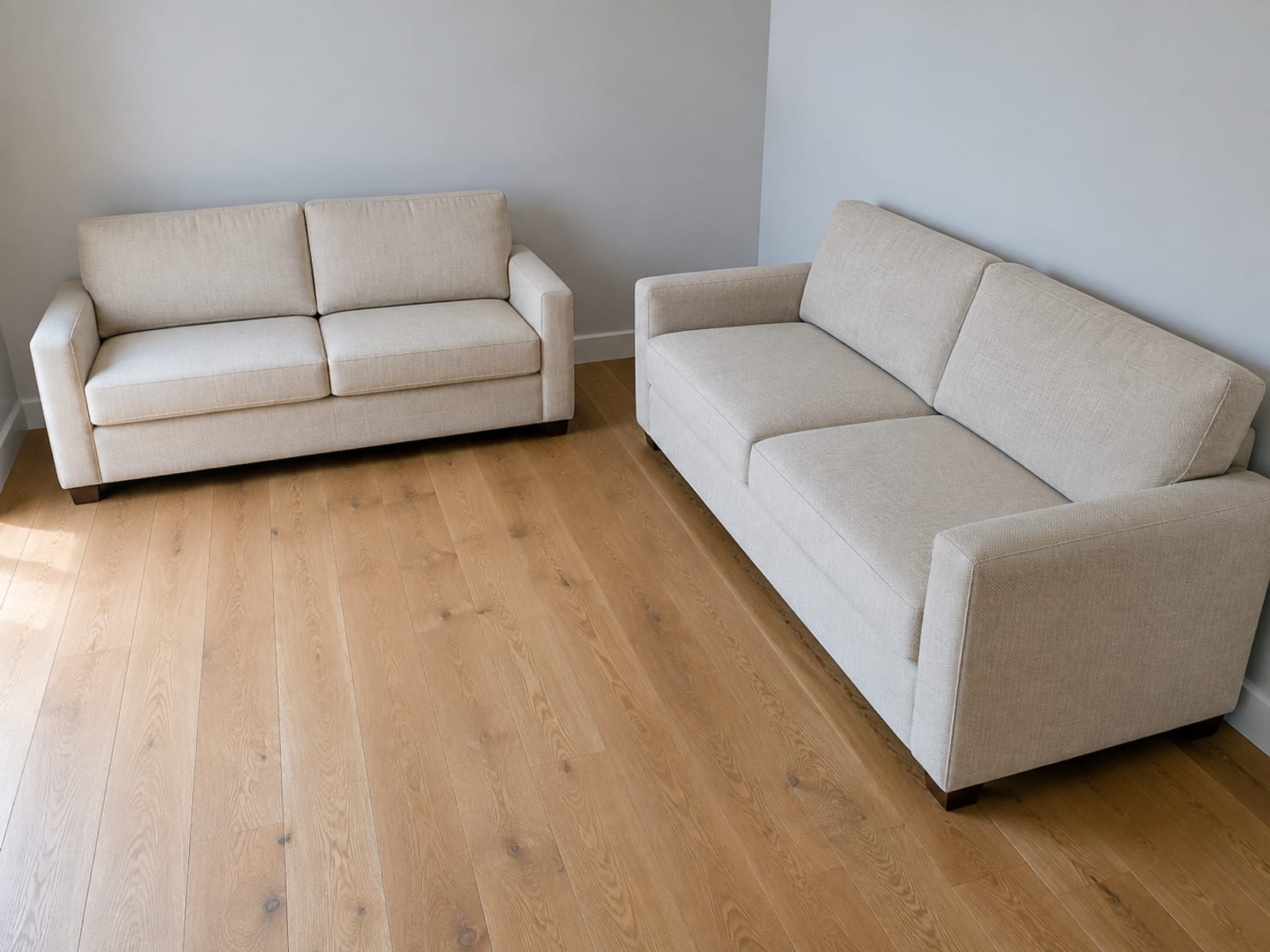
What does a two-seat sofa measure?
A loveseat is a size, not a style: two seats, one frame, and a width that usually lands in the mid seventies of inches. Which of them is worth the wall is compared in the guide to sofas for small spaces.
IKEA publishes its KIVIK loveseat at 74 3/4 inches wide, 37 3/8 deep and 32 5/8 high, which is 189.9 by 94.9 by 82.9 cm, or 6 feet 2 3/4 inches across. Room & Board's Ericson 74-inch sofa is almost exactly as wide at 74 inches, 188.0 cm, but noticeably shallower at 33 inches deep and 31 high, 83.8 by 78.7 cm. Same wall, eight fewer inches into the room.
That pair is worth holding on to, because it shows how much two sofas of the same advertised width can differ once depth is counted. The Ericson gives back about half a foot of floor in front of it, and in a room where the coffee table and the walkway have to share what is left, half a foot is a lot.
What does a three-seat sofa measure?
This is where most shopping happens, and where the published figures spread out enough that a single number cannot describe them.
IKEA's KIVIK three-seat sofa is 89 3/4 inches wide, 37 3/8 deep and 32 5/8 high, which is 228.0 by 94.9 by 82.9 cm, or 7 feet 5 3/4 inches wide. Room & Board's Stevens 81-inch sofa is 81 wide, 37 deep and 34 high with the cushion, so 205.7 by 94.0 by 86.4 cm. Its Cade 91-inch sofa is 91 by 40 by 32 with the cushion, 231.1 by 101.6 by 81.3 cm. IKEA's FRIHETEN sleeper sectional in its three-seat form is 90 1/2 by 59 1/2 by 33 7/8 inches, 229.9 by 151.1 by 86.0 cm.
So, a three-seat sofa in these listings runs from 81 to 91 inches wide, 206 to 231 cm, and from 33 7/8 to 40 inches deep before any chaise is involved. When a page says a sofa is a three-seater and gives you nothing else, that range is what it could mean.
The number in a product's own name is almost always its overall width and nothing more. Room & Board's Ericson 74-inch Sofa is 74 inches wide; it says nothing about the 33 inch depth that decides whether the room still works.
Hover or tap a row to highlight it.
| Configuration | Width | Depth | Height |
|---|---|---|---|
| IKEA KIVIK loveseat, 2-seat | 74 3/4 in / 189.9 cm | 37 3/8 in / 94.9 cm | 32 5/8 in / 82.9 cm |
| Room & Board Ericson, 74 in | 74 in / 188.0 cm | 33 in / 83.8 cm | 31 in / 78.7 cm |
| Room & Board Stevens, 81 in | 81 in / 205.7 cm | 37 in / 94.0 cm | 34 in / 86.4 cm |
| IKEA KIVIK sofa, 3-seat | 89 3/4 in / 228.0 cm | 37 3/8 in / 94.9 cm | 32 5/8 in / 82.9 cm |
| IKEA FRIHETEN sleeper sectional, 3-seat | 90 1/2 in / 229.9 cm | 59 1/2 in / 151.1 cm | 33 7/8 in / 86.0 cm |
| Room & Board Cade, 91 in | 91 in / 231.1 cm | 40 in / 101.6 cm | 32 in / 81.3 cm |
| Monvane L-shaped modular, 4-seat | 103 in / 261.6 cm | 65 in / 165.1 cm | 30 in / 76.2 cm |
| IKEA KIVIK sofa with chaise, 3-seat | 110 1/4 in / 280.0 cm | 37 3/8 in / 94.9 cm, chaise 64 1/8 in / 162.9 cm | 32 5/8 in / 82.9 cm |
| Monvane U-shaped modular, 6-seat | 130 in / 330.2 cm | 65 in / 165.1 cm | 30 in / 76.2 cm |
| IKEA KIVIK sectional, 6-seat | 129 1/8 in / 328.0 cm | 101 1/8 in / 256.9 cm | 32 5/8 in / 82.9 cm |
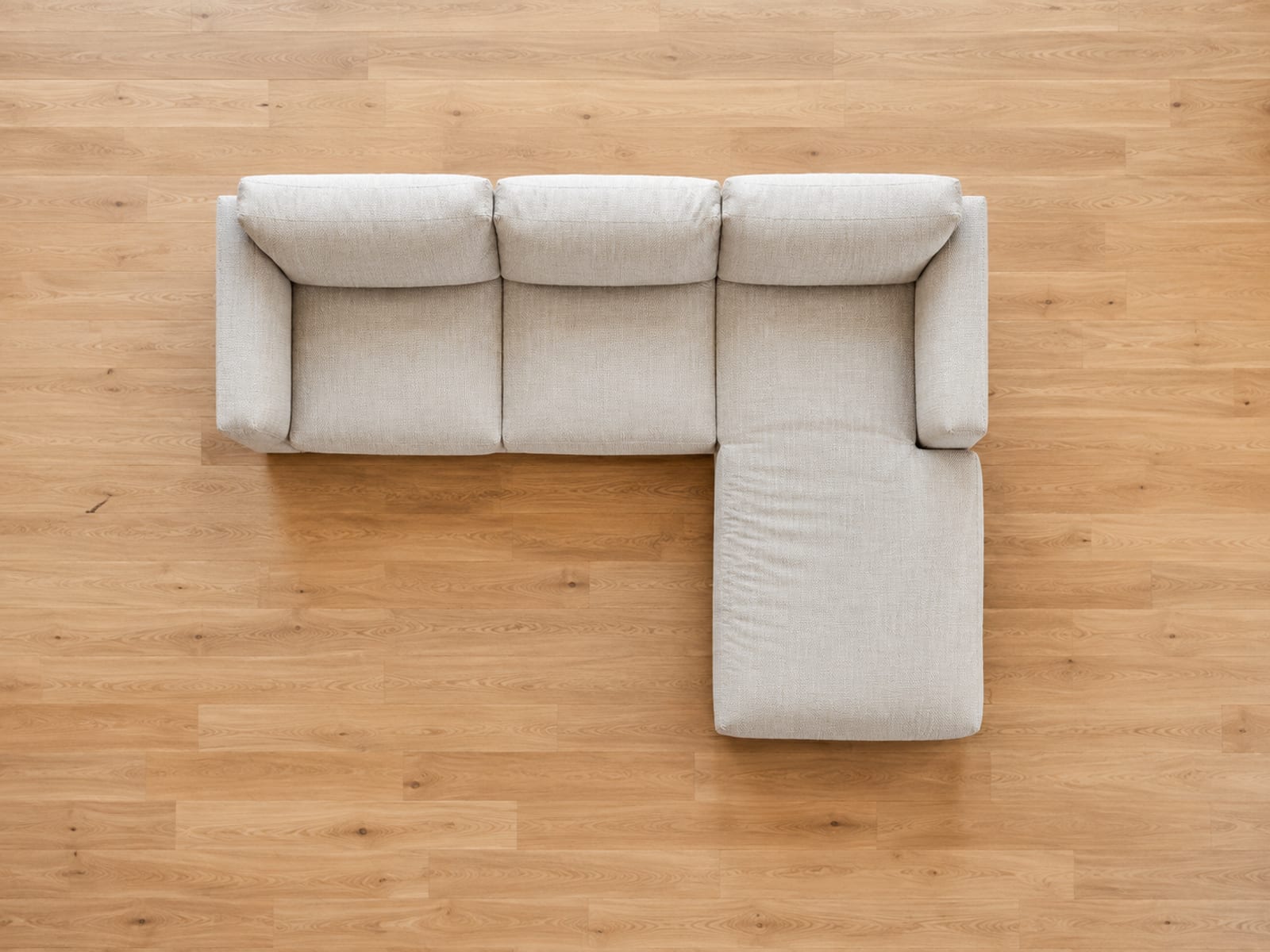
What does a sofa with a chaise or a sectional measure?
Once a chaise appears, one depth stops being enough, and the listings start printing two. Whether that second depth is worth its floor is the question in sofa versus sectional.
KIVIK's three-seat with chaise is 110 1/4 inches wide, 280.0 cm, and its depth is published as 37 3/8 / 64 1/8 inches, 94.9 / 162.9 cm. The first figure is the sofa run and the second is where the chaise reaches. Draw the second one on the floor, because that is the shape the room has to hold.
Full sectionals go further again. KIVIK's six-seat configuration is 129 1/8 by 101 1/8 by 32 5/8 inches, which is 328.0 by 256.9 by 82.9 cm, and at that size both numbers are room-defining rather than wall-defining. Monvane publishes an L-shaped four-seat modular at 103 by 65 by 30 inches, 261.6 by 165.1 by 76.2 cm, and a U-shaped six-seat at 130 by 65 by 30 inches, 330.2 by 165.1 by 76.2 cm, both with a 27.5 inch seat depth. The L is not a smaller U; it is the same depth in a different letter. What separates a modular sectional from a fixed one is how the sections are sold and joined rather than the footprint.
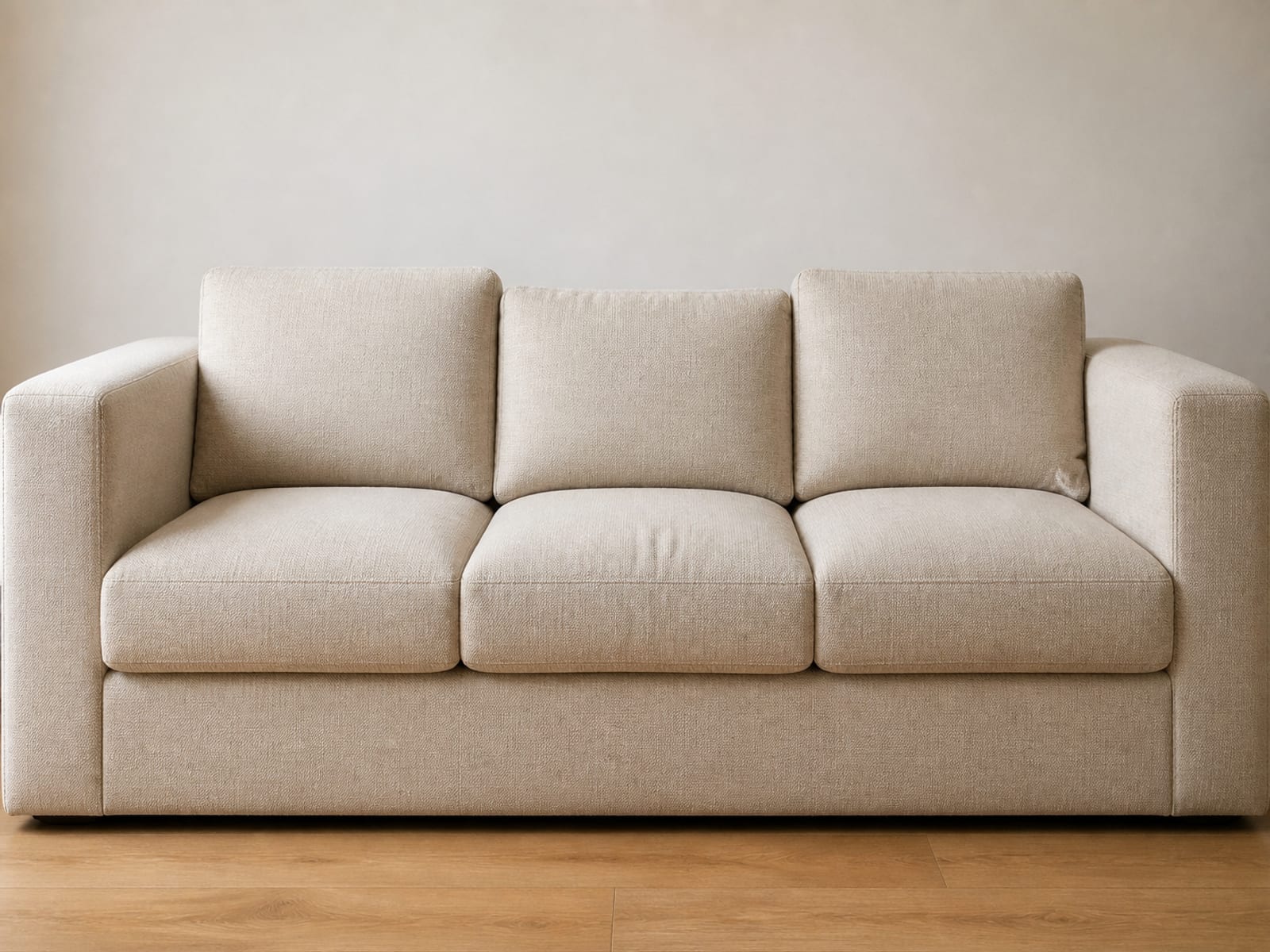
Why is the sofa so much wider than the part you sit on?
Because arms are furniture too, and nobody prints that on the front of a listing.
KIVIK's three-seat sofa is 89 3/4 inches wide overall and 70 7/8 inches across its seat, which is 228.0 cm against 180.0 cm. Just under nineteen inches of the advertised width, more than a foot and a half, is arm. That is not a complaint about IKEA, it is how sofas are built, and it is why two 89 inch sofas can seat differently depending on how much of that width the arms take.
The practical version: if the question is whether three adults fit, the seat width is the number that answers it, and the overall width is the number that decides whether the sofa fits the wall. Both are usually published, and only one of them is in the product name. Across a loveseat and a sofa in the same series, the seat width is the only thing that changes.
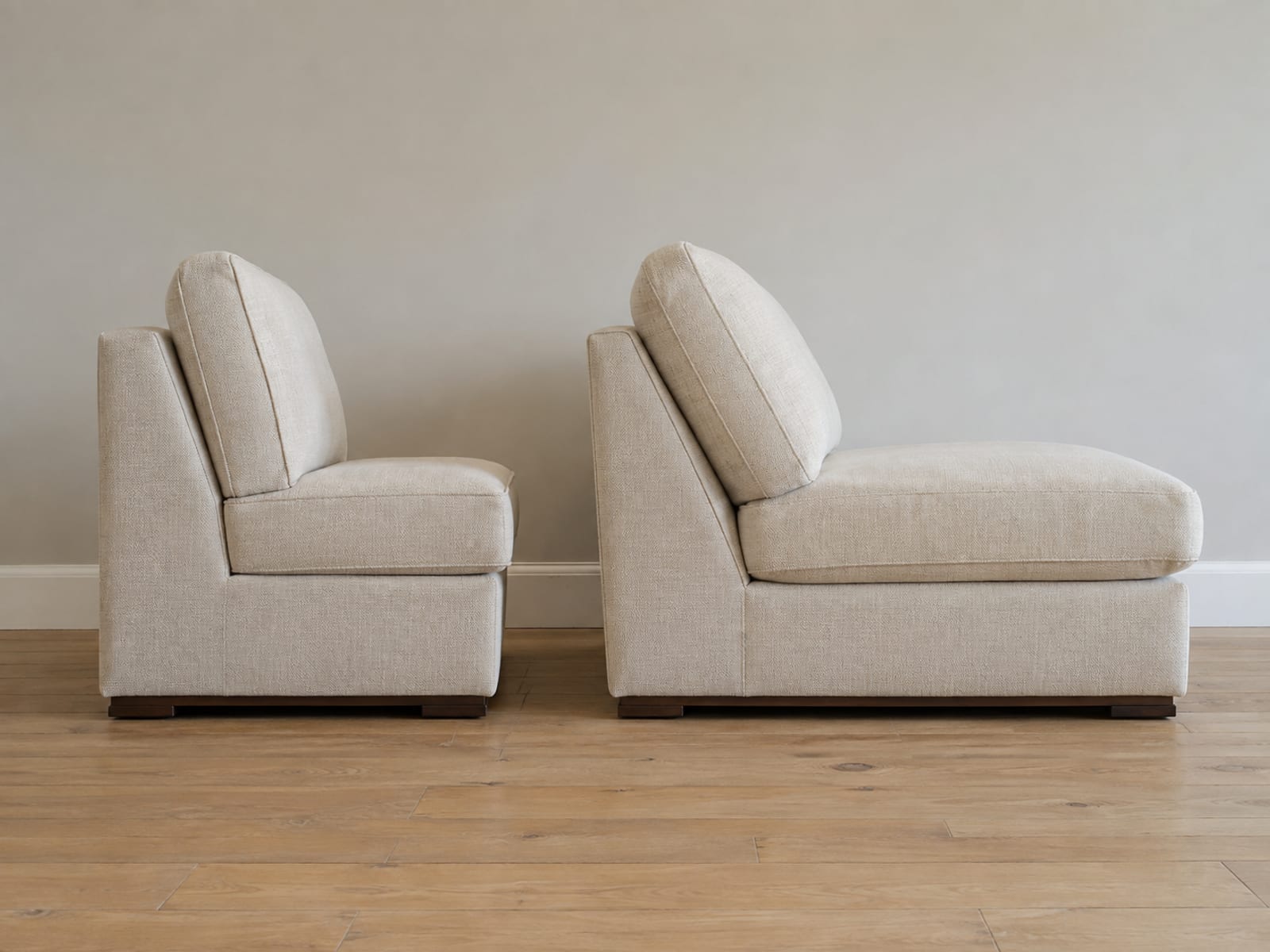
Which numbers change how it feels rather than how it fits?
Seat depth does one more job nobody expects: it is a term in the distance between your eyes and the television, because you sit forward of the back cushion. On chairs the same two figures are the whole decision, and half of accent chair listings publish neither.
Seat depth and seat height do almost all of the work here, and the published spread between real sofas is wider than most people expect.
Room & Board's Ericson publishes a 20 inch seat depth at a 19 inch seat height, 50.8 by 48.3 cm. Its Stevens publishes 23 inches deep at 19 high, 58.4 by 48.3 cm. Its Cade publishes 25 inches deep, 63.5 cm, and Room & Board describes that depth as easier on longer legs, which is the maker's own comfort language rather than a measured threshold. IKEA's KIVIK sits at 23 5/8 inches deep and 17 3/4 inches high, 60.0 by 45.1 cm.
That is five inches of seat depth between the shallowest and the deepest, and it is the difference between a sofa you sit upright on and one you settle back into. Past that, the published figures reach 38 inches, which is where the word deep stops matching the number on the listing. Seat height matters in the other direction: KIVIK's 17 3/4 inches is an inch and a quarter lower than Ericson's 19, and lower seats are harder to stand up from. Which of those is right is a question about your legs and your knees rather than about the sofa, and the third figure, the back height that has to catch you at that depth, is the one almost no listing prints. The guide to choosing a sofa works through what to do with these numbers once you have them.
Hover or tap a row to highlight it.
| Sofa | Seat width | Seat depth | Seat height |
|---|---|---|---|
| Room & Board Ericson, 74 in | Not published | 20 in / 50.8 cm | 19 in / 48.3 cm |
| Room & Board Stevens, 81 in | Not published | 23 in / 58.4 cm | 19 in / 48.3 cm |
| IKEA KIVIK, 3-seat | 70 7/8 in / 180.0 cm | 23 5/8 in / 60.0 cm | 17 3/4 in / 45.1 cm |
| Room & Board Cade, 91 in | Not published | 25 in / 63.5 cm | Not published |
| Monvane L-shaped modular, 4-seat | Not published | 27.5 in / 69.9 cm | 16.5 in / 41.9 cm |
How do you convert between inches, feet, centimetres and metres?
People search this topic in every unit there is, and the arithmetic is short enough to do on a phone.
One inch is 2.54 cm exactly. One foot is 12 inches, or 30.48 cm. One metre is 100 cm, or about 39.37 inches. To go from inches to centimetres, multiply by 2.54; to go the other way, divide.
Worked on the most-searched size: KIVIK's three-seat sofa at 89 3/4 inches is 228.0 cm, 2.28 metres, and 7 feet 5 3/4 inches. Its 37 3/8 inch depth is 94.9 cm. A listing in millimetres is just the centimetre figure with a zero after it, so 228.0 cm is 2280 mm.
The fractions are where mistakes happen. Three eighths of an inch is 0.375, five eighths is 0.625, and three quarters is 0.75, so 37 3/8 inches is 37.375 inches before you multiply.
Is there a standard sofa size?
Part of the reason there is not is that the categories overlap: one IKEA series contains five different couch types under a single name.
Not one that anybody is required to build to. There is no United States product-size standard for sofas, which is why manufacturer figures for the same seat count sit several inches apart.
Google's own answer at the top of this search says a standard three-seater is about 84 inches long, 213 cm, 36 to 40 inches deep and 32 to 36 high. It is a reasonable summary of a middle, and the two three-seat sofas above it are both wider: KIVIK at 89 3/4 inches and FRIHETEN at 90 1/2. Hold 84 inches in mind as a rough middle rather than a specification, and take the actual number from the configuration you are looking at.
The number to act on is the one printed on the configuration in front of you, in the units that listing happens to use.
Can you read a dimensions line?
1. A listing publishes its depth as "37 3/8 / 64 1/8 in". What does that mean?
2. A sofa is 89 3/4 inches wide. How many adults does that seat?
3. You are converting a 37 3/8 inch depth to centimetres. What do you multiply?
Pick an answer to begin.
Frequently asked questions
What are the standard dimensions of a sofa?
There is no mandated standard, so the useful answer is a range from published products: two-seat sofas around 74 to 75 inches wide, three-seat sofas around 81 to 91 inches, and sectionals from 103 inches upward. Depths run from about 33 inches on a shallow sofa to 65 inches on a modular sectional.
What are the dimensions of a 3-seater sofa?
On the listings above, 81 to 91 inches wide, 205.7 to 231.1 cm, and 33 7/8 to 40 inches deep. IKEA's KIVIK three-seat is a good middle reference at 89 3/4 by 37 3/8 by 32 5/8 inches, or 228.0 by 94.9 by 82.9 cm.
What is the average width of a 2-seater sofa?
The published examples here cluster tightly, at 74 inches for Room & Board's Ericson and 74 3/4 for IKEA's KIVIK loveseat, so 188 to 190 cm. Two sofas is not an average, but the two-seat category varies far less in width than the three-seat one does.
How much room do I need around it?
More than the sofa's own footprint, and the amount depends on the paths you actually walk. That is a measuring job rather than a dimensions one, and it is worked through in how to measure a sofa, starting with the rectangle taped onto your own floor.
Why does the same sofa show different depths in different places?
Usually because one figure includes the cushion and the other does not, or because a chaise version is being measured. Room & Board publishes several of its heights as "with cushion" for exactly this reason. Take both numbers from the same listing rather than mixing sources.
What each number on the line means
Tap a term to see what it means.
Overall width. The outside of one arm to the outside of the other. It is the figure in the product name and the one that decides whether the sofa fits the wall.
Take the numbers off the listing you are actually looking at, both depths if it prints two, and put them next to the rows above to see where your sofa sits. Then measure the floor rather than the wall, because depth is what a room notices. When the numbers stack up, PlushPick has guides to the sofas that publish them.
Cal Hewitt
Writer at PlushPick. I compare sofa specs, comfort, durability, and value so you can buy with clearer expectations.
About Cal and how the guides are researchedThe latest
 "Best-of"Best Furniture Protectors for Pets, by What They Actually Cover
 "Best-of"Best Pet-Friendly Sofa Fabrics: Claws, Hair and Spills
 "Best-of"Best Sofas for Small Spaces: Narrow Doesn't Mean Shallow
 "Best-of"Best Recliner Covers for Dogs: What Actually Stays On
 AnswerSofa vs Sectional: Which One Fits Your Room and Life
 AnswerHow to Measure a Sofa So It Fits Through the Door