

Affiliate disclosure. If you buy through a link on this page, PlushPick may earn a commission at no extra cost to you. That never changes which products are named or what is said about them. As an Amazon Associate I earn from qualifying purchases. How this works
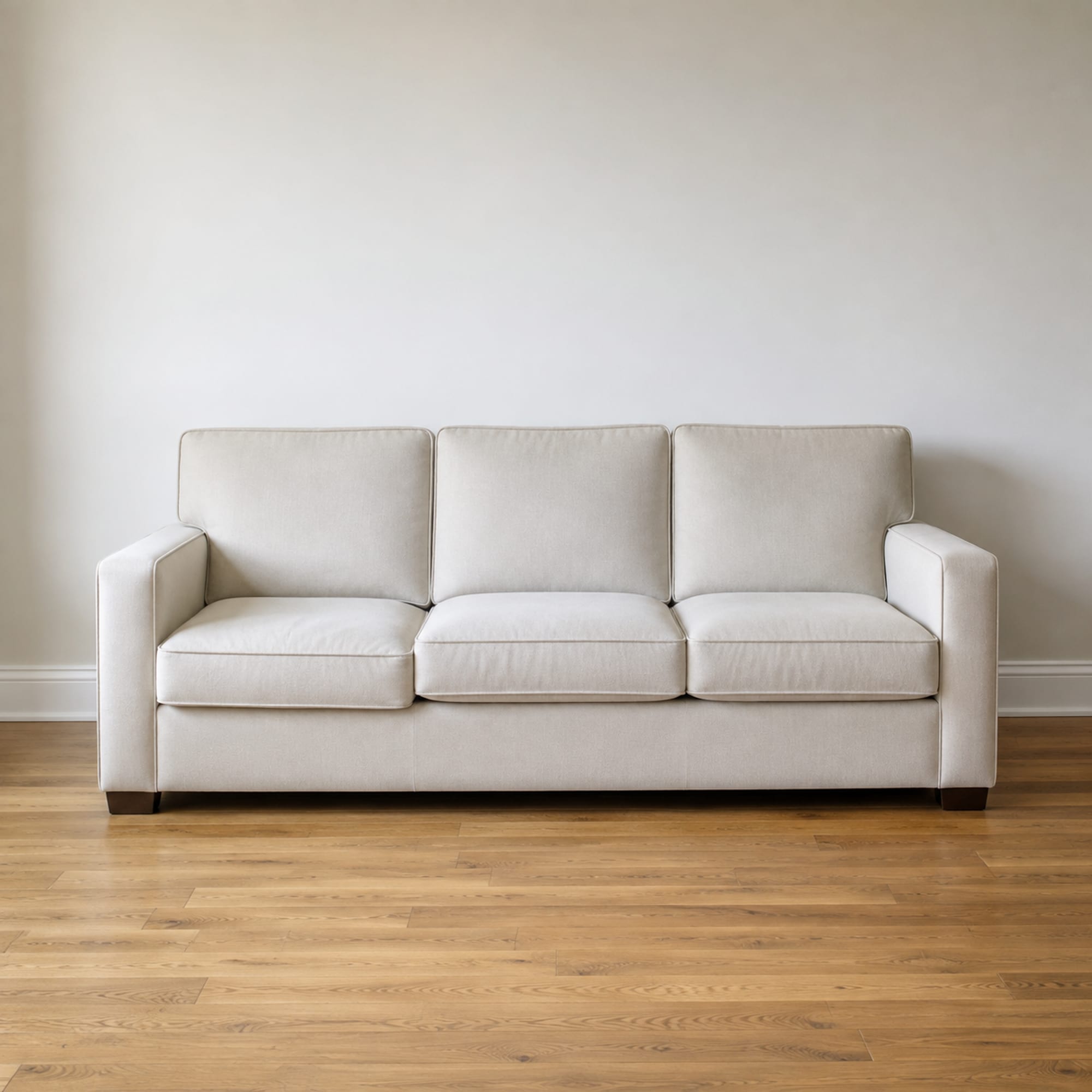
Take one seat cushion off and press the platform underneath with the flat of your hand. If that platform holds firm and only the cushion has gone flat, this is a fill problem, and a correctly measured replacement foam core is the fix. If the bare platform sinks under your hand, no foam on earth will help, and what the seat needs is support beneath the cushions or a repair to the suspension itself. Then check one more thing: whether the cover unzips. That decides whether the fill job belongs to you or to an upholsterer. Both tests take about two minutes and cost nothing, and between them they rule out most of what gets recommended for a sagging seat.
Key Takeaways
Two questions decide the whole job
Which layer dropped, the cushion or the deck under it, and whether the cover opens.
Press the bare deck before you buy anything
A deck that sinks under a hand is a support problem, and new foam sits on top of it doing nothing.
Measure the cover, never the old foam
A compressed core is smaller than the cushion it came out of, so ordering from it repeats the sag.
ILD is the firmness number
FoamOrder's published starting point for a well used 4 to 6 inch seat is EverFlex V44, 2.8 lb per cubic foot with an ILD of 44.
A board is temporary support, not a spring repair
It belongs under cushions on a level deck and a sound frame, and nowhere else.
No zipper changes who does the work
Sewn shut upholstery has to be opened and resewn, and that is an upholsterer's trade rather than an afternoon.
The two minute test that decides everything
The seat you sink into is made of two separate things stacked on top of each other, and only one of them has usually failed. If nothing has actually dropped and the seat is simply deeper than you want, that is a geometry problem rather than a sagging one. On top is the cushion, a foam core with a wrap of batting inside a cover. Underneath is the deck, which is the platform the cushion rests on: springs, webbing straps, or a solid base, depending on how the sofa was built.
So, lift the cushion out and put your hand flat on the deck where you normally sit. Press down with real weight, the way you would testing a mattress. A deck built from springs will give a little and push back. A deck that keeps travelling, dips in the middle, or lets your hand feel the frame rail underneath has stopped supporting anything.
That single press splits the entire problem in two, and the two halves have almost nothing in common.
Hover or tap a row to highlight it.
| What the bare deck does | What has failed | What actually fixes it |
|---|---|---|
| Holds firm, springs back | The cushion fill | A replacement foam core, measured from the cover |
| Sinks, dips, or bottoms out | The deck or its suspension | Support over a sound base, or a suspension repair |
| Feels fine, but one cushion is flat | That cushion only | One core, and rotate the others while you are in there |
| Holds firm and the cushion measures full | Neither, so look at the frame | An upholsterer, before you spend money on foam |
Do the press on every seat, not just the bad one. A three seat sofa with one hollow usually has one tired cushion, since the middle seat gets a fraction of the use in most homes and the end nearest the television gets most of it. A sofa where every seat presses soft is telling you something about the deck instead.
When the deck holds: measure the cover, not the foam
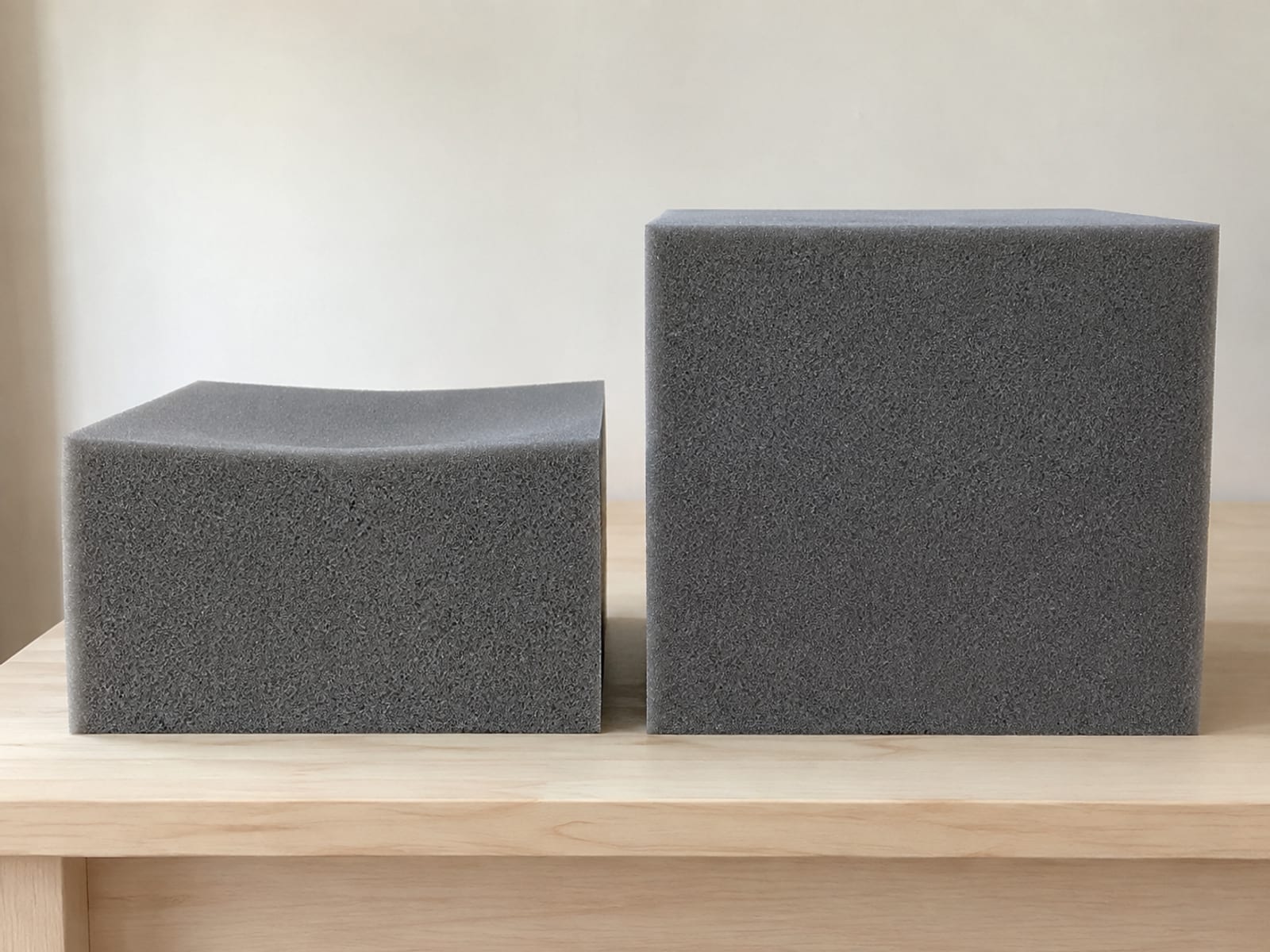
If the deck passed, the job is a new core, and the whole job turns on getting the measurement right. FoamOrder's own measuring guidance is to leave the old foam inside the cushion and measure the cover, seam to seam, for width, depth and thickness.
That instruction exists because the thing you are replacing has shrunk. A core that has been sat on for six years is smaller than the cover it lives in, and ordering to its dimensions builds the sag straight back into the new cushion. The cover is the honest record of how big the cushion was supposed to be.
Two details are easy to get wrong. Measure between the seams or the cording, not out to the rounded edge of the batting, because the batting is a wrap rather than part of the core. And FoamOrder notes that a snug replacement may want an extra inch, 2.54 centimeters, over the measured figure, since a core slightly larger than its cover is what fills the corners out.
Write the numbers down in both units before you order anything. A cushion at 24 by 24 by 5 inches is 61.0 by 61.0 by 12.7 centimeters, and half the foam suppliers worth buying from work in one and half in the other.
The number that actually orders the foam
Foam carries two specifications and they answer different questions. Density is how much material is packed into a given volume. ILD, short for indentation load deflection, is the firmness figure: how much load it takes to compress the foam by a set amount.
FoamOrder's published starting point for a frequently used indoor seat cushion between 4 and 6 inches thick, which is 10.2 to 15.2 centimeters, is its EverFlex V44 at 2.8 pounds per cubic foot with an ILD of 44. Those are two separate numbers about one foam, and quoting only one of them tells a supplier half of what it needs.
Hover or tap a row to highlight it.
| Finished cushion thickness | Grade it names | Why |
|---|---|---|
| Under 4 in. (10.2 cm) | V54 | A thinner cushion has less foam to resist you, so it goes firmer |
| 4 to 6 in. (10.2 to 15.2 cm) | V44, 2.8 lb/cu ft, ILD 44 | Its stated starting specification for a frequently used seat |
| Over 6 in. (15.2 cm) | V34 | More depth to compress, so it can afford to be softer |
Read that table as a rule about thickness rather than about people. It is the supplier's own choice guide for how a cushion of a given depth should behave, and it is not a weight rating for whoever sits on it. If you are also comparing new sofas while you decide, the published construction figures on a sofa listing are a different use of the same vocabulary and worth reading alongside this.
Swapping the core without wrecking the cover
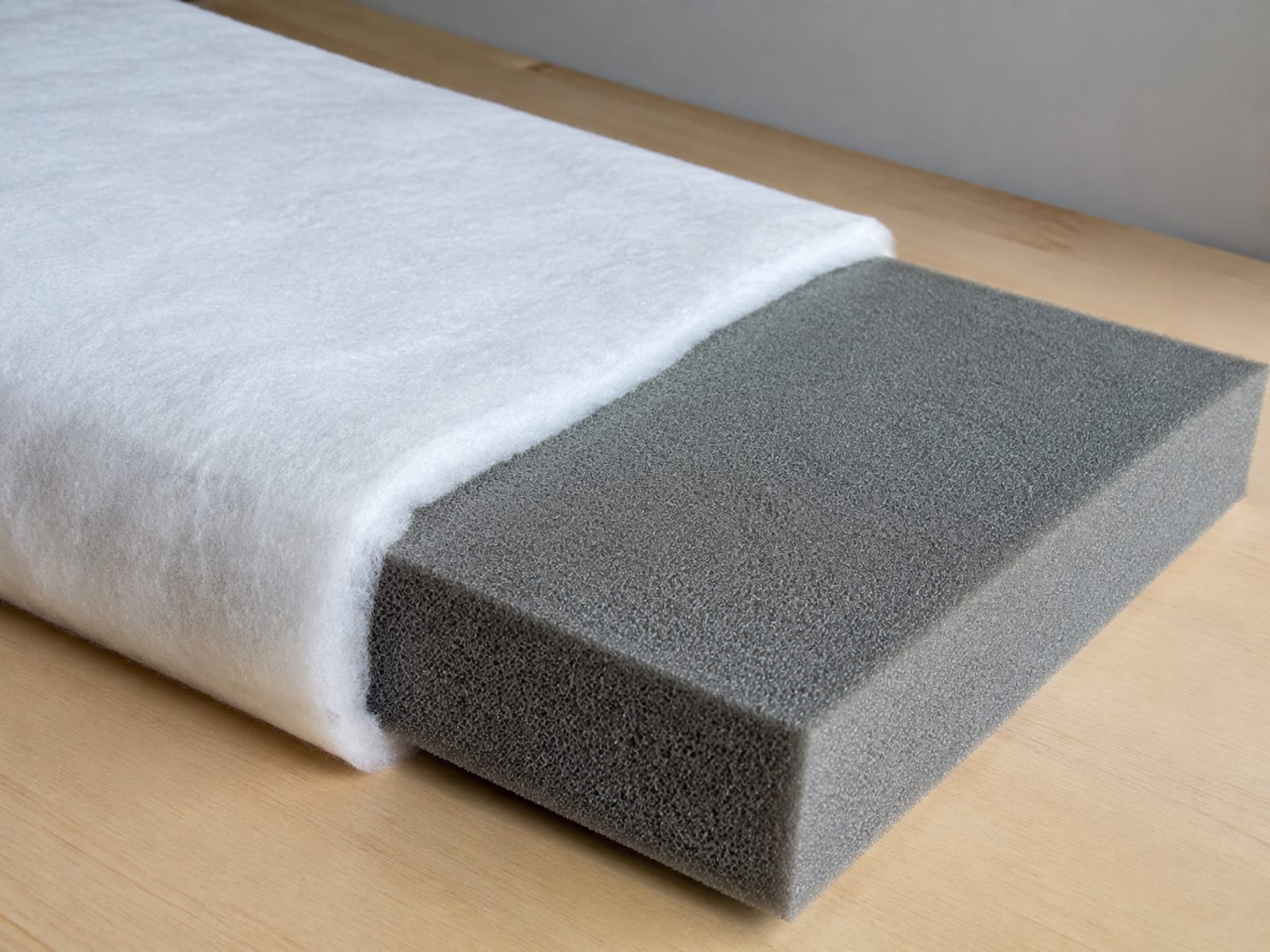
FoamOrder publishes its own replacement sequence, and it is worth following in order because the failure mode is a torn cover rather than a wrong cushion.
Unzip the cover, or turn it inside out where the construction allows, and take the old foam out. Keep the batting if it is still in usable condition, because it is doing a real job. Apply a textile adhesive to the new core and wrap the batting over it in what FoamOrder calls a book wrap, covering the top, the front and the bottom in one continuous piece. Trim the excess. Then feed the wrapped core in slowly, corners first.
The batting is the part people skip, and it is the reason a bare replacement core often looks wrong in an old cover. It softens the edge, it fills the cover's shoulders, and it lets the wrapped core slide instead of catching on the zipper teeth. A core pushed in unwrapped and at speed is how a seam goes.
About the memory foam everybody suggests
Ask this question anywhere people answer it and memory foam comes back. On the r/fixit thread about sinking into a couch, the leading reply is to cut memory foam to size and add it to the cushion, and the original poster, hobbs11, later updated the thread to say they had replaced the padding with memory foam wrapped in batting.
FoamOrder's position on the same material is narrower. Its page describes memory foam as working best as a top layer over a firmer base, so that the seat gives at the surface without letting you sink through it. Memory foam is slow to recover by design, which is a pleasant quality in the first inch and a soft one all the way down.
That is worth knowing before you order, because "memory foam" on its own is not a specification. A memory foam top over a V44 base and a solid block of memory foam are two different cushions, and only one of them holds a seat height.
When the deck drops: a board buys time on a sound frame
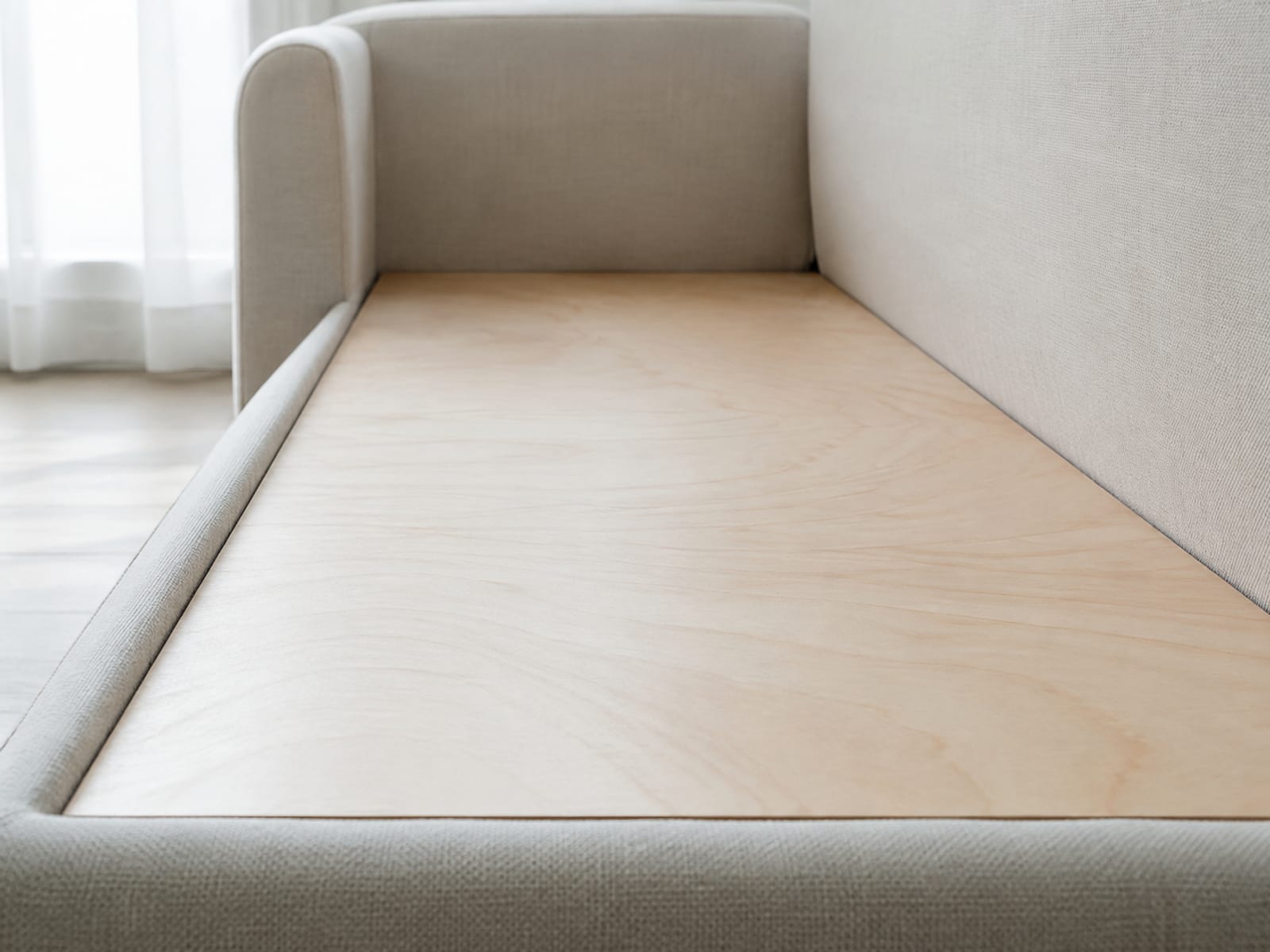
If the press test found a deck that sinks, foam is the wrong purchase. What goes under the cushions instead is a support board: a flat panel that spans the deck and gives the cushions something level to sit on.
The published dimensions are 70 by 21.5 by 0.4 inches, which is 177.8 by 54.6 by 1.0 centimeters, and the same listing carries a 48 by 21.5 inch size for a loveseat. The maker's install instruction is exactly as short as it sounds: take the cushions off, set the board on the frame, put the cushions back. It publishes a limit of up to 400 pounds per person, which is a manufacturer statement rather than a tested result. A pull-out bed is a different mechanism with a different fix, set out in what to do about a sofa bed you can feel through.
Measure the deck before you order one. A board longer than the supported span rests on nothing at its ends, and a board deeper than the deck fouls the back cushions.
There is one thing a board does not do. Its own listing title uses the words repair sagging spring sofa, and that is the seller's wording. Setting a panel over broken springs changes what the seat feels like without restoring the suspension underneath, and nobody in the research publishes a service life for the arrangement. One commenter on the r/fixit thread about non removable cushions reported that a three quarter inch plywood lift will still deteriorate over time, which is one person's experience rather than a figure. Treat a board as level support on a base that is still sound, and treat broken webbing or a cracked frame rail as its own repair.
For a renter this is the whole appeal. A board is set in place with no tools, no staples and no screws, and it comes out with the cushions.
Does your cover open? The question the search results skip
Look at what Google shows underneath this search and a pattern appears. Four of the eight related phrases are asking the same thing in different words: non removable cushions, no zipper, cushions that are attached, and how to do it without taking the sofa apart. That is a lot of people telling the search engine that the standard advice does not apply to their couch.
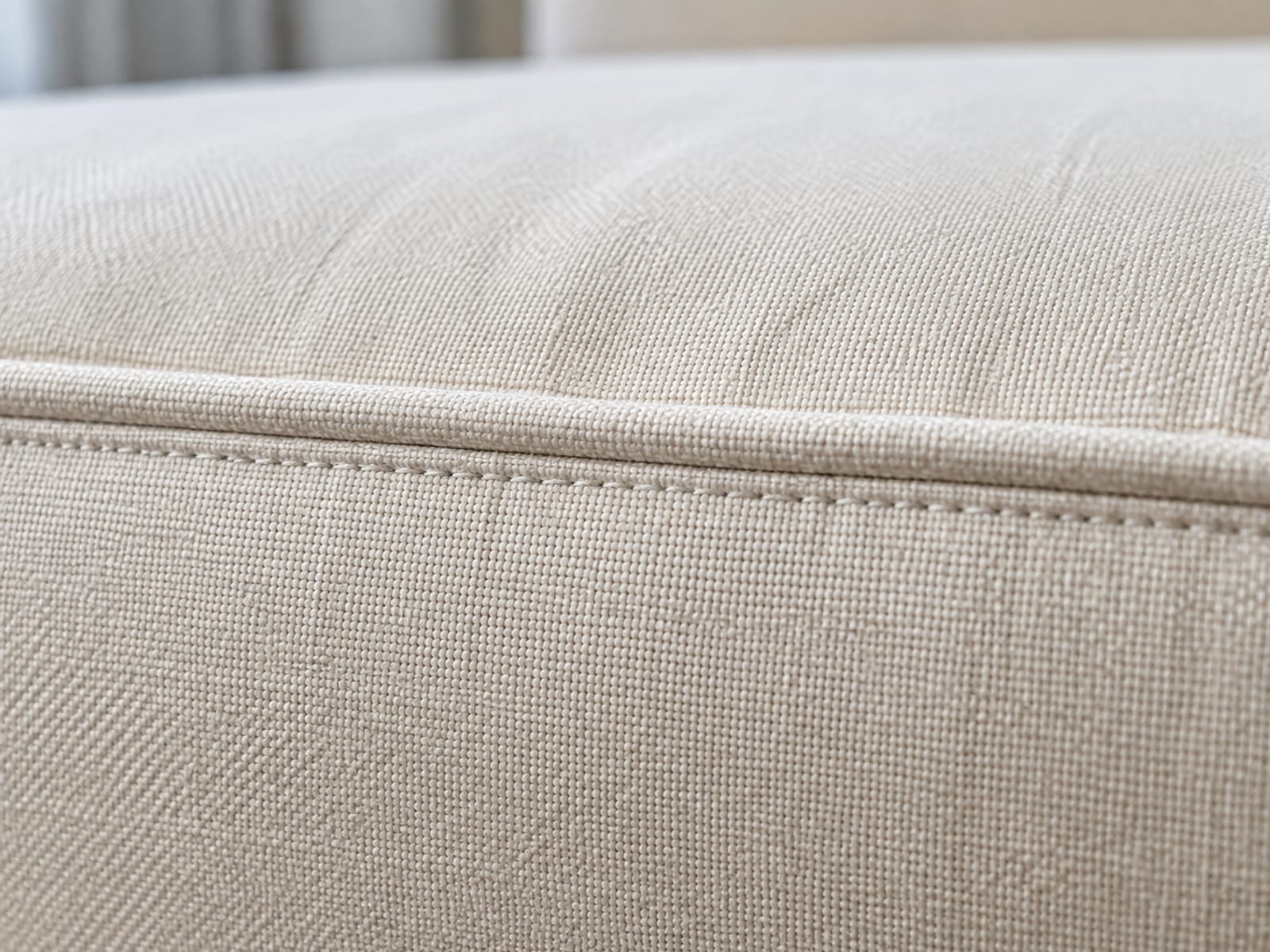
It matters because the access decides the labor, not the diagnosis. A sewn shut seat needs its seam opened, the fill replaced and the seam resewn to match, and on a cushion with piping the welt has to be recreated along with it. A commenter in r/upholstery posting as Spazataz describes sewing covered piping evenly as learned expertise, which is a fair description of why this one leaves the DIY list.
The r/fixit poster posting as okowilly is the situation exactly: they like the couch, they have a newborn, and the cushions do not come off. With attached cushions and a level deck, a board underneath is the reversible option that costs an afternoon rather than a quote. With attached cushions and flattened fill, the honest answer is a trade quote, because there is no version of that job that happens through a zipper that is not there.
Fluffing and rotating, and what it is really for
La-Z-Boy's published care guidance for its own furniture is to fluff cushions and pillows often to retain shape, and to rotate cushions for even wear. Both are worth doing, and both are aimed at a specific kind of filling.
Fluffing redistributes loose fiber. Back cushions and scatter cushions filled with polyester respond to it immediately, because the fill has simply migrated to one end and can be pushed back. A compressed foam core does not respond to it at all, since nothing has moved; the material itself has taken a set.
Rotating is the one that actually buys years. Moving cushions between positions spreads the use across all of them instead of concentrating it on the seat nearest the door, and it costs nothing but the habit. Start it on the new core the week it arrives rather than the year it starts to dip.
What restuffing costs, and who is quoting
Two numbers are available here and both need naming with their source, because neither is a market rate.
One and Done Prep's US restuffing guide, dated February 28, 2026, publishes a planning range of $25 to $120 per cushion for materials, $200 to $1,000 for a whole sofa assuming four to six standard foam cushions, and $120 to $600 for labor. That is a third party's guide rather than a quote you can hold anybody to.
The other figure is one person's. The baybison post in r/upholstery reports being quoted $200 per cushion for four cushions, for high density foam plus Dacron, on a vintage sofa bought for under $500. That is a single quotation from a single shop in a single market, and it is useful mainly as a reminder that four cushions of good foam and a shop's time can approach what the sofa cost.
Set that against what you are trying to save. A sofa with a sound frame, a level deck and covers that unzip is worth reviving, because the expensive part of a sofa is the frame and the expensive part of a cushion is the labor you can supply yourself. If you are weighing repair against replacement more broadly, how long each part of a sofa is meant to last puts the foam clock beside the other three. That is the same conclusion the leather against fabric comparison arrives at from the other direction, where the cover outlasted the seat by years. A sofa where the frame moves when you rock it is not, whatever the foam costs.
Would you get this one right?
1. The cushion is flat, and with it removed the bare deck sinks under your hand. What should you buy?
2. You are ordering a new core. What do you measure?
3. A listing says a support board will repair a sagging spring sofa. How should you read that?
4. Your seat cushions are sewn shut with piping around the edge. What changes?
Pick an answer to begin.
Frequently asked questions
How do you plump up sagging couch cushions?
If the filling is loose polyester, redistribute it by hand and rotate the cushions between positions, which is what La-Z-Boy publishes for its own furniture. If the filling is a foam core that has compressed, plumping does not reach it, because nothing inside has shifted. That cushion needs a new core measured from its cover.
How to stop sofa dipping?
Find out what is dipping first. Take the cushion out and press the deck: if the deck holds, the dip is the cushion and a new core resolves it. If the deck sinks, put level support over it on a sound frame, or have the springs and webbing looked at. Rotating movable cushions slows the next dip either way.
What to put under sagging couch cushions?
A support board sized to the deck, on a frame that is still sound. The one named in this article publishes 70 by 21.5 by 0.4 inches with a 48 by 21.5 inch loveseat size, and it sits on the frame with the cushions replaced on top. Measure the supported span before ordering, and do not read a board as a repair to broken springs.
Why am I sinking into my couch?
Because one of two layers stopped resisting you, and they fail for different reasons. Foam takes a permanent set from years of compression. A deck fails when webbing stretches, a spring breaks, or a rail loosens. The press test with the cushion removed separates them in about ten seconds.
Can you fix sagging cushions that are not removable?
Partly. With a level deck, a support board underneath is reversible and needs no tools, which is why it is the usual answer for attached cushions. Replacing the fill inside sewn shut upholstery means opening the seam, refilling, and resewing it to match, including any piping, and that is an upholsterer's work rather than a weekend project.
The words a foam supplier will use
Tap a term to see what it means.
ILD. Indentation load deflection, the firmness number for a foam. FoamOrder's V44 carries an ILD of 44, and it is quoted alongside density rather than instead of it.
Do the press test tonight, before anything goes in a cart. It takes one cushion, one hand and about two minutes, and it is the difference between buying foam for a deck problem and buying a board for a foam problem. If the test sends you toward a new core and the cover comes off in the process, PlushPick has what a washed cover does and does not tell you about the cushion inside it while you have the thing open.
Cal Hewitt
Writer at PlushPick. I compare sofa specs, comfort, durability, and value so you can buy with clearer expectations.
About Cal and how the guides are researchedThe latest
 "Best-of"Best Furniture Protectors for Pets, by What They Actually Cover
 "Best-of"Best Pet-Friendly Sofa Fabrics: Claws, Hair and Spills
 "Best-of"Best Sofas for Small Spaces: Narrow Doesn't Mean Shallow
 "Best-of"Best Recliner Covers for Dogs: What Actually Stays On
 AnswerSofa vs Sectional: Which One Fits Your Room and Life
 AnswerHow to Measure a Sofa So It Fits Through the Door