

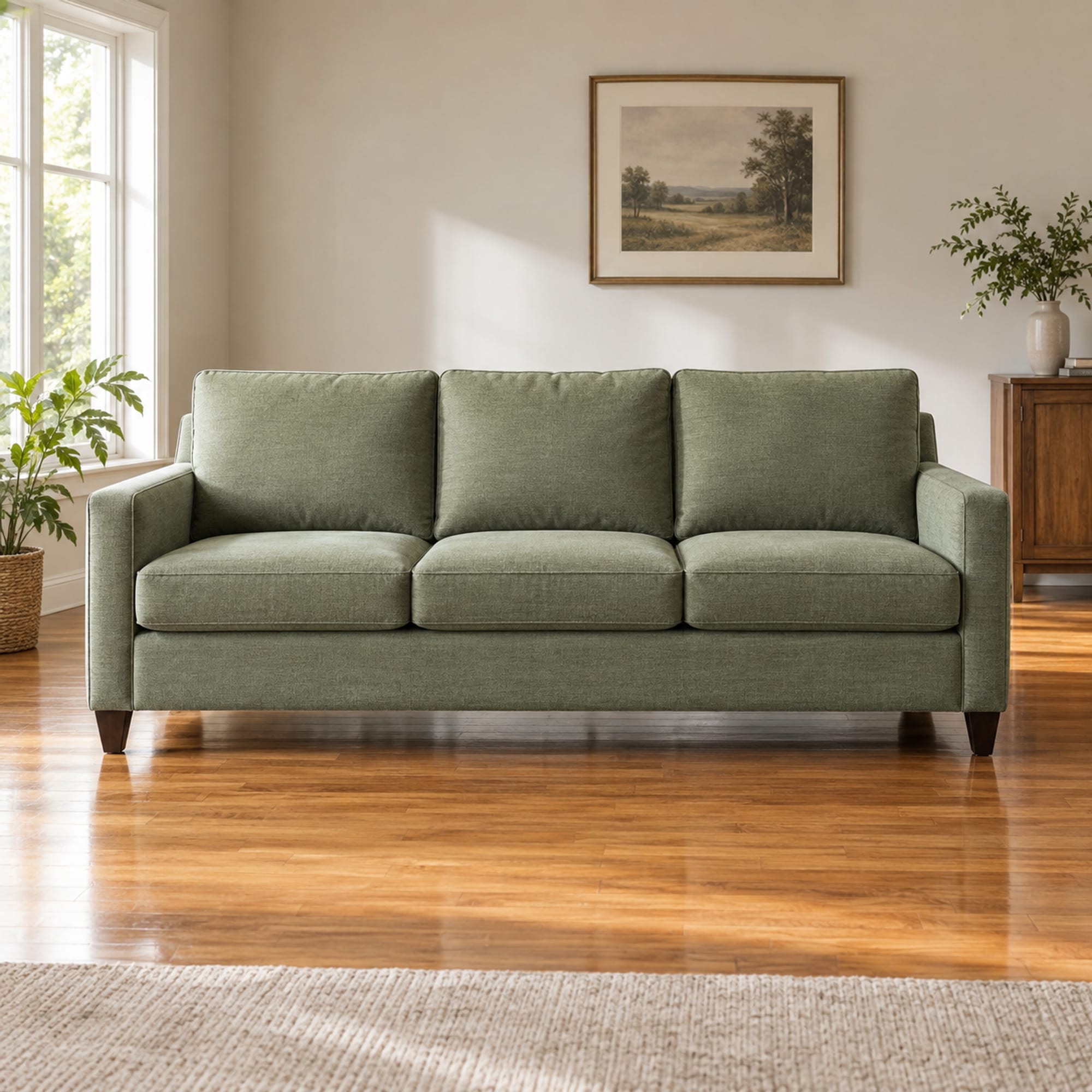
Affiliate disclosure. If you buy through a link on this page, PlushPick may earn a commission at no extra cost to you. That never changes which products are named or what is said about them. As an Amazon Associate I earn from qualifying purchases. How this works
To keep couch cushions from sliding, add grip between the seat cushion and the platform it sits on. A non-adhesive grip pad cut to the size of the seat is the fix to try first on most sofas, because it needs no tools, leaves nothing stuck to the upholstery, and comes straight back out if it does not help. From there, the right next step depends on what your sofa is covered in and how it is built: fabric cushions can take sew-on hook-and-loop, leather should get nothing sticky against it until the maker says yes, and a sofa or sectional that walks across a hard floor needs grippers under its legs.
Key Takeaways
Start under the seat cushion
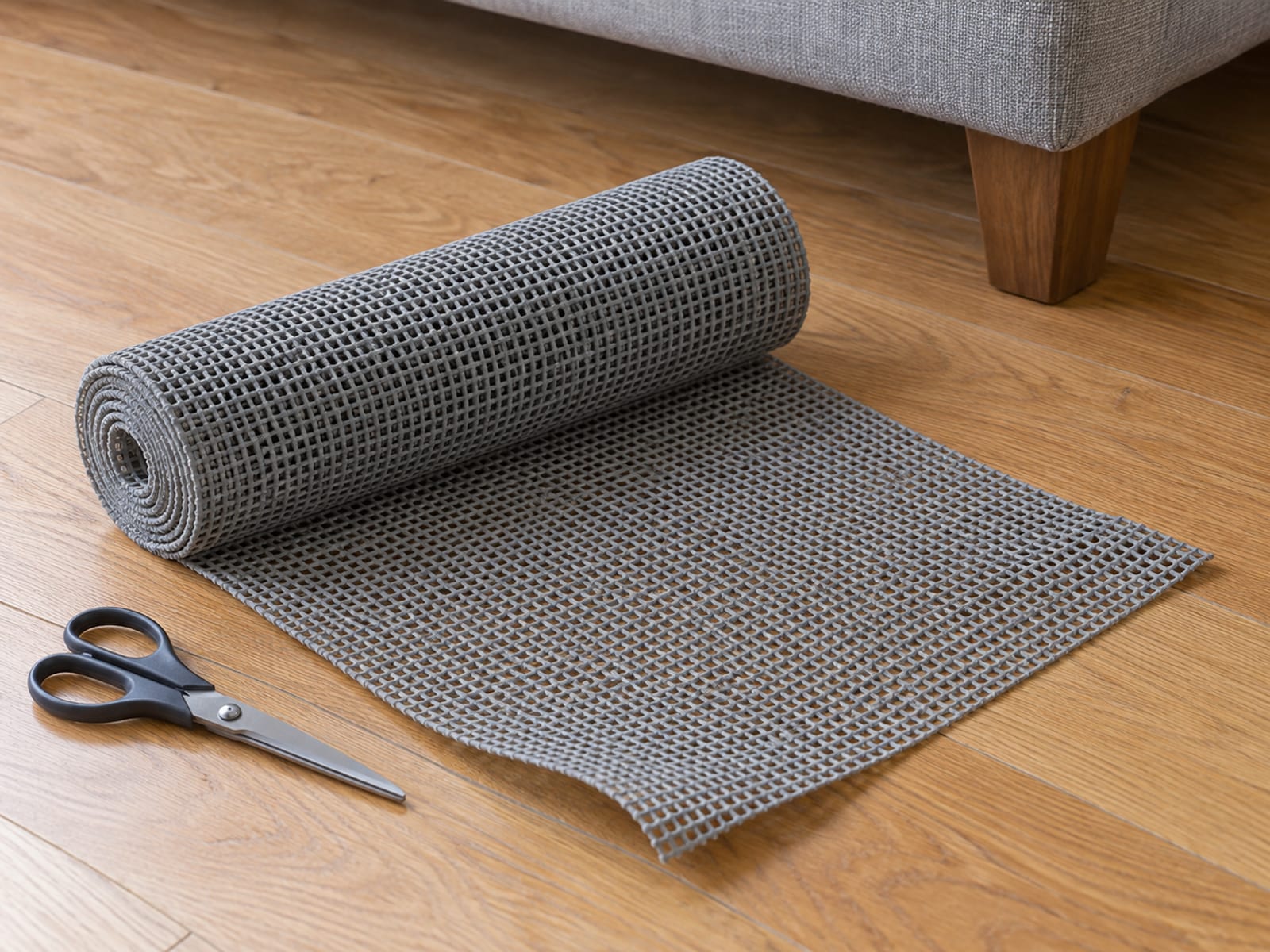
A trim-to-fit grip pad such as the Nevlers pad, PVC foam at 22 by 72 inches and a quarter inch thick, sits between the cushion and the deck with no adhesive.
Fabric can take a sewn fastener
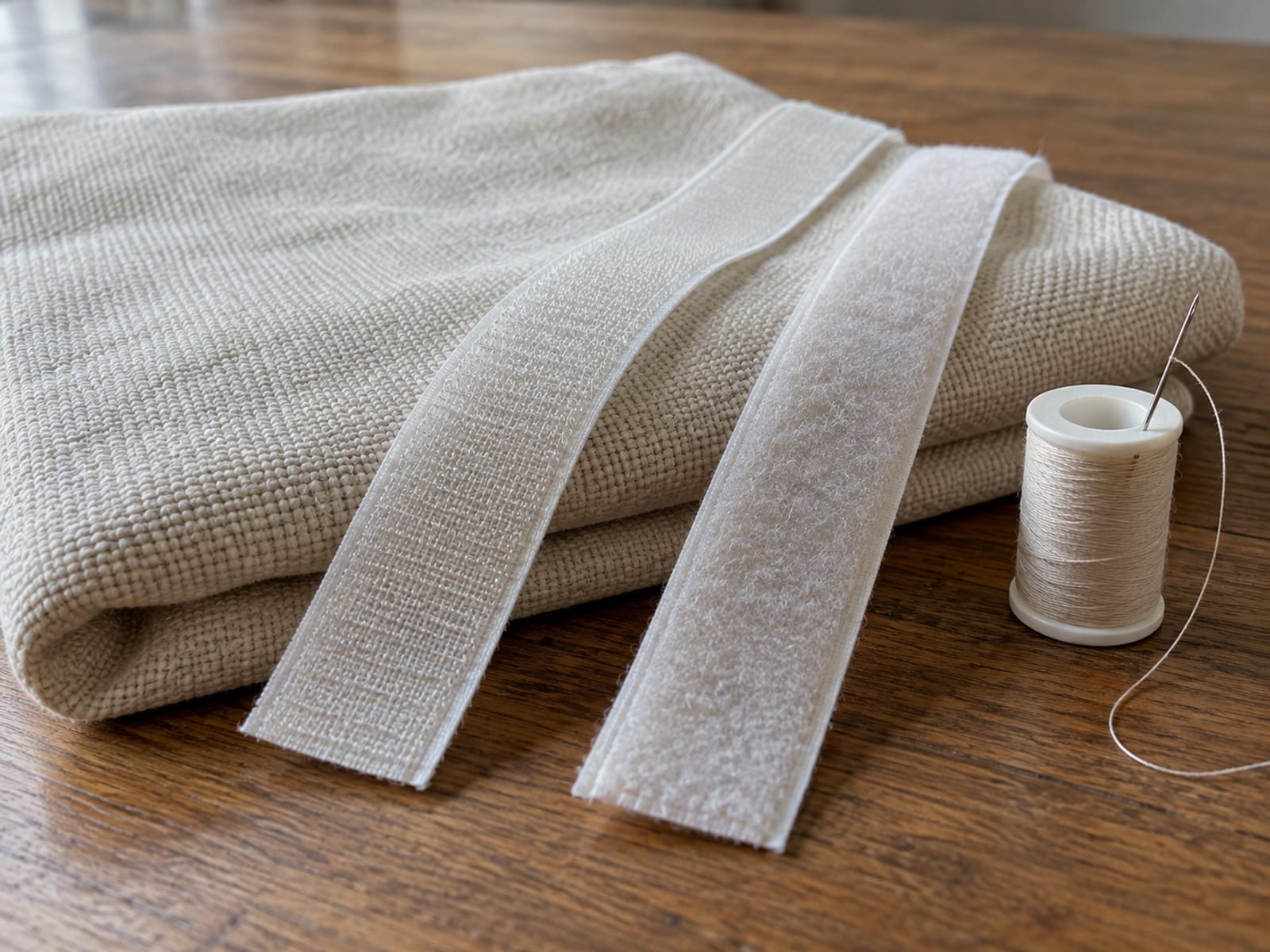
Hook and Loop recommends sew-on strips over adhesive-backed ones for fabric upholstery, because adhesive may not bond well to many fabrics.
Leather needs the maker's approval first
None of the grip products here names leather as a compatible surface, so ask the sofa maker before rubber, PVC or adhesive touches it.
Back cushions need something behind them
One Albany Park Kova owner found foam strips held a cushion against the back better than Velcro did.
A moving sofa is a floor problem
Slipstick, Expanded Technologies and SlipToGrip each name the hard floors their leg grippers are made for.
Sectional pieces start with their own hardware
Lovesac uses clamps and shoes, Home Reserve uses bolts through the frame, and a broken or missing connector is a call to the maker.
Why couch cushions slide
A seat cushion stays put when there is enough friction between its underside and the deck, the platform of springs, webbing or board that the cushion rests on. Every time you sit down, your weight pushes the cushion forward and slightly down, and if the two surfaces glide past each other, the cushion creeps toward the front edge a little at a time.
The most common reason is a slick surface on one side or both. Ideal Home explains that the thread and texture of a fabric normally create friction, and smoother, less coarse materials create less of it. Engineer Fix names leather and microfiber in particular as the covers that lack grip against a deck. That matches what owners describe. On Reddit, one owner reports leather sectional cushions sliding forward by 2 to 5 inches, and others describe the same creep on an Interior Define Sloan and on the seat and back cushions of an Albany Park Kova.
Fit is the second reason. A cushion that is smaller than its platform, or one that no longer fills it, has room to travel. An IKEA KIVIK owner describes cushions that slide out and have become floppy after several years. If your cushions have gone soft or flat as well as mobile, the foam is part of the problem, and finding which layer of a sagging cushion has dropped is the better place to start, since a grip pad under a shrunken core only slows it down.
Sectional and modular sofas add a third kind of movement: whole pieces drifting apart at the seams during use. That has its own fixes, further down.
Start with a grip pad under the seat cushions
A thin grip layer between the cushion and the deck is the fix that suits the widest range of sofas, and it is the one a sofa maker has put its own name to. Inside Weather's Sofette sectional assembly guide tells owners, "To keep the cushions from sliding add the non-slip neoprene pads," which come with that sofa.
For any other sofa, the steps are short:
1. Take the seat cushions off. 2. Measure the footprint of each cushion, or of the deck under it. 3. Cut the pad slightly smaller than that footprint, so no edge shows once the cushion is back. 4. Lay the pad flat on the deck with no wrinkles. 5. Put the cushion back and sit on it. Check that the seat height and the fit of the cover have not changed. 6. Every so often, lift the cushion and shake out any grit, and smooth the pad if it has rucked up.
The Nevlers Non-Slip Grip Pad for Couch Cushions is a purpose-made example with its specifications on the listing. Target lists it as PVC foam, 22 by 72 inches and 0.25 inch thick, trim-to-fit, with no adhesive, for use between the cushion and the sofa, at $14.99 on target.com as of September 2026. The listing also says its open weave lets air through and prevents moisture from building up. At 72 inches long, one pad can cover a three-seat run if your cushions together fit inside that length and 22-inch depth, so measure the total before you cut. The Nevlers listing does not name leather as a compatible surface, which matters for the section on leather below.
Ideal Home's walkthrough uses a similar product, the ECOHomes Couch Cushion Grip Pad, which the maker says sits between the cushion and the sofa frame. Its material, size and thickness are not on the product listing, so ask ECOHomes for them before ordering if you want to compare it with the Nevlers pad.
Owners also cut down rubber shelf liner or rug-pad material for the same job, and several describe it as cheap and effective in a Reddit thread about a cushion that slides when sat on. Those products are made for shelves and floors, so their stated surfaces do not cover upholstery. On a fabric deck that is a small risk; on leather it is a question for the maker first.
Fabric cushions: sew-on hook-and-loop holds hardest
If a pad does not hold a fabric cushion, fastening the cushion to the deck is the next step. Hook-and-loop tape comes in two forms, sew-on and adhesive-backed, and the choice matters on upholstery. Hook and Loop's guide to securing couch cushions says adhesive-backed tape needs a compatible, clean, dry surface and may not bond well to many fabrics, and that sew-on tape is generally the better choice for fabric upholstery.
The sew-on route means stitching one half of the strip to the underside of the cushion cover and the other half to the deck fabric where the cushion lands. A zippered cover makes the cushion half easy, since the cover comes off and can go under a sewing machine. The deck half has to be stitched by hand in place.
If you would rather not sew, VELCRO Brand Sticky Back for Fabrics is an adhesive-backed tape made to stick to fabric. VELCRO Brand says to clean and dry the fabric first, and warns that the adhesive gums up a sewing needle, so do not plan to stick it and then stitch through it. The product is written for fabric and names no use on leather.
Weight works against any fastener. An Albany Park Kova owner reported that Velcro did not hold well because the cushions were heavy. On a sofa with deep, dense seat cushions, sewn tape or a pad plus tape is more likely to hold than a few adhesive squares.
Leather and faux leather: keep adhesive off it
Leather is the upholstery most likely to slide and the one with the fewest safe fixes. Nevlers, ECOHomes, VELCRO Brand and the leg-gripper makers do not list leather among the surfaces their products suit. Until your sofa maker says otherwise for your sofa, keep anything sticky off leather and faux leather entirely. Commenters in a Reddit thread on keeping couch cushions from sliding give the same advice about sewing or sticking hook-and-loop to leather or faux leather.
Owners with leather sectionals do report that a non-slip pad between cushion and deck improved the grip. That is useful to know, and it is also only a report of grip. Before you put a PVC or rubber pad against a leather cushion, contact the sofa maker, give them the pad's material from its listing, and ask whether it is safe against your leather's finish. If the underside of the cushion is a fabric panel rather than leather, say so, because that changes what is touching what. Leather is also sensitive to moisture held against it; the Western Australian Museum's guidance on leather deterioration lists discoloration, hardening and tide marks among the results of leather being soaked. A pad that traps damp under a cushion is worth asking about for that reason too.
If the answer from the maker is no, or you cannot get one, the leg grippers and connector checks further down still apply to a leather sofa, since they touch the floor and the frame rather than the cover. For cleaning or conditioning the leather itself, how to clean a leather couch by its finish covers what each type of leather will tolerate.
Back cushions that slump toward the seat
Loose back cushions slide down and forward rather than straight out, so a pad under them does little. What holds them is something behind or beneath that keeps the base of the cushion pressed back. The Albany Park Kova owner mentioned above found that foam strips tucked behind the cushion held it against the back better than Velcro did.
On fabric sofas, owners also describe sewing small loops, ties or hooks to the back of the cushion cover and fastening them to the frame or back fabric, in threads like this one about cushions on a vintage sofa sliding forward. There is no sofa-specific back-cushion strap with published sizes to point to, so this is a sewing job sized to your own cushions. Ask the maker first if the tie would have to be stitched through anything structural, such as the fabric that covers the back springs.
When the whole sofa or a module walks across the floor
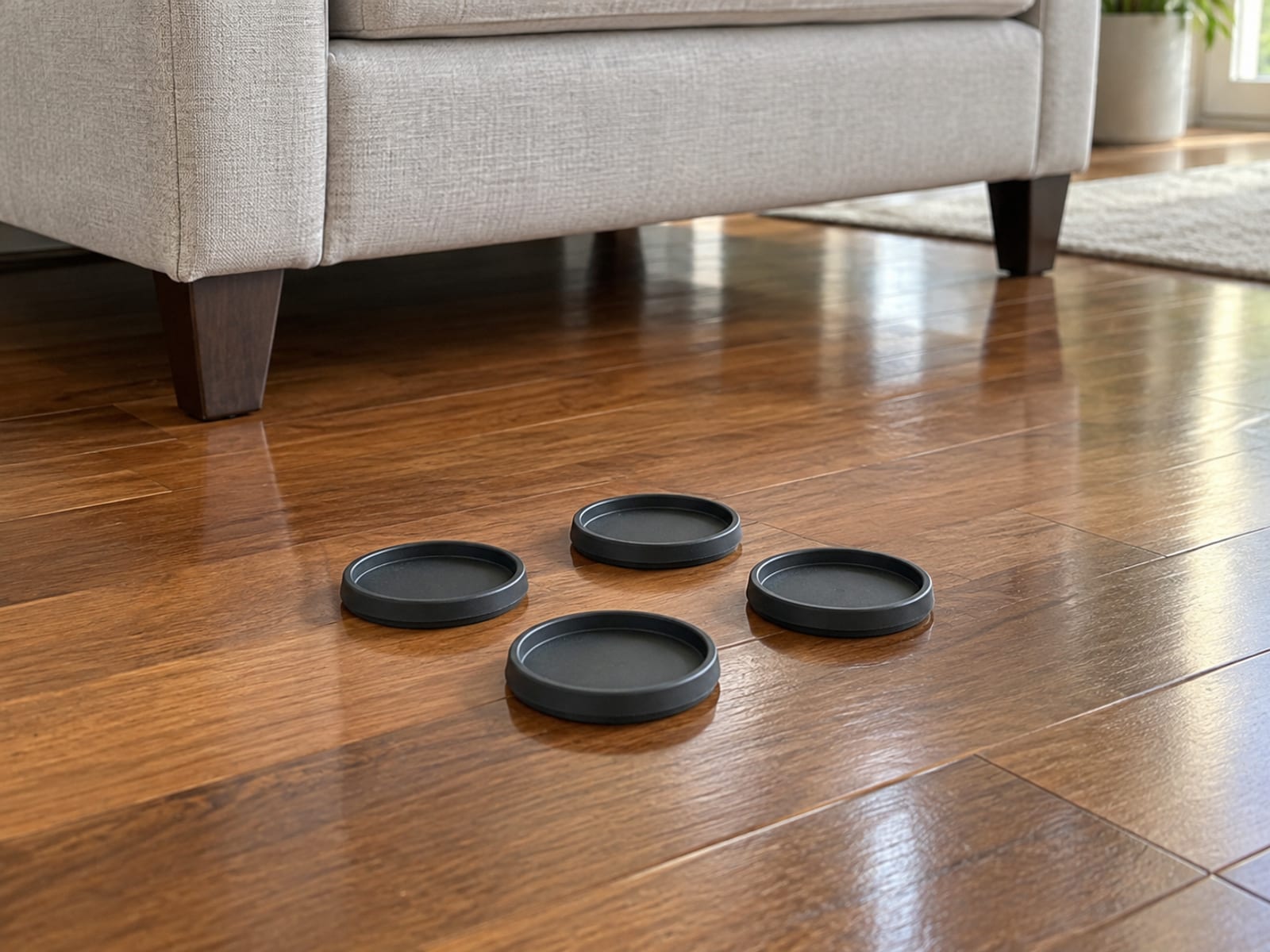
If the entire sofa shifts back when you sit, or modules slide on the floor, the cushions are not the problem. The fix goes under the legs, and the gripper you choose should name your floor. Each of these makers states the floors it is made for:
Hover or tap a row to highlight it.
| Product | Material | Size | Attachment | Floors the maker names |
|---|---|---|---|---|
| Slipstick CB755 | Rubber | Four 3-inch rounds, 1/16 inch thick, 2.5-inch inside lip | Leg sits inside the lip | Hardwood, tile, laminate, LVT, stone, marble |
| Expanded Technologies Gripper Pads | Flexible vinyl | 0.75 inch up to 1 by 6 inches | Peel-and-stick | All floors, especially marble, ceramic tile, vinyl, wood |
| SlipToGrip Furniture Gripper | Anti-slip rubber over a 3/8-inch felt core | Four 4 by 4-inch pads, pre-scored to cut smaller | No glue or nails | Hardwood and other hard floors |
| Slipstick CB325 | Rubber O-ring | 1.25 inches, for legs 1.25 to 2 inches across | Optional adhesive or screw | Hardwood, tile, laminate, vinyl |
The Slipstick CB755 is sold for couches and sofas by name, and its 2.5-inch inside lip is the measurement to check against your sofa's feet. Expanded Technologies' Gripper Pads stick to the foot itself, and a 100-pack of the 0.75-inch size was $14.19 on the maker's site as of September 2026. The SlipToGrip pads are the thickest here, and their pre-scored squares let you size them to a wide block foot. The Slipstick CB325 fits round legs from 1.25 to 2 inches across.
These floor lists are each maker's own statement. If your floor has a specific finish or warranty, check the flooring maker's care guidance for rubber or vinyl contact before leaving a pad under a sofa for months.
Sectional and modular pieces that drift apart
When the seat cushions stay put but the sections of a sectional open a gap, the first thing to check is the hardware that came with it. Owners in a Reddit thread about keeping sectional pieces together describe reconnecting the original fittings rather than adding new ones, and that is the right order: look underneath, find the connector, and see whether it is engaged, bent, missing or broken.
Each maker joins its pieces differently, and its own instructions are the guide:
- Lovesac Sactionals use clamps plus shoes and feet. The Sactionals page says the clamps create the connection and the shoes and feet keep seats and sides from sliding apart, and the Lovesac how-to guides walk through connecting them.
- Home Reserve sectionals join with connecting bolts through holes in the frame, shown in its deep-seat sectional instruction booklet.
- A general sectional use and care manual says the connecting hardware should be securely fastened to keep the sections from separating during use.
- Monvane's U-Shaped Modular Couch relies on its base. The listing on monvane.com says a non-slip base keeps every module securely in place, and it does not describe clips or connectors or list replacement ones. If modules on a Monvane move despite that, the listing directs owners to Monvane support for missing or damaged parts, and the couch carries a two-year limited warranty that extends to three years once registered.
A rug pad or a rug under the sections adds friction, and Outdoor Furniture Authority notes that it does not replace a structural connector. The same source describes U-shaped clips that bridge the lower rails of some woven outdoor sectionals, which shows the idea, though it names no product with published sizes. Universal screw-in brackets are sold too; before buying one, ask its seller which frame and leg sizes it fits. I would not drill into a sofa frame for one without the maker's approval, because that is the change most likely to raise a warranty question.
For how the different modular lines hold together and what that feels like to sit on, including the floors where a friction base does well and badly, whether modular couches are comfortable compares Lovesac, Monvane, Cozey and others side by side.
What the fixes cost for a three-seat sofa
Using dated prices from sellers other than Amazon, the cheap fixes stay cheap:
- One grip pad. A single Nevlers pad covers three seat cushions if their combined footprint fits within 22 by 72 inches: 1 × $14.99 = $14.99 at Target as of September 2026.
- Four leg grippers. A sofa on four legs needs four pads. Expanded Technologies sells the 0.75-inch size as a 100-pack for $14.19 as of September 2026, so one pack covers it with plenty to spare, before tax and shipping.
- Hook-and-loop. The amount depends on how many strips you use per cushion. VELCRO Brand's product listing does not give a price or roll length, so check the roll length against your plan before buying.
- Connectors. Maker parts are priced by the maker. Ask for the part number and price of a replacement clamp, bolt or bracket before looking for a universal one.
When to call the maker instead
Some sliding is a sign of a fault that the maker should fix, and a home remedy can make that conversation harder. Contact the sofa maker when:
- A connector is broken, bent, missing or will not lock. Home Reserve's booklet and the general sectional care manual both expect the supplied hardware to be fastened securely, so a failed part is a replacement request.
- A cushion no longer fills its platform or has lost its shape, especially on a newer sofa.
- The seat seems to tip forward, or the cushions have never fit the platform since delivery.
- The fix you are considering means drilling the frame, cutting or stitching through upholstery, or putting adhesive on leather.
Monvane, Lovesac and Inside Weather do not say on their product and setup pages whether aftermarket adhesive, screws or fasteners affect the warranty. So, ask before you modify: describe the problem, name the product you want to add, and ask whether it changes your coverage. Keep the answer in writing.
Which fix fits your sofa?
1. Your fabric sofa's seat cushions creep forward, and the sofa itself stays still. What do you try first?
2. You have a leather sofa and want to stick hook-and-loop to the cushions. What comes first?
3. Two sections of your sectional open a gap every evening. Where do you look first?
Pick an answer to begin.
Frequently asked questions
Will a rug pad stop a sectional from moving?
A rug pad or rug under the sections adds friction and can slow a sectional that slides on a hard floor. It does not replace the connector between sections, so if the pieces separate at the seam, check that the original clamp, bolt or bracket is engaged first.
Can I use shelf liner under couch cushions?
Owners do, and several report that it works well on fabric sofas. Shelf liner is made for shelves, though, so its listed surfaces do not cover upholstery. On leather, ask the sofa maker before putting any rubber or PVC material against the cover.
Does a grip pad change how the seat feels?
A thin pad should not change it much; the Nevlers pad is 0.25 inch thick. After fitting one, sit on the cushion and check that the seat height and the fit of the cover look the same as before. If the cover now pulls tight, trim the pad smaller.
Why do my back cushions keep sliding down?
A loose back cushion slides down and forward under the weight of your shoulders, so grip underneath does not reach the problem. Foam strips tucked behind the cushion, or sewn ties on a fabric cover, keep its base pressed back where it belongs.
Terms for a cushion that will not stay put
Tap a term to see what it means.
Deck. The surface a seat cushion rests on. How much grip it has against the cushion's underside decides whether the cushion creeps forward when you sit.
Try the pad first; it costs about fifteen dollars and changes nothing permanent. If your cushions also feel flatter than they used to, PlushPick has a two-minute test for whether the foam or the deck has dropped, and what to order for each.
Cal Hewitt
Writer at PlushPick. I compare sofa specs, comfort, durability, and value so you can buy with clearer expectations.
About Cal and how the guides are researchedThe latest
- 1:1AnswerPower vs Manual Recliner: Warranty, Repairs, Cost and Fit
- 1:1AnswerHow Much Does a Recliner Cost? Real Prices, $280 to $3,895
- 1:1AnswerHow Much Does a Sleeper Sofa Cost? Prices by Bed and Mattress
- 1:1AnswerHow Much Does a Futon Cost? Frame, Mattress and Full Sets
- 1:1AnswerDoes Medicare Cover Lift Chairs? What Part B Pays, Who Qualifies
 AnswerHow to Get Rid of an Old Couch, From Free to Paid