

Affiliate disclosure. If you buy through a link on this page, PlushPick may earn a commission at no extra cost to you. That never changes which products are named or what is said about them. As an Amazon Associate I earn from qualifying purchases. How this works
The distance that matters runs from the front of the screen to your eyes when you are actually sitting, and it is usually about two feet shorter than the number people measure. For a 55-inch 4K set, Sony publishes 39 inches as a minimum and Samsung publishes 5.5 feet as a shopping target, both read in September 2026, so you are aiming at a band rather than a point. Getting your own figure takes four measurements and a minute of arithmetic, and two of the four belong to the sofa rather than to the television.
Key Takeaways
Measure to your eyes, not to the wall
Front of screen to seated eye position. Wall-to-wall overstates it by roughly two feet in a normal room.
Two of the four terms are the sofa
How far it sits off the wall and how deep the seat is, because nobody sits against the back cushion.
You are aiming at a band
Sony's 39 inches for a 55-inch 4K screen is a floor; Samsung's 5.5 feet is a target. Both are published.
Resolution changes the answer
Sony's Full HD rule is three times screen height, which puts a 55-inch set at 83 inches, more than double its own 4K minimum.
Screen height follows seat height
LG puts the middle of the screen at seated eye level, and a 15-inch seat and a 19-inch seat put your eyes four inches apart.
Walking room can outrank all of it
One studio layout had 30 inches between couch and TV stand, and moving the sofa back would have taken the only walkway.
Why the number you measured is too big
Stand at the television wall, run a tape to the back of the sofa, and you have measured a room. You have not measured what your eyes do.
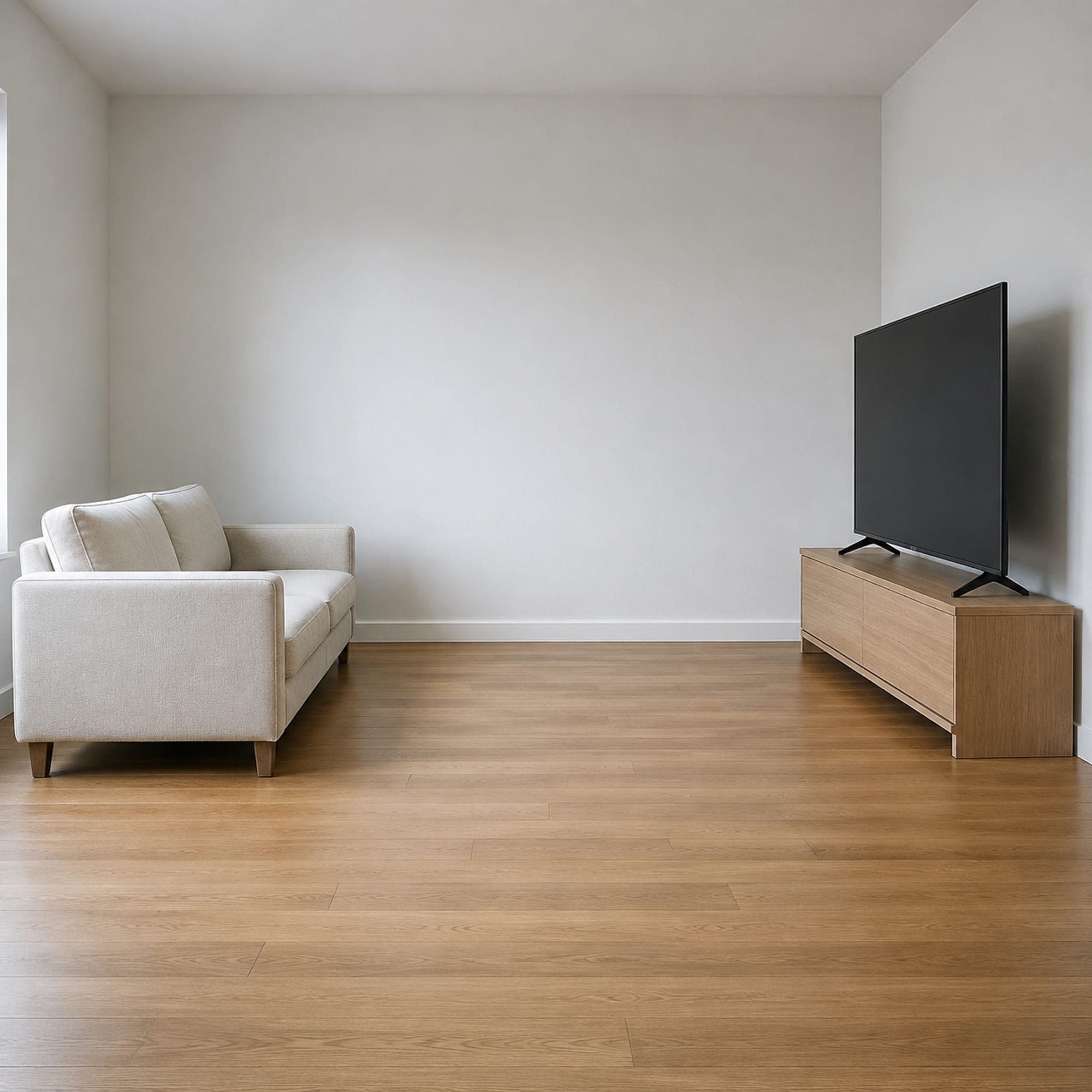
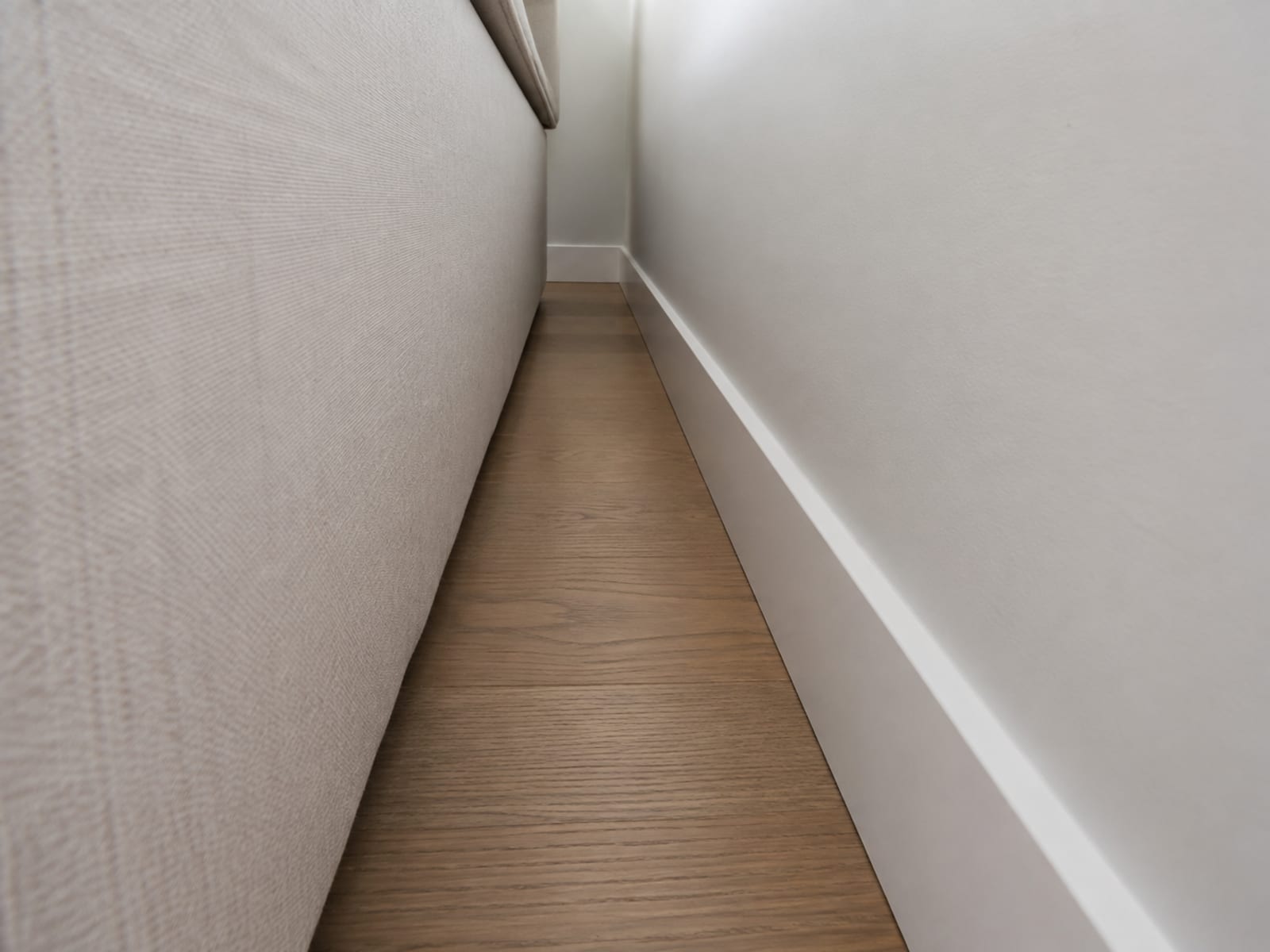
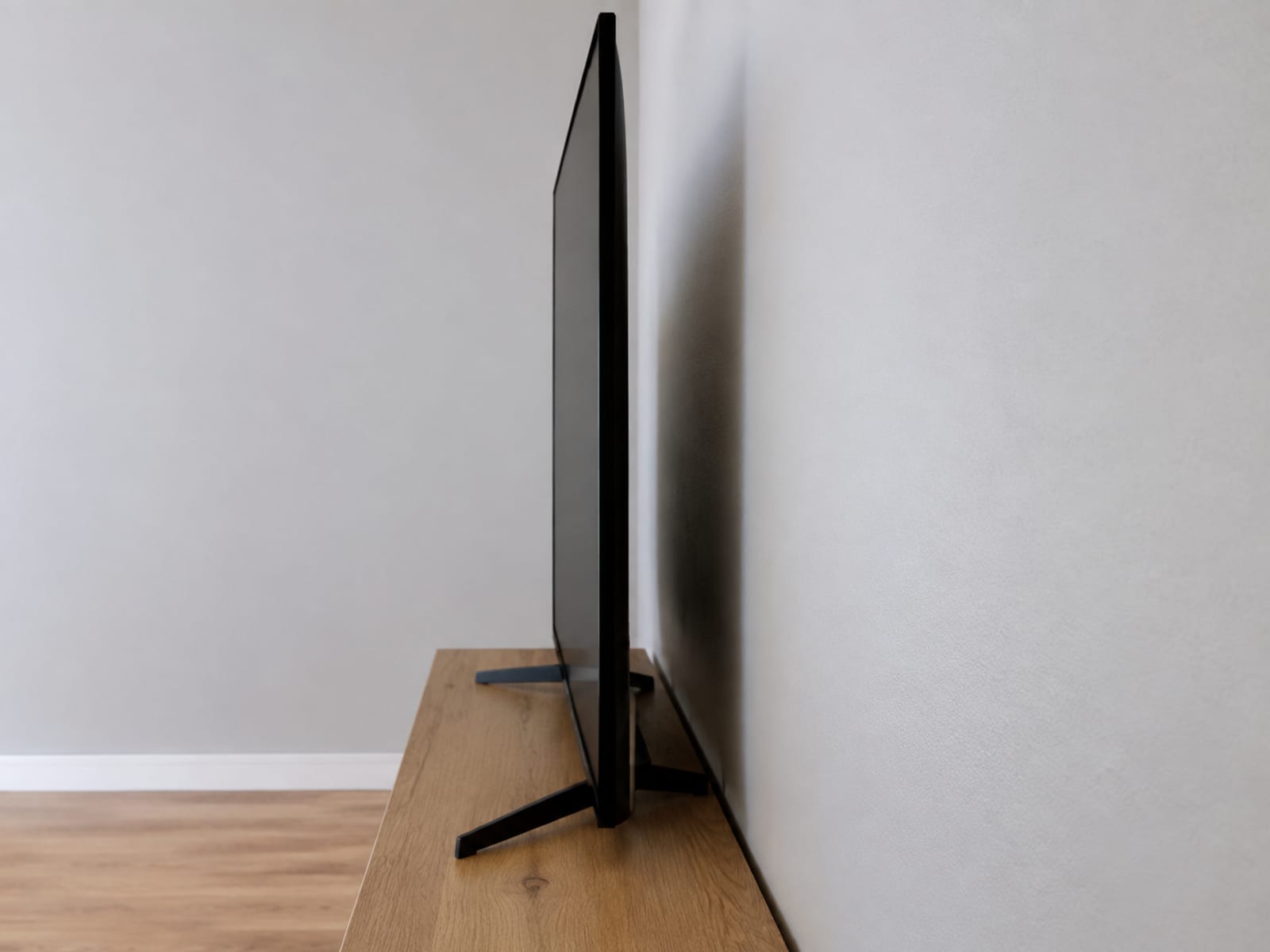
Between those two figures sit four things, and every one of them subtracts rather than adds. The TV stand or console holds the screen forward of the wall, often by twelve to eighteen inches of cabinet depth. The sofa sits off its own wall, because skirting boards, cables and cushions push it out a few inches. The seat depth takes another slice, because you sit forward of the back cushion rather than pressed into it; on a sofa with a 23-inch seat that is most of a foot. And your eyes are forward of your spine, which is small but real.
Put those together on ordinary furniture and the wall-to-wall figure overstates the viewing distance by something close to two feet. That is the difference between clearing Samsung's 5.5-foot target for a 55-inch set and missing it, which is why the recommendations feel wrong to people whose rooms are actually fine.
A poster on r/4kTV made the point without meaning to. RbixMAn described a room four metres wide, which is 13.1 feet, and then estimated the real seat-to-screen distance at 3.2 to 3.5 metres, or 10.5 to 11.5 feet. The room lost more than a foot and a half to furniture before anyone sat down.
The four measurements, and the order to take them in
Take these with the furniture where it will actually live, not where it is now.
1. Screen front to the wall behind it. Measure to the front face of the glass, including whatever the stand puts in front of the wall. 2. Sofa back to its wall. Usually two to six inches once cushions and cables are accounted for. 3. The seat depth of your sofa, published on most listings and measurable in thirty seconds otherwise. This is the usable seat, front to back, not the overall depth of the piece. 4. Where your eyes land. Sit down properly, have somebody hold the tape at the front edge of the seat, and note how far back your head actually is.
Then: room width, minus the screen's projection, minus the sofa's gap, minus the part of the seat you do not use. What you have left is the figure the television makers are talking about.
Hover or tap a row to highlight it.
| Screen | Sony, stated as a minimum | Samsung, a shopping target | LG's comfort table |
|---|---|---|---|
| 55 in | 39 in / 99 cm | 5.5 ft / 66 in / 168 cm | 7.5 ft |
| 65 in | 47 in / 119 cm | 6.5 ft / 78 in / 198 cm | 8.9 ft |
| 75 in | 55 in / 140 cm | 7.5 ft / 90 in / 229 cm | Not published for this size |
| 85 in | 63 in / 160 cm | 8.5 ft / 102 in / 259 cm | Not published for this size |
Those are three different kinds of number rather than three answers to one question. Sony calculates its figures as 1.5 times the screen's vertical height and calls them minimums, which is a floor rather than a recommendation. Samsung's is a retail planning target, roughly a foot of distance per diagonal inch. LG's table is farther again, at 0.07 feet per diagonal inch. Land anywhere between the floor and the target and you are in normal territory.
One thing that does change the answer outright is resolution. Sony's Full HD guidance is three times screen height, which puts a 55-inch set at 83 inches, more than double its own 4K minimum for the same screen. State the resolution whenever you state a distance, because a rule written for one does not transfer to the other.
If you are choosing the sofa rather than the television, where the sofa should sit in a room built around a screen covers the viewing angles and the reason the TV rule must never decide the size of the sofa.
How high, and why your seat height decides it
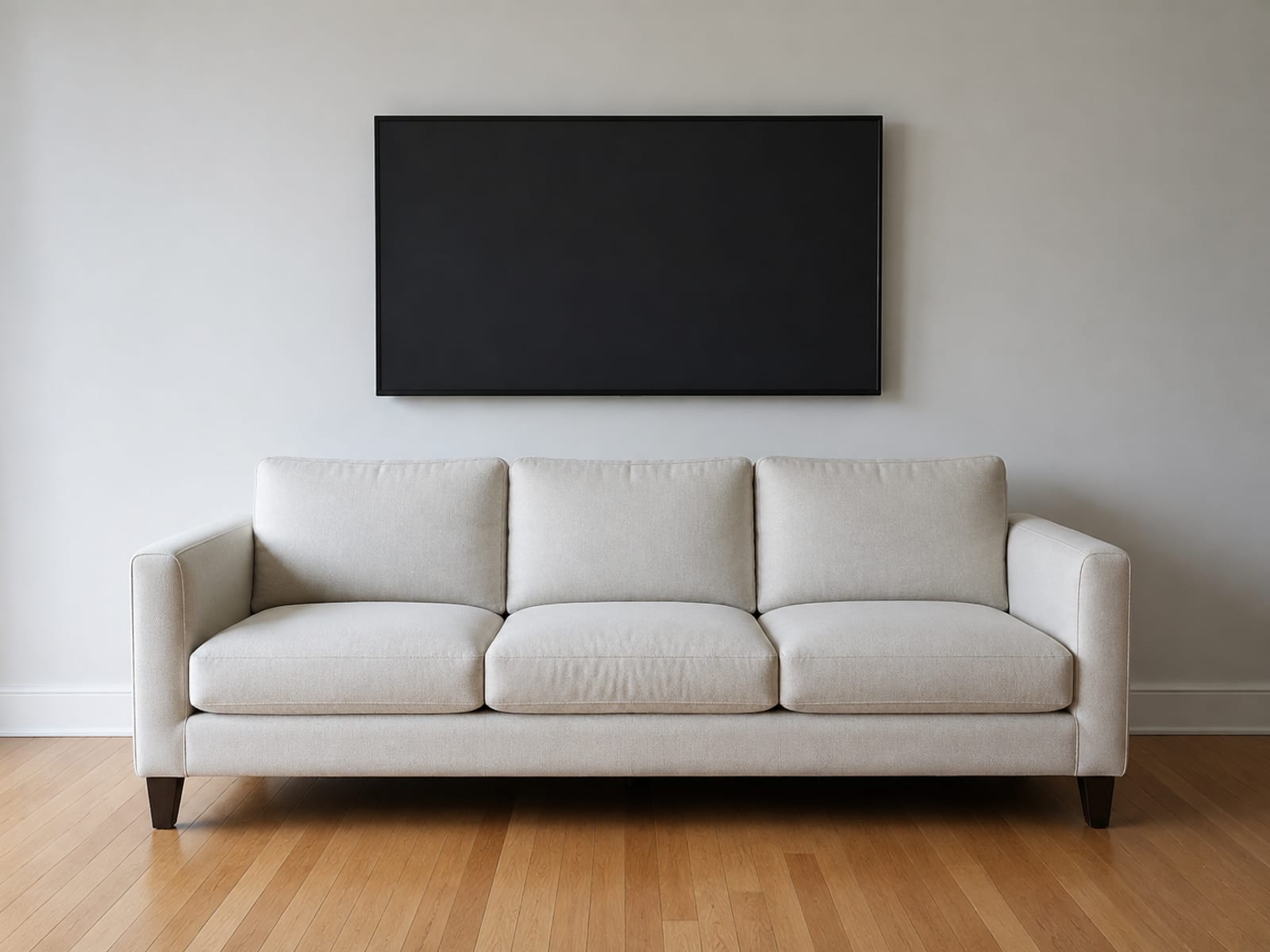
LG's guidance is that the middle of the screen belongs at or slightly below seated eye level, and it is careful to add that the roughly one metre, or 39.4 inches, figure people quote is an expert-rule generalization that varies by person and by seat.
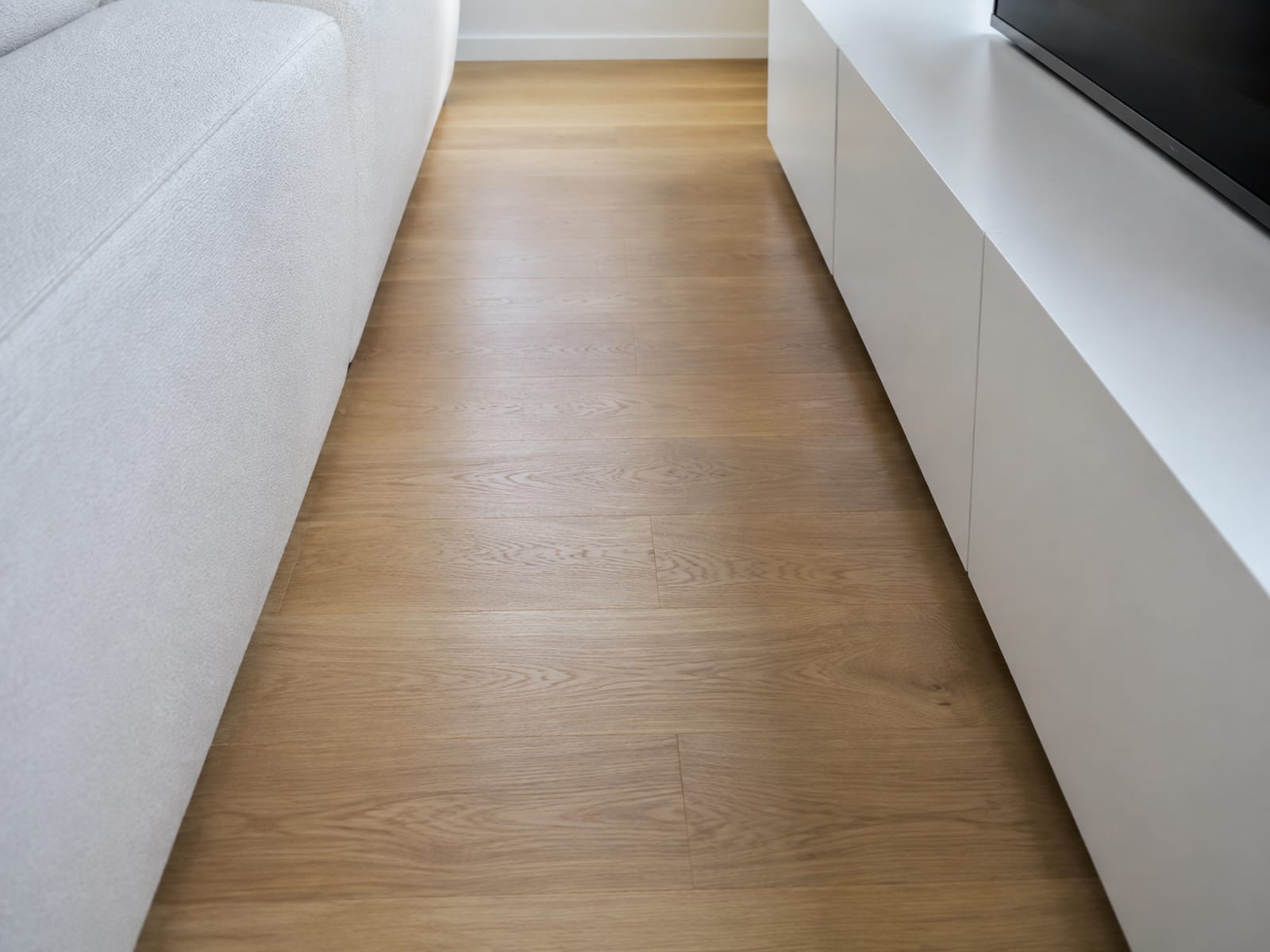
The variable it varies with is the seat height, which is printed on most sofa listings and ignored on most mounting guides. A sofa with a 15-inch seat height and one with a 19-inch seat height put the same person's eyes four inches apart, and a low lounge sectional and an upright three-seater are further apart than that. A bracket height copied off a forum is right for somebody else's furniture.
So, sit on the sofa you own, have somebody measure from the floor to your eyes, and put the centre of the screen there or a little below. It takes a minute and it is the only version of this measurement that is about you.
When the room decides instead
Sometimes the arithmetic is not the constraint. A poster on r/hometheater, Lordosis1235, laid out a small studio with a 65-inch 4K OLED planned opposite the couch, roughly 30 inches of walking space between the couch and the TV stand, and about 5 feet of seated viewing distance.
Five feet is below Samsung's 6.5-foot target for that screen and comfortably above Sony's 47-inch minimum, so the seating position is fine. The real constraint is the 30 inches, because moving the sofa back to hit the shopping target would consume the only route through the room. Walking space wins that argument, and the layout is not a compromise so much as a correct reading of which number was binding.
A second poster, crash_cove, redecorating around 600 square feet, gave the couch-back-to-TV distance as 10 feet while weighing a 77-inch set against an existing 65-inch one. That 10 feet is a back-of-sofa figure, so their true viewing distance is shorter than it sounds, which is exactly the correction this page exists to make. Both are single accounts rather than evidence about rooms in general.
Would you get this one right?
1. You measured 12 feet from the TV wall to the back of the sofa. What is your viewing distance?
2. Sony publishes 39 inches for a 55-inch 4K TV. What kind of number is that?
3. You are mounting the TV. What decides the height?
4. Your seated distance clears Sony's minimum but the walkway is 30 inches. What gives?
Pick an answer to begin.
Frequently asked questions
How close can my couch be to my TV?
Sony publishes 39 inches, or 99 cm, as its minimum reference distance for a 55-inch 4K screen, and 47 inches, or 119 cm, for a 65-inch. Those are screen-to-eye figures rather than sofa-back-to-wall, so measure accordingly. Closer than the minimum and the pixel structure starts to be visible on 4K content.
How far away from a 55 inch TV should you sit?
Somewhere between 39 inches and 5.5 feet, depending on which maker you follow and what you are watching. Sony's 39 inches is a 4K floor and Samsung's 5.5 feet is a shopping target. If the content is Full HD rather than 4K, Sony's own rule of three times screen height puts the same set at 83 inches.
How high should a TV be in relation to a couch?
With the middle of the screen at or slightly below your seated eye level, which LG publishes and which depends on your sofa's seat height rather than on a fixed number. Measure your own eye height sitting on your own sofa. The 39.4-inch figure that circulates is a generalization and LG says so.
Is a 65 inch TV too big for a small living room?
Not by distance alone. A 65-inch 4K set clears Sony's minimum at 47 inches, which almost any room manages. What usually decides it is circulation: if hitting a comfortable distance means blocking the only walkway, the room is telling you something the screen size is not.
Should I measure in feet, centimetres or metres?
Whichever the maker used, then convert once and write both down. Sony publishes inches and centimetres, Samsung publishes feet and inches, and the mistakes happen in the conversion rather than in the measuring.
The terms behind the distance
Tap a term to see what it means.
Viewing distance. Front of the screen to the viewer's eyes when seated. It is not the room's width and it is not the distance to the back of the sofa.
Take the four measurements before you order either piece, because the one you buy second has to live with the one you bought first. If it turns out the sofa is the flexible part, PlushPick has what the published seat depth and seat height actually change once the room is fixed.
Cal Hewitt
Writer at PlushPick. I compare sofa specs, comfort, durability, and value so you can buy with clearer expectations.
About Cal and how the guides are researchedThe latest
 "Best-of"Best Furniture Protectors for Pets, by What They Actually Cover
 "Best-of"Best Pet-Friendly Sofa Fabrics: Claws, Hair and Spills
 "Best-of"Best Sofas for Small Spaces: Narrow Doesn't Mean Shallow
 "Best-of"Best Recliner Covers for Dogs: What Actually Stays On
 AnswerSofa vs Sectional: Which One Fits Your Room and Life
 AnswerHow to Measure a Sofa So It Fits Through the Door