

Best Fabric for a Sofa: How Much Wear Your House Needs
The best fabric for a sofa clears the home benchmark, not the lobby one. See what five named covers publish about abrasion, pilling, fiber and washing.
By Cal Hewitt, (updated )
Affiliate disclosure. If you buy through a link on this page, PlushPick may earn a commission at no extra cost to you. That never changes which products are named or what is said about them. As an Amazon Associate I earn from qualifying purchases. How this works
Buy the cover that publishes a real figure, then check that figure against the benchmark for a home rather than the one written for a hotel lobby. The Association for Contract Textiles, whose voluntary guidelines are the ones the upholstery trade works to, sets private space at 15,000 Wyzenbeek double rubs or 20,000 Martindale cycles. The 30,000 and 40,000 figures that get quoted at shoppers are its public high-traffic references, for waiting rooms and lobbies. Clear the home bar, then spend the rest of the decision on the failure you are actually going to get, which on a family sofa is usually pilling, and pilling is a different test entirely.
At a glance
Key Takeaways
The home benchmark is about half the number you are shown
ACT sets 15,000 double rubs or 20,000 cycles for private space, against 30,000 or 40,000 for public high-traffic.
Abrasion and pilling are separate tests
ASTM lists pilling under D3511 and D3512, apart from the abrasion methods, so a large rub count promises nothing about fuzz.
A bigger number stops meaning more
ACT says results above 100,000 Wyzenbeek rubs have not been shown to indicate longer life.
The same fabric can test 60% apart
ACT reports results varying by more than 60% on some woven structures, which is why a small gap between two numbers decides nothing.
Performance is a category, not a fiber
Sunbrella's own definition covers water, mildew, fade, pilling and abrasion resistance as five separate properties.
Price does not buy disclosure
The $2,299 sectional here publishes nothing about its cover; the $1,399 sleeper publishes 55,000 cycles.
How these were judged
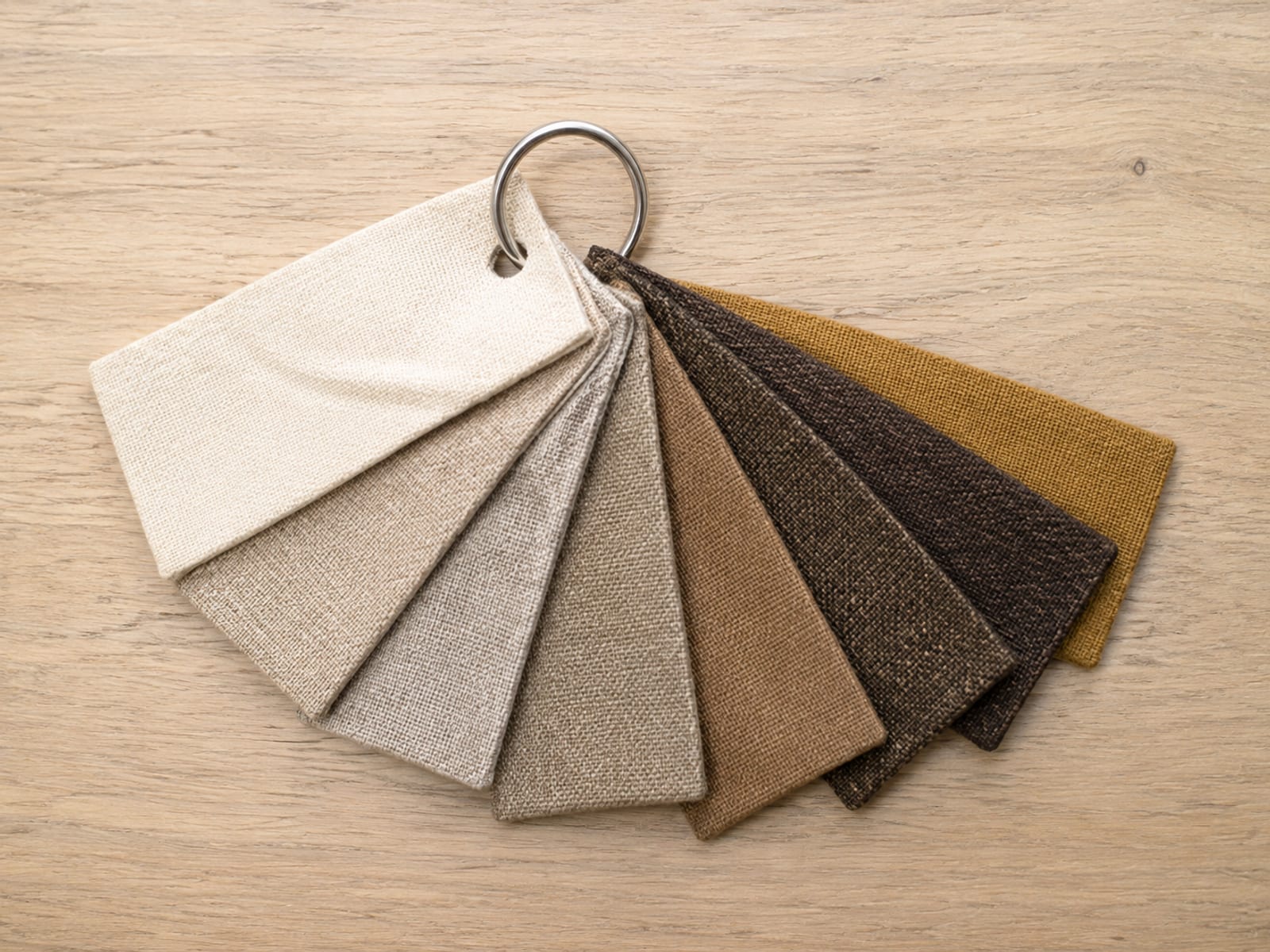
Every candidate was read on the maker's own page, and the only thing that counted was what that page was willing to state. A fabric that publishes an abrasion figure, a fiber content, a care path or a cleaning limit can be compared with another one. A fabric described as durable, easy care and family friendly cannot be compared with anything, including itself in a year.
Where a figure appears, it is reported with whatever context its maker gave it, and where the test method is missing that is said plainly, because a count without its method cannot be set beside a count from a different machine. Nothing here is ranked on how a swatch feels, because that is yours to judge and it is the one part of this you can do better than any page can. Care codes are read the same way on every cover, and what each cleaning letter permits settles most of what happens after a spill.
Best documented, including its own limits: Sunbrella performance upholstery fabric
Sunbrella is the only name in this set that publishes what its fabric will not do. Its definition of performance fabric is cleanable, stain-resistant and durable, and the properties behind that are listed separately: water, mildew, fade, pilling and abrasion resistance. Five properties, not one word.
It also publishes a full cleaning method rather than a reassurance. Mist mild soap and water across the whole affected surface, seam to seam, agitate gently with a soft sponge or very soft brush, rinse the entire surface, blot out the excess and let it air dry. The reason it says seam to seam is that treating only the spot is what leaves a ring.
And then the part almost nobody publishes: Sunbrella states that full stain removal is not always guaranteed when a spill is not addressed promptly. It also tells owners to check with the furniture maker before removing any casing, because cushion construction varies and a removable cover is not automatically a washable one. A maker willing to write down the limits of its own product is telling you it expects to be held to the rest.
Best cover you can wash and replace: Lovesac Sactionals Covers, Seat, Sapphire Navy Corded Velvet
Lovesac states that its Sactionals covers are machine washable, and more usefully, it sells them as a separate line item. The Sapphire Navy Corded Velvet seat cover was $240 on sale against $400 regular on lovesac.com as of September 2026.
That is a cover price and not a sectional price, so it does not belong in a comparison with the whole pieces below. What it buys is a different relationship with the fabric decision. On most sofas the cover is the sofa, and a cover you regret at year three is a piece of furniture you regret at year three. Where covers are separately priced and separately washable, the fabric stops being permanent and starts being a consumable, and the number that matters becomes what a replacement costs rather than how many rubs the original survived.
Best published abrasion figure: IKEA MORABO Sleeper Sofa, Gunnared dark gray/wood
The MORABO listing publishes 55,000 abrasion cycles, which is the highest figure in this set by a distance, and it supplies its own context: IKEA says 15,000 cycles and up suits everyday home furniture and that 30,000 and up indicates good ability to resist abrasion. The piece is 88 5/8 inches wide by 36 1/4 deep by 33 1/8 high, its seat cushion and mattress use 2.0-pound-per-cubic-foot polyurethane foam, and it was $1,399 on ikea.com as of September 2026.
The listing does not name the test method, so those 55,000 cycles cannot be lined up against a result from ASTM D4157 or ASTM D4966; the two methods produce numbers that are not interchangeable, which is worked through in more detail in why a rub count means little without its test name. And the cover is published as stationary, which means it does not come off. Every spill on this sofa is a spot-cleaning job for as long as you own it.
Best published fiber content: IKEA SÖDERHAMN 3-Seat Sleeper Sofa, Viarp beige/brown
Most listings tell you a weave or a mood. The SÖDERHAMN listing tells you what the cloth is made of: 76 percent cotton and 24 percent recycled polyester. That is a fiber content rather than a texture name, and it is the thing that actually predicts how a cover behaves when it is washed, sat on wet, or left in a sunny corner.
The piece publishes 89 inches wide by 39 deep by 32 5/8 high, with a 36 5/8-inch seat depth and a 15 3/4-inch seat height, and it opens to a bed of 76 3/4 by 61 3/8 inches. That seat depth is unusually long, so read it against your own legs before anything else on this page matters.
Best proof that price does not buy disclosure: IKEA STOCKHOLM 2025 Sectional, 4-Seat, Alhamn beige
The STOCKHOLM 2025 four-seat sectional was $2,299 on ikea.com as of September 2026, which makes it the most expensive piece here by nine hundred dollars. It publishes 121 1/4 inches of width, 39 inches of depth, a 25 1/4-inch seat depth and a 15 3/4-inch seat height.
About the cover it publishes nothing. No abrasion figure, no fiber content, no care path. The MORABO at $1,399 from the same retailer publishes 55,000 cycles and names its foam density. So, if you were expecting the fabric information to improve as the price climbs, it is worth knowing before you shop that it does not, and that the question has to be asked at every price rather than assumed at the top one.
Hover or tap a row to highlight it.
| Product | Abrasion figure | Test method named | Fiber content | Cover removable | Price, September 2026 |
|---|---|---|---|---|---|
| Sunbrella upholstery fabric | Not published | Not applicable | Not published | Ask the furniture maker | Varies by sofa |
| Lovesac Sactionals seat cover | Not published | Not applicable | Not published | Yes, machine washable | $240 on sale, $400 regular |
| IKEA MORABO sleeper | 55,000 cycles | No | Not published | No, stationary | $1,399 |
| IKEA SÖDERHAMN sleeper | Not published | Not applicable | 76% cotton, 24% recycled polyester | Not published | Not published here |
| IKEA STOCKHOLM 2025 sectional | Not published | Not applicable | Not published | Not published | $2,299 |
How much wear does a house actually need?
This is the question the hangtags are answering for somebody else. ACT publishes two tiers for woven upholstery, and the gap between them is the whole point. Private space is 15,000 Wyzenbeek double rubs or 20,000 Martindale cycles. Public high-traffic space is 30,000 or 40,000. A living room is private space. The larger pair is the reference for furniture that gets sat on by strangers all day.
Three more things ACT says are worth carrying into the shop with you. The two tests have no correlation, so a Wyzenbeek figure and a Martindale figure cannot be converted into one another or ranked against each other. Results above 100,000 Wyzenbeek double rubs have not been shown to indicate longer life, so the very large numbers used as headline claims are not buying you anything measurable. And results can vary by more than 60 percent on some woven structures, which means a fabric at 22,000 and a fabric at 28,000 have not been meaningfully separated.
Put together, that turns a long comparison into a short one. Find out whether the cover clears the private-space bar. If it does, stop comparing rub counts and start comparing the things below.
Why does a sofa go fuzzy when the number said it would not?
Because the number was measuring something else. Abrasion testing drags a pad across a fabric until the surface wears through, which is one kind of failure. Pilling, the small balls of fuzz that appear on the seat cushion somebody sits on every evening, is a surface-change failure with its own test methods, listed in ASTM's textile catalogue as D3511 and D3512, entirely separate from the abrasion ones.
So, an abrasion count establishes nothing at all about pilling, however large the number is. And pilling is what people report. One buyer on r/BuyItForLife described paying more than $2,000 for a Drew and Jonathan modular sofa and finding pilling and fuzziness after a year and a half, concentrated on the chaise and one favorite cushion where two dogs lay. Nothing wore through. The surface simply changed, on exactly the two spots that got used. If claws and hair rather than fuzz are the main event in your house, the sofas and covers built for pets is the shorter list to start from.
That is one account rather than a measurement, and the shape of it is what matters: the failure arrived early, it arrived where the use was, and it was not the failure the tag was describing. When a seller can only offer an abrasion figure, ask whether anything is published about pilling. Often the honest answer is no, and knowing that is better than assuming the big number covered it.
Would you get this one right?
1. A cover publishes 45,000 double rubs. What have you learned about pilling?
2. One fabric tests at 22,000 cycles and another at 28,000. Which is more durable?
3. A hangtag advertises 150,000 double rubs. What does the extra buy you?
4. A listing says the cover is removable. Can it go in the washing machine?
Pick an answer to begin.
What does the word performance actually cover?
It covers whatever the maker decided it covers, because it is a marketing category and not a fiber or a standard. Sunbrella's published definition is the most complete one available, and it separates the idea into water resistance, mildew resistance, fade resistance, pilling resistance and abrasion resistance. A cover can genuinely have one of those and none of the others.
That makes the word a starting point for a question rather than an answer. Which of the five does this particular cover publish, and is the one you need on the list? A household with a sunny bay window needs fade resistance. A household with a toddler needs the cleaning path. They are not the same product and the same word is sold to both.
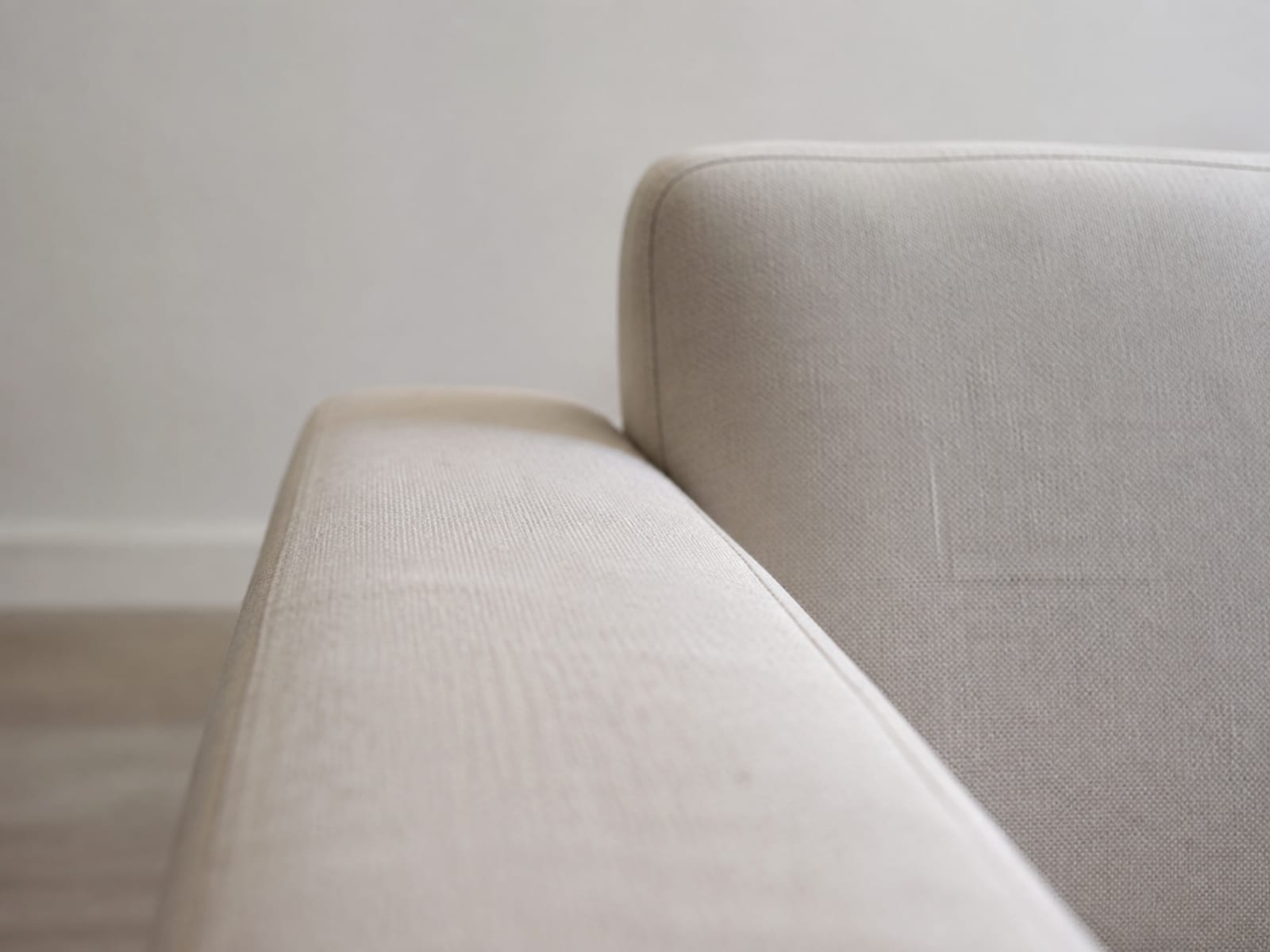
Does the cover come off, and will it survive the machine?
This is the question that changes most about living with a sofa, and it has three possible answers rather than two. A stationary cover, like the MORABO's, is not designed to come off at all. A removable cover comes off but is not automatically machine washable, which is why Sunbrella tells owners to check with the furniture maker first; cushion construction varies and some casings are removable only for a professional. And a genuinely washable cover, like the Sactionals covers Lovesac publishes as machine washable, is the one that makes a spill an evening's inconvenience instead of a permanent feature. Sofas whose covers come all the way off are a small field, and they are worth knowing by name before you fall for a swatch.
The reason this outranks a rub count for most households is arithmetic. Abrasion decides when the fabric wears through, which for a home-grade cover is usually years away. Cleanability decides what the sofa looks like next Tuesday. Ask which of the three you are buying, in those words, before you choose a color. When you do get to the color, the lightfastness rating and what it is telling you is the number to look for.
Frequently asked questions
What is the most durable fabric for a sofa?
There is no single answer that survives contact with the published evidence, because the trade body that sets the guidelines says its own two abrasion tests have no correlation with each other and that results can vary by more than 60 percent on some woven structures. The useful version is a threshold rather than a winner: clear ACT's private-space reference of 15,000 Wyzenbeek double rubs or 20,000 Martindale cycles, then choose on cleanability and whether the cover comes off.
Is a higher rub count always better?
Not past a point. ACT states that results above 100,000 Wyzenbeek double rubs have not been shown to indicate longer life, so the very large figures used in advertising are not evidence of a longer-lasting sofa. Below that, a modest gap between two numbers is not a real difference either, given how widely results vary on some weaves.
What is the best material for a sofa?
The one whose maker publishes the property your house is going to test. A sunny room needs fade resistance, a household with young children needs a published cleaning method and a washable cover, and a household that wants the surface to stay smooth needs something said about pilling rather than only about abrasion. No primary source ranks one material best for every home, and the sellers that publish the most tend to be the ones worth shortlisting.
How long will a sofa fabric last?
Nobody can tell you in years, and a seller who does is going beyond what the testing supports. ASTM's own Martindale standard says at section 5.4 that laboratory abrasion is one contributor among several and should not be used to predict a specific wear life without supporting data. What you can find out is whether a warranty covers the cover, and for how long.
The words on a fabric spec
Tap a term to see what it means.
Wyzenbeek, ASTM D4157. An abrasion method reported in double rubs. ACT's private-space reference is 15,000 of them.
Once you know which of the five performance properties your room is going to test, the shortlist gets short quickly, and the sofas worth your time are the ones whose listings answered the question without being asked. PlushPick keeps the published figures for these covers in one place so the next swatch wall is a shorter afternoon.
Cal Hewitt
Writer at PlushPick. I compare sofa specs, comfort, durability, and value so you can buy with clearer expectations.
About Cal and how the guides are researchedRelated
All guides- "Best-of"
Best Furniture Protectors for Pets, by What They Actually Cover
A cover marked waterproof still leaves an exposed arm bare. The best furniture protectors for pets, sorted by what they cover and what they stop.

- "Best-of"
Best Pet-Friendly Sofa Fabrics: Claws, Hair and Spills
Worried your dog or cat will ruin a new couch? Find the best pet-friendly sofa by fabric: claw resistance, hair pickup, stains and removable covers.

- "Best-of"
Best Sofas for Small Spaces: Narrow Doesn't Mean Shallow
Best sofas for small spaces, compared by outside width and seat depth together, because a narrower sofa can have a deeper seat than a wider one.

- "Best-of"
Best Recliner Covers for Dogs: What Actually Stays On
A recliner moves, so a sofa cover will not stay put. The best recliner covers for dogs, sorted by measured seat width, from one chair to a three-seat sofa.
