Best Lift Chairs: Sizes, Positions and What Medicare Covers
The best lift chair fits the person: seat height, width and weight capacity for five chairs from Pride, Golden and La-Z-Boy, plus what Medicare covers.
By Cal Hewitt,
Affiliate disclosure. If you buy through a link on this page, PlushPick may earn a commission at no extra cost to you. That never changes which products are named or what is said about them. As an Amazon Associate I earn from qualifying purchases. How this works
The best lift chair is the one sized to the person who will use it, so start with their height, their weight and a tape measure. For a user 5 ft 3 in or shorter, Pride's Essential LC-105 has an 18-inch seat and La-Z-Boy's Jean Bronze petite has a 19-inch seat at $899 on la-z-boy.com as of September 2026. For someone between 5 ft 4 in and 5 ft 9 in, Pride's Essential LC-250 has a 20-inch seat and holds 375 pounds. Golden Technologies' Rhea and Titan both hold 400 pounds, and the Titan has the tallest back of the five at 31 inches. On Medicare, the item Part B can help pay toward is the seat lift mechanism, and only when the conditions CMS sets are met and documented; the chair itself is billed separately.
At a glance
Key Takeaways
Measure the person first
Pride's method is knee to floor for seat height, across the seated hips plus a couple of inches for seat width, and back of the seat to the back of the knee for seat depth.
Seat heights here run 18 to 20.5 inches
The 18-inch Pride LC-105 is built for users 5 ft 3 in and under; the 20.5-inch Golden Titan suits a taller medium frame.
Capacity runs 325 to 400 pounds on the picks that list it
Golden's chart lists wide sizes rated to 500 and 600 pounds for a heavier user.
Batteries may not be in the box
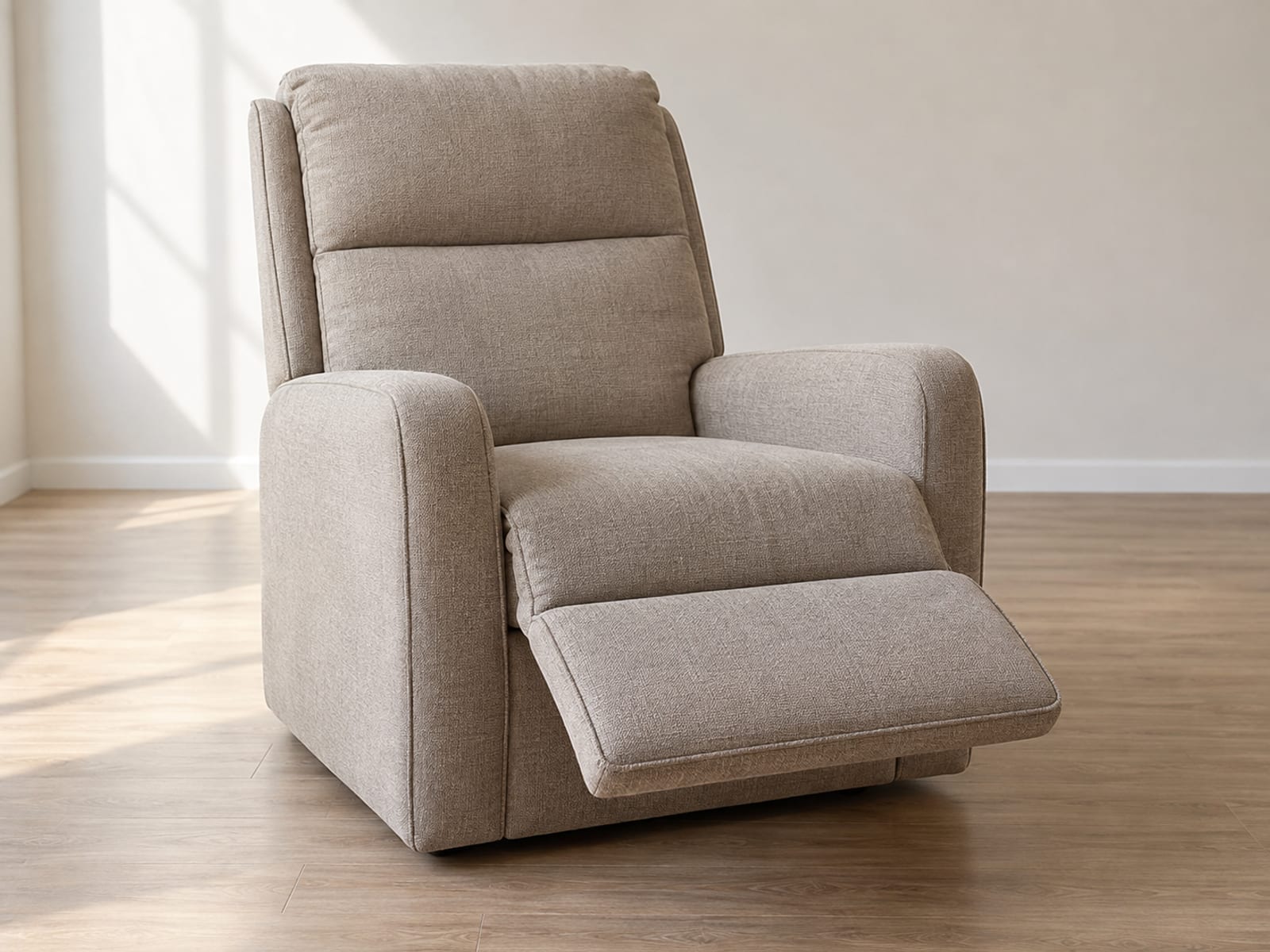
Pride's chairs have battery backup built in with the batteries sold separately, and the La-Z-Boy Jean takes two 9V batteries.
Leave room behind the chair
Reclined wall clearance runs from 17 inches on the Pride LC-105 to 26 inches on the Golden Titan.
Medicare looks at the mechanism
CMS covers a seat lift mechanism only when every listed condition is met, and the chair portion is billed on its own code.
How these were judged
Every pick is a power lift recliner, the kind that tilts forward to bring the user up to standing, and each one had to come from a maker that lists the figures that decide fit: seat height, seat width, seat depth, a user height range or size name, and weight capacity. Warranty terms came next, split by part where the maker splits them, then battery backup and reclined wall clearance. A dated price is given where the maker or seller shows one. Recliners that do not lift are a separate category, covered in PlushPick's recliner picks.
The measurements that matter belong to the person, so take them before you open a listing. Pride's own sizing advice is to sit the user in an ordinary chair with feet flat and measure three things: from the floor to the back of the knee, which is the seat height to look for; across the hips while seated, adding a couple of inches for wiggle room, which is the seat width; and from the back of the seat to the back of the knee, which is the seat depth. Write the three numbers down with the user's height and weight, and you have everything a size chart asks for.
Width deserves a second look. Consumer Reports advises checking that a chair is not overly wide and that the user feels supported, and the reason is practical: a person who pushes on the arms to steady themselves needs to reach both arms comfortably from the middle of the seat. If I were choosing for a parent, I would rather give up an inch of width than have their hands land short of the armrests.
Best for users 5 ft 3 in and under: Pride Essential LC-105, Small
The LC-105 is Pride's smallest Essential chair, sized for users 5 ft 3 in and below, with an 18-inch seat height, which is the lowest seat among the five picks. Pride lists a 19-inch seat depth, a 20-inch seat width, a 24-inch back height and a 325-pound weight capacity on the LC-105 specification page. It is a three-position chair, so it lifts, sits upright, leans back for reading and reclines far enough to nap. Set it at least 17 inches from the wall.
The low seat is the reason to choose it. A shorter person whose feet dangle from a standard chair can keep them flat on the floor, and a seat that meets the back of the knee lets them sit back fully instead of perching on the front edge. The 20-inch width suits a small frame and keeps the arms within reach.
The trade is the warranty. Pride's lift chair warranty gives the LC-105 one year of limited coverage on the motor, the control boxes, the lift frame, the hand control and the scissor mechanism, while its other models carry longer terms. Fabric is excluded, and labor, service calls and shipping are generally not covered unless Pride authorizes them in advance. The Essential brochure says the chair has emergency battery backup built in, with the batteries not included, so buy them with the chair. The specification page shows no price, so ask a seller for a quote on the LC-105 in the fabric you want, and ask whether it has one or two motors, since Pride does not list the count.
Best for users 5 ft 4 in to 5 ft 9 in: Pride Essential LC-250, Medium
The LC-250 is the medium chair in the same Essential line, for users 5 ft 4 in to 5 ft 9 in, with a 20-inch seat height, a 20-inch seat depth, a 22-inch seat width and a 26-inch back height. Pride rates it for 375 pounds, which is 50 more than the LC-105, and it is a three-position chair that needs 20 inches from the wall to recline.
It suits the middle of the height range, and the two extra inches of seat width over the LC-105 give room for a larger frame without going so wide that the arms drift out of reach. The battery backup is the same built-in system with batteries sold separately.
Pride's Essential listing shows a two-year limited warranty for the LC-250. Pride's warranty document describes four years on the motor, lift frame and control parts for its models other than the LC-105, followed by three prorated years, and its brochure describes lifetime coverage on the lift mechanism for most chairs. Ask the seller which terms apply to the LC-250 you are buying, get them in writing with a price quote, and ask about the motor count at the same time.
Best with lithium-ion battery backup: Golden Rhea PR442, Medium or Large
Golden's Rhea is the pick for a household that wants the battery question settled, because the Rhea listing names its battery backup as lithium-ion. It holds 400 pounds, and Golden lists a 20-inch seat height, a 21-inch seat depth, a 22-inch seat width, a 29-inch back height and 7 inches from the seat to the top of the arm. It comes in Medium and Large, so confirm with the seller which size those figures describe before you order. Golden's sizing guide puts Medium at 5 ft 5 in to 6 ft and Large at 5 ft 10 in to 6 ft 2 in.
Golden calls the Rhea's positioning its 4-Zone Comfort Zone. That is Golden's own name, so ask the dealer how the back and footrest move on it and whether they move separately. The listing shows Golden's HeatWave technology as standard and no heat-and-massage option. Reclined, the Rhea needs 25 inches from the wall, so it wants more floor behind it than either Pride chair.
The warranty is lifetime on the frame, lift frame and recline mechanism, three years on electrical parts, three years of mechanical labor and one year of electrical labor; Golden does not list a fabric warranty for it. Golden's lift recliner page showed an MSRP, the maker's suggested price, of $2,449 to $2,549 as of September 2026, so ask the seller for its own quote.
Best for a taller back: Golden Titan PR448, Medium
The Titan has a 31-inch back, the tallest in the set, for a user who wants the chair back to reach higher behind them. Golden's Titan specification sheet lists a 20.5-inch seat height, a 20.5-inch seat width, a 21-inch seat depth, 6.5 inches from the seat to the top of the arm and a 400-pound capacity. The Titan PR448 in this spec sheet is a Medium, which Golden's chart places at 5 ft 5 in to 6 ft.
Its positioning is Golden's MaxiComfort system, again Golden's own name, so ask the dealer how far it reclines and whether the back and legs move independently. It has no heat or massage. It needs the most room of any pick, 26 inches from the wall when reclined.
Golden covers the chair frame, lift frame and recline mechanism for life, the electronics for three years, mechanical labor for three years and electrical labor for one year, with prorated coverage in years four through seven. The spec sheet does not list the battery type, so ask whether a battery comes with the chair. The MSRP was $2,289 on Golden's lift recliner page as of September 2026.
Best petite chair with a posted price: La-Z-Boy Jean Bronze Power Lift Recliner, Petite
La-Z-Boy's Jean is the only pick here with a retail price on the maker's own store: $899 on the Jean Bronze listing as of September 2026, for style 3BL793. It is a petite chair for users 5 ft 3 in and under, with a 19-inch seat height, a 21-inch seat width and a 21-inch seat depth. The whole chair is 32.5 inches wide, 38 inches deep and 40.5 inches tall, the arms sit 23.5 inches off the floor, it stretches to 61.5 inches fully extended and it weighs 102 pounds.
Next to the Pride LC-105, it gives a small user an inch more seat height, an inch more width and two inches more depth, which suits someone short but with longer thighs. It is made to order, and La-Z-Boy shows 6 to 8 weeks and says it is hand-delivered to the home, so plan around that wait if the chair is needed after a hospital stay.
The listing leaves out several figures that matter on a lift chair: the user weight capacity, the back height, the number of positions and the motor count. Ask the store for each one before you order, especially the weight capacity. Battery backup runs on two 9V batteries, and the chair carries La-Z-Boy's limited lifetime warranty, which the listing does not split by part, so ask how long the lift motor and electronics are covered.
The five chairs side by side
Hold the three measurements you took against this table, with the seat height first, then width, then capacity.
Hover or tap a row to highlight it.
| Chair | User height | Seat height | Seat width | Seat depth | Back height | Capacity | Wall clearance | Price |
|---|---|---|---|---|---|---|---|---|
| Pride LC-105, Small | 5 ft 3 in and under | 18 in | 20 in | 19 in | 24 in | 325 lb | 17 in | Dealer quote |
| La-Z-Boy Jean Bronze, Petite | 5 ft 3 in and under | 19 in | 21 in | 21 in | Ask the store | Ask the store | Ask the store | $899 |
| Pride LC-250, Medium | 5 ft 4 in to 5 ft 9 in | 20 in | 22 in | 20 in | 26 in | 375 lb | 20 in | Dealer quote |
| Golden Rhea PR442 | Medium or Large | 20 in | 22 in | 21 in | 29 in | 400 lb | 25 in | $2,449 to $2,549 MSRP |
| Golden Titan PR448, Medium | 5 ft 5 in to 6 ft | 20.5 in | 20.5 in | 21 in | 31 in | 400 lb | 26 in | $2,289 MSRP |
Sizes for a user over 6 feet or over 400 pounds
None of the five picks is built for a user taller than 6 ft 2 in or heavier than 400 pounds, and both groups have their own sizes. Golden's chart lists a Tall size for users 6 ft 2 in and above, with a 22.5 to 23-inch seat height, a 23-inch seat width and a 400-pound capacity, and a Tall/Wide size rated to 500 pounds with a 29-inch seat width. For a heavier user of medium height, Golden's Medium Wide runs 27 to 29 inches across the seat and is rated to 600 pounds, and its Large/Wide is also rated to 600.
Pride sizes its range the same way. Its sizing chart runs from Small, with an 18 to 19-inch seat height and an 18 to 20-inch seat width, through Medium and Large or Large-Tall, which reaches a 21.5-inch seat height and a 31-inch back, up to X-Large and XX-Large, with seat widths of 26 and 30 inches. Pride says to check the exact model for weight capacity and dimensions, because the chart gives ranges.
On Golden's lift recliner page, the Cloud Classic PR510 is listed at 400 to 600 pounds with an MSRP of $2,479 to $2,839 as of September 2026. That page does not give its seat measurements, so ask a Golden dealer for the spec sheet of the exact size before you compare it with the chairs above. Golden notes that its general chart is not a guarantee of fit or a basis for a return or exchange, which is one more reason to hold the exact model's figures against the user's own measurements.
What two-position, three-position and infinite-position mean
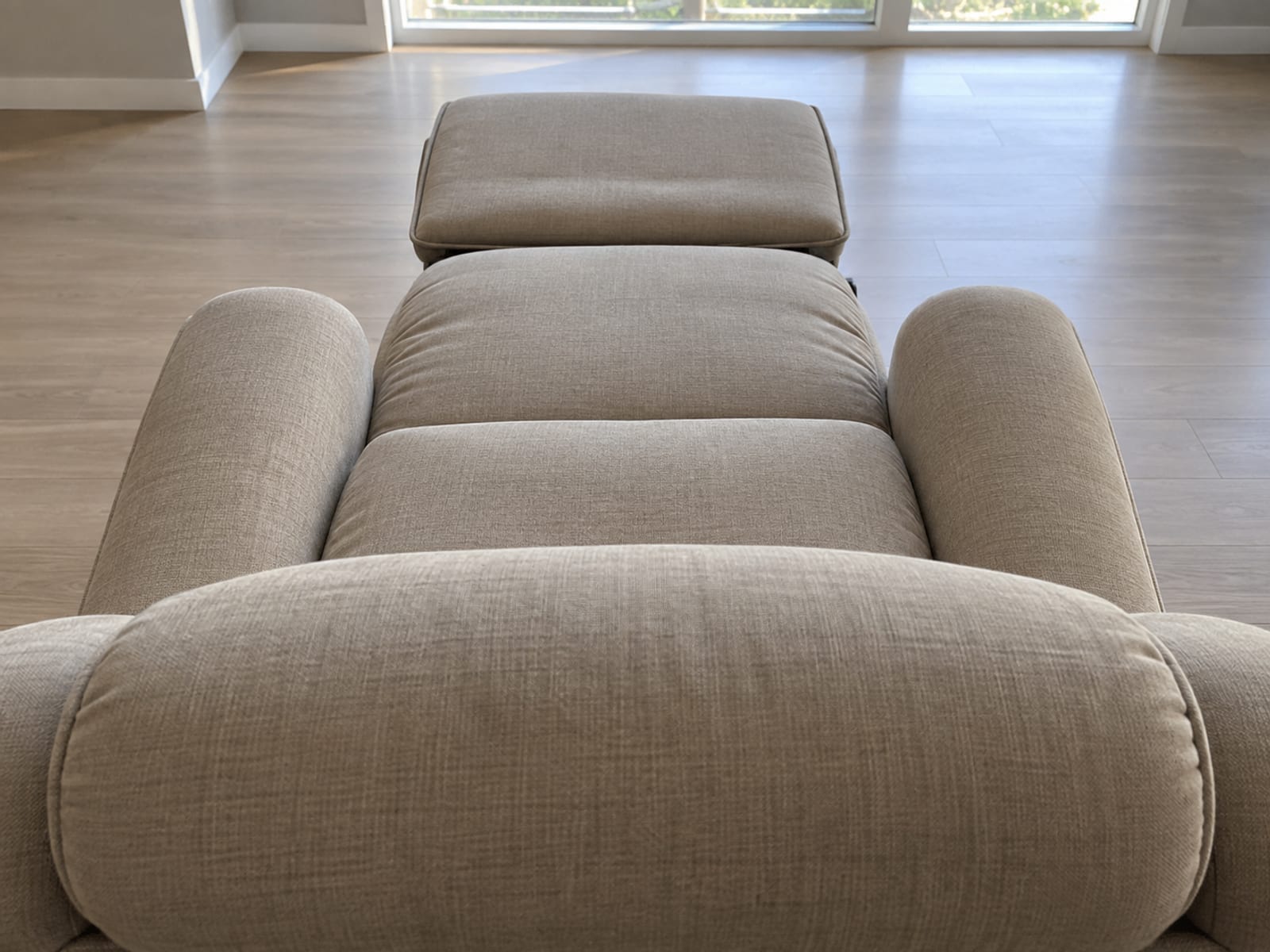
The position type decides how far the chair goes back and whether the back and footrest can move separately. Pride defines the three types in its sizing and position answers:
- Two-position, which Pride also calls TV recline, lifts, sits upright and leans back to a reading position.
- Three-position, or full recline, adds a napping position further back.
- Infinite-position moves the backrest and footrest independently, so the user can stop at many combinations, and Pride says some models include Trendelenburg or zero-gravity positioning.
For someone who naps in the chair, three-position is the least that reclines far enough. For someone who wants their legs up without lying back, infinite-position is the type that separates the two. Golden uses its own names, Comfort Zone and MaxiComfort among them, so ask a Golden dealer which of the three behaviors the chair you are looking at has. What owners report about single and dual motors is covered in the types of recliners explained; no pick here lists its motor count, so ask for it.
Battery backup, and what happens when the power goes out
A power lift chair keeps working in an outage only if it has battery backup and the batteries are in it, and each maker handles that differently:
- Pride builds emergency battery backup into its chairs, according to its lift chair brochure, but does not include the batteries. Its warranty document gives the lithium-ion battery pack on applicable models a one-year warranty.
- Golden lists the Rhea's backup as lithium-ion. The Titan spec sheet does not name a battery.
- La-Z-Boy says the Jean Bronze needs two 9V batteries.
None of the three makers lists how many lifts a charged battery gives. Put the batteries in on delivery day, ask the seller how often to replace or recharge them, and show the user how the backup works before the first storm.
Wall clearance, and where the chair will sit
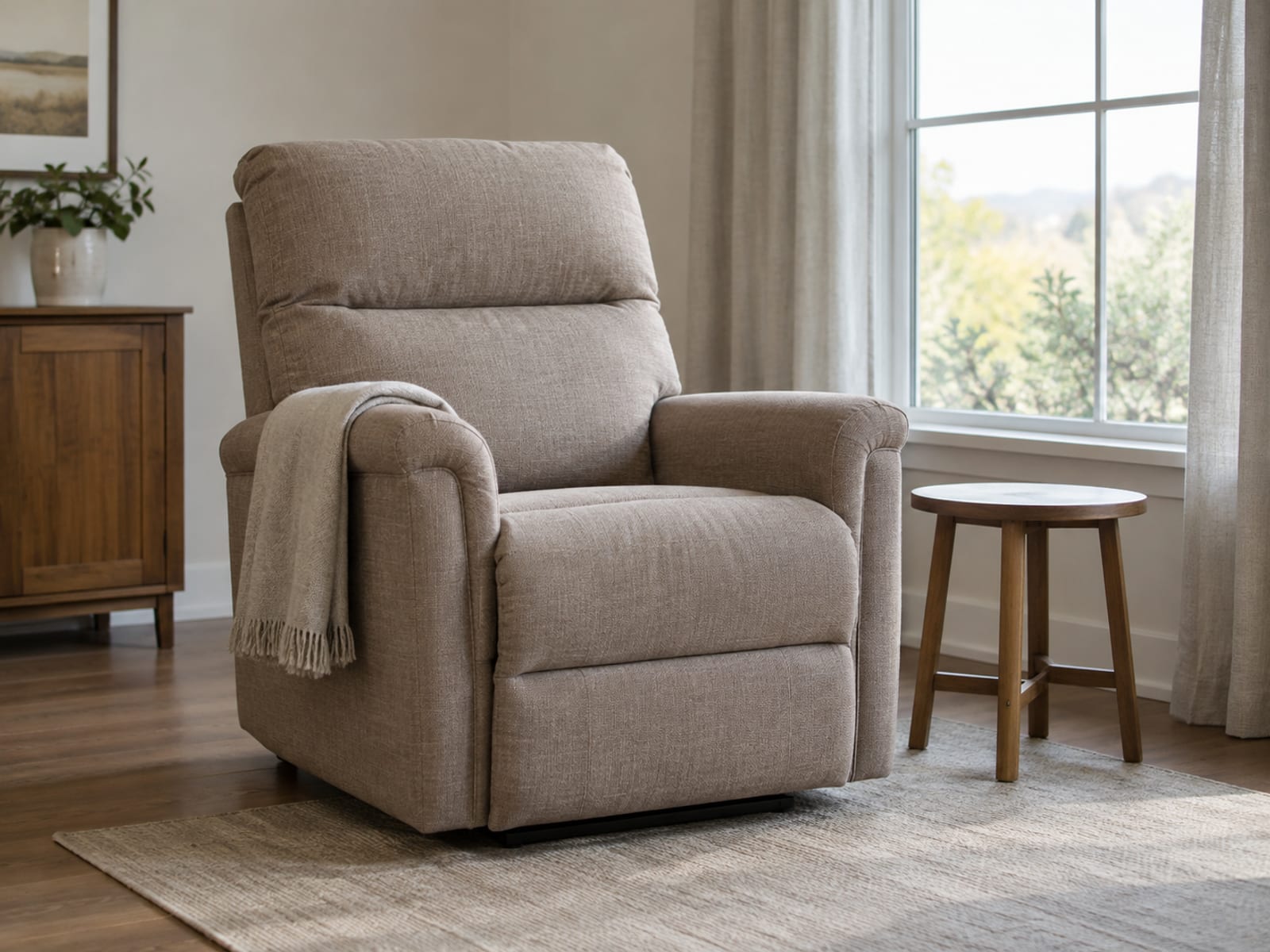
A lift chair reclines back toward the wall, so the published figure is the gap to leave behind it. Pride's general guidance is 13 to 21 inches depending on the model, with 17 inches on the LC-105 and 20 inches on the LC-250. Golden lists 25 inches for the Rhea and 26 for the Titan. La-Z-Boy does not give a wall clearance for the Jean, but it lists a 61.5-inch fully extended length, so mark that length on the floor from where the chair will sit and ask the store how far from the wall to place it.
Leave room at the front too. The chair tilts forward to lift, and the user needs clear floor to stand on and, if they use one, space for a walker.
What Medicare covers for a lift chair
Medicare Part B can help pay toward a seat lift mechanism, the part that raises the seat, and only when every condition in its coverage rules is met. The rules are in CMS's local coverage determination for seat lift mechanisms, L33801, which says a "seat lift mechanism is covered" only when all of its criteria apply. The upholstered chair around the mechanism is a separate item. When the mechanism is built into a complete chair, the CMS policy article A52518 tells the supplier to bill the mechanism under code E0627 for an electric mechanism or E0629 for a manual one, and to bill the chair under A9270.
That split is why a seller's line that a chair is "Medicare approved" or "covered by Medicare" needs checking. Pride's own wording is that "You must obtain a prescription for the seat lift mechanism from your doctor before Medicare helps pay for a lift chair," and CMS's billing rule is what decides which part that help applies to.
The conditions CMS lists
The LCD sets out the criteria, and all of them have to be met:
1. The beneficiary has severe arthritis of the hip or knee, or a severe neuromuscular disease. 2. The mechanism is part of the treating practitioner's course of treatment, prescribed to improve the condition or keep it from getting worse. 3. The beneficiary is completely unable to stand up from a regular armchair or any chair in their home. CMS says difficulty getting up from a low chair alone is not enough. 4. Once standing, the beneficiary can walk. 5. The mechanism operates smoothly, is controlled by the beneficiary, and helps them stand and sit without other help. Spring-release mechanisms that work like a catapult are excluded. 6. The ordering practitioner is the one treating the condition, or consulting on it. 7. The practitioner's records show that other treatments, such as medication or physical therapy, were tried and did not make it possible to get from the chair to standing.
What you pay, and who you buy from
Medicare.gov's durable medical equipment page says Part B covers medically necessary equipment that a doctor or other provider orders for use in the home, and that the supplier must be enrolled in Medicare. After the Part B deductible, you generally pay 20 percent of the Medicare-approved amount when the supplier accepts assignment, so ask any supplier two questions before you buy: whether they are enrolled in Medicare, and whether they accept assignment. CMS does not publish a set dollar figure for the mechanism or for the chair; the Medicare-approved amount and the supplier's billing decide what the covered share comes to.
The steps, in order
The sequence below follows the CMS rules and the Medicare.gov page:
1. See the treating practitioner and ask them to evaluate whether a seat lift mechanism fits the criteria above. 2. Have the practitioner record the diagnosis, the treatments already tried, and the mechanism as part of the treatment plan. 3. Get a Standard Written Order from the practitioner. CMS requires it to reach the supplier before the claim goes in, and a claim without it is denied. 4. Choose a supplier enrolled in Medicare and confirm whether it accepts assignment. 5. Confirm the supplier will bill the mechanism under E0627 and the chair separately under A9270. 6. Keep copies of the order, the medical records and the proof of delivery. 7. Expect the chair portion to sit outside the mechanism benefit, and expect to pay the Part B deductible and generally 20 percent of the approved amount for the mechanism.
Delivery, returns and the questions to ask the dealer
La-Z-Boy says the Jean is hand-delivered and made to order in 6 to 8 weeks, and Pride ships its chairs in an impact-resistant box. For any of the five, get the return policy and any restocking fee from the seller before you order. A lift chair that does not fit the user is a large, heavy thing to send back, so before you pay, ask the seller:
- Is delivery white glove, into the room of choice, with the chair set up and the lift demonstrated?
- What is the return window for a lift chair, and is there a restocking fee?
- How many motors does this chair have, and do the back and footrest move separately?
- Is a battery included, what type is it, and how often should it be replaced?
- What is the weight capacity and the reclined wall clearance, if the listing does not show them?
- Which warranty terms apply to the lift motor, the electronics and the labor, and is repair done in the home?
Get the answers in writing with the quote.
Check your lift chair choices
1. A user is 5 ft 2 in and measures 18 inches from the floor to the back of the knee. Which pick matches that seat height?
2. A chair lists a 25-inch wall clearance. Where should it sit?
3. Under the CMS billing rule, how is a lift chair with a built-in mechanism split?
4. Someone finds it hard to get up from a low sofa but stands easily from a dining chair. Does that meet the CMS criteria?
Pick an answer to begin.
Frequently asked questions
What size lift chair do I need?
Match the chair's seat height to the user's floor-to-back-of-knee measurement, its seat width to their seated hip width plus a couple of inches, and its size band to their height and weight. Pride's LC-105, for example, is for users 5 ft 3 in and under up to 325 pounds, and Golden's Medium covers 5 ft 5 in to 6 ft.
Does Medicare pay for a lift chair?
Medicare Part B can help pay toward the seat lift mechanism when every CMS criterion is met, including severe hip or knee arthritis or severe neuromuscular disease and the ability to walk once standing. The chair itself is billed separately under code A9270, and the supplier must be enrolled in Medicare.
Do lift chairs work during a power outage?
Only if the chair has battery backup and the batteries are installed. Pride builds in the backup but does not include the batteries, and La-Z-Boy's Jean Bronze takes two 9V batteries, so fit them on the day the chair arrives.
How much space does a lift chair need behind it?
The reclined wall clearance on the chairs here runs from 17 inches on the Pride LC-105 to 26 inches on the Golden Titan, and Pride's general range is 13 to 21 inches. Use the figure for the exact model and leave clear floor in front for standing.
Is a lift chair a good idea after hip or knee surgery?
Consumer Reports describes lift chairs helping people recovering from surgery and people with knee or back problems, as well as caregivers who help someone in and out of a chair. Ask the surgeon or therapist about the seat height they want for the recovery, and remember that a made-to-order chair such as the La-Z-Boy Jean can take 6 to 8 weeks to arrive.
Lift chair terms
Tap a term to see what it means.
Seat lift mechanism. The part of the chair that tilts the seat forward and raises the user toward standing. It is the part CMS's coverage rules address.
Take the three measurements tonight, pick the size band, and call two dealers with the questions above before anyone pays. If the chair only needs to recline and the user stands without help, PlushPick has recliners picked on seat height and wall clearance instead.
Cal Hewitt
Writer at PlushPick. I compare sofa specs, comfort, durability, and value so you can buy with clearer expectations.
About Cal and how the guides are researchedRelated
All guides- "Best-of"
Best Couch Cushion Replacement Foam, by Density and Firmness
The best couch cushion replacement foam grades from four foam retailers, each with its published density, ILD firmness and life estimate, plus how to measure.
- "Best-of"
Best Sofa Slipcovers, and How to Size One to Your Sofa
The best sofa slipcovers for a sofa you are keeping, from stretch covers to custom fits, with published size ranges, care lines and what each fit costs.
- "Best-of"
Best Couch for Families With Kids: Covers, Parts and Labels
The best couch for families with kids, judged on washable covers, replaceable parts and warranty terms, plus what the TB117-2013 tag and flame retardant line mean.
- "Best-of"
Best Sleeper Sofa Under $1,000, With Bed Sizes in Inches
Best sleeper sofa under $1,000: IKEA and Wayfair picks from $599 to $999 with published bed sizes, mattress type, seat numbers and return terms side by side.