

Affiliate disclosure. If you buy through a link on this page, PlushPick may earn a commission at no extra cost to you. That never changes which products are named or what is said about them. As an Amazon Associate I earn from qualifying purchases. How this works
A comfortable couch is one where the seat depth and the back height suit the same person. Almost every listing publishes the first number and almost none publishes the second, which is why a sofa can feel right in a showroom and wrong on a Tuesday evening: ninety seconds of sitting forward tests the seat, and three hours of sitting back tests the back.
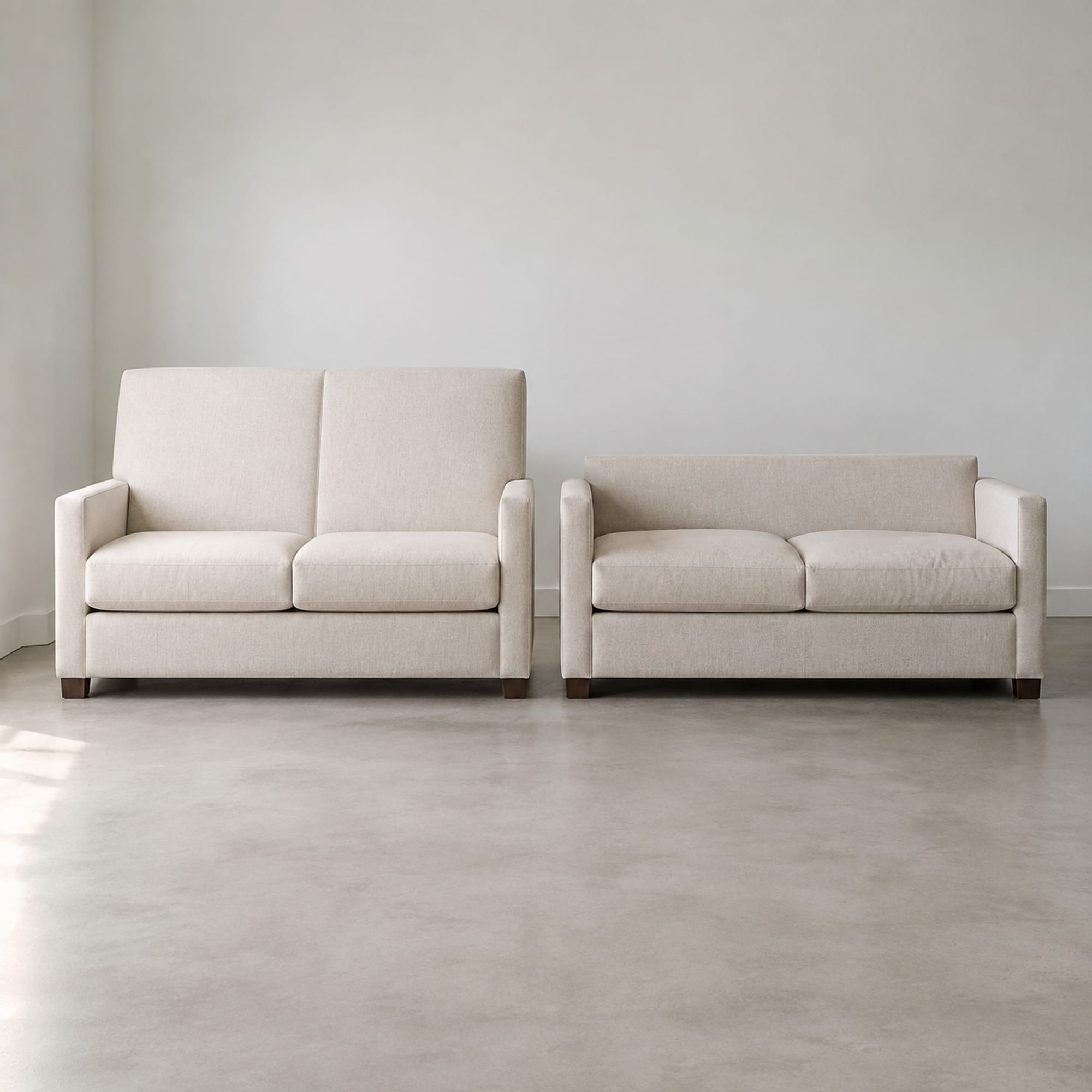
Here is the part that is checkable. Room & Board is one of the few makers that publishes both figures, and across its own range they do not move together. The Jasper sectional publishes a 21-inch seat depth with a 32-inch back. The Chelsea publishes a 24-inch seat depth with a 30-inch back. Three more inches of seat pushes you three inches further from the back cushion, and on that pair the back that has to catch you is two inches lower rather than taller. The Carlton publishes 22 inches deep at a 17-inch seat height and no back height at all, which is the state most listings are in.
Key Takeaways
Depth alone tells you nothing about support
On the two Room & Board sofas that publish both numbers, the deeper seat has the lower back.
The number to hunt for is back height
Seat depth and seat height are on almost every spec sheet. Back height is on very few.
Published depths sit in a narrow band
21, 22 and 24 inches across three sofas from one maker, which is only three inches of spread and a completely different sit at each end.
Seat height moves the other way
19 inches on the shallowest, 17 on the middle one. A low seat with a deep cushion is the hardest combination to stand up from.
The back is not built like the seat
Carlton's seat is a foam core wrapped in fiber; its back is foam and fiber together, which is a softer thing that settles sooner.
A too-deep seat is a geometry problem
It is not a sagging seat, and firming the base does not fix it.
Why a sofa can feel right for ninety seconds and wrong for an evening
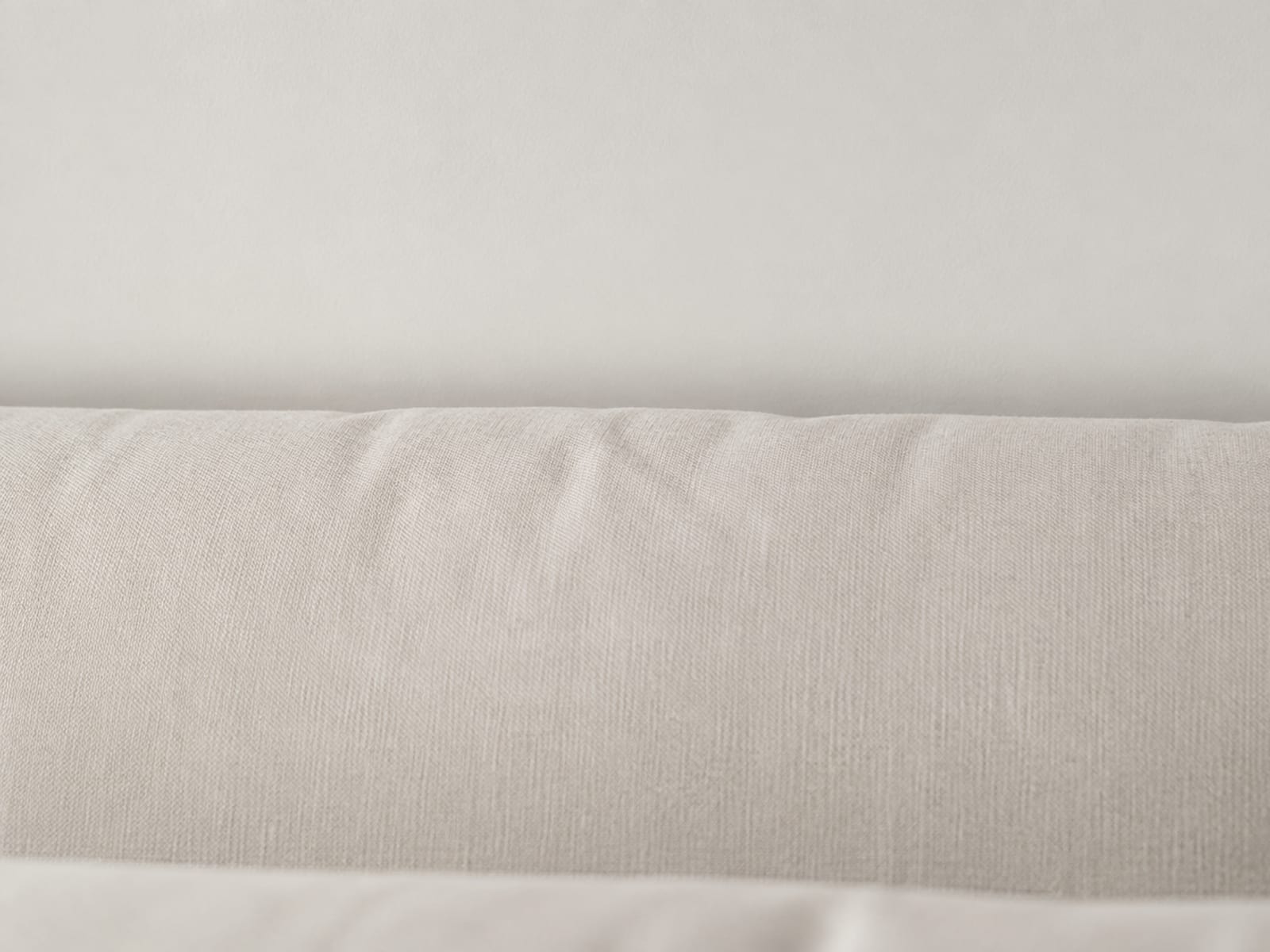
In a store you sit down, plant your feet, and stay upright. That posture uses the front third of the seat and almost none of the back, so a 24-inch seat and a 21-inch seat feel nearly identical.
At home you do the opposite. You slide back until something stops you, and what stops you is either the back cushion or the point where your shoulders lose contact with it. On a deep seat with a low back, that point arrives with your lower back unsupported and your head forward, and the only ways to sit are perched on the front edge or slumped down into it. Neither of those is a fault in the cushion, and neither of them shows up in ninety seconds.
That is the whole reason people describe a sofa as looking comfortable. It did look comfortable. It was measured for a different body, or for a different way of sitting.
The two numbers that have to agree
Seat depth is the inside front-to-back of the cushion you actually sit on, not the overall depth of the sofa, which includes the back cushions and the outside back panel. Carlton is 37 inches deep overall and 22 inches across the seat, a difference of fifteen inches.
Back height is how far up your spine the support reaches, measured from the seat. It is the number that decides whether a deep seat is a lounge or a trap.
Hover or tap a row to highlight it.
| Sofa | Seat depth | Seat height | Back height |
|---|---|---|---|
| Room & Board Jasper sectional | 21 in | 19 in | 32 in |
| Room & Board Carlton, 86 in | 22 in | 17 in | Not published |
| Room & Board Chelsea sectional | 24 in | 18 in | 30 in |
Read down that table and the trade is visible. The Jasper is the sofa to sit up in: the shallowest seat, the tallest seat height at 19 inches, and the tallest back. The Chelsea is the one to settle into: three more inches of seat, an inch lower to the floor, and two fewer inches of back. Carlton sits between them on depth and lowest of the three on seat height, and it does not tell you where its support ends.
None of that makes one of them the comfortable one. They are three different sits, published honestly enough that you can pick, and which of the three you are actually buying is the question underneath most comfort searches. What matters is that the depth on its own would have told you the opposite of what the back height tells you.
My sofa is already too deep. What actually helps?
Start by working out how much of the seat you are using. Room & Board's own guidance for choosing between these depths is to compare your seated thigh length and the way you prefer to sit against the published inside depth, and you can do that on the sofa you already own: sit the way you actually sit in the evening, with your back against the support, and see how much cushion is left in front of your knees. That leftover is the depth you are not using, and it is the gap something has to fill.
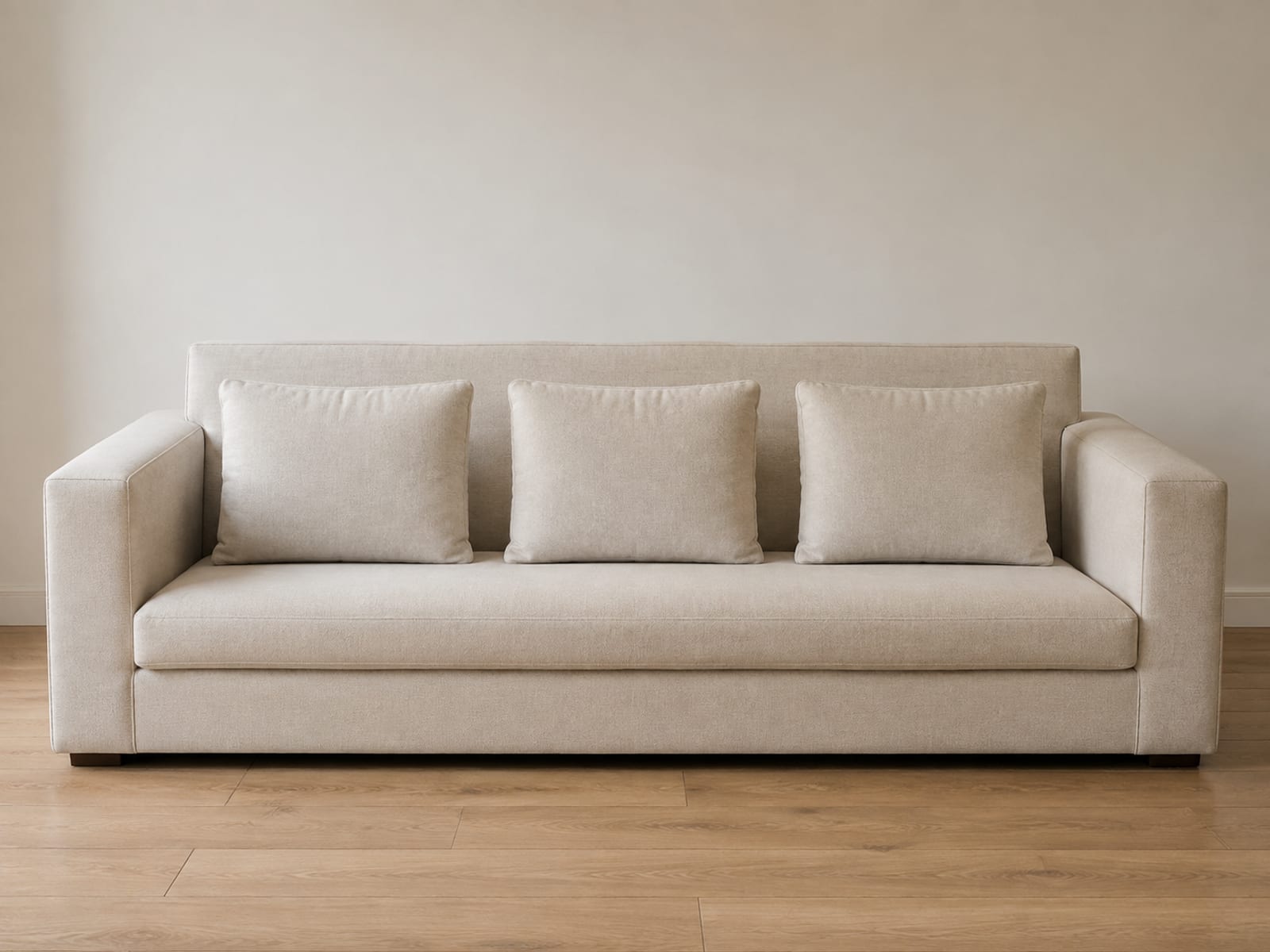
What fills it is support behind your lower back. On a deep seat the sofa's own back height is what was supposed to do that job and did not reach, so the fix belongs at the back rather than under the cushion. The back cushions the sofa arrived with are the first thing to try, moved down rather than up.
What will not help is firming up the base. A seat that is too deep is a geometry mismatch, not a soft or failing one, and it is a completely different problem from a cushion that has dropped. If the seat has actually sunk, working out which layer dropped is a different job with a different answer.
And when you next buy, the same measurement is what you shop with: your usable depth, against the published inside depth, against whatever back height the maker is prepared to print.
What is inside the seat, and why the back is built differently
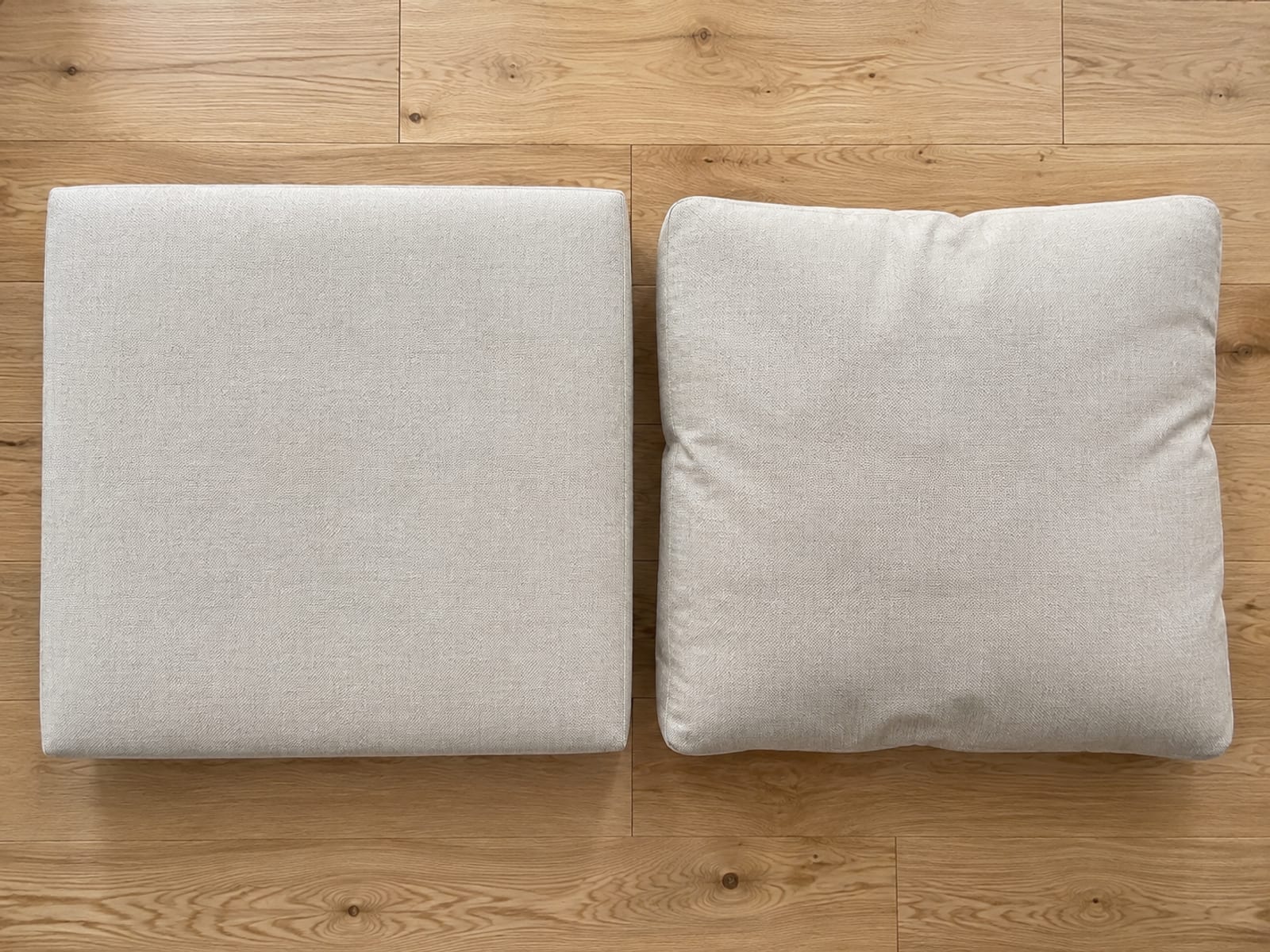
The Carlton is the clearest published example. Its frame is hardwood, its suspension is a sinuous coil, and its seat cushion is a high-resiliency CertiPUR-US certified foam core wrapped in fiber. Its back cushion is foam and fiber together.
Those are deliberately different builds. A wrapped core holds its shape because the foam inside is doing the structural work and the fiber is only softening the surface. A back of foam and fiber has less core to hold, so it compresses sooner and stays compressed longer, which is why the backs on most sofas look tired before the seats do. Plumping the backs regularly is not fussiness; it is the maintenance that build implies.
Room & Board publishes no density figure for that foam, and there is no useful default to fill in. The 1.80 pounds per cubic foot that circulates as a target comes from California TB 117-2013, where it specifies the standard test foam used in a smoldering-cigarette test, not a recommended density for a seat cushion. It is a laboratory substrate that escaped into shopping advice.
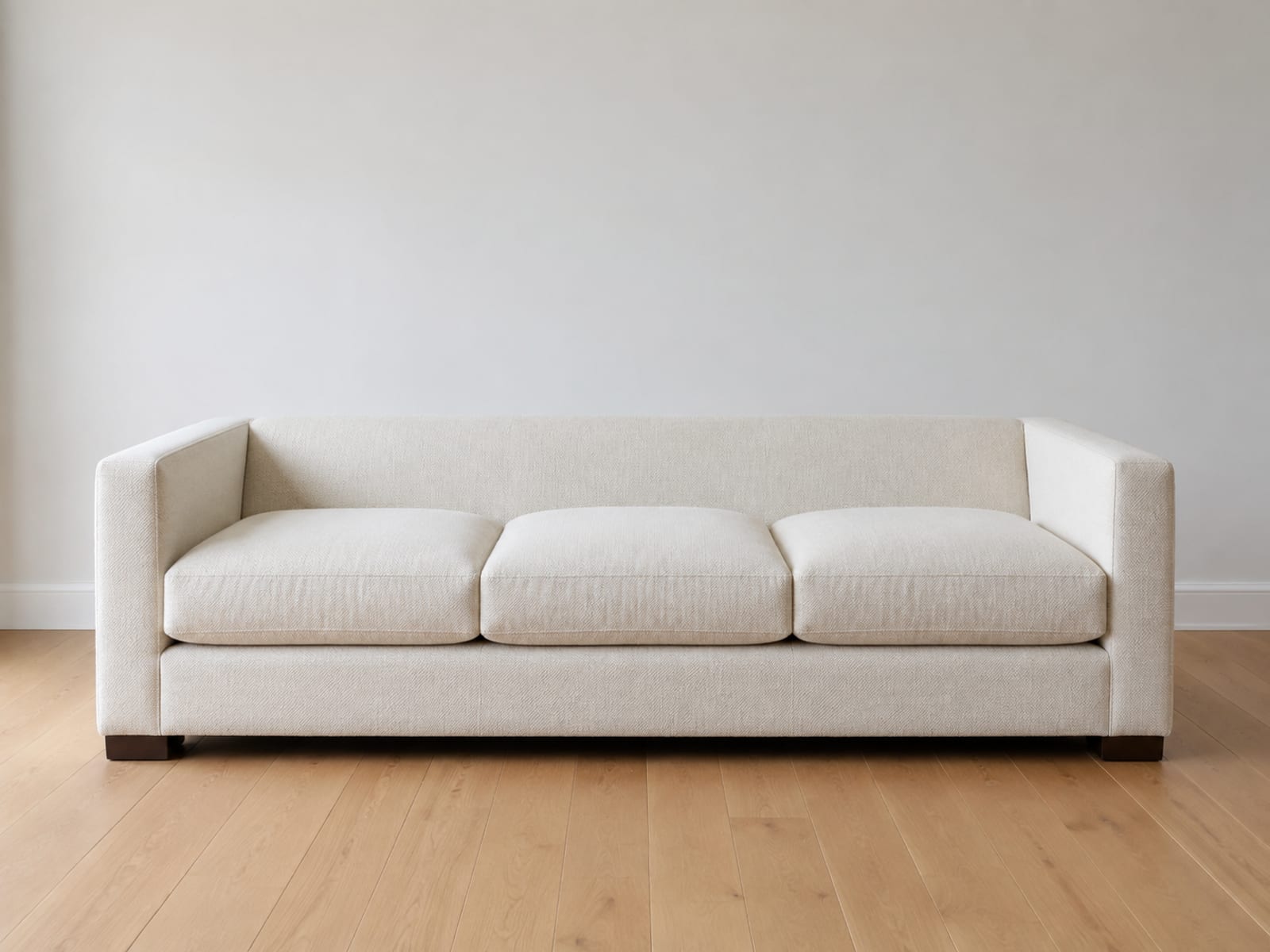
What to read on a listing, and what to ask when it is missing
Find the inside seat depth and make sure it is labeled as the seat rather than the sofa. Then the seat height, because a low seat and a deep cushion together are the hardest pair to rise from. Then the back height, and if the listing does not carry one, that is the question worth an email before the question about fabric. Word it carefully, because a published back figure is usually taken on an empty sofa; the measurement to ask a seller for is the one taken under a person.
Then read what the cushions are made of separately for the seat and the back, because a maker who describes both is telling you which one will need more looking after.
Room & Board also publishes the maintenance that keeps any of this true: vacuum with the upholstery tool, because dust and dirt speed up wear, and flip, rotate and fluff removable cushions. On a foam-and-fiber back that last one is doing real work.
Would you get this one right?
1. A sofa publishes a 37-inch depth. What do you know about the seat?
2. Two sofas publish 21 inches and 24 inches of seat depth. Which one supports your shoulders better?
3. A seat feels too deep to sit back in. What is the problem?
4. A listing quotes 1.80 pounds per cubic foot as a quality benchmark. What is that figure?
Pick an answer to begin.
Frequently asked questions
My sofa is too deep for comfort. How can I fix it?
Put support behind your lower back rather than under the cushion, starting with the back cushions the sofa came with. A seat that is too deep is a mismatch between the sofa's geometry and yours, so firming up the base will not change how far back you have to travel before something catches you.
What is the best deep seated couch?
The one whose back height suits you at that depth, which is why the pair of numbers matters more than either alone. Of the three sofas above, the Chelsea is the deep option at 24 inches, and its 30-inch back is two inches shorter than the shallower Jasper's, so a taller sitter should try both before assuming the deeper one is the more comfortable.
What are the key features of a comfortable couch?
Inside seat depth, seat height, back height, what the cushions are filled with and what the suspension is. Carlton publishes four of those five: 22 inches deep, a 17-inch seat height, a hardwood frame over sinuous coil suspension, and a fiber-wrapped high-resiliency foam seat against a foam-and-fiber back.
Does foam density tell me how comfortable a sofa will be?
On its own, no, and most makers do not publish one anyway. Density describes how much material is in the foam rather than how firm it feels or how long it holds, so use it to compare two cushions where both figures are given and ignore it as a standalone quality score.
The three words a spec sheet uses for the same sofa
Tap a term to see what it means.
Back height. How far the support reaches up from the seat, measured on the sofa rather than on the wall. It decides whether a deep seat catches your shoulders or your kidneys, and most listings leave it out.
Once you know the depth you actually use and the back height that catches you at it, the rest of the sofa hunt gets much shorter. PlushPick has the full set of published sofa dimensions explained and what the word deep is actually attached to, and between them they turn a spec sheet into a decision you can make from your phone.
Cal Hewitt
Writer at PlushPick. I compare sofa specs, comfort, durability, and value so you can buy with clearer expectations.
About Cal and how the guides are researchedThe latest
 "Best-of"Best Furniture Protectors for Pets, by What They Actually Cover
 "Best-of"Best Pet-Friendly Sofa Fabrics: Claws, Hair and Spills
 "Best-of"Best Sofas for Small Spaces: Narrow Doesn't Mean Shallow
 "Best-of"Best Recliner Covers for Dogs: What Actually Stays On
 AnswerSofa vs Sectional: Which One Fits Your Room and Life
 AnswerHow to Measure a Sofa So It Fits Through the Door