


Affiliate disclosure. If you buy through a link on this page, PlushPick may earn a commission at no extra cost to you. That never changes which products are named or what is said about them. As an Amazon Associate I earn from qualifying purchases. How this works
Pick the sectional when its whole L, chaise included, still leaves you a walking route through the room. Pick the sofa when it does not, or when you expect to move the furniture around. That is the decision, and it is settled by the shape of your room and the way your household uses it rather than by which one looks better in a photograph. IKEA's MORABO four-seat sectional is 111 3/4 inches wide with a chaise reaching 62 1/4 inches into the room; its GLOSTAD sofa is 67 3/8 inches wide and 30 3/4 deep. Those two numbers ask completely different things of a floor.
Key Takeaways
The chaise is the whole argument
A sectional's second depth is what commits the floor. MORABO reaches 62 1/4 inches out where the sofa run is 36 1/4.
Walking room is not optional
Crate and Barrel publishes 18 to 24 inches around furniture, so the chaise needs its projection PLUS that route, not a bare gap on a sketch.
Two pieces move, one shape does not
If you rearrange for a table at Christmas or a birthday dinner, that is an argument for separate pieces before it is an argument about seats.
Sectional does not mean modular
A sectional is the assembled shape. Only a maker who says the sections connect and recombine is promising you can change it.
Guests sit differently to loungers
A long L is built for stretching out. Two pieces facing each other seat the same number of people in conversation.
The 2/3 rule is decorating advice
No standard or manufacturer specification establishes it. Measured clearance does the same job and is checkable.
What actually separates the two?
One number, and it is not width.
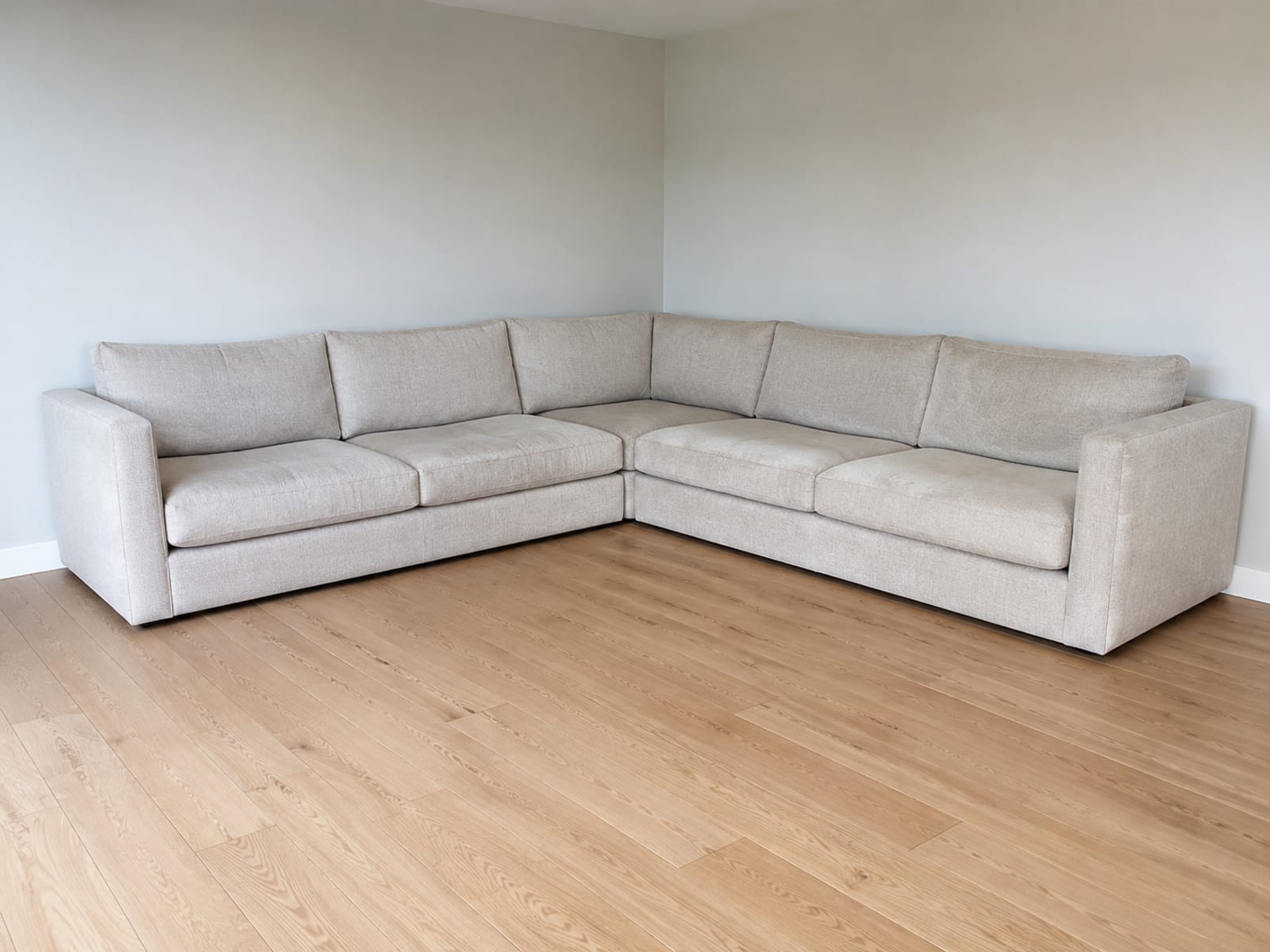
A sofa has a single depth. A sectional has two: the depth of its straight run, and the much greater depth where the chaise or corner reaches out into the room. IKEA publishes MORABO's four-seat sectional at 111 3/4 inches wide and 36 1/4 inches deep, then publishes the chaise depth separately at 62 1/4 inches. That second figure is more than five feet of floor, and it is the one that decides whether the room still works. See the MORABO sectional listing for the full specification.
Set that against a straight sofa. GLOSTAD is 67 3/8 inches wide, 30 3/4 deep and 26 3/4 high at the back, with a 64 5/8-inch seat width and a 16 1/8-inch seat height, and it was $199 on ikea.com as of September 2026. STOCKHOLM 2025's three-seat is 95 5/8 inches wide and 39 deep. Even the larger sofa asks for barely more than half the depth the sectional's chaise does.
So, the comparison that matters is not sofa against sectional in the abstract. It is one depth against two, on your floor.
Does the room have space for the L?
The depth to draw on the floor is the chaise depth, with the walking route added beyond it.
Crate and Barrel's published planning figure is 18 to 24 inches of walking room around furniture. That means MORABO's chaise needs its 62 1/4 inches of projection and then a clear path beyond it, not a 62 1/4-inch gap on a sketch with a wall at the end of it. The measuring guide sets out the method. Our own walkthrough for measuring a sofa and the route it has to travel covers the doorway half of this, and how little sectional depths actually vary covers what you are choosing between once the walkway is drawn.
If the L is the shape you want, which sectionals publish what is actually inside the seat is the next comparison to run. A sectional also decides the room's orientation in a way a sofa does not. The L faces one direction and cannot be turned without becoming a different shape, so anything else in the room, the television included, arranges itself around that decision. If the room is built around a screen, keep the viewing distance you need before you commit to a chaise: at the 30 degree field of view that SMPTE uses as a mixed-use baseline, RTINGS lists 8 feet 10 inches for a 65-inch display. That is a viewing constraint rather than a sofa rule, but a chaise that pushes the seating a foot closer changes it. Working the viewing distance out from your own furniture settles whether that foot matters.
Hover or tap a row to highlight it.
| IKEA GLOSTAD sofa | IKEA MORABO 4-seat sectional | |
|---|---|---|
| Overall width | 67 3/8 in / 171.1 cm | 111 3/4 in / 283.8 cm |
| Depth of the run | 30 3/4 in / 78.1 cm | 36 1/4 in / 92.1 cm |
| Depth at the chaise | None | 62 1/4 in / 158.1 cm |
| Seat depth | Not published | 24 in |
| Seat height | 16 1/8 in | 18 1/2 in |
| Seat foam | 1.5 lb/cu ft | 2.2 lb/cu ft seat, 1.5 back |
| Price as of September 2026 | $199 | $1,249 |
Is it better to have two sofas or a sectional?
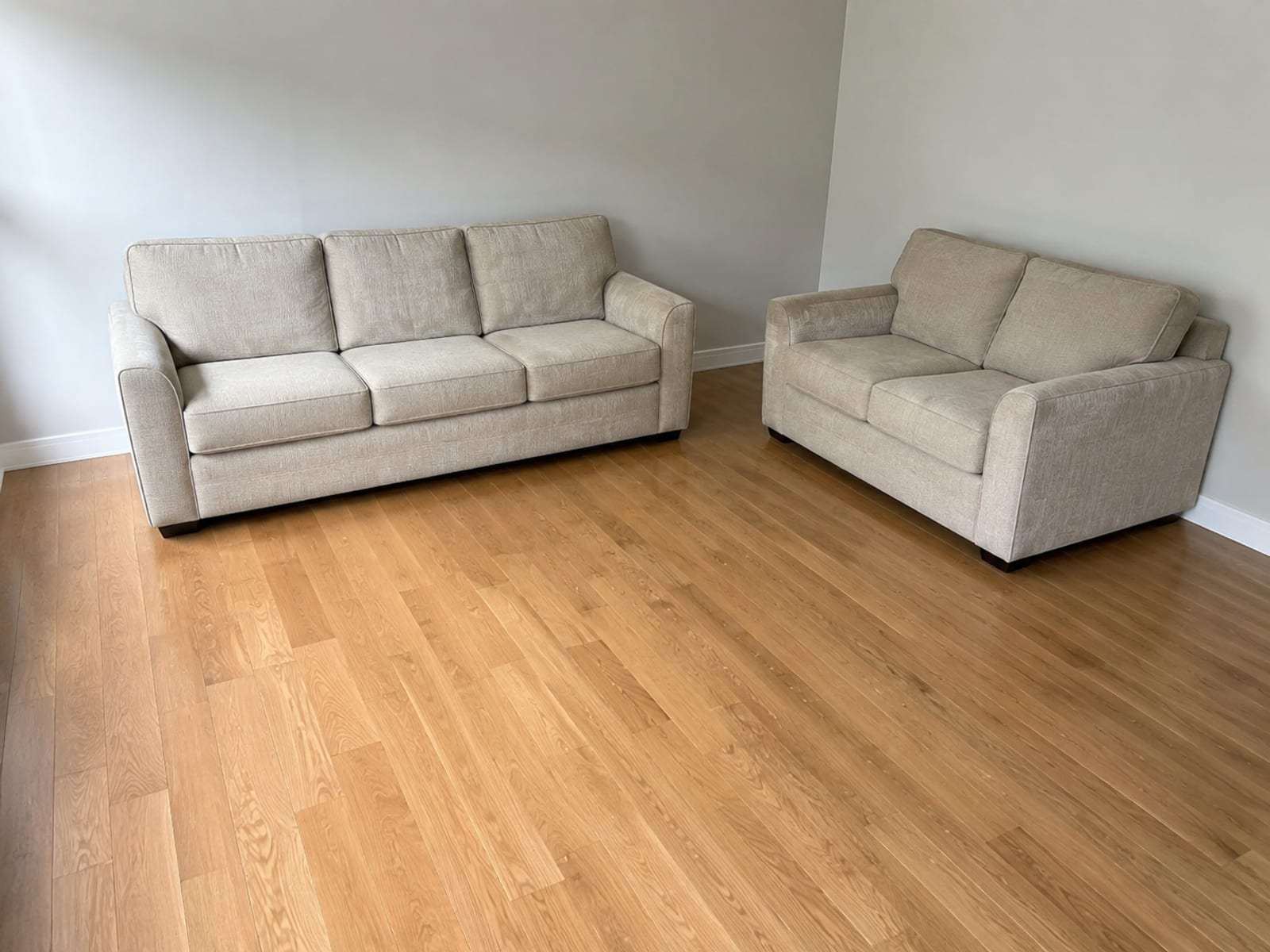
It depends on one question nobody asks out loud: does your furniture ever move? If the two pieces are a sofa and a loveseat, what actually separates those two names is worth a minute first.
If the answer is yes, separate pieces are the format. A poster on r/homeowners named exactly this as the thing that decided it for them, rearranging to make room for a birthday dinner or a Christmas tree. A sectional does not do that. It is one connected shape and moving it means dismantling it, if it dismantles at all. Their thread is worth reading for how ordinary the reasons turn out to be.
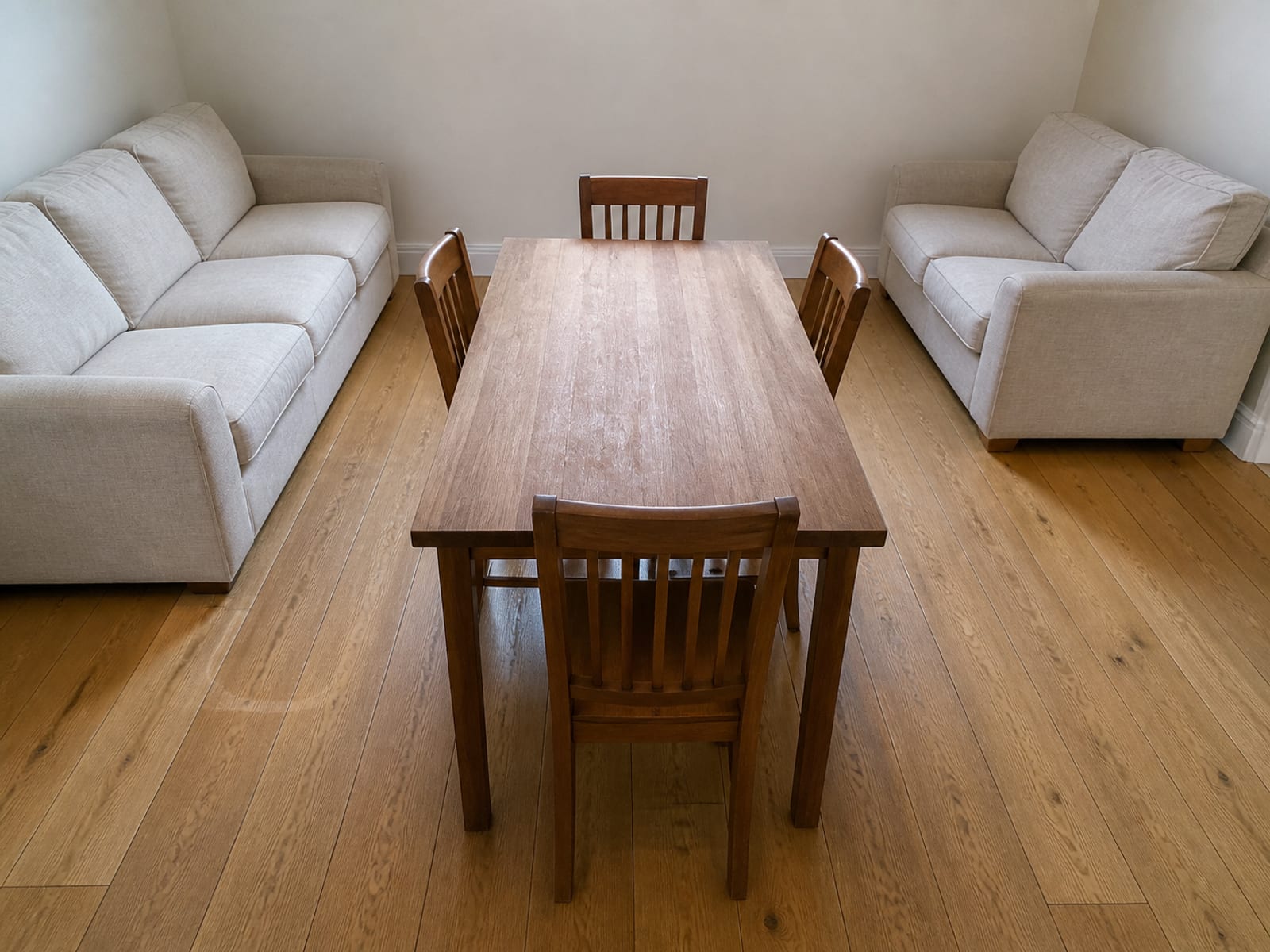
Two pieces also seat people differently. In the same discussion, someone with one large sitting room and no separate guest space asked whether a bumper chaise would seat visitors less comfortably than two sofas. The answer is that it would seat them differently: a long L is built for one or two people to stretch out, while two pieces facing each other put the same number of people in conversation. Neither is better. They are for different evenings.
A sectional wins when the room has a corner doing nothing, when the household mostly watches rather than talks, and when the layout is settled enough that nobody will want to move it next spring.
What are the downsides of a sectional?
The real ones are worth knowing before you order rather than after.
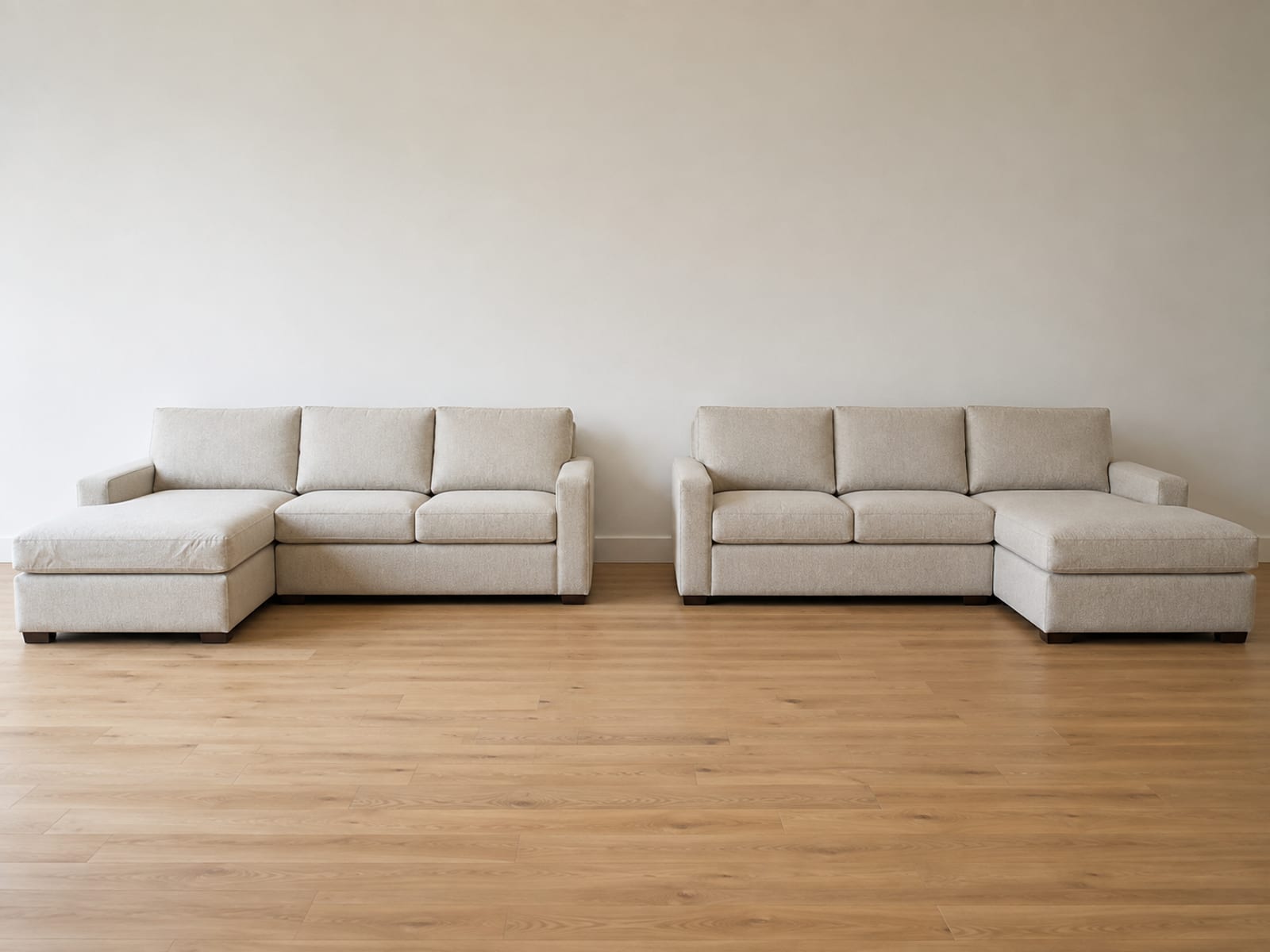
The footprint is the first, and the chaise is the reason. A shape that consumes a circulation path is a problem you live with daily rather than one you notice at delivery.
The second is the delivery route, and it is worse for a sectional because there is more of it. Every component has to clear every doorway, hall turn, stair and elevator, measured on its diagonal depth rather than its ordinary depth. A sectional is not automatically renter-unfriendly, though; if its pieces pass the route independently, it may travel better than one long sofa. That cuts both ways and it depends on the product.
The third is that the shape is fixed. Unless the maker specifically says otherwise, you are buying one arrangement forever, and the handedness of the chaise is part of it. A left-facing chaise cannot become a right-facing one because you moved house.
Is a sectional the same as a modular sofa?
Both of those are configuration names, which is the half of the vocabulary that changes what you pay. The other half only changes the look.
No, and the words get used as if they were.
A sectional describes the assembled shape: connected pieces forming a corner or a chaise. It says nothing about whether those pieces come apart or recombine. Modular describes how the thing is sold and built, in sections designed to connect in more than one arrangement. IKEA says explicitly that STOCKHOLM 2025's sections are easy to connect and combine to suit the space; that is a claim about that product, and it does not carry over to every sectional on the market.
The practical version: if you want the shape to change later, look for the maker saying so in writing. If they only show you photographs of one arrangement, that is what you are buying. What makes a sofa modular rather than sectional goes through how to tell.
What about kids, pets and the fabric?
This one is decided by the cover's care code rather than by the silhouette, and both formats come in both.
Ashley publishes the standard codes plainly. W means a water-based shampoo or foam only. S means a dry-cleaning solvent only. WS means either will do. X means vacuum or light brushing and nothing wet at all. That last one on a sofa in a house with a toddler is a decision you make once and regret weekly, and it has nothing to do with whether the piece has a chaise. Ashley's care and cleaning page lists them.
Hover or tap a row to highlight it.
| Code | What may be used | What it means day to day |
|---|---|---|
| W | Water-based shampoo or foam only | The most forgiving of the four |
| S | A dry-cleaning solvent only | Nothing wet, so most household spills need a professional |
| WS | Either foam or a mild solvent | The most flexible |
| X | Vacuum or light brushing only | No liquid at all, ever |
Check what the specific product publishes. MORABO's cover is not removable, and IKEA's instruction for it is vacuuming and wiping with a damp cloth. A sectional in a light fabric with an X code and a dog is a harder life than a sofa in the same fabric, only because there is more of it.
Which format does your room want?
1. Your living room has one corner that nothing currently uses, and the layout has not changed in three years. What does that argue for?
2. You rearrange the room for guests two or three times a year. What does that argue for?
3. A listing shows one L-shaped arrangement and says nothing about connecting the sections. What have you been told?
Pick an answer to begin.
Frequently asked questions
What is the 2/3 rule for couches?
It is a decorating guideline that a sofa should be about two thirds the length of the wall or the room it sits against. No furniture standard, building code or manufacturer specification establishes it, so treat it as a proportion that tends to look right rather than a measurement you have to hit. Published clearance figures do the same job and can actually be checked against your floor.
Are sectional sofas outdated?
Nothing published settles that, and it is not a question a specification can answer. Both formats are widely sold by every major retailer, and the useful question is which one your room and your household can live with.
Do sectionals cost more than sofas?
Usually, because there is more of them, though the range on both is wide enough that the formats overlap. Two published examples from the same retailer: GLOSTAD at $199 and the MORABO four-seat sectional at $1,249, both as of September 2026. That gap is about size and construction rather than about the shape.
Can I put a sectional in a small room?
Sometimes, and the test is the chaise depth plus a walking route, not the room's square footage. A small sectional is not automatically smaller than a large sofa, so compare the published figures for the exact configurations rather than the category names.
Is a sectional harder to get into the house?
Not necessarily. It usually arrives as separate components, and if each one clears your doorways and turns on its own, it can travel better than a single long sofa. The measurement to compare is diagonal depth at every tight point.
The words on a sectional listing
Tap a term to see what it means.
Chaise. The extended part you put your legs on. It is where a sectional's second, much larger depth comes from, and it is the figure to draw on the floor.
Draw the chaise depth on your own floor before you decide anything else, then walk the route you use every day and see what is left. If the room keeps working, the sectional is the more comfortable piece for most evenings. If it does not, or if the furniture moves twice a year, two pieces will serve you better and cost less. PlushPick has a chart of what real sofas and sectionals measure if you need the numbers to draw with.
Cal Hewitt
Writer at PlushPick. I compare sofa specs, comfort, durability, and value so you can buy with clearer expectations.
About Cal and how the guides are researchedThe latest
 "Best-of"Best Furniture Protectors for Pets, by What They Actually Cover
 "Best-of"Best Pet-Friendly Sofa Fabrics: Claws, Hair and Spills
 "Best-of"Best Sofas for Small Spaces: Narrow Doesn't Mean Shallow
 "Best-of"Best Recliner Covers for Dogs: What Actually Stays On
 AnswerHow to Measure a Sofa So It Fits Through the Door
 AnswerHow to Clean a Smelly Couch When the Cover Is Already Clean