

Affiliate disclosure. If you buy through a link on this page, PlushPick may earn a commission at no extra cost to you. That never changes which products are named or what is said about them. As an Amazon Associate I earn from qualifying purchases. How this works
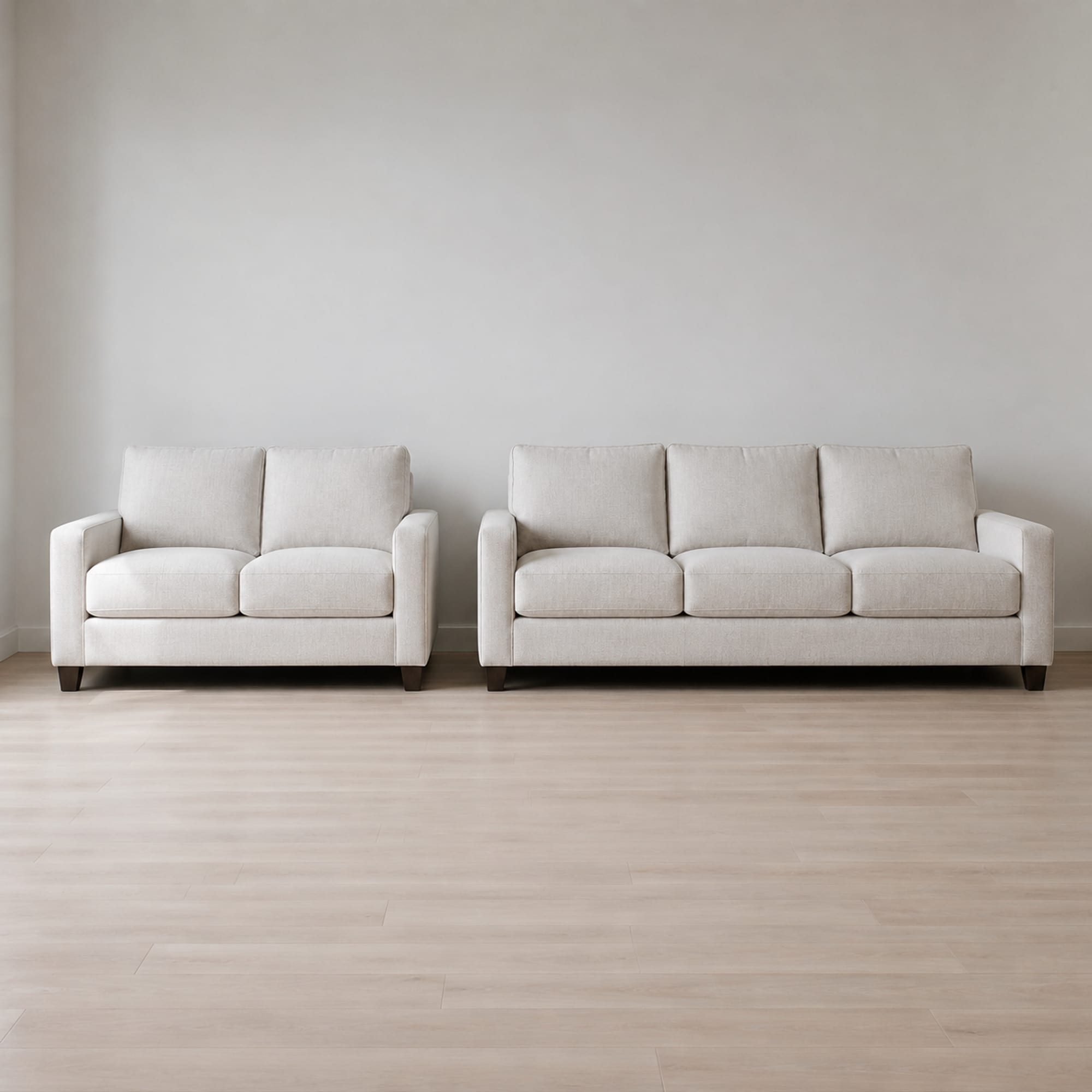
A loveseat seats two and a sofa seats three, which is the answer everybody gives and almost nobody can act on, because it does not tell you what you are giving up. IKEA happens to publish the experiment that does.
The KIVIK loveseat and the KIVIK sofa are the same piece of furniture at two widths. Both are 37 3/8 inches deep and 32 5/8 inches high. Both have a 23 5/8-inch seat depth and a 17 3/4-inch seat height. Same frame, same foam, same cushions, same everything you sit on. The loveseat is 74 3/4 inches wide with a 55 1/8-inch seat; the sofa is 89 3/4 inches wide with a 70 7/8-inch seat. So, choosing the loveseat releases exactly 15 inches of wall and gives up exactly 15 3/4 inches of seat, and nothing else moves at all.
The prices, read on ikea.com in September 2026, were $899 and $949. On that pair, on that day, fifteen and three quarter inches of extra seating cost fifty dollars.
Key Takeaways
Only one number changes
On the KIVIK pair the depth, height, seat depth and seat height are identical.
Fifteen inches of wall, 15 3/4 inches of seat
That is the entire difference between the two categories on that pair.
Fifty dollars separated them
$899 against $949 on ikea.com in September 2026.
There is no boundary
IKEA calls a 74 3/4-inch piece a loveseat and a 78-inch piece a sofa, in one catalog.
The bigger name can have the smaller seat
SODERHAMN is a sofa with an 18 7/8-inch seat depth; the KIVIK loveseat's is 23 5/8.
Buy the configuration, not the word
The retailer's own page settles what you are getting; the category name does not.
The same sofa at two widths
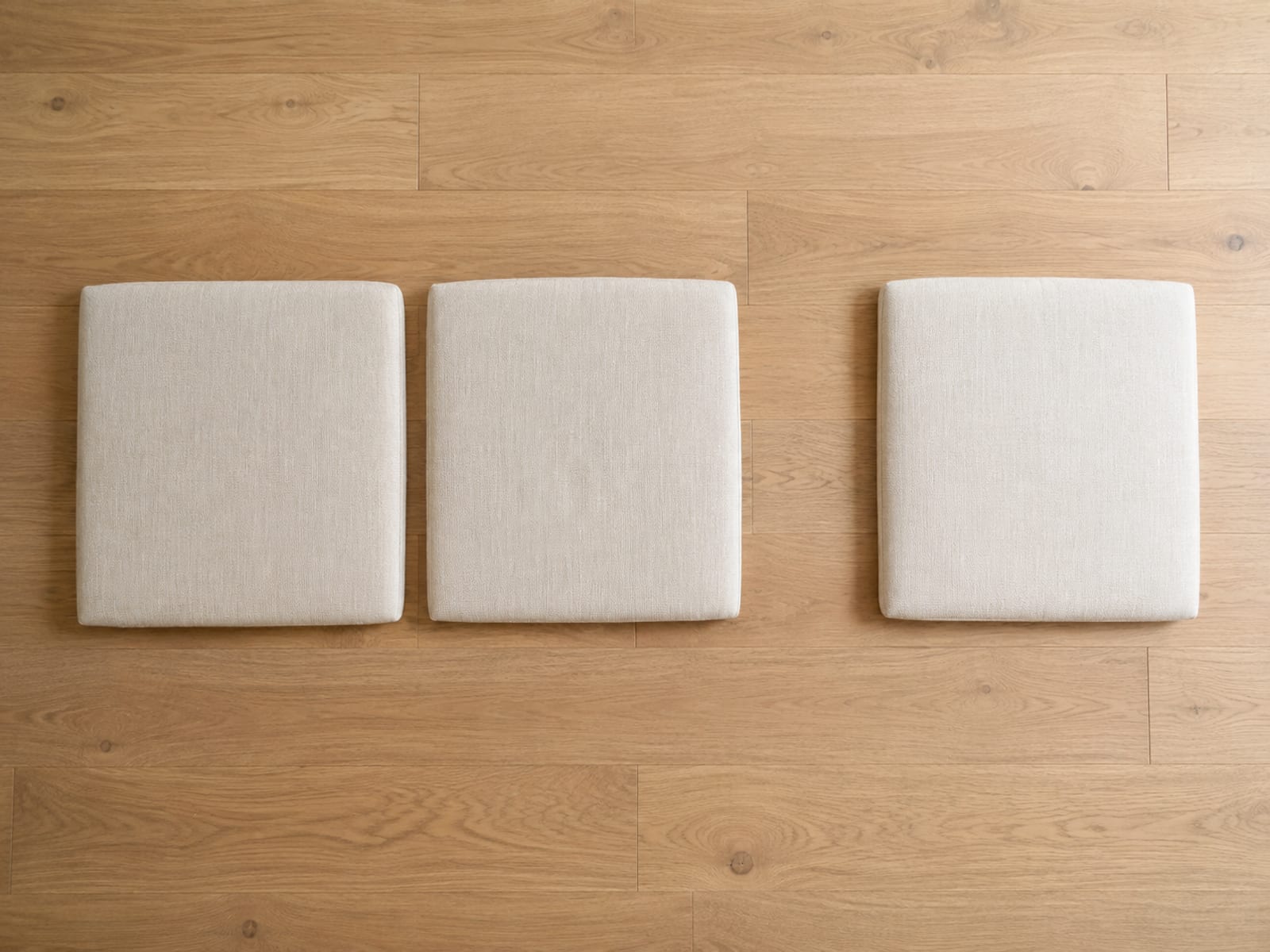
Set the two side by side and the comparison is unusually clean, because nothing is confounded. This is the same series, the same cover, the same construction.
Hover or tap a row to highlight it.
| Figure | Loveseat | Sofa | Difference |
|---|---|---|---|
| Overall width | 74 3/4 in | 89 3/4 in | 15 in |
| Overall depth | 37 3/8 in | 37 3/8 in | None |
| Overall height | 32 5/8 in | 32 5/8 in | None |
| Seat width | 55 1/8 in | 70 7/8 in | 15 3/4 in |
| Seat depth | 23 5/8 in | 23 5/8 in | None |
| Seat height | 17 3/4 in | 17 3/4 in | None |
| Price, September 2026 | $899 | $949 | $50 |
Three of those rows are the whole argument, and two of them are blank. Depth is what decides how far the piece reaches into the room, and it is identical. Seat depth and seat height are what decide how it feels to sit on, and they are identical too. The choice is a width choice and only a width choice.
What fifteen and three quarter inches of seat actually gets you
That is roughly the width of one more person, which is why the category names exist at all. Whether you need it is a question about how often three people sit down at once, not about how the room looks.
If the answer is a couple of times a year, the loveseat gives you back a foot and a quarter of wall for a chair, a lamp, a bookcase or nothing, and the sitting experience is unchanged. If the answer is most evenings, the sofa is fifty dollars on that pair and the room has to find fifteen inches somewhere.
What the loveseat does not do is make the piece easier to live with in any other way. It is exactly as deep, so it eats the same amount of floor front to back, and that is usually the measurement that decides whether a room feels crowded.
Where the line between them is
There is not one, and the same catalog demonstrates it. IKEA calls the 74 3/4-inch KIVIK a loveseat. It calls the 78-inch SODERHAMN a sofa. Four inches apart, two different category names, no published rule anywhere that separates them.
That matters because a lot of shopping advice quotes a cut-off, usually around 72 inches, and a blanket figure like that would put one of those two products in the wrong box. No standards body defines a loveseat, so the only thing that controls what you are buying is the retailer's declared configuration plus its published measurements.
The practical version: read the width and the seat width off the page, and treat the category word as a filter for browsing rather than as information about the product.
The name can point the wrong way
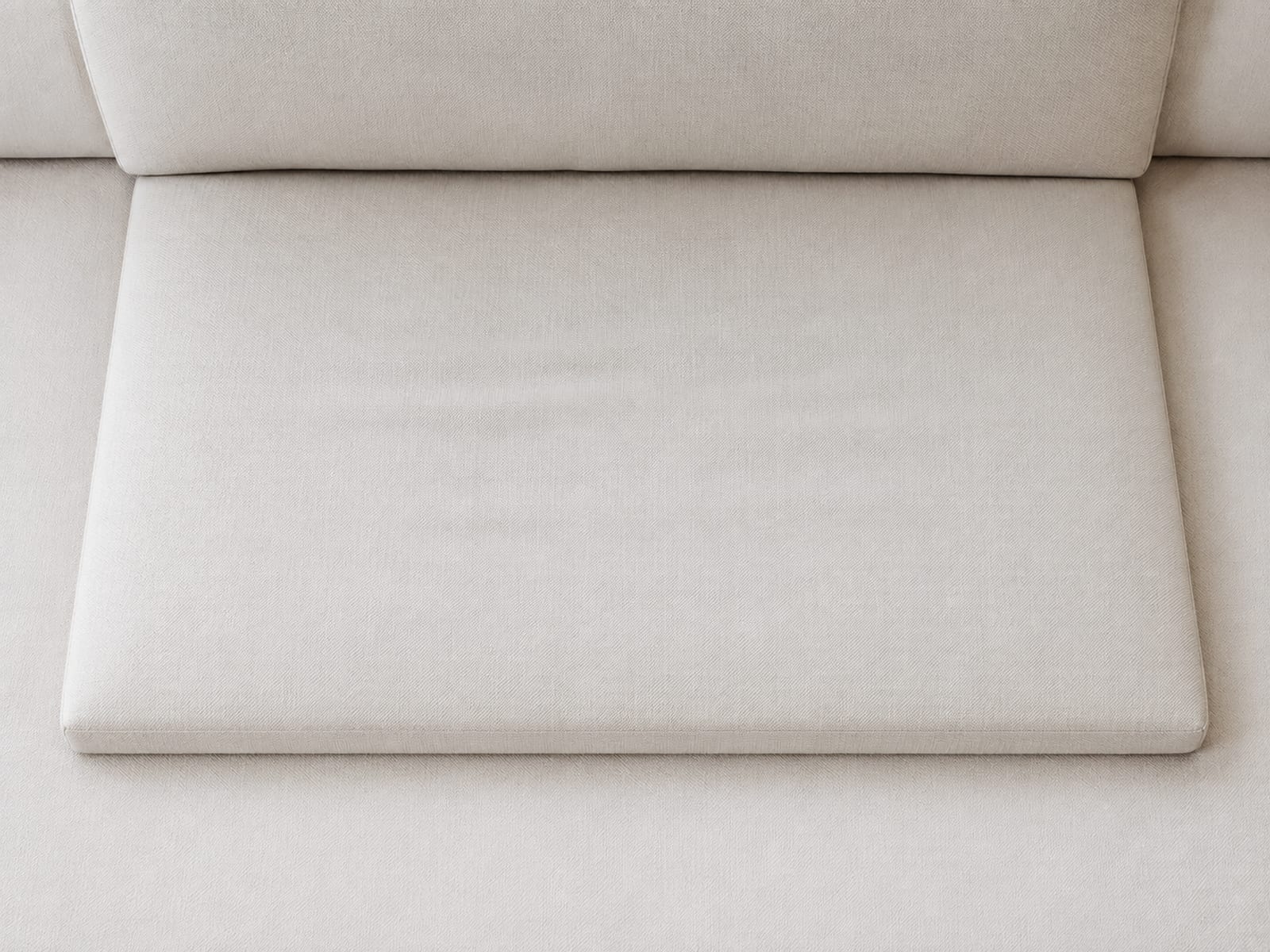
SODERHAMN is the useful example again, because it is a sofa whose seat is 18 7/8 inches deep, against 23 5/8 inches on the KIVIK loveseat. Nearly five inches shallower, on the piece with the bigger category name.
Its other published figures are different too: 78 inches wide by 39 deep, a 73 1/4-inch seat width, a 15 3/4-inch seat height and a 27 1/8-inch backrest, with upholstery foams at 1.2 and 2.2 pounds per cubic foot. KIVIK's seat cushion is high-resilience foam at 2.2 pounds per cubic foot over foam at 2.0.
So, two sofas from one maker, and the one with the wider seat sits nearly five inches shallower and more than two inches lower. Neither is better. They are different pieces of furniture wearing the same word, which is the argument for reading the measurements every time.
Which one your room is actually asking for
Two situations from real rooms are worth holding onto, because they are the shape this decision usually takes. Once the name is settled, the two-seaters ranked on what each seller publishes narrows it further.
The first is a single-occupant apartment where the living room is also the dining room and the office. One buyer described an 18 by 12 foot space already holding a corner desk, a dining set, a TV console and a coffee table, with one or two visitors occasionally, and was weighing a reclining sofa against a reclining loveseat. When the room has four jobs, the fifteen inches is worth more as floor than as seating.
The second is a household choosing between a sectional and a sofa-and-loveseat set for a new family room, with two dogs and a baby on the way. There the question stops being width and becomes layout and cover, and whether a sectional or two separate pieces suits the room is the comparison that answers it.
Before either, measure the route rather than the room. Pottery Barn's guidance is that the width has to clear the entryway, and the diagonal depth has to clear it if the piece goes in on end, which is why a loveseat sometimes gets into a building that a sofa cannot. The order to take those measurements in is a half hour that settles it.
Would you get this one right?
1. You swap a KIVIK sofa for the KIVIK loveseat. What changes besides width?
2. A retailer calls a 74 3/4-inch piece a loveseat and a 78-inch piece a sofa. What is the rule?
3. Which is deeper to sit on, the KIVIK loveseat or the SODERHAMN sofa?
4. Your room is tight front to back. Does a loveseat help?
Pick an answer to begin.
Frequently asked questions
Can I use a loveseat instead of a sofa?
Yes, if two people sitting at once covers how the room is actually used. On the KIVIK pair the loveseat gives 55 1/8 inches of seat against 70 7/8, and everything else about sitting on it is identical, so what you are giving up is one person's width rather than any part of the comfort.
What is the difference between a small sofa and a loveseat?
The word the retailer chose. No standards body defines either, and IKEA's own range has a 74 3/4-inch loveseat and a 78-inch sofa four inches apart. Compare the published overall width and seat width on the two specific products and the naming stops mattering.
What is the difference between a chair and a loveseat?
Seat width, in practice. A loveseat is built for two people side by side, which on the KIVIK is 55 1/8 inches of seat, while a chair is a single seat with an arm on each side of one person. If a listing does not publish a seat width, the overall width and the cushion count will usually tell you which it is.
Which is better, a sectional or a sofa and loveseat?
It depends on whether you want the corner filled or the pieces movable, which is a layout question rather than a seating one. Two separate pieces can face each other, split between walls or move to another room later; a sectional commits the corner and usually seats more per foot of wall.
The words on a two-seat listing
Tap a term to see what it means.
Declared configuration. The category the retailer assigns its own product, such as loveseat, sofa or sleeper. It is the controlling label for what arrives, and it is not measured against any standard.
Decide how often three people actually sit down at once, then read the seat width rather than the category name. PlushPick has the full set of published sofa dimensions explained and what a sectional costs you in floor space for the two questions that usually come next.
Cal Hewitt
Writer at PlushPick. I compare sofa specs, comfort, durability, and value so you can buy with clearer expectations.
About Cal and how the guides are researchedThe latest
 "Best-of"Best Furniture Protectors for Pets, by What They Actually Cover
 "Best-of"Best Pet-Friendly Sofa Fabrics: Claws, Hair and Spills
 "Best-of"Best Sofas for Small Spaces: Narrow Doesn't Mean Shallow
 "Best-of"Best Recliner Covers for Dogs: What Actually Stays On
 AnswerSofa vs Sectional: Which One Fits Your Room and Life
 AnswerHow to Measure a Sofa So It Fits Through the Door