

Affiliate disclosure. If you buy through a link on this page, PlushPick may earn a commission at no extra cost to you. That never changes which products are named or what is said about them. As an Amazon Associate I earn from qualifying purchases. How this works
Match the fix to what your guest can actually feel. A bar or a dip in the middle is a support problem and gets a board under the mattress. A thin or hard surface is a cushioning problem and gets a 2-inch topper that comes off before the bed closes. A mattress that is simply worn out gets replaced with a folding-sofa-specific one. The part nobody mentions is that this is the only bed in the house that has to disappear again on Monday, so every fix has to come back out, and that is what decides which one you can live with.
Key Takeaways
A felt bar is not fixed by a topper
Support goes under the mattress; cushioning goes on top. They solve different complaints.
A queen topper is not a queen sleeper
West Elm's Haven queen mattress is 60 by 72 inches. Casper's queen topper is 60 by 80.
Two inches comes off easily, three is a chore
One buyer returned a 3-inch topper because folding and storing it was too awkward.
A support board stays put
It sits under the mattress and does not change the closed height.
Match the fix to the length of the stay
A weekend, a few months and two years are three different problems.
Ask before you add height
Check with the maker that the mechanism still closes safely.
What can you feel, and what does it mean?
Start here, because the three common complaints have three different answers and buying the wrong one is how people end up with a topper in a closet.
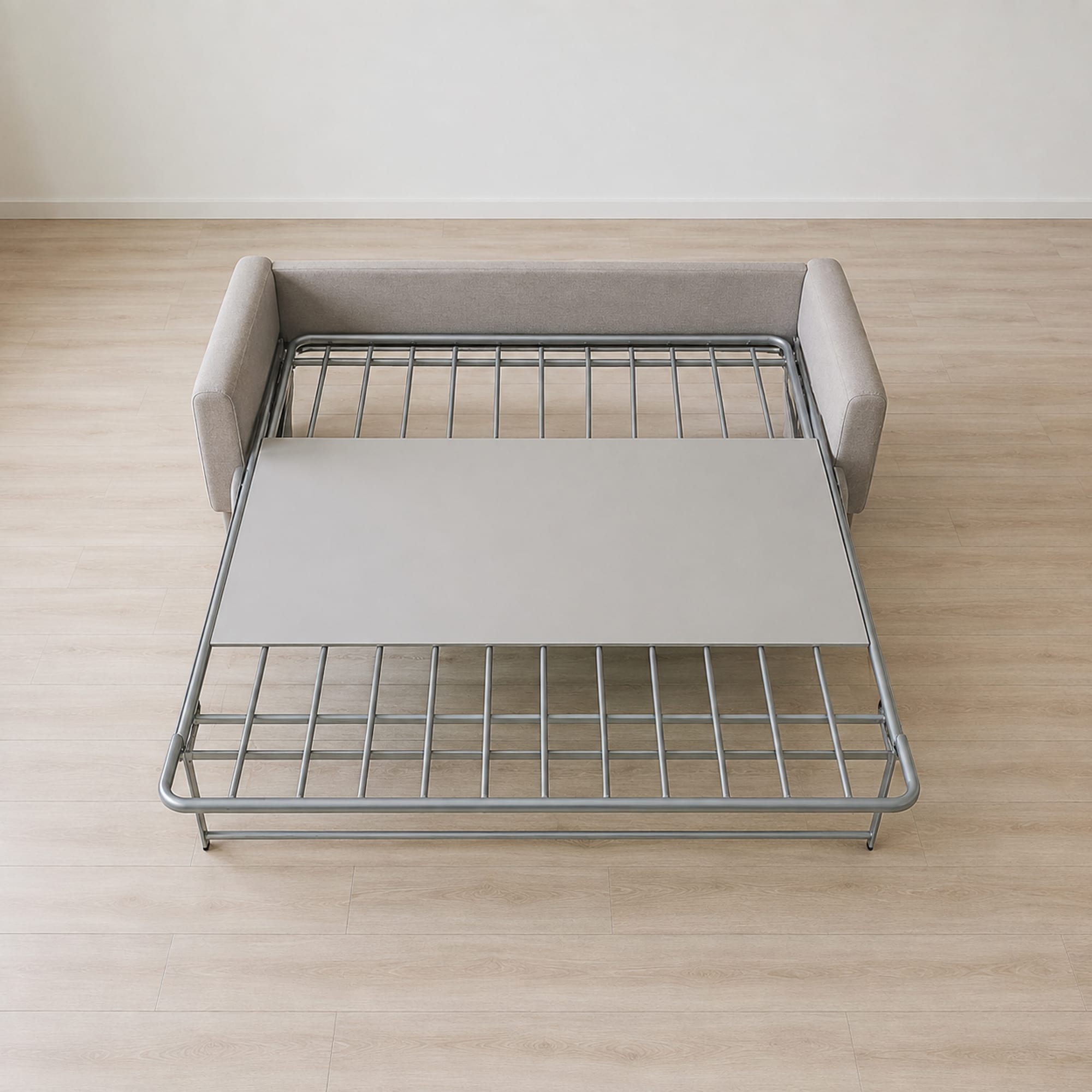
A hard bar across the middle, or a dip you roll into, is the steel mechanism coming through. The mattress is too thin or too packed down to bridge it. Padding on top helps a little and never really solves it, because the problem is underneath the mattress rather than on it.
An evenly thin, hard surface with no particular bar is a cushioning problem. There is enough support, there is just not enough between you and it.
A mattress that has gone lumpy, soft in patches, or visibly tired is worn out, and no amount of layering fixes a core that has failed.
If the sagging is in the seat you sit on rather than the bed you pull out, that is a different job, and the seat cushions and the deck under them is the one to read instead.
So, lie on it yourself for ten minutes before you buy anything. The complaint you can name is the one you can fix.
Fixing a felt bar: a board under the mattress
Support goes underneath. Meliusly's SleeperSaver Classic is 8 mm plywood made to sit between the mechanism and the mattress, in 36 by 48, 48 by 48 and 60 by 48-inch sizes, at $99.99 read in September 2026. Meliusly says it needs no tools.
Read what it covers, because the maker is specific about it: the board is stated to cover the core support area rather than the mattress's whole length. That is the middle section where the bar sits and where most people report the problem, not the full run of the bed.
The reason this is the fix that lasts is that it does not change the closed height. It goes under the mattress and stays there, so nothing has to be lifted out and stored on Monday. That single property is worth more over a year than a thicker topper.
Fixing a thin surface: a 2-inch topper, and the size trap
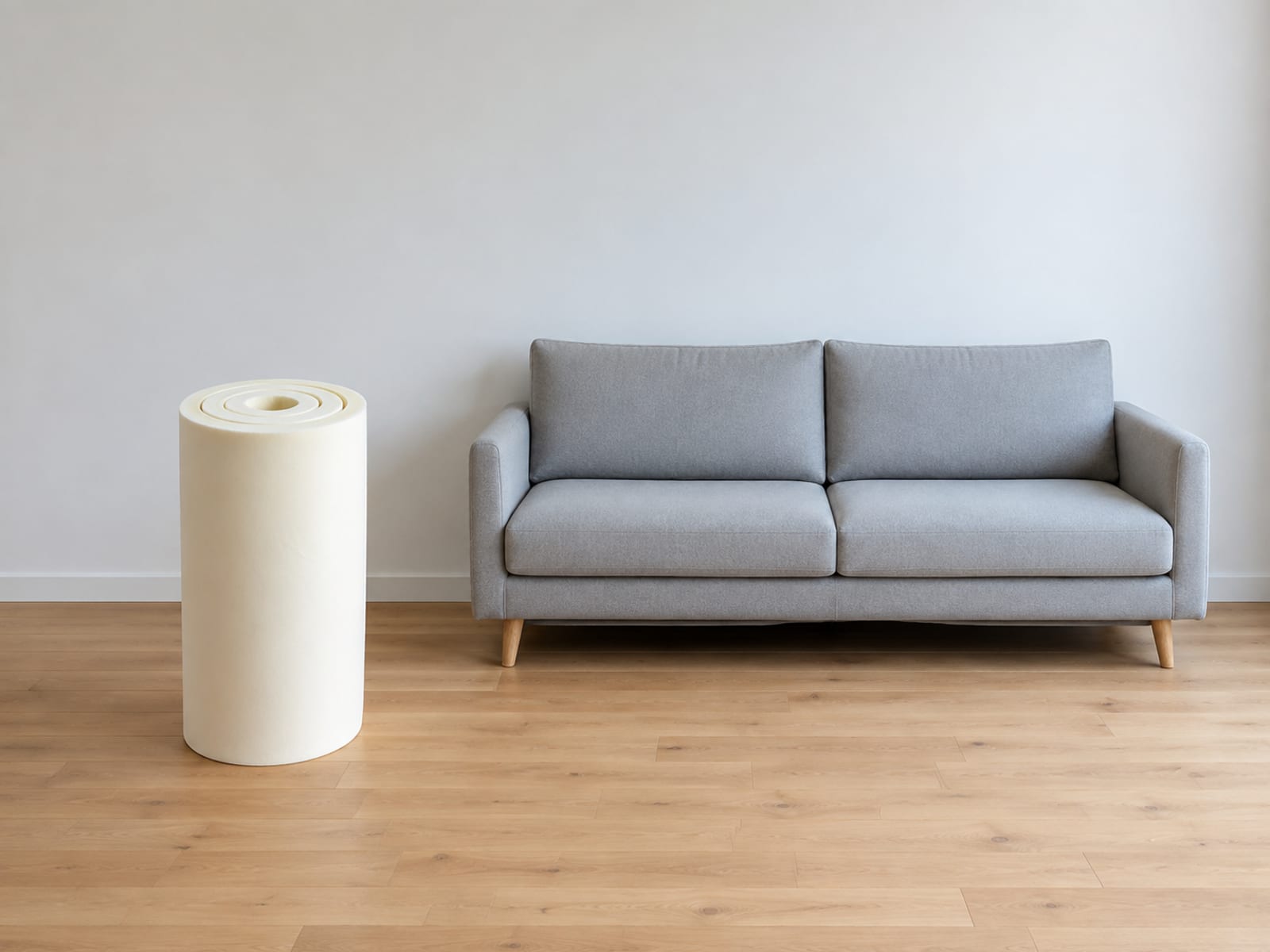
Cushioning goes on top, and here is where money gets wasted.
A queen topper is not a queen sleeper. West Elm's Haven Queen sleeper publishes a mattress of 60 by 72 by 5 inches. Casper's queen topper is 60 by 80. The topper is eight inches longer than the bed it is meant to improve, and both boxes say queen. Sleeper mattresses are routinely shorter than the bed size they are named after, so measure the actual mattress before ordering anything to go on it.
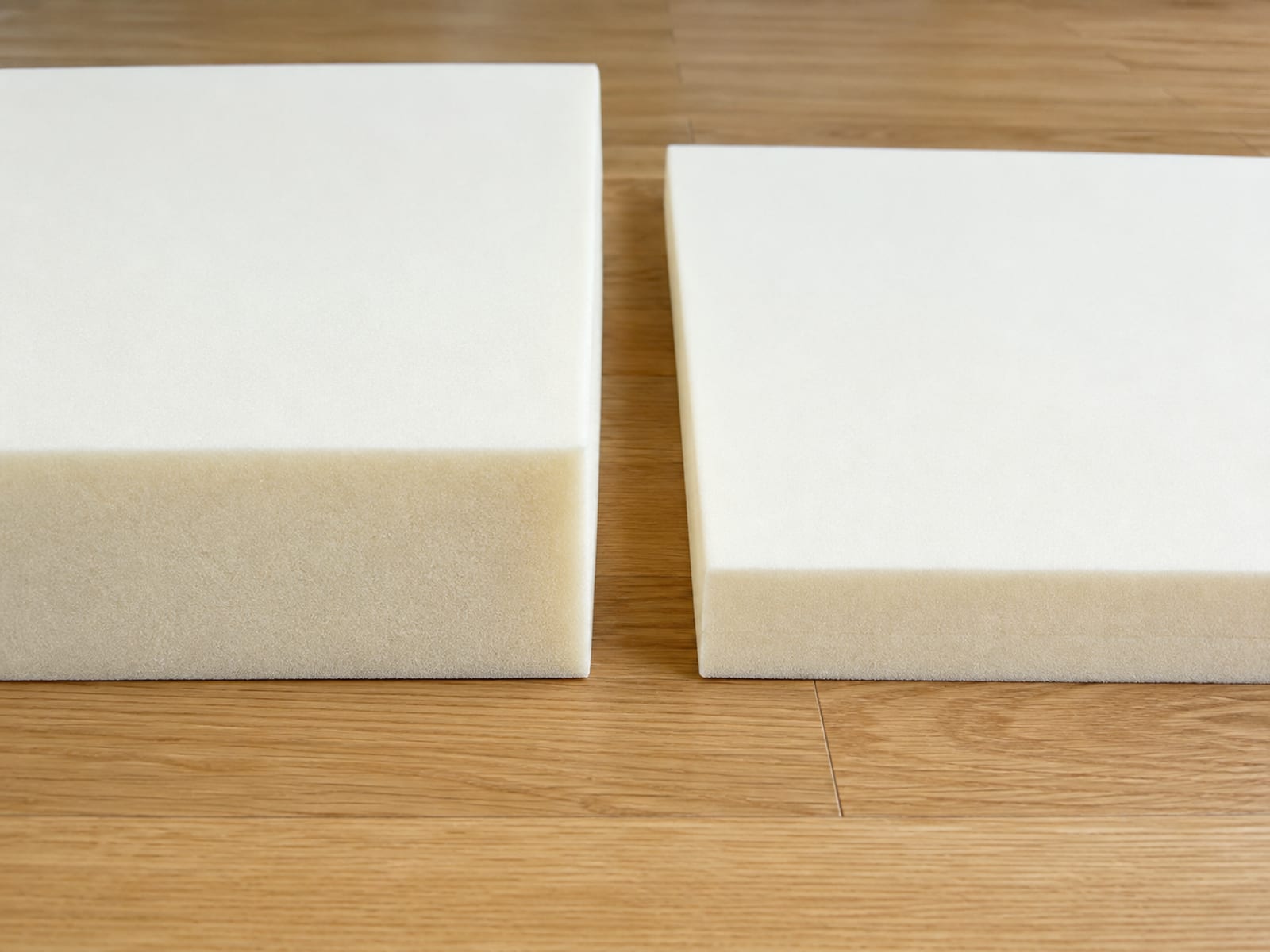
On thickness, take the 2-inch rather than the 3-inch unless you have somewhere easy to keep it. The research is blunt about why: a 3-inch topper adds more height and is correspondingly more awkward to store, and a commenter on a sleeper-sofa thread returned one for exactly that reason, because removal, folding and storage were all difficult. Casper lists its 2-inch at $132 in queen, $116 in full and $100 in twin, read September 2026.
Whatever you choose comes off before the bed folds. That is not optional, and it is why a topper you cannot easily carry becomes a topper nobody uses.
Replacing the mattress, and what to measure first
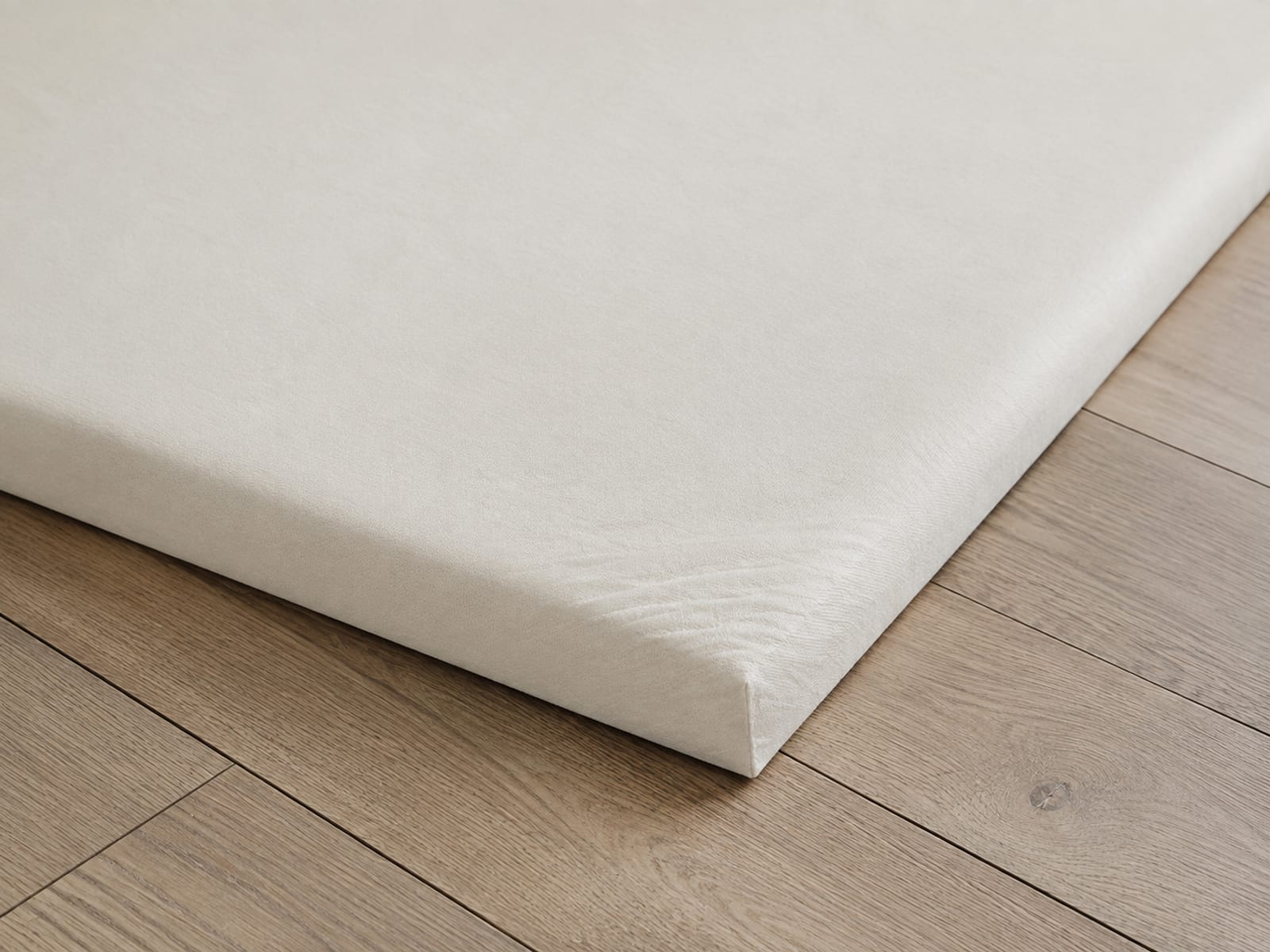
When the core has gone, replace it with a mattress made for a folding frame rather than a bed. Milliard's Premium 4.5-inch memory foam replacement was $224.99 in queen, read September 2026, and the useful range for this job is roughly 4.5 to 5 inches.
Before ordering, take four measurements off the mattress that is in there now: width, length, thickness, and the corner cuts. That last one catches people out. Sleeper mattresses are often cut away at the corners to clear the frame, and a square replacement of the right width and length will still not fold properly.
⚠️ And check with the sleeper's maker before you go thicker than the original. The whole mechanism is designed around a stated mattress height, and adding to it is the one change that can stop the bed closing safely. Do not add screws or plywood to the frame itself.
Hover or tap a row to highlight it.
| What you feel | What it is | The fix | Published example, September 2026 |
|---|---|---|---|
| A bar or a dip in the middle | The mechanism coming through | A board under the mattress | Meliusly SleeperSaver Classic, 8 mm ply, $99.99 |
| Evenly thin and hard | Not enough cushioning | A 2-inch topper, removed to close | Casper 2-inch, $132 queen, $116 full, $100 twin |
| Lumpy, soft in patches, tired | A worn-out core | A folding-specific replacement | Milliard 4.5-inch, $224.99 queen |
| The topper hangs off the end | A bed-size topper on a sleeper mattress | Measure the mattress, not the name | Haven queen 60 x 72 against Casper queen 60 x 80 |
How long is somebody actually sleeping on it?
This is the question that decides how far up the list to go, and it is worth answering honestly before spending anything.
A weekend, a few times a year. Bedding does most of the work. A folded quilt or a mattress pad under the fitted sheet takes the edge off a thin mattress, and real bed pillows instead of the sofa's decorative cushions will do more for a guest's neck than anything else on this page.
A few months. This is where the fixes earn their money. One couple in a sleeper-sofa thread were hosting parents in their sixties for exactly that long, and at that duration the question stops being whether a guest survives two nights and becomes whether a low, thin sleeper is the right bed for an older adult for a season. A board plus a 2-inch topper is a reasonable answer. A worn mattress at that length of stay should just be replaced.
A year or more. Another poster was in temporary housing for two to three years and weighing a sleeper against a Murphy bed. At that point the honest answer stops being a topper. If somebody is sleeping there most nights for years, the money is better spent on a real bed that folds or a proper mattress, and the sofa goes back to being a sofa. The sleepers whose makers publish a real mattress are the ones worth looking at if it comes to that. These are individual accounts rather than a survey, and they are useful because all three describe a different problem wearing the same words.
The cheap things worth doing first
Some of this costs nothing and it is worth trying before an order goes in.
Put a folded quilt, a thick blanket or a padded mattress pad under the fitted sheet. It hides a thin patch and adds a layer without anything to store, since it goes back in the linen cupboard with the sheets.
Swap the decorative cushions for real bed pillows. Sofa cushions are firm and shallow by design and they are not pillows, and a guest lying on two of them will wake up with a sore neck no topper can prevent.
Use sheets that actually fit. A deep-pocket fitted sheet made for a mattress twice the thickness will not stay put on a five-inch sleeper pad, and a sheet that keeps pinging off a corner in the night is its own kind of bad night.
If the frame squeaks, a silicone-based lubricant on the metal joints and springs quiets it and helps the mechanism travel. That is maintenance rather than comfort, and it takes five minutes.
Would you get this one right?
1. Your guest says they can feel a bar across the middle. What fixes it?
2. Your sleeper is a queen. Is a queen topper the right size?
3. Why choose a 2-inch topper over a 3-inch one?
4. What should you check before fitting a thicker replacement mattress?
Pick an answer to begin.
Frequently asked questions
What can I put on my sofa bed to make it more comfortable?
It depends on what is wrong with it. A 2-inch topper for a thin, hard surface, a support board underneath for a felt bar, and a folding-specific replacement mattress when the core has gone. Whatever you add has to come off before the bed folds, so pick the one you will actually be willing to move on a Monday morning.
How do you not feel the bars on a sleeper sofa?
Put something rigid between the mechanism and the mattress rather than something soft on top of it. A support board like Meliusly's 8 mm plywood SleeperSaver bridges the core support area and needs no tools, and because it lives under the mattress it does not have to be taken out when the bed closes. A topper alone tends to disguise a bar rather than remove it.
Why is my sofa bed so uncomfortable?
Usually because the mattress is thin enough that the folding mechanism underneath comes through it, and sometimes because that mattress has packed down over years of being folded. Sleeper mattresses are also shorter and thinner than a bed mattress of the same name, so the surface starts out with less to give than a guest expects.
Can I put a normal mattress topper on a sofa bed?
You can, if it fits and if you are willing to take it off each time. Measure the sleeper's actual mattress first, because a queen sleeper mattress can be eight inches shorter than a queen topper, and choose 2 inches over 3 unless storage is easy. Never leave a topper inside when you fold the bed.
The words on a sofa bed fix
Tap a term to see what it means.
Support board. A rigid panel that sits under the mattress to bridge the mechanism. Meliusly publishes 8 mm plywood covering the core support area.
Name the complaint first, buy the one thing that answers it, and keep whatever you add light enough that folding the bed on Monday is not a chore. PlushPick keeps the published mattress and sleeper dimensions together, which is where to check the size before a topper goes in the basket.
Cal Hewitt
Writer at PlushPick. I compare sofa specs, comfort, durability, and value so you can buy with clearer expectations.
About Cal and how the guides are researchedThe latest
 "Best-of"Best Furniture Protectors for Pets, by What They Actually Cover
 "Best-of"Best Pet-Friendly Sofa Fabrics: Claws, Hair and Spills
 "Best-of"Best Sofas for Small Spaces: Narrow Doesn't Mean Shallow
 "Best-of"Best Recliner Covers for Dogs: What Actually Stays On
 AnswerSofa vs Sectional: Which One Fits Your Room and Life
 AnswerHow to Measure a Sofa So It Fits Through the Door