

Affiliate disclosure. If you buy through a link on this page, PlushPick may earn a commission at no extra cost to you. That never changes which products are named or what is said about them. As an Amazon Associate I earn from qualifying purchases. How this works
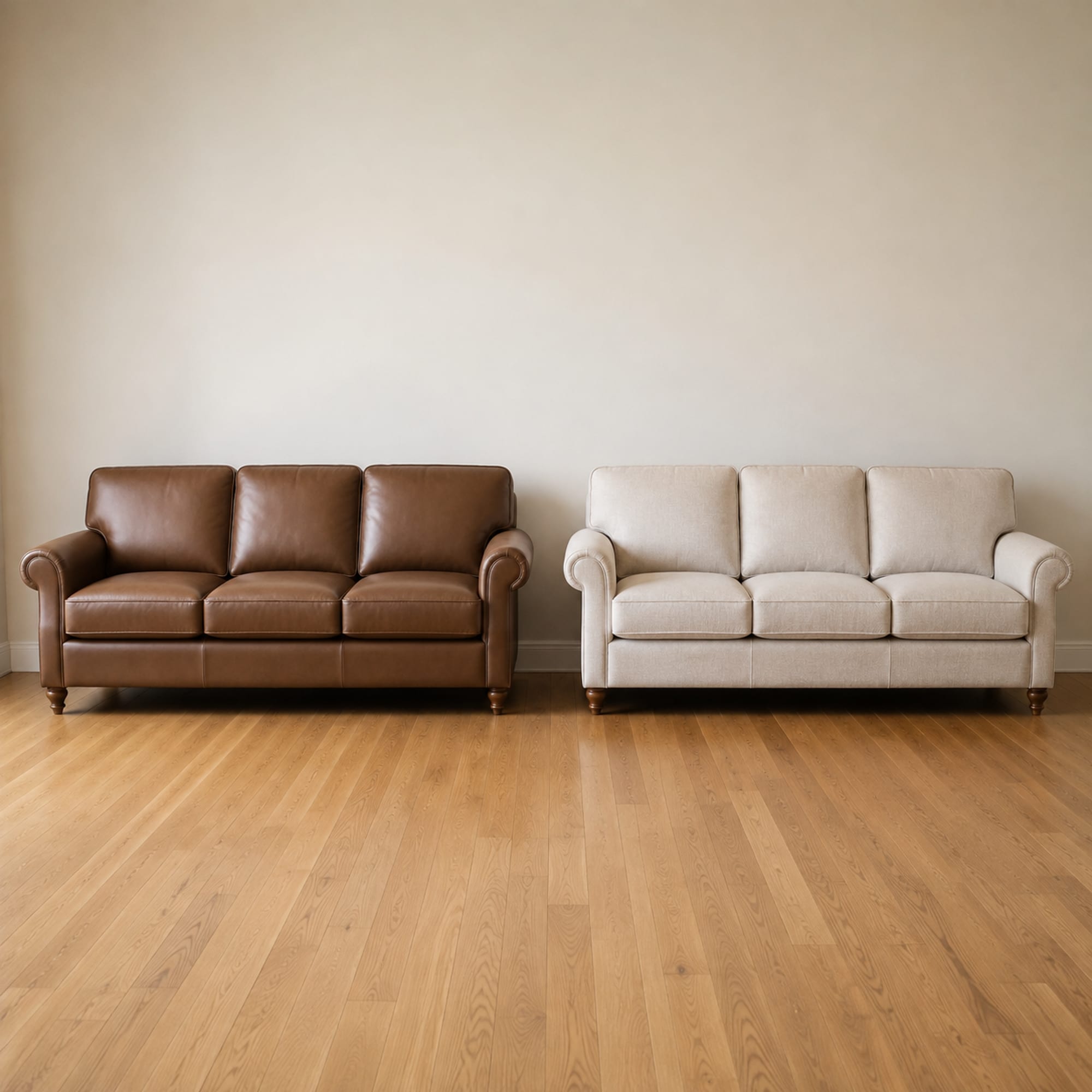
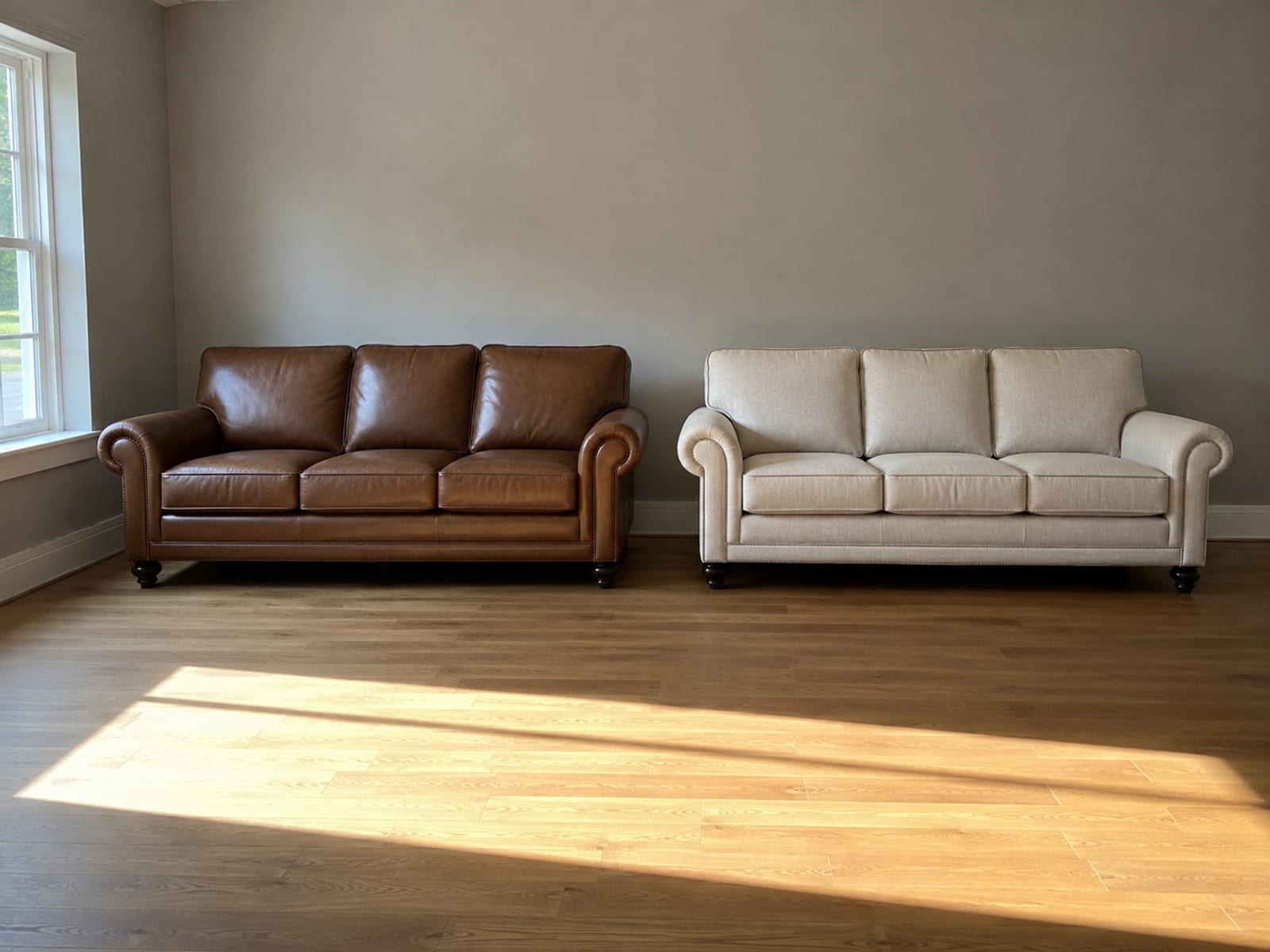
Price the same sofa both ways and the question stops being philosophical. La-Z-Boy's Noah Sofa is one frame, 83 inches wide by 36 deep by 36.5 high, with a 72-inch seat width and a 22-inch seat depth. In its i-Rene fabric covers it lists at $2,169. In leather, the same page shows $5,149. That is a $2,980 difference that buys you a different surface on an identical piece of furniture, and it does not buy a longer-lasting sofa, because the parts that wear out are underneath and they are the same either way.
Key Takeaways
Same frame, two prices
The La-Z-Boy Noah is $2,169 in i-Rene fabric and $5,149 in leather on the same product page, for the same 83 by 36 by 36.5 inch piece.
The cover is not the durability decision
ASTM says in its own standard text that its abrasion test is comparative and may not necessarily predict real-use performance.
What actually fails is the cushion
One owner reported a leather sectional whose cushions had stopped protecting from the frame after 14.5 years. The cushion is the same component under either cover.
A rub count needs its test name
"50,000 rubs" means nothing without Wyzenbeek and ASTM D4157, or Martindale and ASTM D4966, beside it.
The real complaint about leather is skin contact
Not durability. The top answer on a thread about leather's drawbacks is that it is cold to sit on and sticky to get up from.
Leather has a specific enemy list
Claws, heat and direct sun. One owner reported cats damaging leather as they jumped up.
What does the extra money actually get you?
A different surface on the same sofa. That sounds glib until you look at a page that sells both.
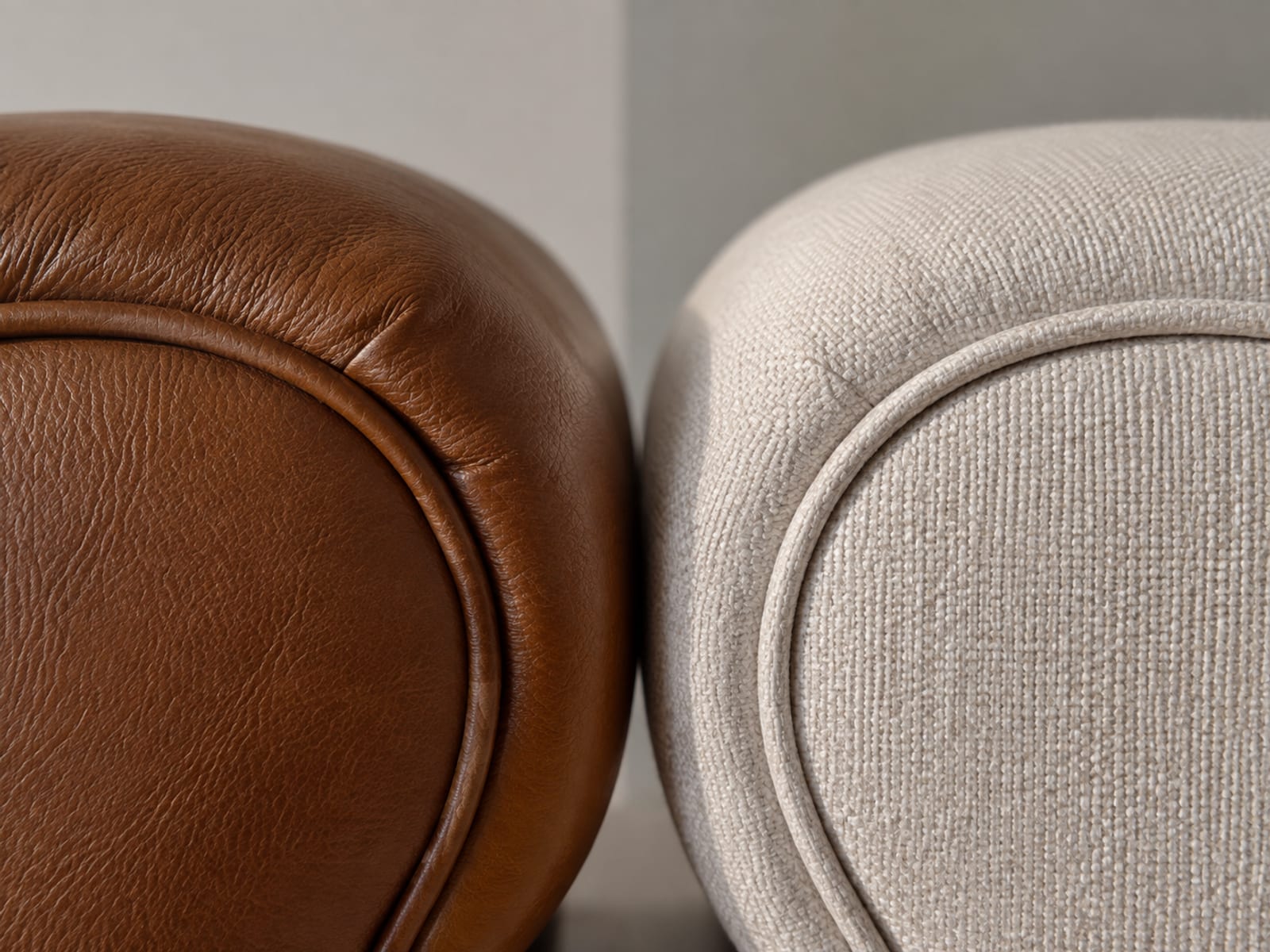
The La-Z-Boy Noah Sofa publishes one set of dimensions: 83 inches wide, 36 deep, 36.5 high, with a 72-inch seat width, a 22-inch seat depth and a 20.5-inch seat height. Its i-Rene fabric covers are listed at $2,169 and its leather covers at $5,149, both on la-z-boy.com as of September 2026. The frame does not change. The cushions do not change. The seat depth you will sit on for the next fifteen years does not change. What changes is what your legs touch, and it costs $2,980.
That is one model at one retailer rather than a universal leather premium, and it is worth doing the same exercise on whatever you are actually looking at. La-Z-Boy notes on that page that construction differences between cloth and leather can cause some dimension variation, and that the piece is made to order with a 6 to 8 week lead time. It also labels the i-Rene fabric as water, dry and stain resistant, which is a fabric doing a job people assume only leather does.
Once the number is in front of you, the question becomes answerable. Three thousand dollars is a rug, a chair, and a very good lamp. It is worth spending on a surface you will be happier touching. It is not worth spending on a promise about how long the sofa will last.
Does leather last longer than fabric?
Nobody can tell you, including the people who write the tests.
The number usually offered is a rub count, and a rub count is only meaningful with its method named: Wyzenbeek and ASTM D4157, or Martindale and ASTM D4966. Those are different tests and their numbers are not interchangeable. More to the point, ASTM's own D4157 standard says at section 5.6 that the test is comparative and may not necessarily predict real-use performance. That is the standards body telling you its own number does not forecast how your sofa will do in your house. There is still a published bar written for a house rather than a lobby, and what a home sofa fabric actually has to clear sets it out.
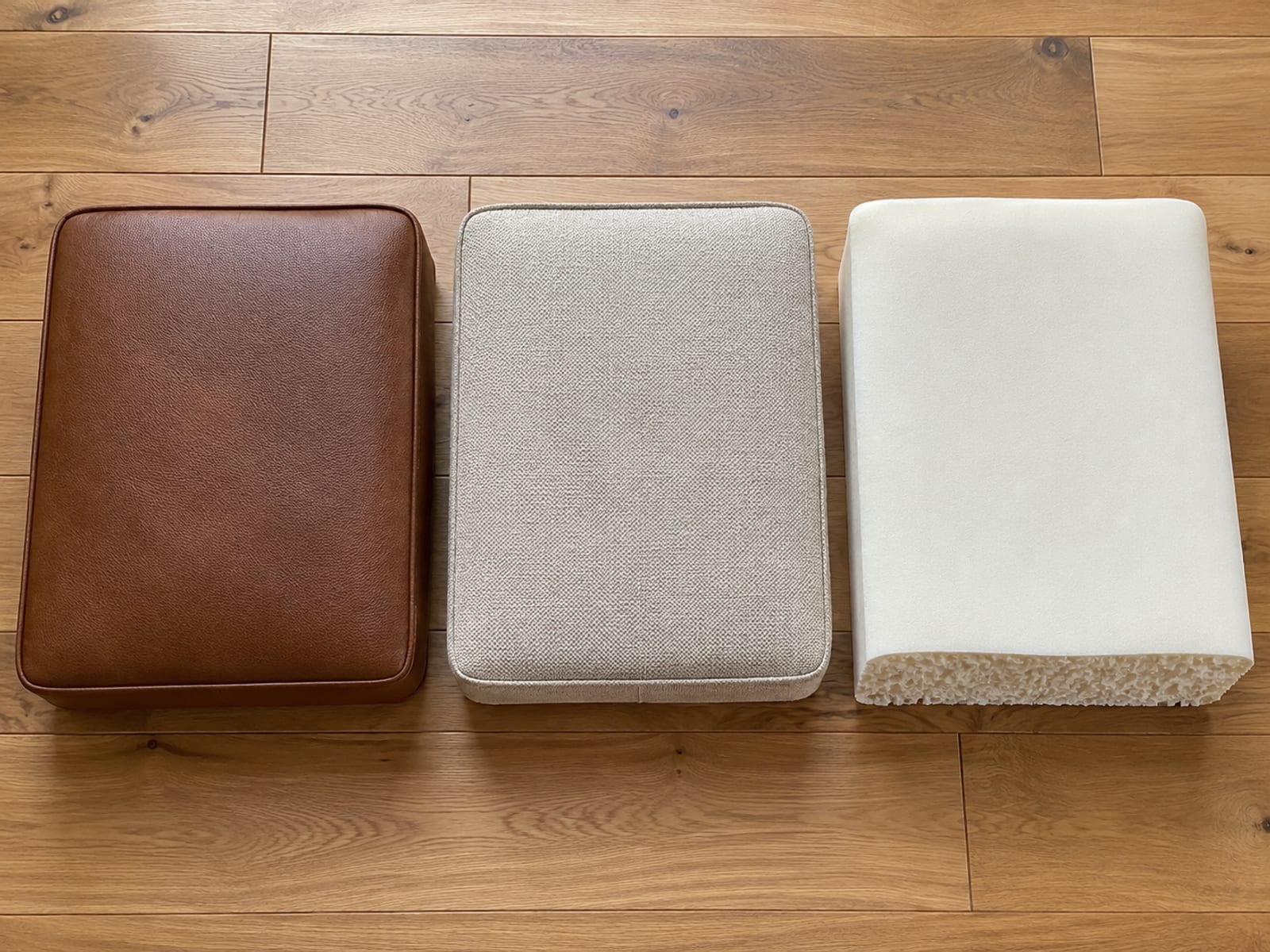
So, what does fail? The evidence available is one person's account and it points somewhere specific. A commenter on the r/furniture thread about leather's drawbacks reported that a leather sectional's cushions had ceased protecting from the frame after 14.5 years. Read that carefully: the leather was still there. The cushions had gone. And the cushions are the same foam under a leather cover as under a fabric one.
That is one household rather than a study, and it points at the right component. If you want a sofa that is comfortable in fifteen years, the money goes into the seat construction, not into the skin over it. The wider version of that argument, four parts running on four separate clocks, covers the springs and the frame as well as the cushions. And if the seat has already gone on a sofa you own, finding out which layer dropped comes before any decision about replacing it.
Hover or tap a row to highlight it.
| i-Rene fabric | Leather | |
|---|---|---|
| Price | $2,169 | $5,149 |
| Width, depth, height | 83 by 36 by 36.5 in | 83 by 36 by 36.5 in |
| Seat width | 72 in | 72 in |
| Seat depth | 22 in | 22 in |
| Seat height | 20.5 in | 20.5 in |
| Lead time | 6 to 8 weeks, made to order | 6 to 8 weeks, made to order |
The thing people actually complain about
Owners who dislike leather almost never bring up durability or cleaning. They bring up how it feels against skin.
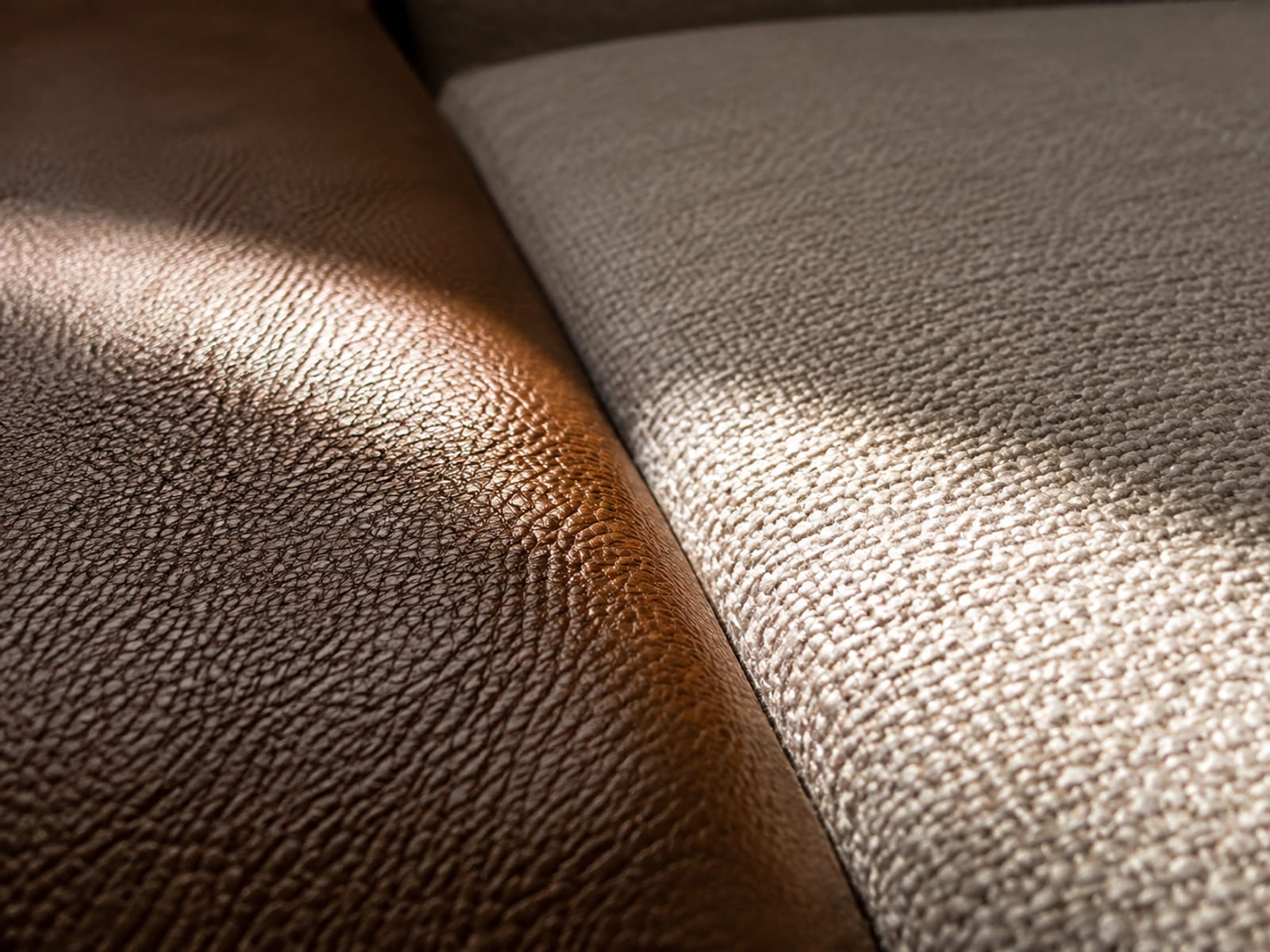
The top answer on that r/furniture thread puts it plainly: leather feels horrible on bare legs, cold when you sit down and then sticky when you get up. It is the first thing an owner says when asked what is wrong with leather, ahead of price and ahead of wear.
It is also not universal, and it is worth understanding why before you take it as a verdict. A cool room, a soft semi-aniline hide and long trousers is a different experience from a sunny room, a heavily coated leather and bare legs in August. The same material behaves differently depending on the finish over it and the temperature of the room it stands in, which is why owners can describe opposite experiences in good faith.
The useful move is not to resolve it from a page. It is to go and sit on one, for longer than a showroom minute, in the clothes you actually wear at home.
What the cover does decide
If leather is the way you are going, the next question is which hide, and the grade most listings never name is where that decision actually sits.
The cover choice is real, it is just not about lifespan. It is about what your particular household does to a surface.
Leather is wipeable, which is genuinely different from washable, and it has a short and specific enemy list: claws, heat and direct sunlight. A commenter on the same r/furniture thread reported cats damaging the leather as they jumped up, which is the failure mode leather has and fabric mostly does not. Sun and radiators are the other two, and where the sofa stands matters more for leather than for most fabrics.
Fabric's answer is that a good performance fabric is a genuine high-wear option, and the Noah's own i-Rene covers are published as water, dry and stain resistant. Fabric also gives you the option leather never does, which is a cover that comes off and goes in a machine. One poster comparing the two for a living room specifically valued removable washable covers and spot-cleaning after spills.
Neither of those is a general ranking. They are two different maintenance lives, and which one suits you depends on what is in the house.
If animals are the deciding factor, that question has more to it than the cover material and the fabrics that hold up in a house with animals goes through it properly.
What each one asks of you afterward
Different routines, not more and less work.
Leather wants a specific care product for its specific finish, and finished top-grain, aniline and nubuck are not interchangeable in what they will take. It does not want to sit in the sun. Left alone in the right spot it is very low maintenance, and the whole routine is covered in cleaning leather without drying it out.
Fabric wants you to know one letter. The care code on the tag decides what may touch it, and what your letter actually permits is the whole method. A removable washable cover, where the product actually says so, makes most of that moot.
The honest summary is that leather asks for less frequent attention of a more particular kind, and fabric asks for more frequent attention of a simpler kind.
Would you get this one right?
1. The same La-Z-Boy sofa is $2,169 in fabric and $5,149 in leather. What changes between the two?
2. A fabric is advertised at 50,000 rubs. What is missing?
3. What does ASTM say about its own abrasion test at section 5.6?
4. One owner's leather sectional failed after 14.5 years. What had failed?
Pick an answer to begin.
Frequently asked questions
Which is better, a fabric or leather sofa?
Neither, as a general matter, and the search results arguing it are arguing something that cannot be settled. What can be settled is the specific number: on the La-Z-Boy Noah the cover is a $2,980 decision on an identical frame. Price the sofa you actually want both ways and decide whether that gap is worth it for a surface you prefer touching.
Do fabric sofas last longer than leather?
There is no published basis to say either way. ASTM states in its own standard that its abrasion test is comparative and may not necessarily predict real-use performance, so even a properly named rub count does not forecast lifespan. The one long-term account available describes cushions failing at 14.5 years under a leather cover that was still intact.
What are the downsides of a leather sofa?
Cost, on the same frame, and skin contact. Owners consistently describe leather as cold to sit on and sticky to get up from in warm weather, though at least one retailer publishes the opposite. Beyond that it has a specific enemy list: claws, heat and direct sun. One owner reported cats damaging leather as they jumped onto it.
Is a performance fabric as good as leather?
For resisting spills, published performance fabrics do the job leather is usually credited with. The Noah's i-Rene covers are labeled water, dry and stain resistant on the product page itself, at less than half the price of the leather option on that same page. Whether it feels as good is a different question and only you can answer it.
Should I buy leather if I have cats?
Claws are the one damage type leather is clearly worse at, and one owner in the thread reported exactly that from cats jumping up. It is not an absolute rule and it is the single most reported leather failure. The fabric side of that decision has more to it than the material name.
The terms in this argument
Tap a term to see what it means.
Wyzenbeek and ASTM D4157. One abrasion test method, measured in double rubs. A number without this name or the Martindale one beside it is incomplete.
Find the sofa you want first, then price it in both covers on the same page and look at the gap as a number rather than as an argument. If the frame turns out to be the thing you are unsure about rather than the skin over it, PlushPick sorts the sofas whose construction is actually published so you can compare what is underneath.
Cal Hewitt
Writer at PlushPick. I compare sofa specs, comfort, durability, and value so you can buy with clearer expectations.
About Cal and how the guides are researchedThe latest
 "Best-of"Best Furniture Protectors for Pets, by What They Actually Cover
 "Best-of"Best Pet-Friendly Sofa Fabrics: Claws, Hair and Spills
 "Best-of"Best Sofas for Small Spaces: Narrow Doesn't Mean Shallow
 "Best-of"Best Recliner Covers for Dogs: What Actually Stays On
 AnswerSofa vs Sectional: Which One Fits Your Room and Life
 AnswerHow to Measure a Sofa So It Fits Through the Door