

Affiliate disclosure. If you buy through a link on this page, PlushPick may earn a commission at no extra cost to you. That never changes which products are named or what is said about them. As an Amazon Associate I earn from qualifying purchases. How this works
Seven to fifteen years is the honest planning range, and it comes from retailer and editorial guidance rather than from a durability standard. Wayfair breaks it into tiers: three to seven years for a budget sofa, seven to ten for mid-range, ten to twenty for high end. Use that to plan with. Then look one level down, because a sofa is four things stacked together and they are not on the same clock. The cover, the cushion fill, the suspension underneath and the frame all wear out at different speeds, and the shortest of those four clocks is the one that ends the sofa. It matters which one, because two of them are a Saturday and a hundred dollars, and the other two are a trade quote or a new couch.
Key Takeaways
Four parts, four clocks
Cover, cushion fill, suspension, frame. The first one to fail decides whether your sofa is finished or fixable.
The foam has a published figure
Sailrite publishes eight to ten years of daily use for its 1.8 pound per cubic foot cushion foam. That is a number for the part that usually goes first.
1.8 is the threshold to look for
The Polyurethane Foam Association reports that lower-density seat foam breaks down faster and that foam at 1.8 PCF or higher performs better in seating.
The federal figure describes furniture in service
The CPSC's model used a 14-year expected product life and calculated an 8.5-year average age for upholstered furniture in use.
Squeak and wobble are the expensive signs
They point at the frame, which is the one component with no reasonable repair on a mass-market sofa.
A sofa can look finished and be sound
One six-year-old sofa in a forum thread had acceptable fabric and cushions and dead springs. Judge the parts separately.
The four clocks, and why the number underneath matters
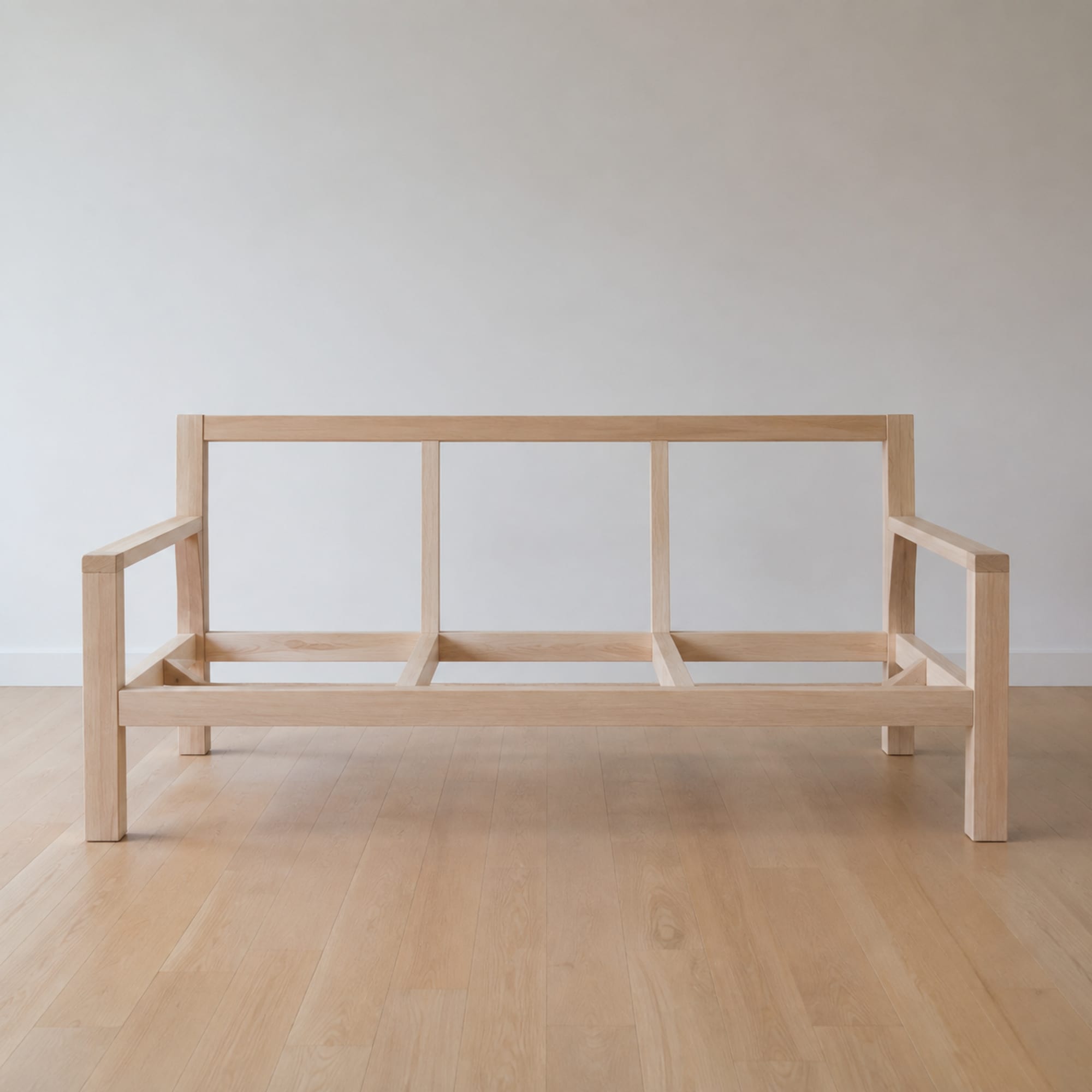
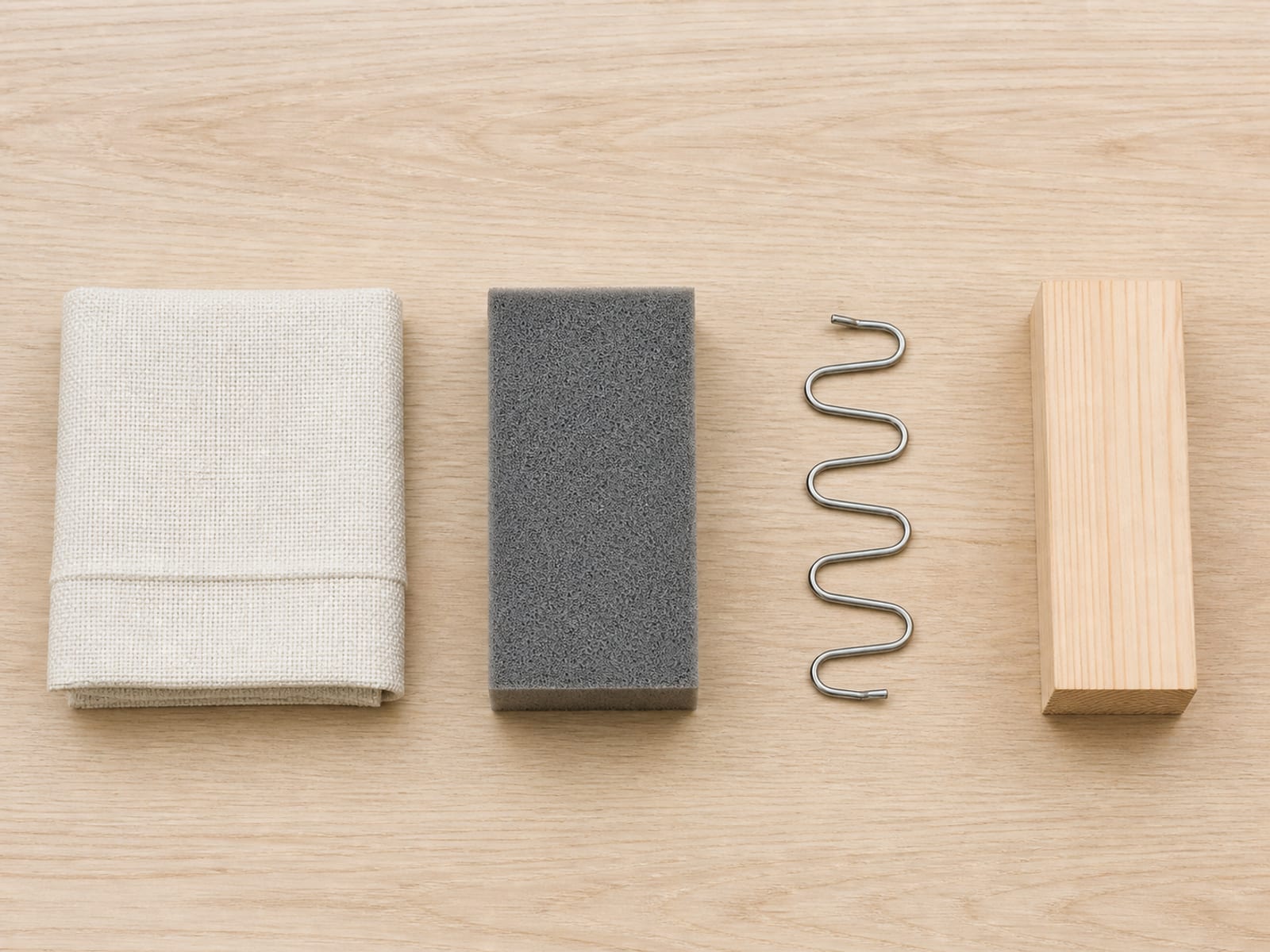
Take the sofa apart in your head. On the outside is the cover, which is fabric doing a fabric's job. Under that is the cushion fill, usually a polyurethane foam core, sometimes with fiber wrapped around it. Under the cushions is the suspension, meaning the springs or the webbing straps that carry your weight into the frame. And holding all of it is the frame itself, wood or metal, with joints.
Those four fail in different ways on different timelines. A cover goes thin at the front edge of the seat where legs swing over it. A foam core takes a permanent set and stops pushing back. Springs stretch or break. Frame joints loosen and start to talk.
The reason to separate them is money. A cover can be washed, patched, slipcovered or replaced. A foam core can be swapped by anyone with a tape measure. A suspension is a trade job. A loose frame on a mass-market sofa is usually the end. So, the useful question is not how many years a sofa gets, it is which of the four ran out first.
Hover or tap a row to highlight it.
| Part | What it looks like when it goes | Who fixes it |
|---|---|---|
| Cover | Thinning or fraying at the seat front, holes in a cushion face | You, or a slipcover, or an upholsterer for a full recover |
| Cushion fill | The seat sits low and does not push back, and fluffing changes nothing | You, with a measured replacement core |
| Suspension | The deck drops under your hand with the cushion removed, or a spring is audible | An upholsterer or a furniture repairer |
| Frame | A squeak when you sit, an arm that moves, a rocking motion when you shift | Usually nobody, on a mass-market piece |
The one part with a published service life
The foam is the only component of a sofa you can buy a real number for, because it is sold separately as a material.
Sailrite's CushionRite upholstery foam is published at 1.8 pounds per cubic foot with an indentation force deflection of 20 to 45 depending on whether you choose soft, medium or firm. Its own listing publishes eight to ten years for daily use. It sells in 39 by 41 and 39 by 82 inch sheets at $3.65 to $144.45 depending on size, thickness and firmness, read on sailrite.com in September 2026.
That figure is the seller's own claim about its own product rather than an independent test result, and it applies to that foam rather than to every foam. It is still the most concrete thing available on this subject, and it lands right in the middle of the seven-to-fifteen band, which tells you something: on a sofa that reaches the top of the published range, the original cushions almost certainly did not.
The Polyurethane Foam Association reports the threshold behind that. Lower-density seat foam breaks down faster, and its cited test-guideline experience is that polyurethane foam at 1.8 PCF or higher performs better in seating than foam below it. Density is pounds per cubic foot, and it is a different measurement from firmness; IFD is the firmness one, and the PFA notes that firmness can be engineered independently of density. When you next buy, that is the number to ask for, and it is the number a listing that does not publish it is not telling you.
What a federal model says about the furniture actually in service
There is one figure in this whole subject that comes from an organization with nothing to sell, and it turns up somewhere unexpected.
In a Consumer Product Safety Commission briefing, a historical-sales model used a 14-year expected product life for upholstered furniture and calculated an 8.5-year average age for the upholstered furniture in use across the country. Both figures were built for fire-risk work rather than for durability research, and neither one is a promise about any particular couch.
They are still worth carrying, because they measure a different thing from every other number here. The retailer tiers estimate what a product should achieve. The CPSC's 8.5 years describes the age of what is actually sitting in living rooms right now, which includes the sofas people kept because they were still fine and the ones they replaced early because they were not.
When it is the cushions, which is most of the time
The most common complaint, by a distance, is that the seat has gone soft and low. That is the foam clock, and it runs out sooner than the rest.
The thing to establish before spending anything is whether the cushion is the part that failed or whether the deck under it is, because the fix is completely different and the wrong one does nothing. A press test with the cushion removed separates them in about ten seconds.
If it is the fill, the sofa is not finished. A measured replacement core turns a five-year-old sofa back into a usable one for the price of foam, and it is the single highest-return repair on this list. What it does not do is fix a cover that has thinned or a frame that has loosened, so do the whole assessment before you order anything.
When it is the springs, and the sofa still looks fine
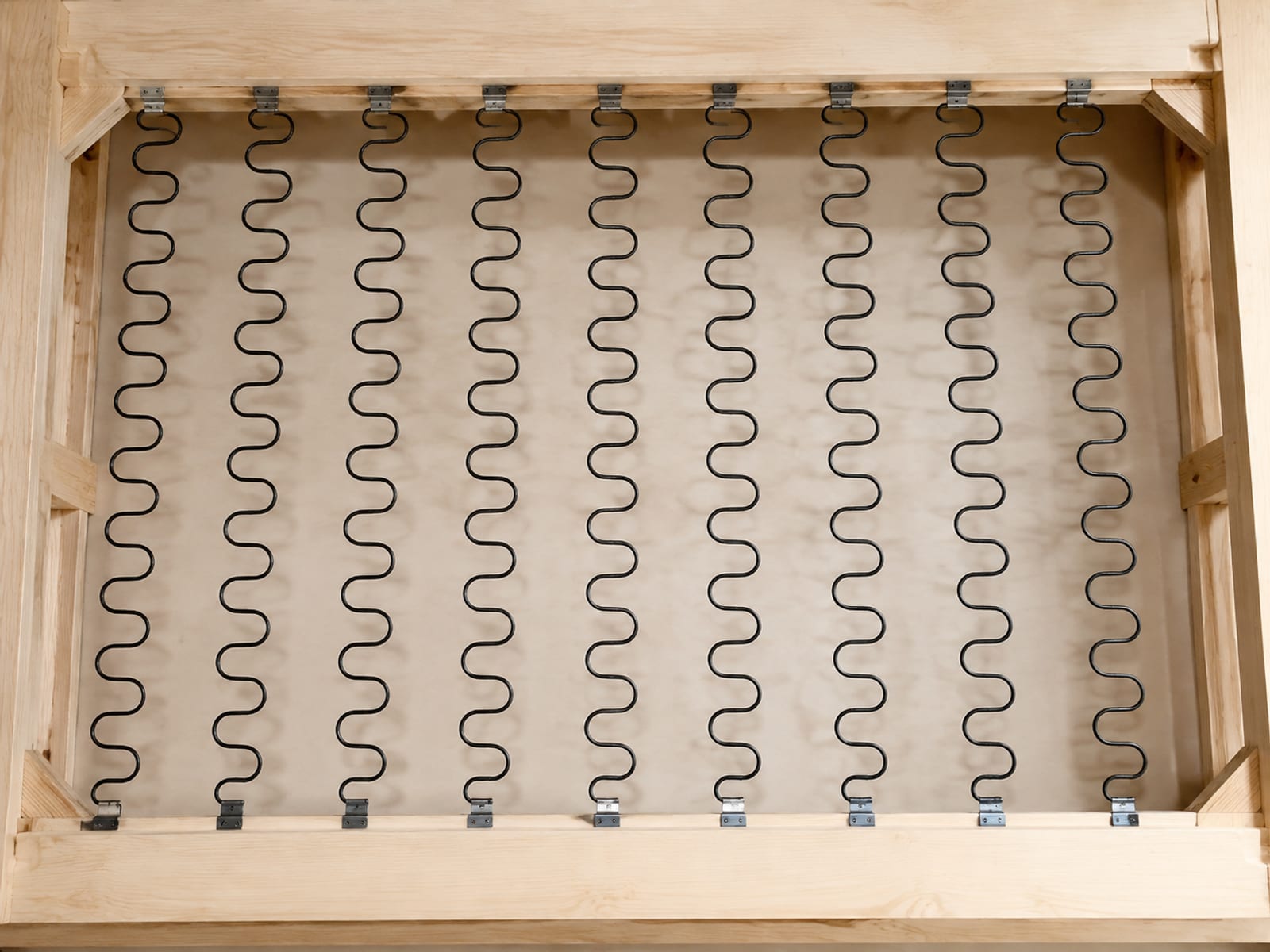
This is the case people misread, and there is a clear example of it. A poster in an r/interiordecorating thread on sofa lifespan described a six-year-old sofa used by two adults and two small animals where the fabric and the cushions were both still acceptable and the springs were not.
That is one person's report rather than a pattern, and it is a useful one because it inverts the assumption the whole category runs on. A sofa can look almost new and be structurally done, and it can look tired and have years left. Appearance and support are separate systems and they age separately.
A failed suspension is an upholsterer's job. It is worth quoting on a sofa with a sound frame and a cover you like, and it is worth nothing on a piece whose frame is also moving.
When it is the frame, which is the end
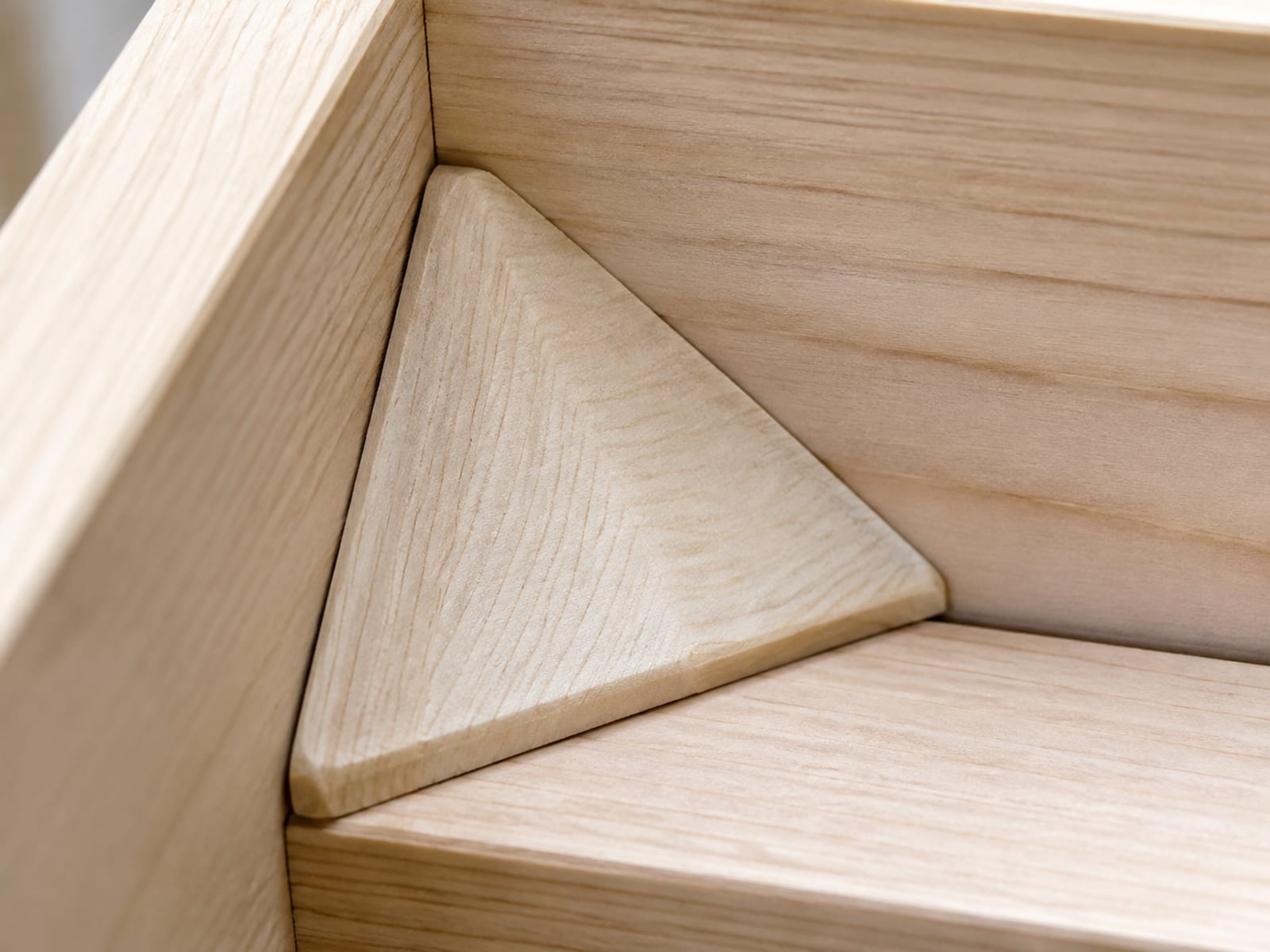
Squeaking and a wobbling arm are the two signs to take seriously. Christine Kobervig Munger, quoted in LivingCozy's guide to sofa lifespan, lists the replacement signals as squeaking, wobbling arms, sagging or fraying cushions, and holes in a seat cushion. Two of those four are cosmetic or repairable. The other two are the frame telling you its joints have gone.
Wayfair's construction guidance points at the same thing from the buying end: where children or pets jump on furniture, it says to prioritize a solid wood or metal frame over plywood and particleboard. That is a construction descriptor rather than a guaranteed number of years, and it is the difference between a frame that can be re-glued and one that cannot.
An r/BuyItForLife poster with a toddler and two Labrador retrievers described an Ashley fabric sofa that needed cushion-cover work and frame bracing after four-plus years. Two clocks ran out at once in that house, and the frame is the one that decided it. That is a single account and not a verdict on a brand, and it is a fair illustration of what a hard-use household does to the two ends of the stack at the same time.
What actually moves the numbers
Household load first, and by a wide margin. A commenter on the r/interiordecorating thread put it as a rough rule: with kids or pets, expect around five years from upholstered furniture, and with one or two tidy adults, two or three times longer. That is one person on a forum rather than a measurement, and the size of the gap they describe matches what the tier tables imply.
Then construction. A published frame material, a published foam density and a suspension named on the product page are the three things that separate one seven-year sofa from one twelve-year sofa, and all three are missing from most listings.
Then care, which matters more at the cover clock than anywhere else. A cover that gets cleaned by whatever was under the sink ages faster than one cleaned by the letter on its tag, and what each care-code letter permits is the whole of that decision.
What does not move the numbers is anything about size. Width, seat depth, the delivery path and where the television sits are all real considerations when buying and none of them changes how long the sofa lasts once it is in the room.
Would you get this one right?
1. Your six-year-old sofa looks fine but sags in the middle when you sit. What have you learned?
2. A listing gives a foam density of 1.5 pounds per cubic foot. What does the PFA's guidance suggest?
3. The sofa squeaks when you sit down and one arm moves. Which clock ran out?
4. What is the CPSC's 8.5-year figure measuring?
Pick an answer to begin.
Frequently asked questions
How often are you supposed to replace a couch?
Not on a calendar. Replace it when the frame moves or squeaks, when the suspension has gone under a cushion that is otherwise fine, or when damage to the cover costs more to put right than the sofa is worth. If the only problem is a flat seat, that is a repair rather than a replacement, and it is usually the cheapest one on the list.
How long should a $500 couch last?
There is no test that turns a price into a number of years, and the two published estimates disagree. Wayfair's budget band is three to seven years. The Sofa Review says three to five for budget couches. Both are estimates rather than warranties, so treat the overlap, three to five years, as the cautious planning figure and check the actual frame material and foam density on the specific model before you decide.
How often does the average person buy a new couch?
No published US study with a sample and a date came up for this. The nearest real figure is the CPSC model's 8.5-year average age for upholstered furniture in use, and that measures how old the country's sofas are rather than how often anybody buys one. The two are not the same thing, and the gap between them is all the sofas nobody has replaced yet.
Is $2,000 a lot for a couch?
It is a mid-to-upper price in the US market and it buys published specifications more reliably than it buys years. At that level you should expect the frame material, the foam density, the suspension type and the cover's cleaning code to all be printed on the product page. A $2,000 sofa that publishes none of those is not obviously better than a $900 one that publishes all of them. Pricing a sofa per seat shows how far apart two pieces with the same seat count can sit, and what the gap is actually buying.
Does a longer warranty mean a longer life?
A warranty is a repair promise on specific defects, usually the frame, and it is not a statement about how long the seat will stay comfortable. Read what it actually covers, because frame coverage and cushion coverage are almost always different lengths, and the cushions are the part most likely to need it.
The four parts, in the words a maker uses
Tap a term to see what it means.
Suspension. The layer under the seat cushions that carries weight into the frame. Sinuous springs, pocket springs or webbing straps, depending on the build, and it is specified separately from the upholstery.
Work out which of the four went first before you decide anything, because that answer and the seven-to-fifteen range together are what actually tell you where your sofa is. A flat seat on a sound frame is a repair. A moving frame under a good cover is a replacement, whatever the calendar says. If it turns out to be the seat, PlushPick has the two-minute test that separates the cushion from the deck beneath it before you spend anything.
Cal Hewitt
Writer at PlushPick. I compare sofa specs, comfort, durability, and value so you can buy with clearer expectations.
About Cal and how the guides are researchedThe latest
 "Best-of"Best Furniture Protectors for Pets, by What They Actually Cover
 "Best-of"Best Pet-Friendly Sofa Fabrics: Claws, Hair and Spills
 "Best-of"Best Sofas for Small Spaces: Narrow Doesn't Mean Shallow
 "Best-of"Best Recliner Covers for Dogs: What Actually Stays On
 AnswerSofa vs Sectional: Which One Fits Your Room and Life
 AnswerHow to Measure a Sofa So It Fits Through the Door