


Affiliate disclosure. If you buy through a link on this page, PlushPick may earn a commission at no extra cost to you. That never changes which products are named or what is said about them. As an Amazon Associate I earn from qualifying purchases. How this works
If you have washed the covers and the couch still smells, you have not done it wrong. You have cleaned one layer out of four. California's furniture standard, the one every American sofa is built to, names the parts of an upholstered seat separately: the cover material, a barrier or interliner beneath it, the resilient filling that gives the cushion its shape, and the deck, which is the upholstered platform your loose cushions sit on. A wash cycle reaches the first of those. The smell is almost always sitting in one of the other three, and the deck is the one nobody thinks to look at.
Key Takeaways
A couch is four layers, not one surface
California's TB 117-2013 names the cover, the barrier or interliner, the resilient filling and the deck as separate components. Washing a cover cleans one of them.
The deck is the layer people never check
It is the upholstered platform under the loose seat cushions, and it is exposed the moment you lift them out.
The source decides the treatment
A pet accident, body oils, mildew from damp and plain years-of-sitting mustiness are different problems, and one deodorizer does not cover them.
Baking soda has a published dwell time
Zerorez gives 20 to 30 minutes for ordinary odor, 1 to 2 hours for a strong one, and 30 to 60 minutes per side on a cushion insert.
Damp is its own cause, not a side effect
Too much moisture leaves a musty smell of its own, and the AAFA puts the indoor target at 30 to 50 percent relative humidity.
Odor that comes back after full drying is the stop point
That is the moment a professional inspection is worth more than another weekend of trying.
Where is the smell if the cover is clean?
Underneath the cover, and that is a statement about how the couch was built rather than a guess. California's Technical Bulletin 117-2013, the flammability standard American upholstered furniture is manufactured to, defines cover material, barrier or interliner, resilient filling, and deck as four distinct components of a seat. It is a smolder test rather than a cleaning document, so it says nothing about odor, but it is the clearest published answer to what the parts of your couch actually are.
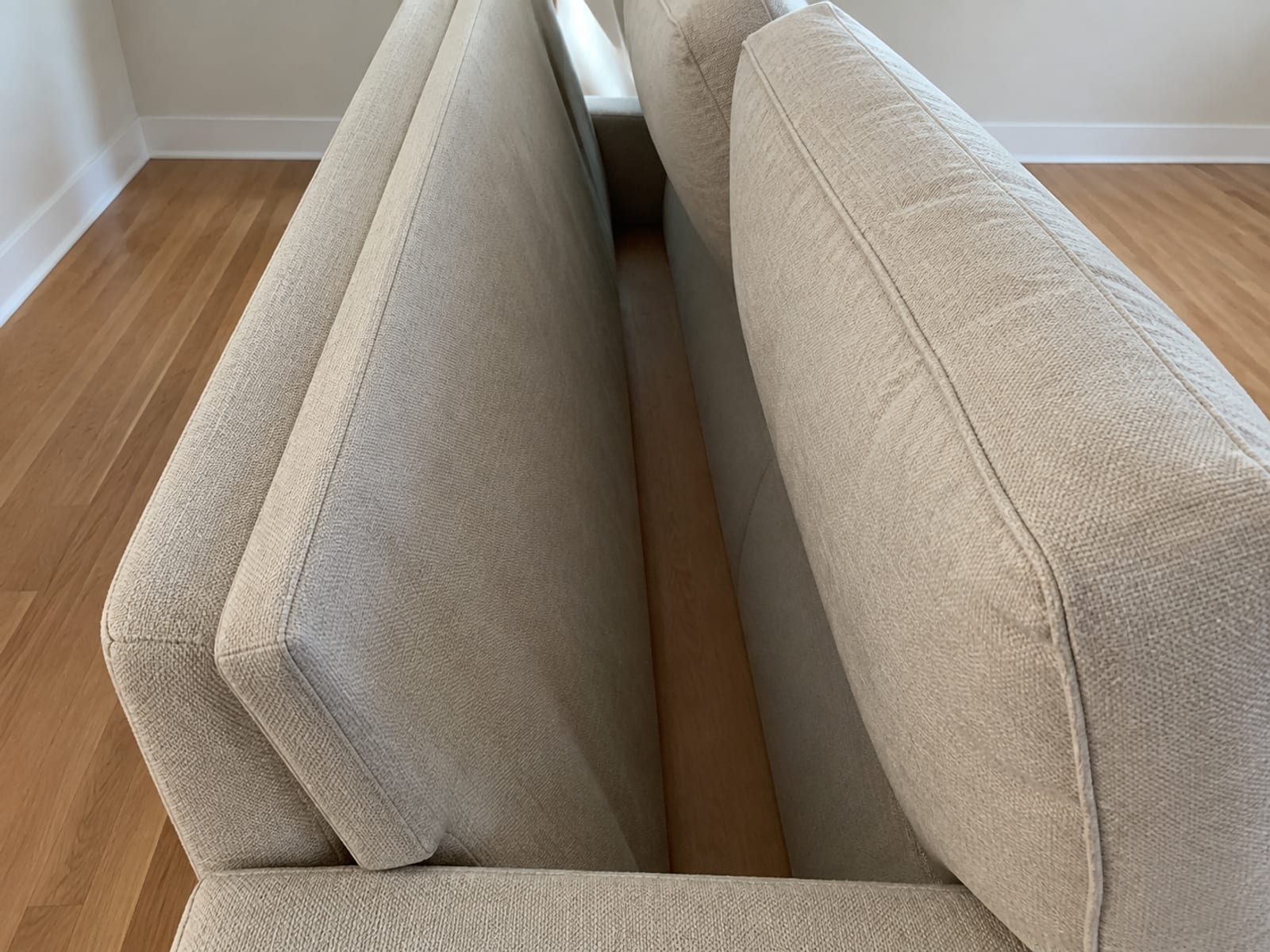
The deck is the one worth learning. It is the upholstered support underneath a loose seat cushion, and on most sofas you have never seen it. Liquid that soaked through a cushion has to pass into the filling and then onto the deck, and neither of those goes in a washing machine. A cover that comes out of the wash smelling of detergent has told you about the cover.
Somebody on r/CleaningTips described exactly this on a new couch after a diaper overflow. They used a disinfectant, went over it with a portable cleaner until the water ran clear, let it dry, and then found the smell on their hand afterward. The water running clear was real, and it was information about the cover rather than about what was underneath it. A commenter's answer was to separate the cover from the foam and batting and to dry it properly, which is one person's experience rather than a specification, and it is the right instinct.
What is actually causing it?
This is the question the generic advice skips, and it changes what you do next. Zerorez lists the usual candidates: pet hair and dander, food spills, body oils, humidity and moisture, dust, and debris packed into the seams. Those are not one problem with six names. A pet accident is protein that needs breaking down, and getting pet urine out of a couch is its own sequence rather than a stronger version of this one. Body oil is accumulation that needs lifting. Mildew is water that never finished drying, and no amount of deodorizer fixes a couch that is still damp.
Hover or tap a row to highlight it.
| If it smells like | The likely layer | What it actually needs |
|---|---|---|
| A pet accident | Filling and deck, wherever it soaked | An upholstery-safe enzyme cleaner on the source area, to its own label |
| Dog, generally, with no accident | Cover and seams, plus dander in crevices | Thorough vacuuming of seams and deck before anything wet |
| Body odor or sweat | Cover and the filling under the seating position | Washing what the maker says is washable, then treating the insert |
| Musty or mildewed | Filling and deck, from moisture | Airflow and complete drying first, then reassessment |
| Stale and lived-in, no clear source | Seams, deck and debris | Vacuum the crevices and deck, then dry baking soda |
| Nothing identifiable after inspection | Possibly deeper than DIY reaches | A professional who identifies the fabric and tests it first |
Fragrance is the one response that is not on that list. Spraying something pleasant over an unidentified smell tells you nothing about where it came from and leaves the source exactly where it was.
How do you find it without taking the couch apart?
Take out everything the maker meant to come out, and no more than that. Throws off, loose cushions out, and then vacuum with an upholstery tool: both faces of every cushion, the seams, the arms, the edges, and the deck you have just exposed. Zerorez's own guidance is specific that the crevices count, and vacuuming only the visible cover is the common mistake.
With the cushions out you can smell the deck directly, which is worth thirty seconds. If the deck is where it is coming from, you have found it, and you have also found out why washing the covers twice did not help.
Do not carry the sofa outside to do this. Take out the components the manufacturer designed to be removable and leave the rest of it where it stands.
How long does baking soda actually need?
Longer than most people give it, and there are published times to work from. Zerorez specifies 20 to 30 minutes for ordinary odor and 1 to 2 hours for a strong one, then a complete vacuum. On a removable cushion insert it says to do both sides for 30 to 60 minutes. After that, give the couch 30 to 60 minutes of moving air, with a window open or a fan running.
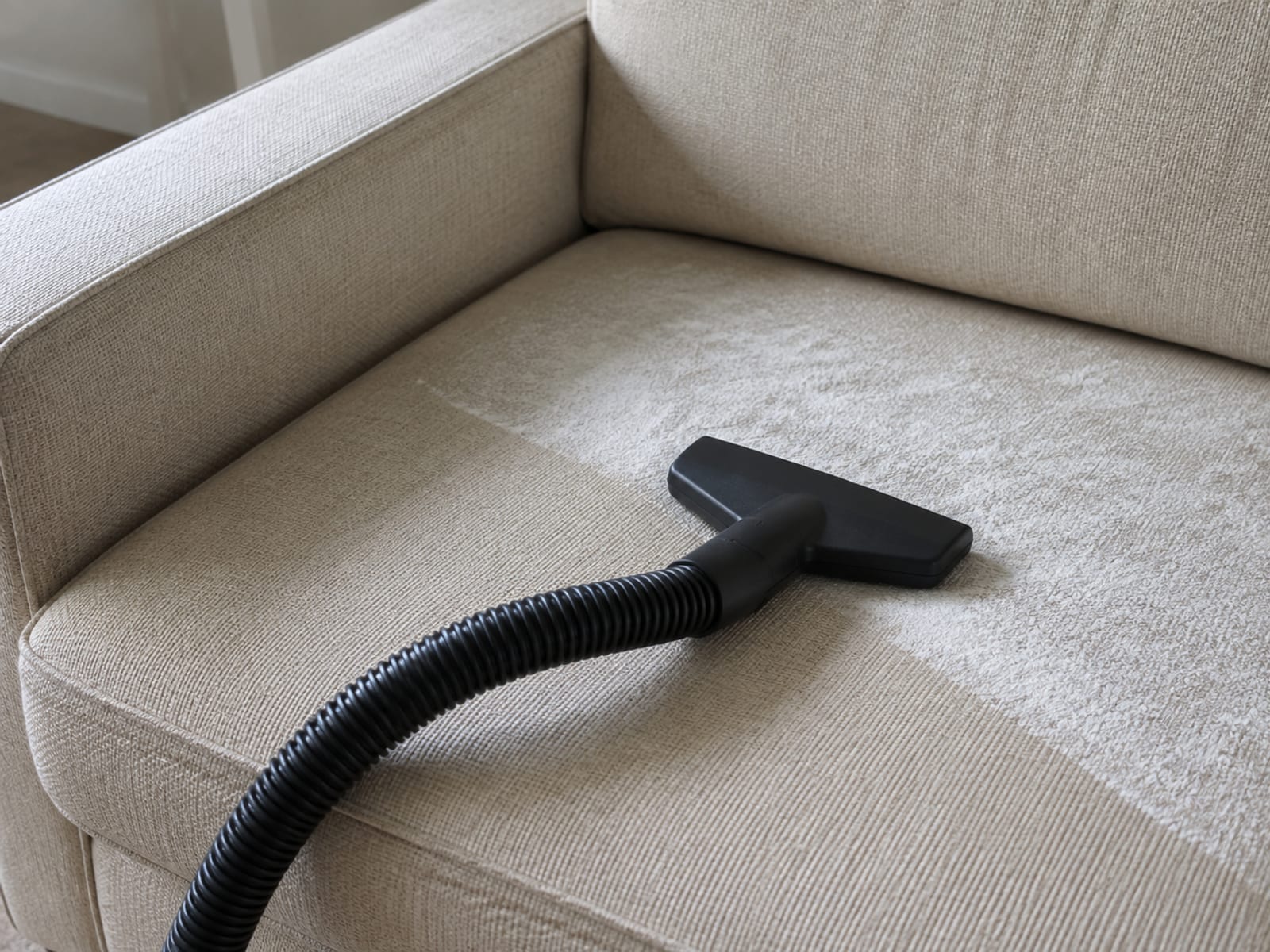
Apply it lightly and brush it in rather than burying the fabric. Then vacuum slowly enough to actually lift it back out; powder left in the weave is the reason some people decide baking soda does not work.
One thing it is not for: a known pet accident. Zerorez's own position is that baking soda may not be enough there and points to an enzymatic cleaner on the source instead, which is a different job with a different product.
What each step actually takes
- 1
Vacuum, cushions out
15 to 20 minutes across both cushion faces, the seams, the arms and the exposed deck
- 2
Baking soda, ordinary odor
20 to 30 minutes on the surface before vacuuming it out
- 3
Baking soda, strong odor
1 to 2 hours, and on a cushion insert 30 to 60 minutes per side
- 4
Airflow afterward
30 to 60 minutes with a window open or a fan across the piece
- 5
Drying after any wet method
Zerorez publishes 6 hours or less for its own cleaning, varying with material and weave
- 6
The reassessment
Judge the result only once it is completely dry, never while it is still damp
What if the smell is the damp itself?
Then more cleaning makes it worse, and this is the branch people miss. Zerorez is direct that too much moisture can leave a musty or mildew odor of its own, and its guidance calls for airflow and complete drying rather than another application. A couch that was cleaned enthusiastically last weekend and smells worse this weekend is usually a couch that never finished drying.
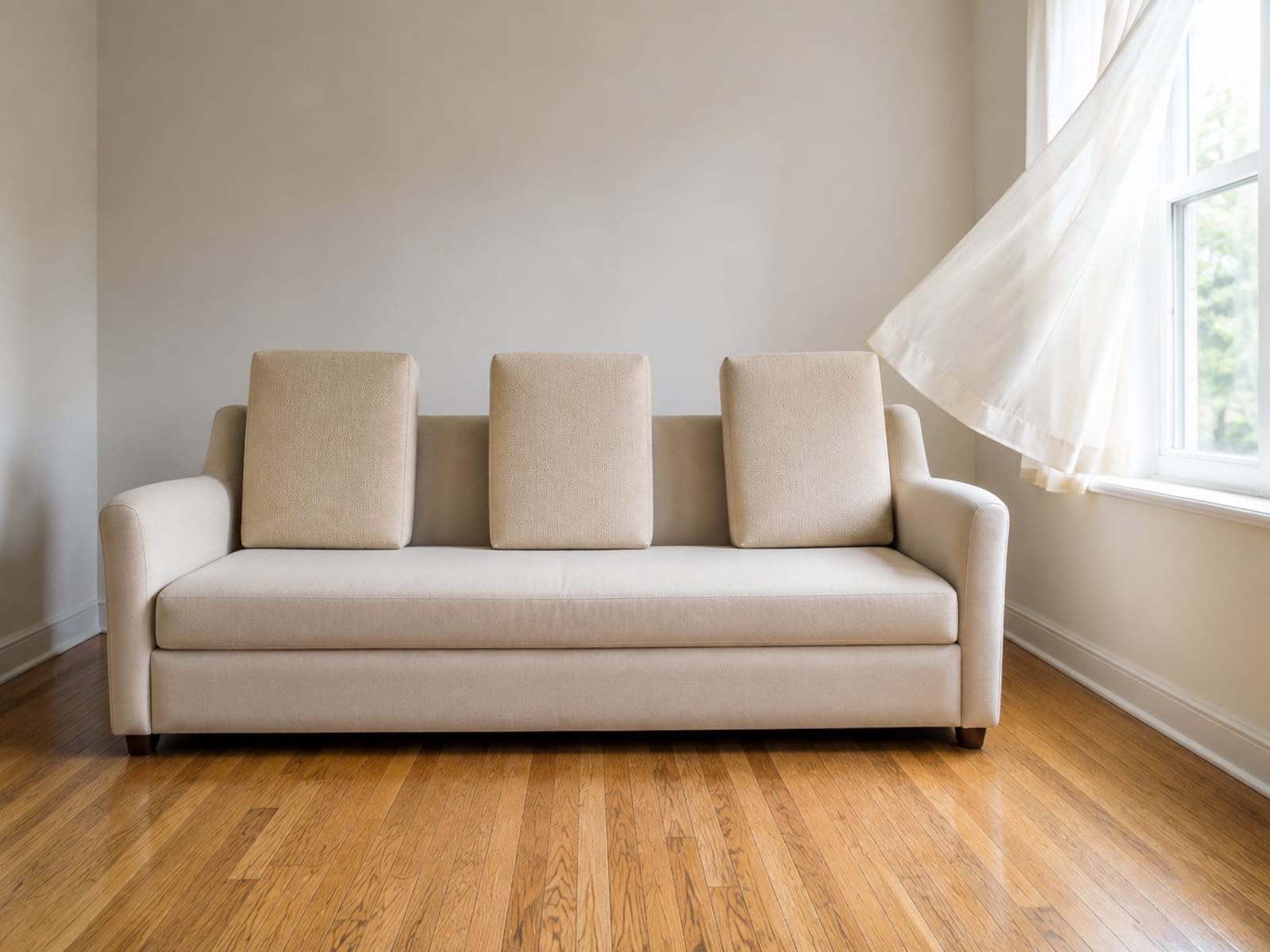
Humidity around it matters too. The Asthma and Allergy Foundation of America puts the indoor target at 30 to 50 percent relative humidity, and notes that dust mites and mold do well above 50 percent. In a small apartment, that means moving air across the sofa rather than shutting a damp one into a closed room.
Zerorez publishes that upholstery it has cleaned usually dries in 6 hours or less, while saying material and weave change it. That is one company's figure for its own process rather than a rule for a spray bottle in a living room, so treat it as an order of magnitude: hours, not minutes, and longer for a dense weave.
Does it need a machine?
Only if the care label permits water on that fabric, and only after the dry steps have had their turn. A portable spot machine sprays a solution in and pulls it back out, which is the part hands cannot do, and pulling it back out is the entire point on a couch that already smells of damp.
The BISSELL Little Green 1400J publishes the numbers that decide whether it reaches: a 3-inch stain tool, a 48-ounce tank, a 4-foot hose and a 15-foot cord. Those describe reach and refill frequency, not a safe wetting radius, and they are not permission to soak an unlabeled fabric. It reads $129.99 on bissell.com in Canada as of September 2026, which is the manufacturer's own Canadian page rather than a US price. The closely related 1400B is sold on Amazon. If you would rather compare the field before buying anything, the upholstery cleaners sorted by the care code they suit covers the bottles as well as the machines.
What about dust mites and allergies?
Worth separating from odor, because the two get confused and the answers differ. The AAFA says dust mites and their waste can sit deep in sofa stuffing, that weekly vacuuming with a HEPA filter helps keep debris from returning to the air, and, plainly, that vacuuming alone does not remove all of it. So, a weekly pass is a maintenance habit rather than a fix.
If the concern is a pet allergy rather than a pet smell, the Mayo Clinic is clear that cleaning does not remove all pet allergens from upholstery, and that moving or replacing upholstered furniture can be part of the answer. That is a medical judgment rather than a cleaning one, and it is worth knowing before somebody spends a season trying to clean their way out of symptoms.
When is it not worth saving?
When the odor is still there after the piece has dried completely. That is the honest line, and everything before it is worth trying. The other cases are an unknown or delicate fabric, a cover you suspect will bleed dye, a source that has plainly reached the filling or the deck, and any suspicion of water damage or mold, where the problem stopped being a smell some time ago.
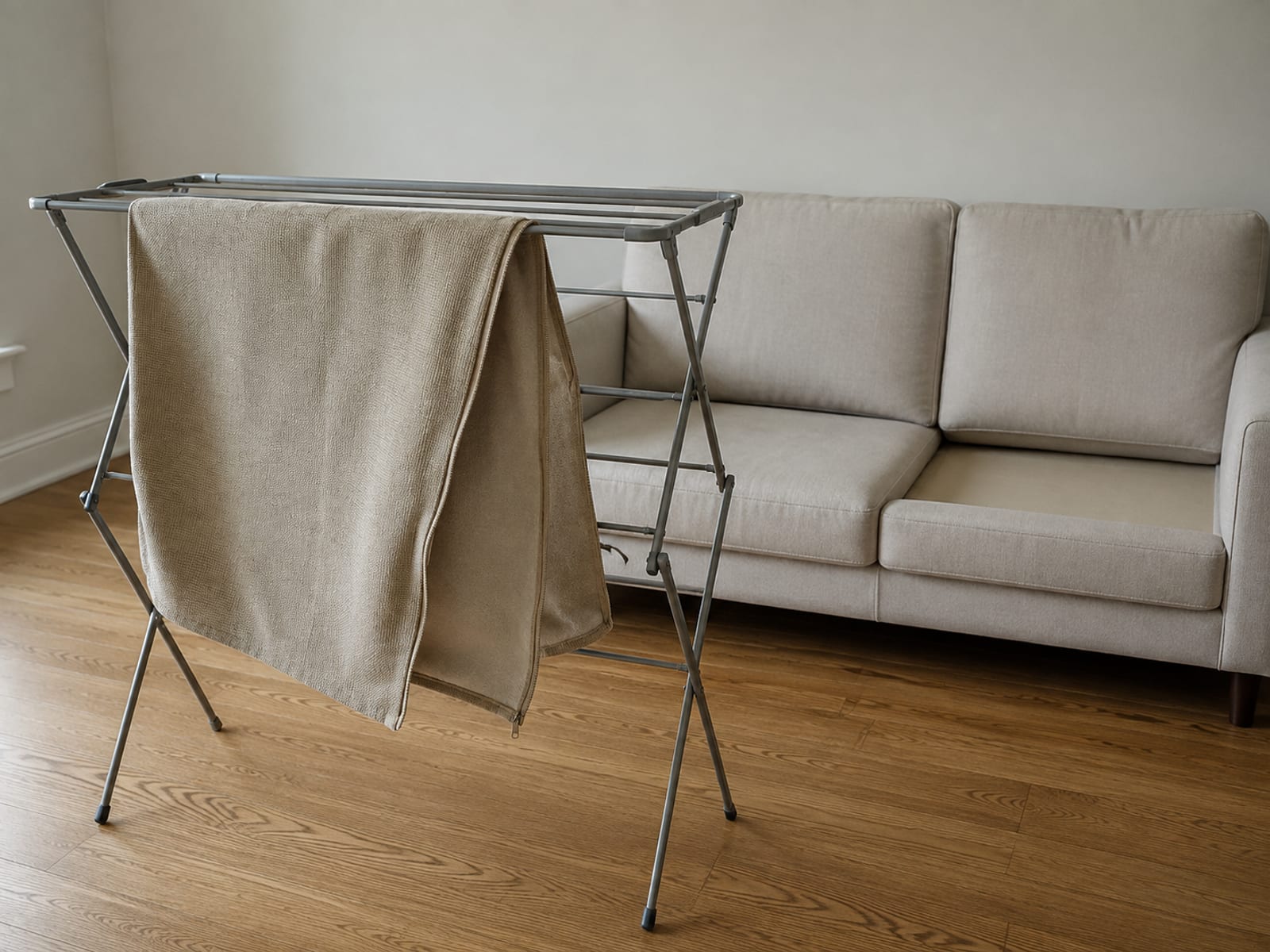
A professional starts where a home attempt cannot. Zerorez's published process is to identify the fabric and its condition and run a colorfast test, then pre-treat, then a low-pressure rinse with extraction, then drying, and it says openly that it does not clean every upholstery fabric. The trade's standards are named on the IICRC index: S300 for professional upholstery cleaning, S500 for water damage and S520 for mold remediation. The text of those is paid, so they are worth naming when you call rather than following at home.
The money is usually less frightening than the decision feels. One named local example, Ace Chem-Dry in northern Colorado, publishes a coupon at $129 for a couch, $109 for a loveseat and $59 for a recliner, subject to its own conditions, and Zerorez suggests professional cleaning roughly every six months as general maintenance. Set that against replacing the piece: IKEA's MANNARP three-seat sofa is $449 on ikea.com as of September 2026, and the larger UPPLAND frame with chaise is $1,160. A visit from a cleaner costs a fraction of the cheaper of those, and it answers the question you cannot answer yourself, which is whether anything is still in there.
Get the quote for your actual piece. A published coupon in another state is a sense of scale, not your price.
Where would you look first?
1. You washed the cushion covers twice and the couch still smells. What does that most likely mean?
2. What is the deck on a sofa?
3. Your couch smelled better on Sunday and worse on Wednesday, after a wet clean. What is the likeliest cause?
4. On a removable cushion insert, how long does Zerorez say to leave baking soda?
Pick an answer to begin.
Frequently asked questions
What can I use to remove smells from my fabric sofa?
For ordinary odor on a fabric the care label permits, dry baking soda is the published first step: lightly applied, 20 to 30 minutes, then vacuumed out completely. For a known pet accident, an upholstery-safe enzyme cleaner used to its own label on the source area is the different answer, and the two are not interchangeable.
How do you freshen up a couch without washing it?
Vacuum the seams, the arms, both cushion faces and the deck with an upholstery tool, then use dry baking soda and give the piece 30 to 60 minutes of moving air afterward. None of that puts liquid into the fabric, which matters when the cover is not washable, or when the last wet attempt is what caused the problem in the first place.
My couch still smells even after I cleaned it. What can I do?
Stop cleaning the cover and go looking at the other three layers. Lift the cushions out, smell the deck directly, check whether the filling is still damp from the last attempt, and only then decide between a source-specific treatment and a professional. Odor that survives complete drying is the point at which more product stops being the answer.
How do I get my couch to stop smelling like a dog?
If there has been no accident, it is usually hair, dander and body oils in the seams and the deck, so the vacuum does more than any spray. If there has been an accident, that is a source treatment with an enzyme cleaner rather than a general deodorizing job. And if the real issue is allergy symptoms rather than smell, cleaning has a documented ceiling.
Do vinegar or steam work on a smelly couch?
Both are common advice and neither is universal. Zerorez publishes a light vinegar mist as one option while saying to test a hidden area and not to drench the sofa, and the steam guidance that circulates comes with the same condition, that the fabric has to be able to take it. Check the care label before either, because the label decides what your particular couch permits, and what each care tag letter allows is the thing to settle before any liquid goes near the fabric.
The parts of a couch, as the standard names them
Tap a term to see what it means.
Cover material. The outermost fabric enclosing everything else. It is the layer a wash cycle reaches, which is why a clean cover proves nothing about the rest.
A weekly vacuum is the cadence both the EPA and the AAFA publish, and what the three cleaning intervals actually are sets out which job runs on which clock.
And if a previous wet attempt is what started this, every common cleaning mistake enlarges the marked area rather than shrinking it, which is worth knowing before the next one.
Lift the cushions out before you buy anything, because that one move answers most of this: you will either find the smell on the deck, find the filling still damp from the last attempt, or find nothing, and each of those points somewhere different. If it turns out the couch itself is the problem rather than what happened to it, PlushPick has the fabrics that hold up in a busy house and the covers that genuinely come off.
Cal Hewitt
Writer at PlushPick. I compare sofa specs, comfort, durability, and value so you can buy with clearer expectations.
About Cal and how the guides are researchedThe latest
 "Best-of"Best Furniture Protectors for Pets, by What They Actually Cover
 "Best-of"Best Pet-Friendly Sofa Fabrics: Claws, Hair and Spills
 "Best-of"Best Sofas for Small Spaces: Narrow Doesn't Mean Shallow
 "Best-of"Best Recliner Covers for Dogs: What Actually Stays On
 AnswerSofa vs Sectional: Which One Fits Your Room and Life
 AnswerHow to Measure a Sofa So It Fits Through the Door