

Affiliate disclosure. If you buy through a link on this page, PlushPick may earn a commission at no extra cost to you. That never changes which products are named or what is said about them. As an Amazon Associate I earn from qualifying purchases. How this works
Almost every mistake on a couch has the same result: the marked area ends up larger than the thing that caused it. A spill is a spot; a badly handled spill is a ring, a halo, or a patch that dried a different shade, and it is always wider than where the liquid actually landed. So, before the next attempt, judge every move by one question, which is whether it keeps the mark the size it is now or spreads it. Blotting keeps the size. Rubbing, flooding, and going back to the same spot a third time all increase it.
Key Takeaways
The damage is measured in inches, not in shades
One person cleaning up a root beer spill reported a brown ring around 12 inches across afterward. The spill was not 12 inches across.
Blot toward the middle, never rub
Rubbing moves the liquid outward and carries the soil with it. Room & Board's own care page says to blot rather than rub.
Tap water leaves something behind
Room & Board says tap water can stain or discolor because of its minerals, and specifies a small amount of distilled water instead.
An uneven dry is what makes the ring
Room & Board's instruction is to dry evenly on the lowest heat, in its own words to prevent moisture rings.
Repeat attempts stack
Every treated patch has an edge. Three overlapping attempts leave three edges, which is why a couch can look worse after each try.
There is one time to go bigger on purpose
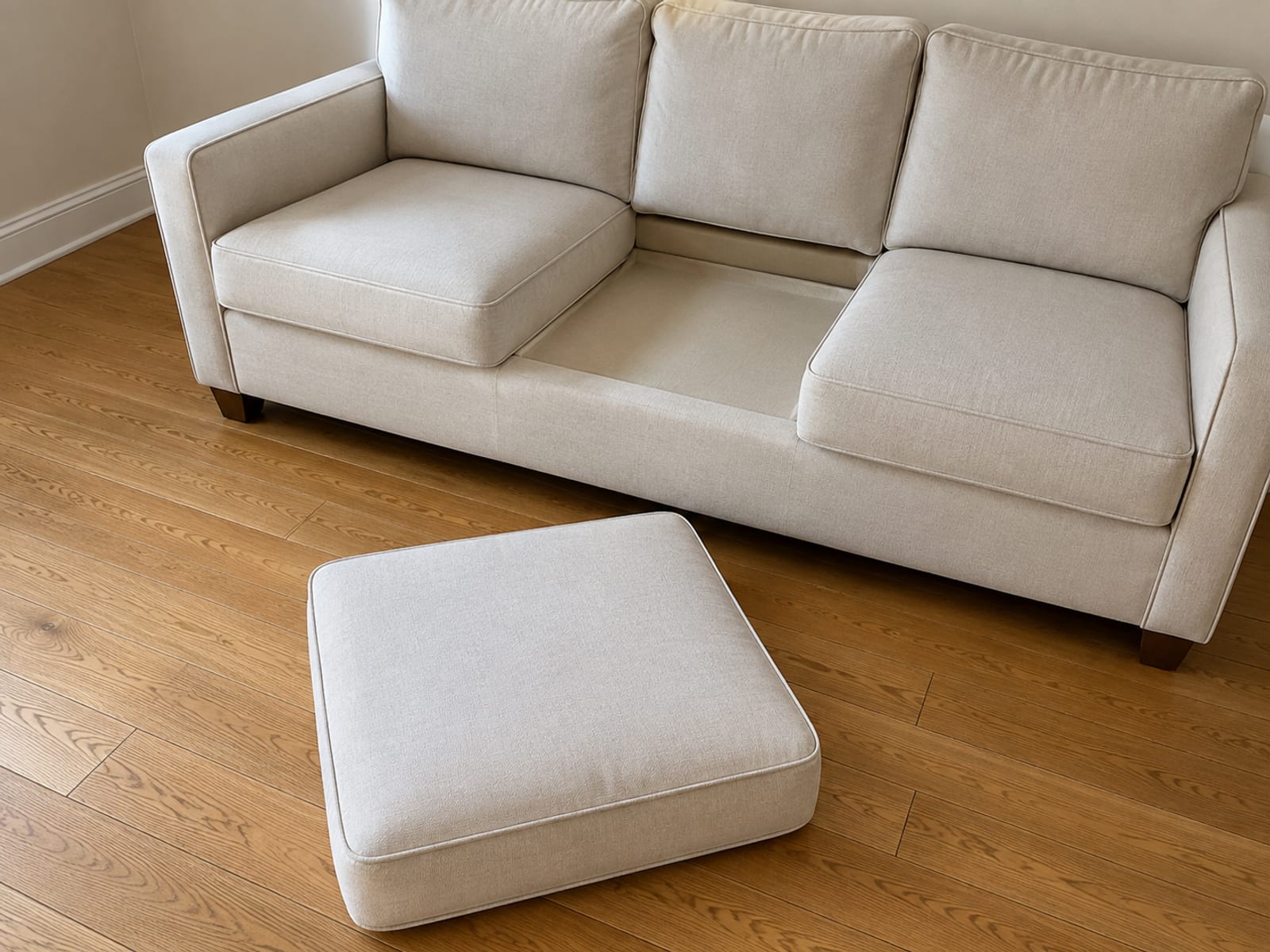
Clean the whole cushion face and the edge of the treated area lands on a seam, where nobody can see it.
Why does the couch look worse than before you started?
Because the treated area is now bigger than the original mark, and your eye reads an edge more easily than it reads a shade.
A stain has a boundary you can point at. What replaces it after a bad attempt has a boundary too, and that boundary is somewhere the fabric was previously fine. One person cleaning up a root beer spill on r/CleaningTips described a brown ring roughly 12 inches across after treating it. That is one account rather than a measurement, and the shape of it is the point: the spill was small, the damage was a foot wide.
The same thread records the pattern that follows. Each attempt made it look worse. And another poster who steam-cleaned one side of a couch after a dog reported ending up with a bigger stain than they started with. Different fabrics, different products, same direction of travel.
Mistake one: reaching for a product before reading the tag
This is first because it decides whether anything after it is even allowed. Room & Board publishes the definitions: W means a water-based upholstery product, S means only water-free pure solvent, and SW means either. Its page also notes that professionals ask for the fabric code before they start, which tells you how much weight the trade puts on it.
Put water on a solvent-only cover and the mark you end up with is not the mark you started with. One person with a couch whose only instruction was water-free dry cleaning asked whether a steam cleaner was therefore usable, which is exactly the right question and one most people never think to ask.
Go and find the letter under a seat cushion or on the underside before anything else, and what your letter actually permits is settled there rather than by the stain.
Mistake two: rubbing
Rubbing is the fastest way to make a small problem a large one. It drives liquid down into the fill and outward through the weave at the same time, so the wet area grows in every direction while you work. Room & Board's instruction is plain: blot, do not rub.
Blotting is a press and a lift with a clean white absorbent cloth, worked from the outside of the mark toward its middle. Working inward is the part people skip, and it is what keeps the perimeter where it is. The cloth should be white so that any color coming away shows on it, which tells you something a colored cloth hides.
Mistake three: using more liquid than you can pull back out
The volume you put in is the volume that has to come back out, and whatever does not come out travels to the edge of the wet area and dries there. That is where a ring comes from.
Room & Board and BISSELL publish instructions that attack this from opposite ends. Room & Board says that if the maker calls for a rinse, use a small amount of distilled water and blot it back out, because tap water may stain or discolor thanks to its minerals. And BISSELL's own formula instructions for a portable machine direct warm rather than boiling water to the fill line, then one pass with the spray on and a second pass with the spray off, purely to pull the excess back. That second dry pass is the entire point of owning the machine and it is the pass people skip.
The distilled-water detail is worth sitting with. If tap water can leave a mark on its own, then flooding a spot with it is not a neutral act, and the mineral deposit ends up in a ring at the perimeter for the same reason the soil does.
Mistake four: judging it while it is still damp
Damp fabric is a different color from dry fabric, so anything you decide while it is wet is a decision made on the wrong information. Wait, then look.
Room & Board's drying instruction is specific and it explains itself: dry evenly, on the lowest heat, and it names the reason as preventing moisture rings. Evenly is the operative word. A patch that dries from the middle outward pushes the remaining moisture, and everything dissolved in it, to a perimeter that then dries last and hardest.
If the mark is still there when it is properly dry, that is the moment to decide whether to go again.
Mistake five: going back to the same spot a third time
Every treatment leaves a treated area with an edge. Do it once and there is one edge. Do it three times in slightly different places and there are three, overlapping, each a slightly different shade, and the result reads as damage rather than as a stain.
The poster whose every attempt made it worse had tried baking soda left overnight and a half-and-half water and vinegar mix over the whole thing, one after another. Both of those are reasonable things to try on their own. What produced the result was doing them one after another over the same area.
So, the rule is two attempts and then a change of approach, not a third helping of the same thing. The change of approach is either the whole cushion face or a professional.
The one time to make the area bigger on purpose
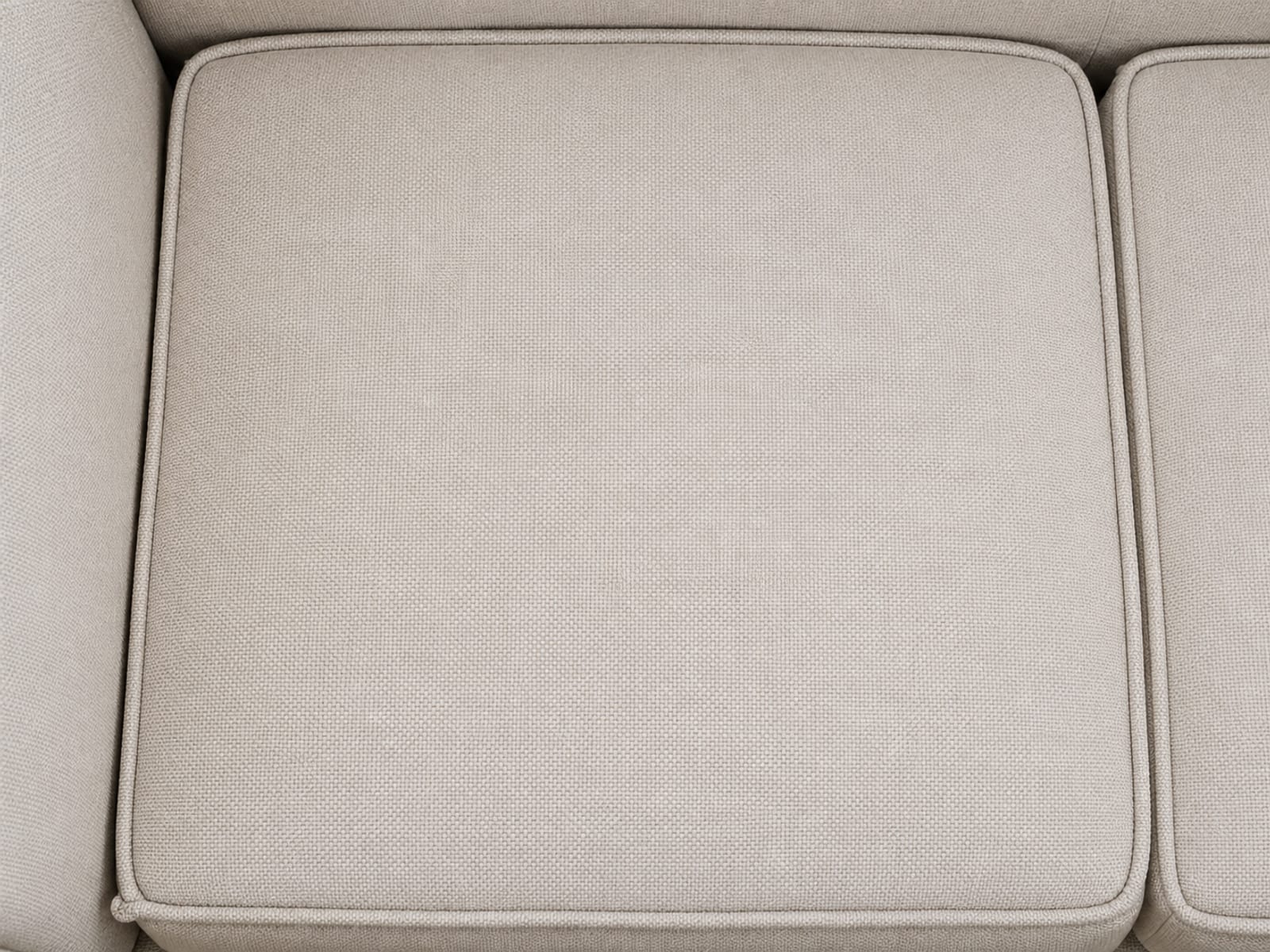
There is one situation where a bigger treated area is the right answer, and it turns on where the edge lands. If the treated area is going to have a visible edge, put that edge somewhere invisible. On a couch, that place is a seam.
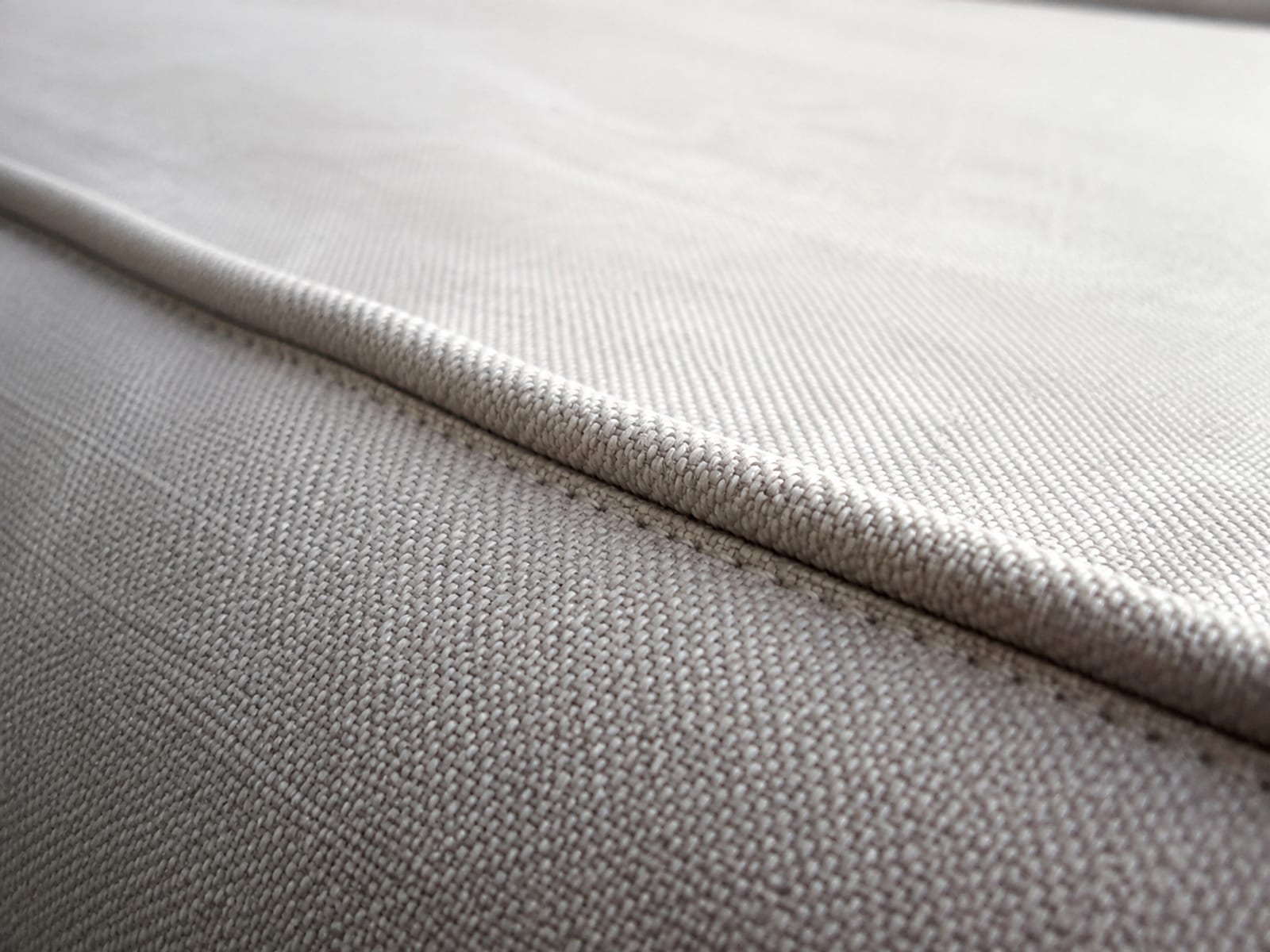
Cleaning the whole face of a cushion, evenly, from seam to seam, means the boundary of the treated zone falls exactly on the piping. There is no halo because there is nowhere for a halo to be. It uses more product and takes longer than dabbing at a coin-sized spot, and it is the difference between a couch that looks cleaned and a couch that looks patched.
Do it on the whole cushion face, both faces if the cushion comes out, and let the whole thing dry as one piece rather than in zones.
The order that keeps the mark its own size
- 1
Right away
Lift the loose material off and blot the liquid with a clean white cloth, working from the outside of the mark inward. No product yet.
- 2
Before any product
Find the letter on the tag and match the product to it. This decides whether the next step is allowed at all.
- 3
The hidden test
Try the approved product somewhere nobody sees and let that patch dry completely before you judge it.
- 4
The treatment
The whole cushion face, seam to seam, rather than the spot. Product on the cloth, not poured on the fabric.
- 5
The rinse, only if the maker asks for one
A small amount of distilled water, blotted back out. Not tap water and not a flood of it.
- 6
Drying
Evenly, lowest heat if the maker permits heat at all, and judged only when it is dry through.
What about the things everybody recommends?
Dish soap is the most common suggestion and it is not a universal answer. It is water-based, which rules it out on an S-coded cover outright, and a W code permits water-based upholstery cleaning products rather than anything water-based you have in the house. Makers publish dilutions for their own products; none of them publishes one for dish soap.
Bleach is worth naming because there is a real published recipe and it is narrower than people assume. Room & Board specifies 1 fluid ounce of bleach to 30 fluid ounces of water, and expressly limits it to fabric whose bleach-cleanability is known. Performance fabric is not a synonym for bleach-cleanable, and a diluted-bleach mix on the wrong cover produces a lightened patch, which is the largest and most permanent version of the problem this whole page is about.
When it stops being your job
When the mark has grown after an attempt, that is the signal. Not when it is stubborn, when it is bigger.
The other clear cases are a cover whose code you cannot establish, an S or X code and anything beyond a dry blot, and liquid that has clearly gone through into the cushion fill rather than sitting on the surface. The professional framework for this work is ANSI/IICRC S300, listed by the IICRC as the Standard for Professional Upholstery Cleaning, and asking a company whether it works to it is a reasonable question. The standard's own text is paywalled, so nobody outside the trade can quote its procedures at you, and a company that offers to is worth a second thought.
Tell them three things when you call: what the code is, how old the mark is, and everything you have already put on it. That last one matters more than it sounds, because what is already in the fabric changes what they can safely use next.
Where removable covers change the answer
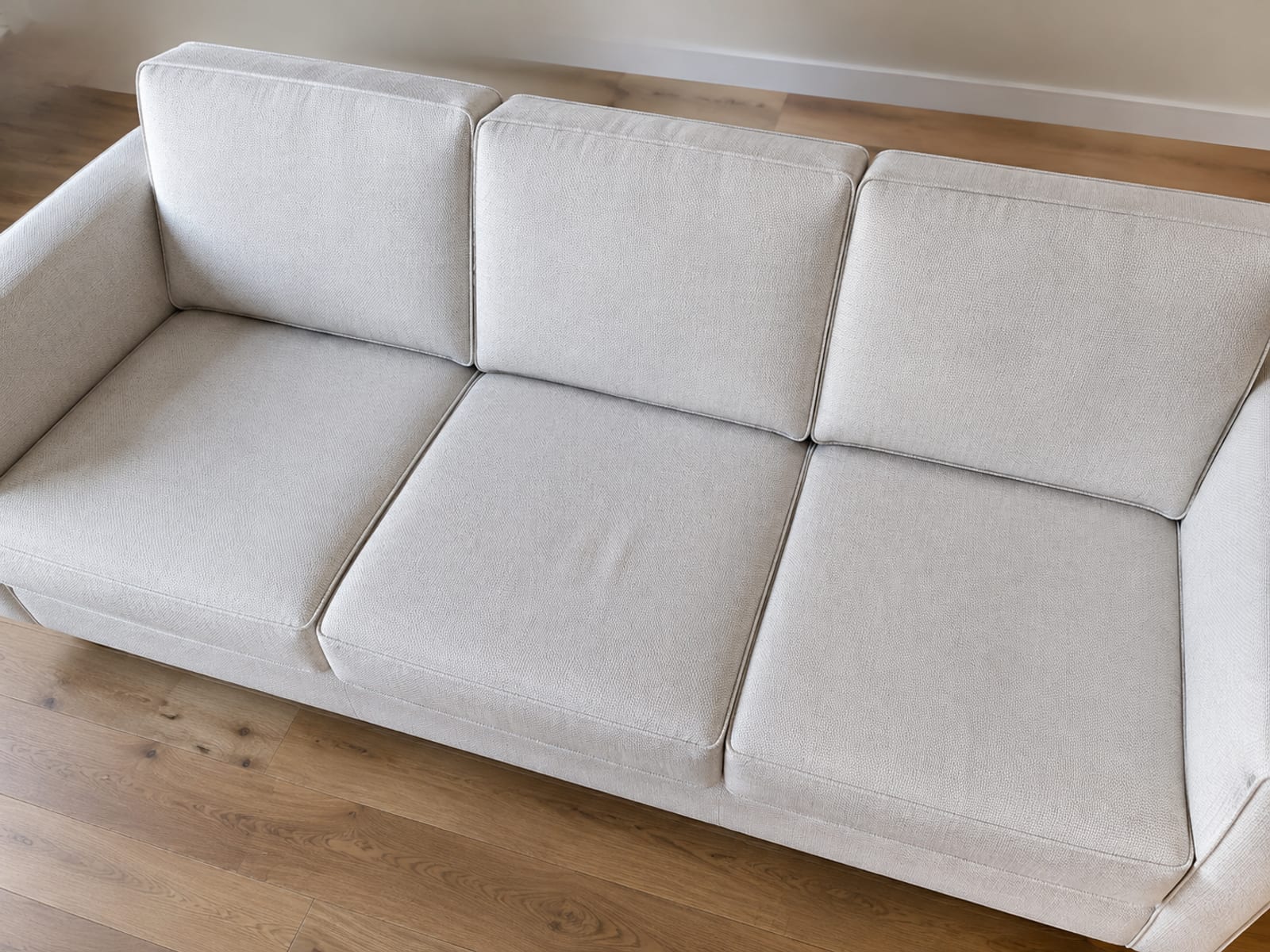
If the cover comes off and that exact product says it is machine washable, a great deal of this stops applying, because a washing machine treats the whole panel evenly by definition and there is no edge to hide. IKEA's KIVIK in Gunnared beige, for one published example, states a removable machine-washable cover.
Read that as belonging to that configuration rather than to fabric sofas in general. Plenty of covers come off and are not washable, and a cover that unzips is not by itself permission.
Would you get this one right?
1. There is a fresh spill and a clean white cloth in your hand. Which direction do you work?
2. A maker's care page calls for a rinse. What does it specify?
3. You have treated the spot twice and it still shows. What is the next move?
4. A maker publishes a diluted bleach mix. What is the ratio and who is it for?
Pick an answer to begin.
Frequently asked questions
Can you ruin a couch by cleaning it?
You can enlarge the problem, which amounts to the same thing. Putting water on a solvent-only cover, flooding a spot with tap water, or stacking three treatments in slightly different places all leave a marked area larger than the one you started with. The code on the tag and the amount of liquid are what decide it.
Is it bad to use dish soap on a couch?
It is not supported as a general upholstery cleaner. It is water-based, so it is ruled out on an S code, and a W code permits water-based upholstery products rather than any water-based liquid in the house. Makers publish dilutions for their own products and not for dish soap.
Why does my couch have a ring after cleaning?
Because more liquid went in than came back out, and whatever did not come out traveled to the edge of the wet area and dried there along with the soil and any minerals in the water. Room & Board's instruction to dry evenly on the lowest heat exists specifically to prevent that. On a pile fabric there is a second reason as well, and why a clean spot dries with a ring around it covers that one.
How do I really deep clean a couch?
Evenly, by whole panels rather than by spots, after establishing the code and testing the product somewhere hidden. Doing a cushion face seam to seam is what keeps the treated area's edge invisible, and it is slower and less satisfying than attacking the mark directly. That is the trade.
What should I never use?
Water or steam on an S code, any wet cleaning at all on an X code, and a diluted bleach mix on fabric that is not published as bleach-cleanable. Beyond those, avoid stacking different products on the same spot, because what is already in the fabric changes what is safe to use next.
The words this comes down to
Tap a term to see what it means.
Blotting. Pressing and lifting with a clean white cloth, worked from the outside of a mark inward. It removes liquid without moving the boundary of the wet area.
Most of what ends up as a rescue started as a spill that waited, so the three intervals a couch actually runs on is worth settling once the current mark is dealt with.
Measure the mark before you touch it again, even roughly, because that number is the only honest way to tell afterward whether the last attempt helped. And if it turns out the code on your tag rules out everything you own, the cleaners at PlushPick are sorted by the letter they suit so the shortlist is already narrowed.
Cal Hewitt
Writer at PlushPick. I compare sofa specs, comfort, durability, and value so you can buy with clearer expectations.
About Cal and how the guides are researchedThe latest
 "Best-of"Best Furniture Protectors for Pets, by What They Actually Cover
 "Best-of"Best Pet-Friendly Sofa Fabrics: Claws, Hair and Spills
 "Best-of"Best Sofas for Small Spaces: Narrow Doesn't Mean Shallow
 "Best-of"Best Recliner Covers for Dogs: What Actually Stays On
 AnswerSofa vs Sectional: Which One Fits Your Room and Life
 AnswerHow to Measure a Sofa So It Fits Through the Door