

Affiliate disclosure. If you buy through a link on this page, PlushPick may earn a commission at no extra cost to you. That never changes which products are named or what is said about them. As an Amazon Associate I earn from qualifying purchases. How this works
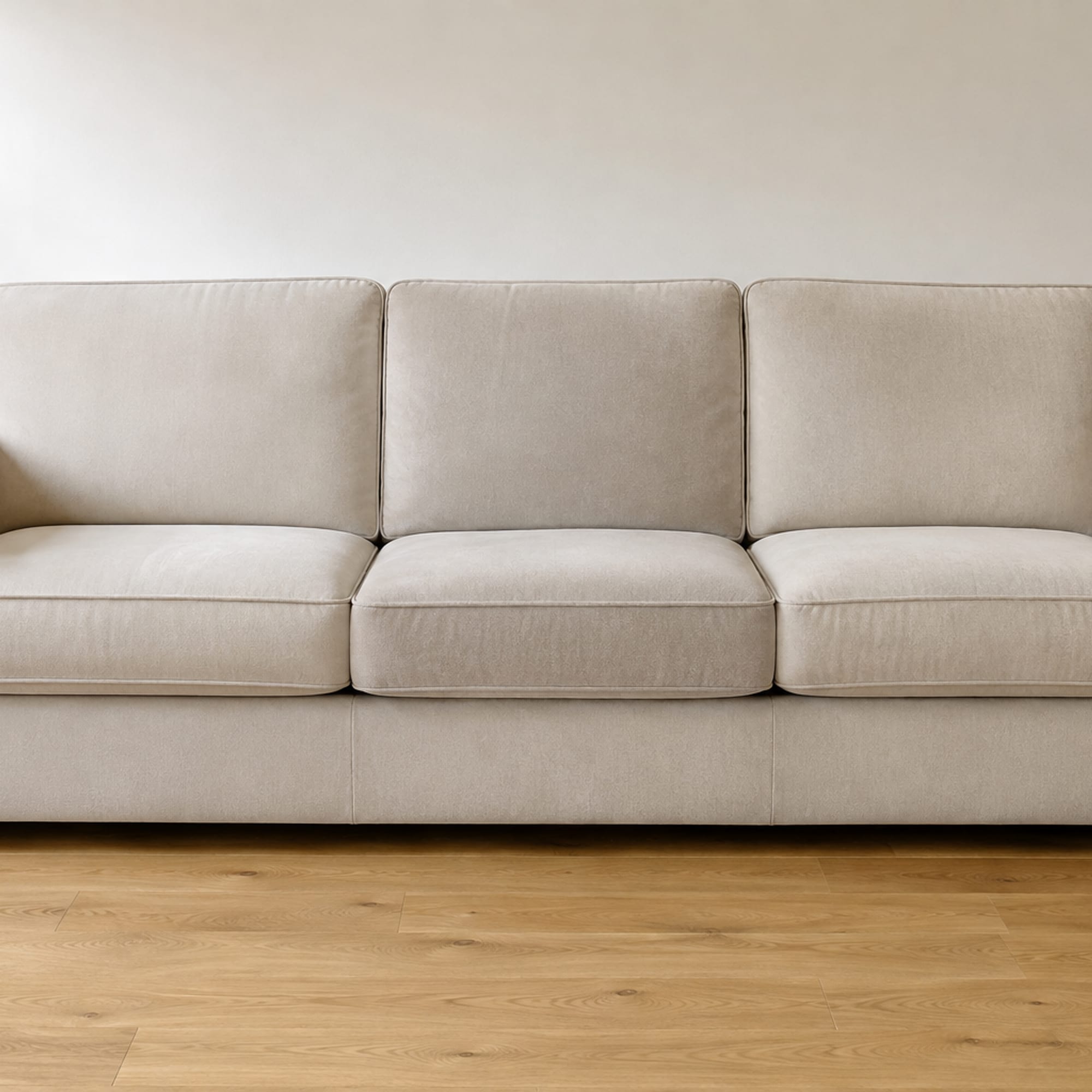
The mark usually comes up. What people are afraid of is what the spot looks like afterwards: a pale edge where the wet patch stopped, or a clean rectangle that sits stiff and slightly shiny against the rest of the cushion. That is not the cleaner failing. It is the nap, the short standing fibers that give microfiber its softness, drying flattened in one place and catching the light differently to the fibers around it. Mist rather than soak, blot rather than scrub, let it dry all the way, then brush it. The brush is the step almost nobody mentions and it is the one that makes the repair disappear. The ring itself is one of several ways a cleaning attempt leaves a bigger mark than the spill did. The same nap behaves the same way on velvet, though which velvet you own decides what may touch it long before the brush comes out.
Key Takeaways
The ring is mechanical, not chemical
Flattened fibers reflect light differently to standing ones. Nothing is left behind on the fabric; it is lying down.
Alcohol is the S method, not the microfiber method
It works, and it is what most microfiber tags permit. The letter on the tag is what makes it right, not the word microfiber.
Mist, never pour
A spray bottle puts a fine, even film on the surface. A poured or squeezed application drives liquid into the pad below, which is what dries as a hard edge.
Use a white or natural sponge
Dye from a colored sponge or cloth moves into damp fabric, and you have swapped one mark for another.
Test on a one-inch square first
Home Depot specifies an inch, on the lower back or the underside, dried fully before you judge it.
The dry brush is the finish
A soft-bristle brush over the completely dry patch lifts the nap back up to match its surroundings.
Why does a clean spot dry with a ring around it?
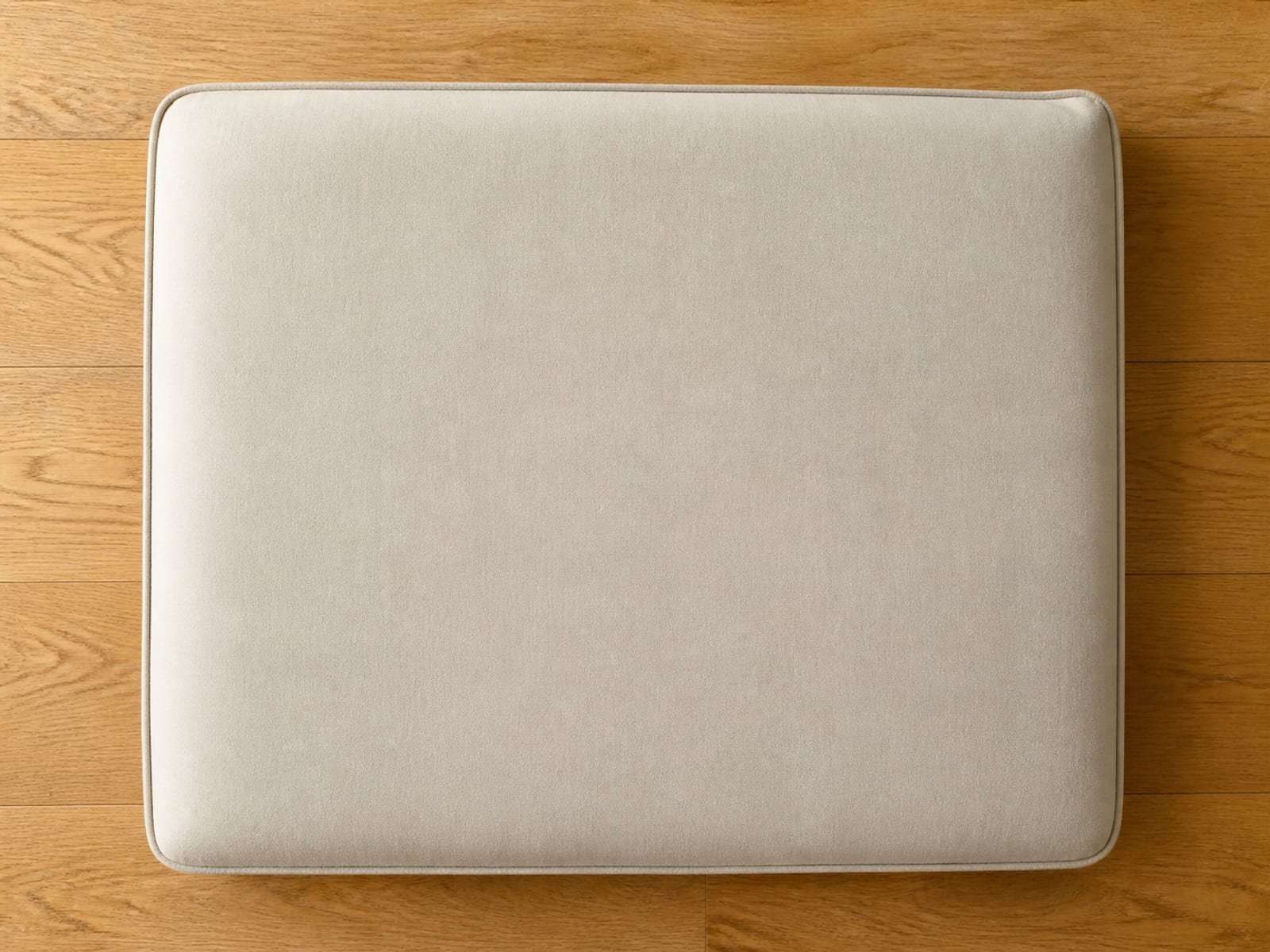
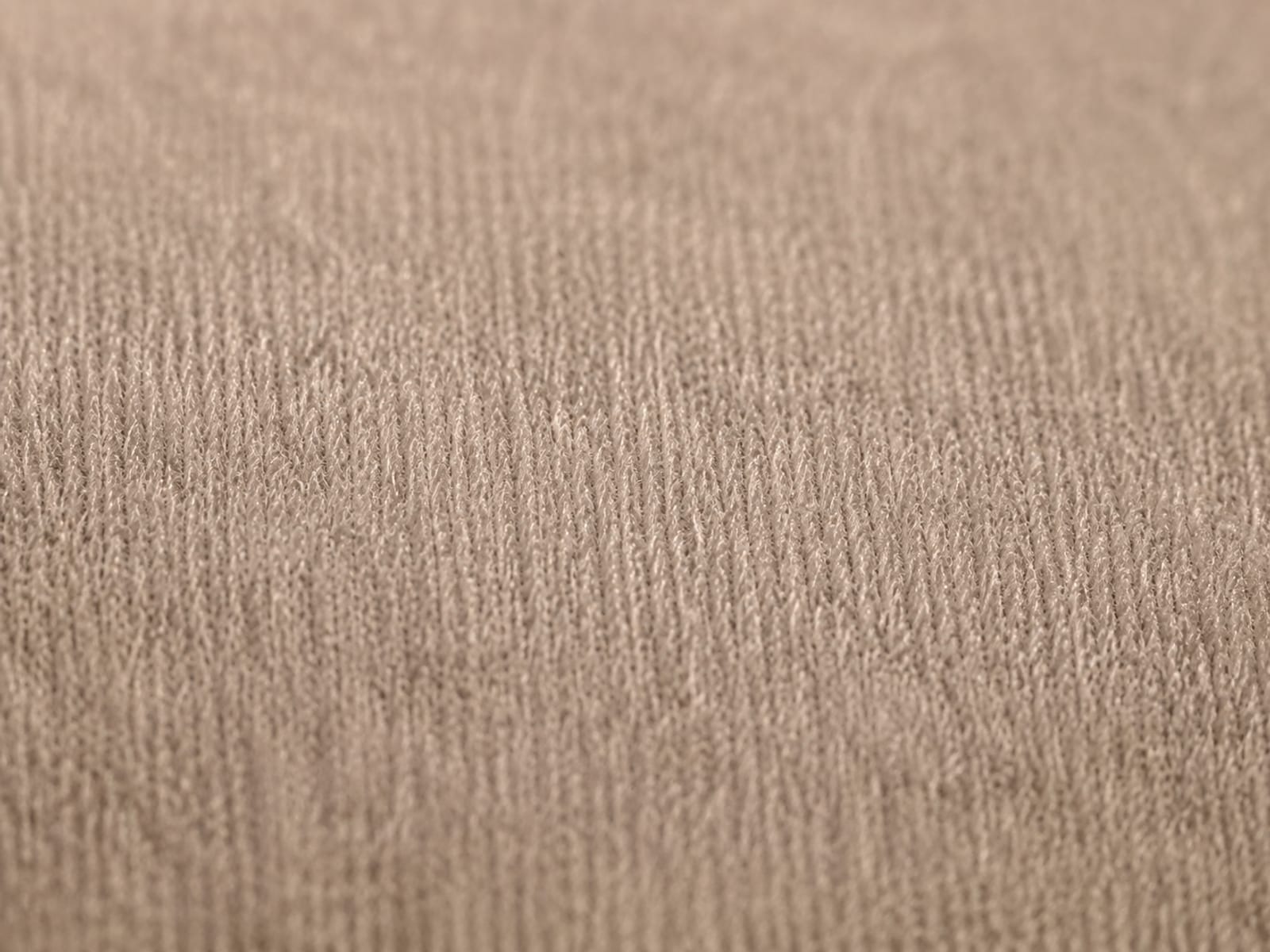
Microfiber is a dense mat of very fine synthetic fibers standing upright together. RC Willey describes the fabric as commonly polyester, sometimes nylon or polypropylene, and that upright pile is called the nap. It is what makes the fabric feel like suede and what gives it its depth of color.
When a patch gets properly wet, those fibers lie down. When they dry lying down, they stay there. Light hits a flattened area at a different angle to the area around it, so the patch reads darker, lighter or shinier depending on where you are standing. Move around the room and it changes.
That is worth knowing because it changes what you do about it. The mark is not still in the fabric. There is nothing left to lift out, and spraying the spot again makes it worse, because more liquid means more flattening.
Too much liquid in one place does it, and so does pressure. Rubbing hard at a spot mats the fibers in exactly the shape of the thing you rubbed with.
Does the rubbing alcohol trick actually work?
Yes, and it is the method the manufacturer intends, provided one thing is true: your tag reads S. Home Depot's guide gives undiluted rubbing alcohol in a spray bottle for an S-coded cover, applied as a light mist and worked with a white or natural-colored sponge.
Most microfiber upholstery is coded S, which is why the trick circulates as widely as it does and why it usually works for the person trying it. Lift a seat cushion and check the tag before you start, because the method belongs to the letter, not to the fabric name.
The letters and what they permit in general are covered in the method for cleaning a fabric couch. What matters here is what you actually mix:
Hover or tap a row to highlight it.
| Tag | What goes in the spray bottle | Notes for microfiber |
|---|---|---|
| S | Undiluted rubbing alcohol | The familiar method. Ventilate the room. Alcohol can leave the nap feeling stiff, which the dry brush fixes |
| W | 1 quart of warm water with 1 tablespoon of mild, clear dish soap | Home Depot's published mix, 0.95 liters to 15 milliliters. Clear soap, so no dye goes on |
| WS or SW | Either of the above | Start with whichever suits the mark, and test it |
| X | Nothing. Vacuum, or brush lightly | No liquid at all, however gentle it looks |
If there is no tag, or the writing has gone, you do not have an answer yet. A retailer's own guide calls solvent the best guess for an unlabeled piece, and a guess is not the same as a permission. Find the model, ask the maker, or treat it as a job for somebody with the equipment to test it properly.
How do you clean it without flattening the nap?
Vacuum first, with the upholstery attachment, along the seams and under the cushions. Bane-Clene, an upholstery cleaning firm, puts weekly vacuuming and light brushing at the heart of keeping microfiber looking right. Loose grit that is still sitting in the pile when liquid arrives gets ground into it.
Then test. Home Depot asks for a one-inch square on the lower back or the underside, blotted and left until it is completely dry before you look at it. Two minutes of patience here is what stands between you and finding out on the front of the cushion.
When you treat the mark, mist it. A spray bottle held far enough back to lay down a fine film is the whole technique; a squeezed bottle or a soaked cloth puts far more liquid into one place than the surface needs, and that surplus goes down into the pad where it dries as an edge.
Work it with a white or natural-colored sponge, blotting more than scrubbing. A dyed sponge or a colored cloth will move its own color into damp fabric. Keep the pressure light: you are lifting the mark, not sanding it.
Work in small sections and stop when the mark is gone. There is no benefit to going over it again, and every extra pass is more liquid and more flattening.
What if the smell is the problem rather than a mark?
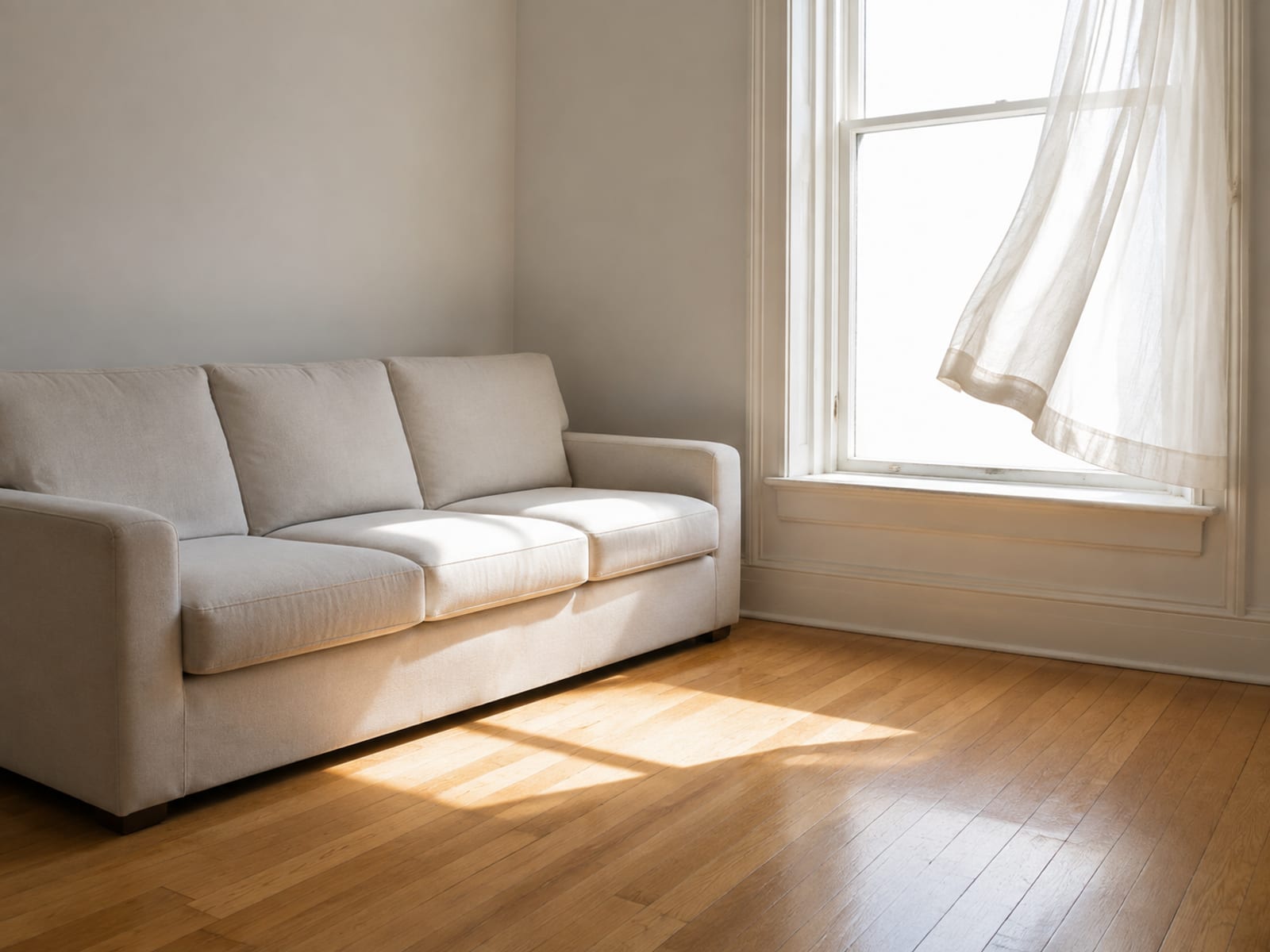
A dry pass is the one to try first. IKEA's upholstery guide has baking soda left for several hours or overnight, then vacuumed off. It absorbs odor from the surface and it comes off dry, so there is nothing to flatten and nothing to dry out.
What it does not do is disinfect, kill mold, or deal with anything that has soaked into the foam. If the smell is musty and belongs to the whole piece rather than to one patch, it is very likely coming from inside the cushion or the frame, and no surface treatment reaches that.
Air it out and put a fan on it for a day. A smell that is still there after that is not a surface problem and more baking soda will not change it.
How long before you touch it again?
Until it is completely dry, and completely means dry underneath as well as to the fingertips. There is no published drying time for an alcohol treatment on microfiber, so judge it by the fabric rather than by a clock. Cool and heavy underneath means there is still liquid in there.
Where a maker has specifically authorized steam cleaning, which is a different treatment and not one to assume, IKEA gives six to twenty-four hours in a ventilated room or with a fan on it. That figure belongs to steam and does not transfer to a misted spot.
Judging it wet is the mistake that costs people the cushion. A treated patch looks darker and worse while it is damp, and going back at it with more alcohol because it looks wrong is how a small spot becomes a large one.
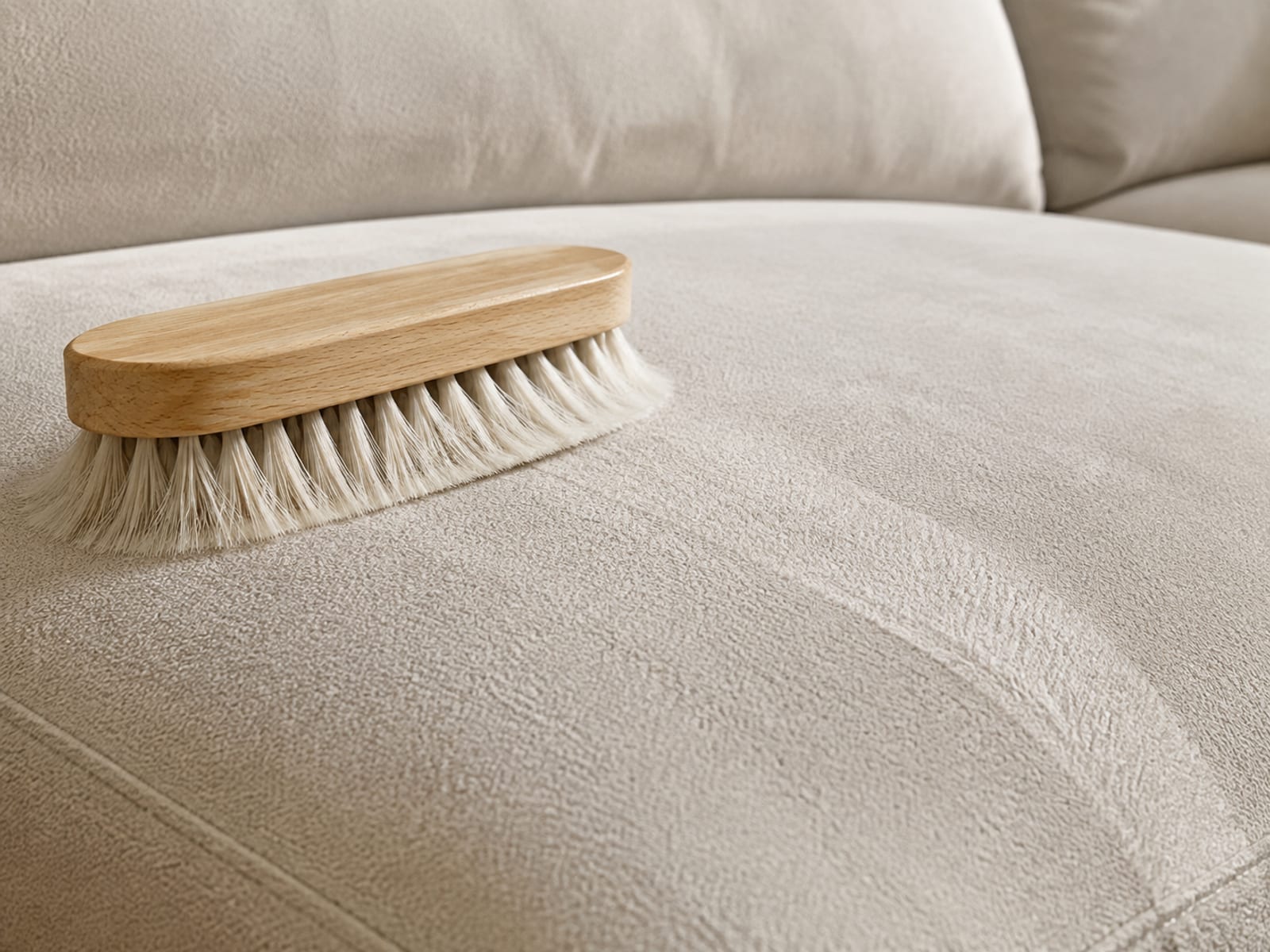
Then, once it is dry, the finish. Take a dry soft-bristle brush and work the treated area in short strokes to lift the nap back up. RC Willey's guide names this as the remedy for the stiffness that alcohol leaves behind, and it is the step that separates a couch that looks untouched from one with a faint clean rectangle on it. Brush a little wider than the patch you treated so there is no line where you stopped.
If your tag reads W or WS and the mark covers more than a hand's width, an extractor pulls the liquid back out instead of leaving it in the pad, which is the same problem the misting technique exists to avoid.
That machine is for water-safe covers only. On an S tag it is the wrong tool and on an X tag it must not be used at all.
Before it gets that far, the upholstery cleaners sorted by care code cover what is worth buying for a job you can still do yourself.
When does it stop being a home job?
After one careful attempt that did not work. A second and third pass with the same method rarely lifts what the first one left, and each one puts more liquid into the piece.
Call an upholstery cleaner when the tag reads X and the mark is real, when there is no tag and you cannot identify the model, when your hidden test moved color onto the sponge, or when the whole piece has gone dull rather than carrying one spot. Bane-Clene's own guidance is that generally soiled upholstery is a job for a professional service rather than for repeated home spot treatments.
Suspected mold, or a smell that belongs to a piece that has been stored in a basement, is a different call again and worth making early rather than after three weekends of trying.
And some things are not cleaning problems at all. A split seam, a failed zip, flattened foam or a burn needs an upholsterer, and no cleaner repairs construction. Flattened foam is the one of those with a home answer, and it starts with a press test that separates the cushion from the deck under it.
Would the spot survive you?
1. You have a mark on an S-coded microfiber cushion and a bottle of rubbing alcohol. What is the first thing you do?
2. The patch has come clean but now looks slightly shiny. What has happened?
3. You reach for a sponge. Which one?
4. The treated area still looks darker after twenty minutes. What now?
Pick an answer to begin.
Frequently asked questions
What is the best cleaning solution for a microfiber couch?
The one your tag permits, which is undiluted rubbing alcohol on an S code and a mix of one quart of warm water with a tablespoon of mild clear dish soap on a W. There is no single solution that is right for all microfiber, because microfiber describes the fiber rather than what may be put on it.
Can you use water on a microfiber couch?
On a W or WS tag, yes, in the published proportions and as a light application rather than a wash. On an S tag water is the thing to avoid, and on an X tag no liquid goes on at all.
Why does my microfiber couch feel stiff after cleaning?
The nap has dried flattened and slightly matted, which is normal after an alcohol treatment. Wait until the area is completely dry, then work it with a dry soft-bristle brush to stand the fibers back up.
What are the disadvantages of microfiber furniture?
The honest ones are about care rather than durability: the nap changes texture after cleaning and needs brushing back, and the wrong liquid on the wrong code leaves a visible mark of its own. Both are manageable, and both are why the tag matters more on this fabric than on most.
The words on a microfiber tag
Tap a term to see what it means.
Nap. The short upright fibers that give microfiber its suede feel. It is a physical direction as much as a texture, which is why a flattened patch reads differently in the light.
Photograph the tag while the cushion is off, and keep a white sponge and a soft brush wherever you keep the vacuum, because the whole method takes about ten minutes when the things it needs are already in the house. If it turns out your tag reads X, the cover is telling you it will never be a home job, and PlushPick compares the sofa fabrics whose covers come off and go in a machine instead.
Cal Hewitt
Writer at PlushPick. I compare sofa specs, comfort, durability, and value so you can buy with clearer expectations.
About Cal and how the guides are researchedThe latest
 "Best-of"Best Furniture Protectors for Pets, by What They Actually Cover
 "Best-of"Best Pet-Friendly Sofa Fabrics: Claws, Hair and Spills
 "Best-of"Best Sofas for Small Spaces: Narrow Doesn't Mean Shallow
 "Best-of"Best Recliner Covers for Dogs: What Actually Stays On
 AnswerSofa vs Sectional: Which One Fits Your Room and Life
 AnswerHow to Measure a Sofa So It Fits Through the Door