


Affiliate disclosure. If you buy through a link on this page, PlushPick may earn a commission at no extra cost to you. That never changes which products are named or what is said about them. As an Amazon Associate I earn from qualifying purchases. How this works
Put the cloth down dry for a moment. Velvet describes how a fabric is made rather than what it is made of, so the same word sits on sofas that want completely different treatment, and the advice you have found so far was written for one of them without saying which. Right now, three things are safe on all of them: vacuum the loose dust off with a soft brush attachment at light pressure, moving with the direction the pile lies; press a clean white cloth onto a fresh spill from the outside of the mark inward, without rubbing; and once the area is completely dry, brush the pile back one way with a nonmetallic stiff-bristle brush. Everything beyond that depends on which velvet you own, and that is findable.
Key Takeaways
Velvet describes how a fabric is made
The word covers polyester, cotton blends, silk, rayon and acetate, and they do not clean the same way. Nothing about the surface tells you which is under your hand.
Fiber content does not predict what it takes
Rowe publishes a 100 percent polyester velvet coded W, which permits water, and a cotton and polyester blend coded S, which does not. Both are velvet, both from the same maker.
Performance velvet still needs its code checked
Burch's Prestige is sold as a performance velvet, carries an S code, and its own instructions recommend professional cleaning.
Some velvets are not a home job at all
Roger and Chris publish a plain instruction not to attempt acetate, rayon or silk velvet yourself.
Blot from the outside of the mark inward
Rubbing works liquid down into the pile, which is where a ring comes from.
Brush only when it is bone dry, and only with a nonmetallic brush
Crate and Barrel names a nonmetallic stiff-bristle brush, and Burch says to wait until drying is complete.
What kind of velvet do you actually own?
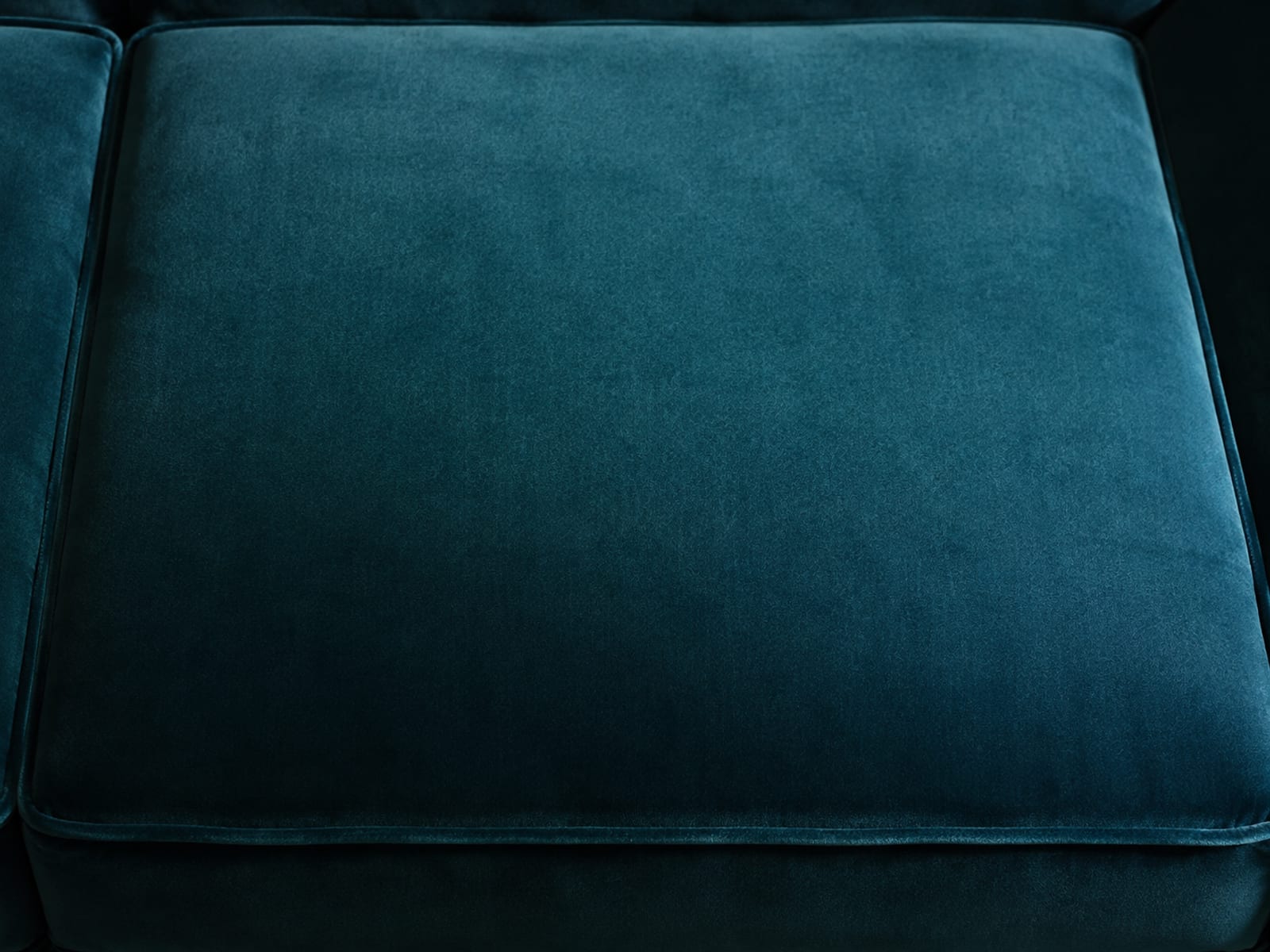
This is the question every recipe you have read skipped, and it is the only one that changes what you are allowed to do. Velvet is a construction: a pile surface woven or knitted so the fibers stand up. Any fiber can be made into it. So, the label on the showroom floor said velvet and told you nothing about the chemistry.
Here is the fact that settles the argument. Rowe sells a velvet in 100 percent polyester, pattern 17799-66, and it carries a W code, which means water-based cleaning is allowed. Rowe also sells a velvet that is 50 percent cotton and 50 percent polyester, pattern 13695-69, and it carries an S code, meaning a water-free solvent only. Same catalog, same word, and the all-synthetic one is the one that takes water. If you were reasoning from fiber content you would have guessed it the other way around, and most people do.
It goes further. Burch's Prestige performance velvet is sold on the word performance and still carries an S code, with its own printed instructions recommending professional cleaning. And Roger and Chris publish a flat instruction not to attempt acetate, rayon or silk velvet at home, and to bring in a professional for larger or prominent stains.
Hover or tap a row to highlight it.
| What you might have | What it usually permits | How you would know |
|---|---|---|
| Polyester velvet, W coded | Distilled water or a water-based agent or foam | The letter on the tag, not the fiber name |
| Cotton and polyester velvet, S coded | A mild water-free solvent only, no water | The letter on the tag; Rowe publishes an example of exactly this |
| Performance velvet | Not automatically anything. Burch's is S coded and recommends professional cleaning | The maker's own care sheet for that fabric |
| Silk, rayon or acetate velvet | Not a home job. Roger and Chris say do not attempt it | The receipt or the maker; these are usually sold as such |
Where the answer is written down
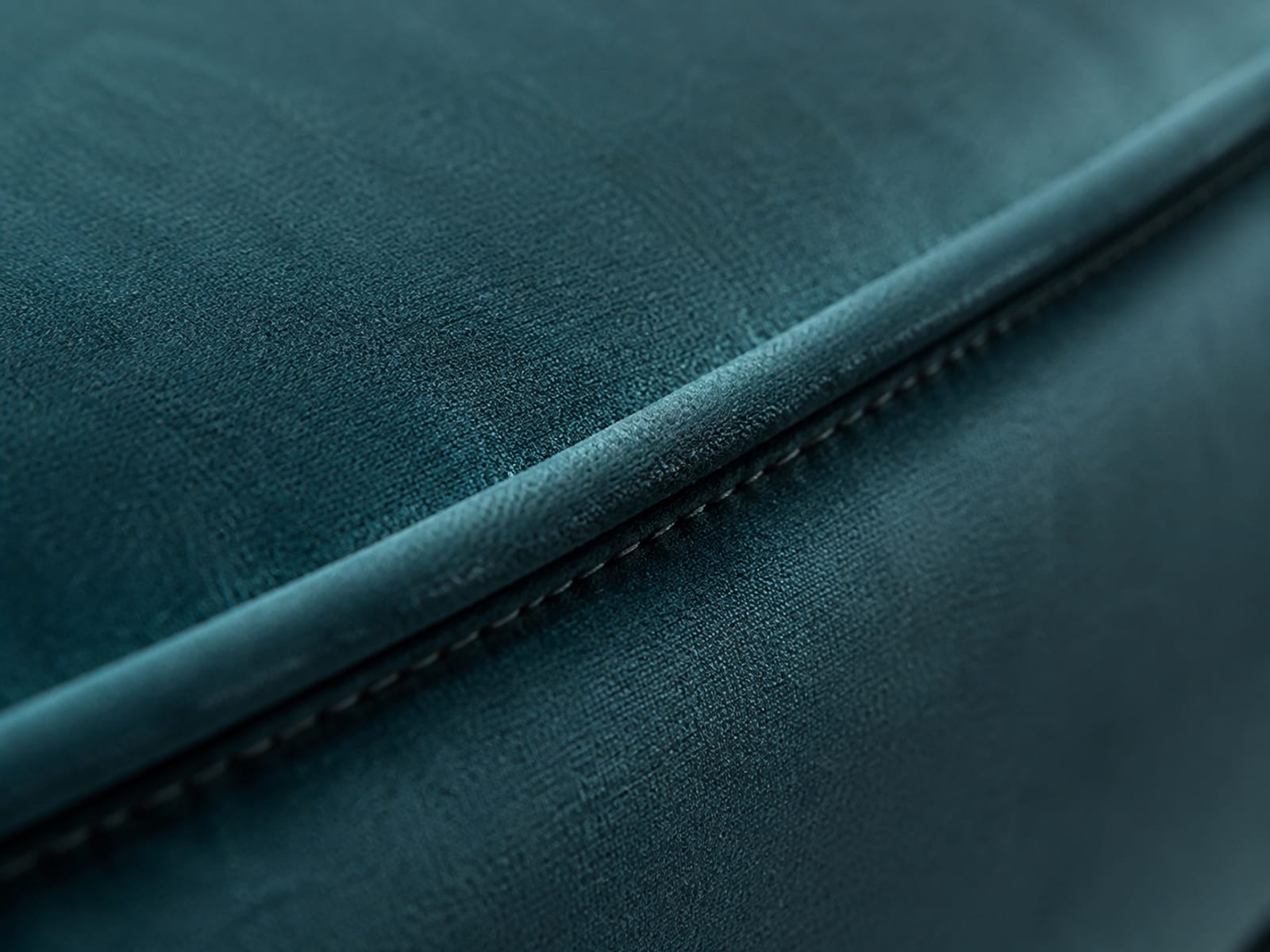
Start with the tag stitched under a seat cushion or into the deck, which carries the single letter you need. Then the original receipt or order confirmation often names the fabric, which is enough to look it up. The manufacturer's own product page for that model usually publishes the care code alongside the dimensions. And if the sofa came upholstered in a named fabric, like the Rowe patterns above, the fabric maker publishes its own care sheet.
Crate and Barrel publishes what each letter means, and it is short enough to carry in your head. If you want it laid out in full, what each care-code letter permits and rules out sets the four side by side. W allows distilled water, a water-based agent, or a foam. S allows a mild water-free solvent and no water at all. SW allows either. X allows vacuuming or a light brush and nothing wet whatsoever.
Take a photograph of the tag while you are down there. The next spill will not wait while you go looking a second time.
What is safe on every velvet, whatever the letter says
If you cannot find the code tonight, you are not stuck. These three do not depend on it.
Vacuum, gently and with the nap. A soft upholstery or brush attachment, minimal pressure, moving in the direction the pile lies. Pottery Barn points out that a pile surface traps dust, and Burch specifically lists crumbs and pet hair among what needs removing. Weekly is the rhythm both suggest. The reason to be gentle is mechanical: pressing a hard attachment into standing pile dents it.
Blot a fresh spill straight away, from the edge inward. Clean white absorbent cloth, pressed rather than wiped, working from the outside of the mark toward its middle. Pressing lifts liquid out. Rubbing drives it down into the pile and spreads the wet area outward, and a wider wet area is what dries into a visible edge.
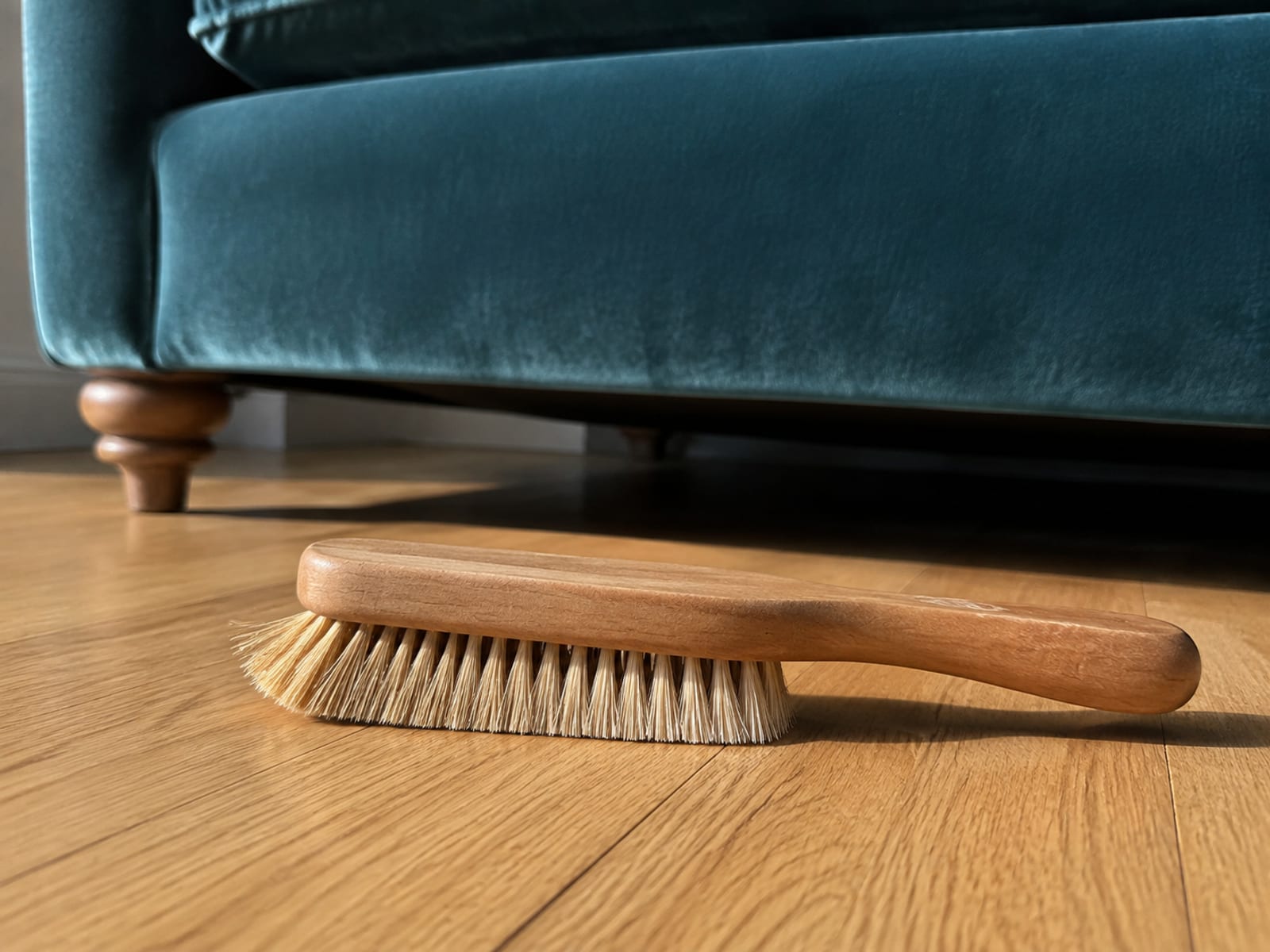
Brush the pile back, but only when it is completely dry. Crate and Barrel names a nonmetallic stiff-bristle brush for pile fabrics, and Burch says to do this after drying is complete rather than while there is any moisture left. One direction, lightly. It is worth saying the nonmetallic part out loud, because brass brushes get recommended for velvet in a lot of places and a metal bristle on a pile surface is a risk you do not need to take.
What if you find the letter and it says W?
Then you have room to work, with two conditions. Pretest first: put the agent on a hidden patch, somewhere behind an arm or under the skirt, and let that patch dry completely before you judge it. And apply to the cloth rather than to the sofa, so the pile takes the minimum liquid that will do the job. Blot; do not scrub.
Crate and Barrel adds a warning worth taking seriously even on a W fabric: a spot clean can leave a ring or a patch of fading, and for an even result the whole cushion casing or the whole piece may need cleaning rather than the one spot. That is not a reason to avoid cleaning it. It is a reason to think in cushion faces rather than in coin-sized dots.
If the code permits water and extraction, a portable machine does the part a cloth cannot, which is pulling the liquid back out again. BISSELL's Little Green 1400B publishes a 3-inch tool, a 4-foot hose, a 15-foot cord and a 48-ounce tank, and reads $129.99 on bissell.com as of September 2026. Its matching spot and stain formula is $12.99 there as of the same month. Neither belongs anywhere near an S or an X velvet, and a machine that lists upholstery on the box does not change a letter printed on your sofa.
And if it says S, or X, or you never find it?
S means a mild water-free solvent and nothing water-based, which is a narrower job than it sounds and worth a pretest of its own. X means the vacuum and the soft brush and nothing else, ever, and that is not a failure of the fabric; it is what the maker has told you it will tolerate.
An unknown code is best treated as X until you know better. That costs you nothing except the wait, and the alternative costs a ring you cannot undo. One person on r/SofaSnobs described exactly this position after finding an S code on a new Room and Board velvet sofa and being afraid to put water anywhere near it. That instinct is the right one; the answer is a solvent-only spot treatment or a professional, not a leap of faith with a wet cloth.
When is it somebody else's job?
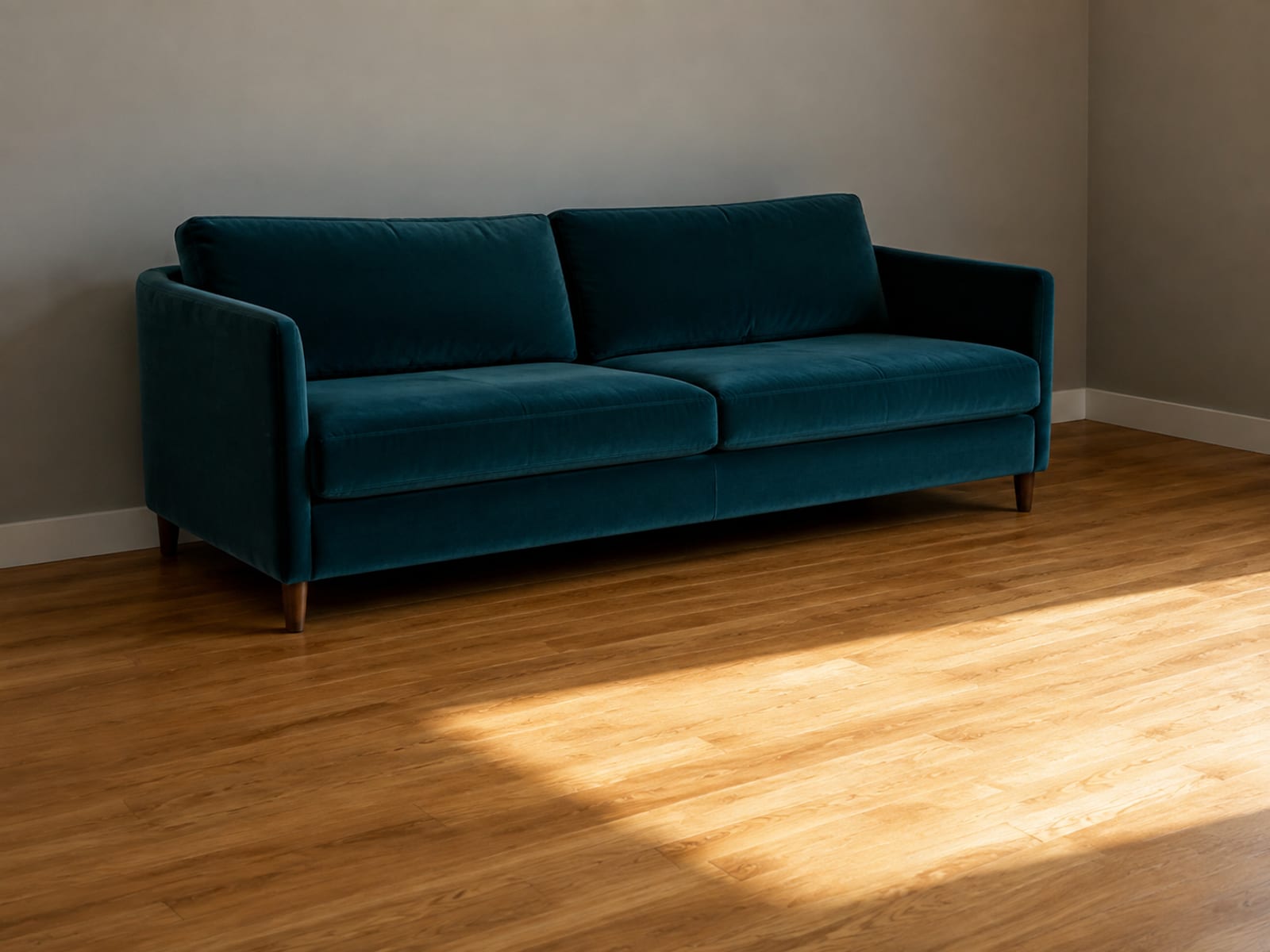
Sooner than on most fabrics, and there is no shame in it. Hand it over when the code says S or X and the mark is beyond a dry blot; when the code is unknown; when the velvet is silk, rayon or acetate; when the stain is large or somewhere you will always look at; when a previous attempt has already left a ring, a faded patch or transferred dye; and when liquid has gone through into the cushion fill.
Crate and Barrel suggests professional upholstery cleaning annually as ordinary maintenance rather than as a rescue, which is a different way to think about it: booked once a year, it is upkeep, and the whole-piece result avoids the ring problem entirely.
When you call somebody, the standard covering this trade is ANSI/IICRC S300, the Standard for Professional Upholstery Cleaning, listed in the IICRC's standards index, and asking a company whether it works to that is a fair question. Prices are local. As one published example of what an extra line item looks like, Houston Kwik Dry lists $50 for moving large furniture, which is that company's own local rate rather than a national one.
Be realistic about the outcome before you spend the money. A poster on r/CleaningTips who spilled tea on a pink velvet couch, tried damp and dry paper towels, then a portable extractor, and finally a professional, reported that the professional faded the stain without fully removing it. A dyed stain in a pale pile is the hard case, and going in expecting improvement rather than erasure is the kinder frame.
The order this goes in
- 1
The first minute
Blot. Clean white cloth, pressed from the outside of the mark inward, no rubbing, no product yet.
- 2
Before any liquid
Find the letter. Tag, receipt, maker's page, fabric maker's care sheet, in that order.
- 3
Before you treat the mark
Pretest the permitted agent on a hidden patch and let that patch dry all the way.
- 4
The treatment
Agent onto the cloth rather than onto the sofa. Blot, do not scrub. Think in cushion faces.
- 5
Completely dry
Only now, brush the pile one way with a nonmetallic stiff-bristle brush.
Would you get this one right?
1. Two velvets from the same maker, one 100 percent polyester and one half cotton. Which one is coded W for water?
2. A fabric is marketed as performance velvet. What does that tell you about cleaning it?
3. You have blotted a spill and the area is still slightly damp. When do you brush the pile back?
4. You cannot find a care tag anywhere. What is the safest assumption until you do?
Pick an answer to begin.
Frequently asked questions
Can you use Dawn dish soap on a velvet couch?
Only on a fabric whose own code permits a water-based cleaner, which means W or SW, and only after a hidden pretest that has dried fully. Several furniture retailers publish a dish-soap-and-water method for velvet, while Crate and Barrel's S code rules out water entirely, and both are right about the fabrics they are describing. Your sofa's own letter is the tiebreak.
Does velvet get ruined by water?
It depends entirely on the fabric, and on how much water. Rowe's 100 percent polyester velvet is coded W and takes water-based cleaning; its cotton-blend velvet is coded S and does not. On any velvet, the risk is less about a drop than about a saturated patch drying unevenly, which is what leaves an edge.
How do you bring flattened velvet back to life?
Take the loose soil off first, wait until the area is completely dry, then brush lightly in one direction with a nonmetallic stiff-bristle brush. Crate and Barrel names that brush for pile fabrics and Burch specifies waiting for complete drying. It restores the look of the pile, and it will not undo fiber that has genuinely been worn away.
Is white vinegar or baking soda safe on velvet?
Both circulate widely and neither is a general velvet method. Crate and Barrel's S code excludes water-based liquids of any kind, which rules a vinegar solution out on those fabrics entirely. On a W fabric, use the water-based agent your own maker names, and pretest it on a hidden patch first.
How often should a velvet sofa be professionally cleaned?
Crate and Barrel suggests annually as routine care rather than as a repair. Booking it that way also sidesteps the ring problem, because a professional cleans the whole cushion casing or the whole piece for an even result instead of treating one spot.
The words on a velvet care sheet
Tap a term to see what it means.
Pile and nap. The raised fibers standing up off the backing, and the direction they lie. Vacuum and brush along it, never across it.
Photograph the care tag before you put that cushion back, because the whole of this decision runs through one letter and it takes ten seconds to have it forever. If the letter turns out to be W and you would rather compare tools before you buy anything, the portable machines sorted by how far they reach is where PlushPick picks it up.
Cal Hewitt
Writer at PlushPick. I compare sofa specs, comfort, durability, and value so you can buy with clearer expectations.
About Cal and how the guides are researchedThe latest
 "Best-of"Best Furniture Protectors for Pets, by What They Actually Cover
 "Best-of"Best Pet-Friendly Sofa Fabrics: Claws, Hair and Spills
 "Best-of"Best Sofas for Small Spaces: Narrow Doesn't Mean Shallow
 "Best-of"Best Recliner Covers for Dogs: What Actually Stays On
 AnswerSofa vs Sectional: Which One Fits Your Room and Life
 AnswerHow to Measure a Sofa So It Fits Through the Door