

Affiliate disclosure. If you buy through a link on this page, PlushPick may earn a commission at no extra cost to you. That never changes which products are named or what is said about them. As an Amazon Associate I earn from qualifying purchases. How this works
Yes, a modular couch can be as comfortable as a one-piece sofa for sitting, lounging and napping, as long as the parts that make it modular suit you. The seam between two seats has to stay tight enough that you do not feel it, the pieces have to stay together on your floor, the seat depth and height have to fit your legs, and the back and arms have to reach where you need them. Every one of those can be read off a listing or asked of the seller before you order, and the return window covers the part no listing can tell you, which is how the fill feels to you.
If you are still settling what counts as modular in the first place, what a modular sofa is, and how it differs from a sectional covers that. What follows is about the sit.
Key Takeaways
The seam is where a modular differs most
Dweva measured the join between a Burrow Range seat and chaise at about 0.15 inch after assembly and about 0.25 inch after repeated rearranging.
Check what holds the pieces together
Lovesac uses steel clamps plus shoes and feet; Monvane relies on a non-slip base, and some Monvane owners add a rug on wood floors.
Seat depth is published on most lines
Monvane lists 27.5 inches, IKEA JÄTTEBO 27 1/8 inches, and Lovesac 29 inches on a Standard Seat and 35 on a Deep Seat.
Back height is the number to ask for
Lovesac publishes the height of its Side pieces; Monvane's modular pages list an armrest width and no back height.
Loose cushions can drift
A reviewer found the Cozey Gaia's seat, back and arm cushions were not attached and could slide.
The return terms cover how it feels
Lovesac offers a 60-day home trial and IKEA a 365-day return; Monvane and Wayfair list 30 days.
Where you feel the join between two seats
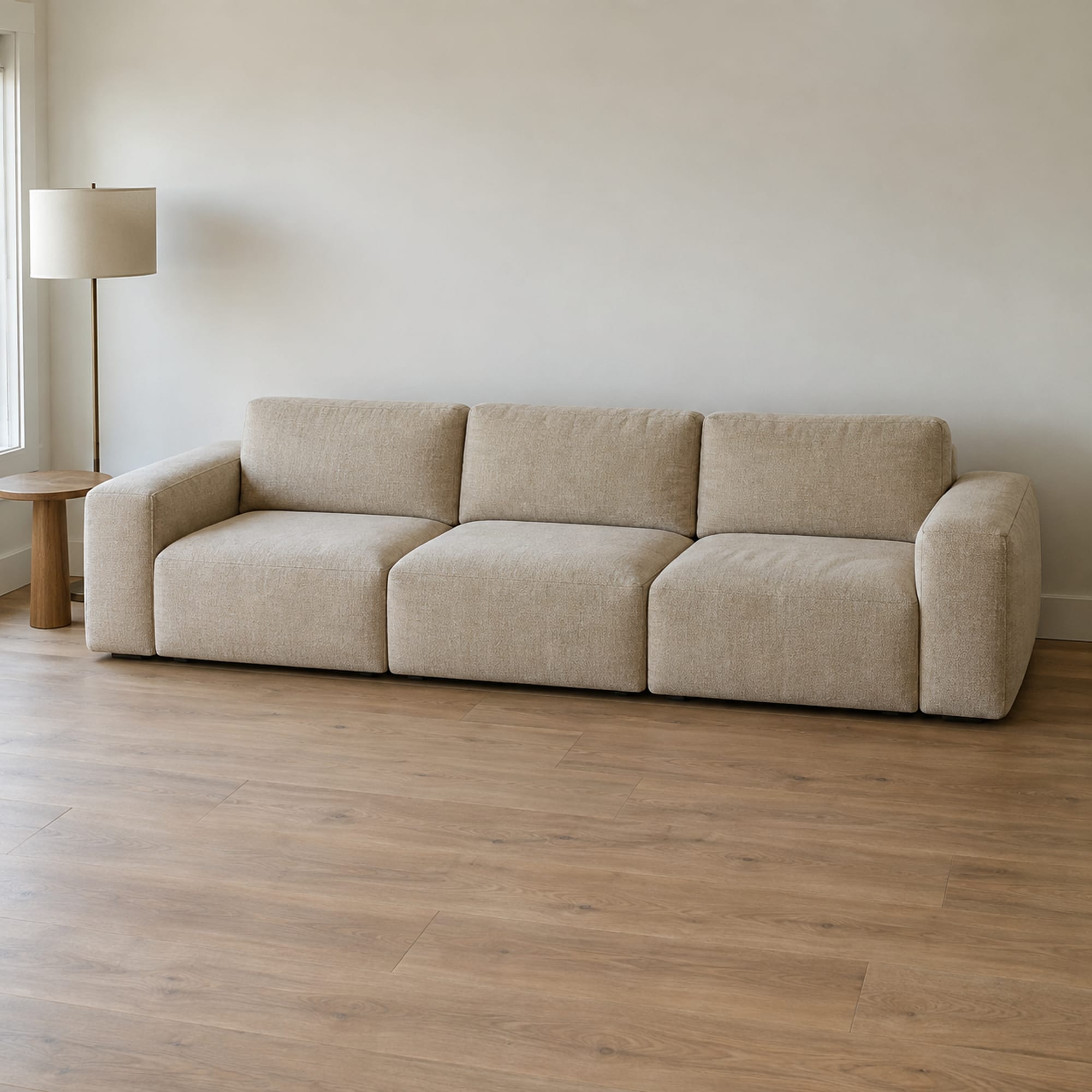
On a one-piece sofa, the frame under you is continuous, even when the cushions on top are separate. On a modular, each seat is its own box, so there is a line running between them all the way down to the floor. Whether you ever notice it depends on how tight that line stays and on whether you sit or lie across it.
The clearest measurement comes from Dweva's review of the Burrow Range three-piece sectional. After assembly, the gap between the main seat and the chaise was about 0.15 inch. After the reviewer had taken the pieces apart and put them back together several times, it had grown to about 0.25 inch. Dweva reported that the gap was visible from above and collected dog hair, but that it did not affect support. You can read the numbers in Dweva's Burrow Range review. A quarter of an inch is small, and it tells you something useful: a join that starts tight can open a little every time you rearrange.
A seam can also come from the cushions rather than the frames. Devin Toolen, reviewing the Cozey Gaia for Homes & Gardens after several months with it, praised how plush and comfortable it was, and also found that the two base cushions formed a significant crevice down the middle that made the center seat uncomfortable. Her Cozey Gaia review is worth reading if you plan to put a person in the middle position every night.
Owners report the same thing in their own words. One Lovesac Sactionals owner on Reddit wrote that the cushions compressed at the seams and that the wood underneath could be felt there, in a thread about the couch's comfort. Another described cushions shifting and a front cushion moving away from the back cushion, which opens a gap you sit into, in a separate owner thread. Those are individual accounts, not measurements, but they point at the same place.
So, think about where your body will land. If you sit upright in one seat each, the join sits between people and rarely matters. If you lie across three seats, or someone always takes the middle, the seams run under your hips and shoulders, and that is where a cushion that compresses at the edge or slides away from its neighbor shows up. Ask the seller whether each seat cushion is fixed to its module or loose on top, and whether any cushion spans the join between two modules. Of the lines here, none of the maker pages says a cushion spans a seam, and the Monvane pages do not say whether the seat cushions are attached.
What keeps the pieces from drifting apart
The second thing a modular can do that a one-piece sofa cannot is creep apart while you sit on it. That shows up as a join that slowly widens over an evening, or a chaise that walks away from the seat beside it when someone flops down.
Makers solve this in different ways, and the listing usually tells you which one you are getting.
Lovesac names its hardware. The Sactionals page says, "Steel clamps create a durable connection. Shoes and Feet keep Seats and Sides from sliding apart." Cozey also uses a mechanical connector. Tom's Guide reported that the Cozey Ciello's connectors were easy enough to lock, especially under the chaise, and that the module bases stayed locked and the couch had not wiggled or moved, in its Cozey Ciello review.
Monvane relies on the base instead. Its U-Shaped Modular Couch listing says, "A non-slip base keeps every module securely in place," and the L-Shaped listing names a "Stable, anti-slip base." The 8, 10 and 12-seat U-shaped couches describe an "Anti-slip base for enhanced stability and safety." None of those pages names a clip, bracket or strap between modules. Owner comments on the Monvane U-Shaped page are mixed in a useful way. James O. wrote that the modules moved easily when he wanted to rearrange but stayed put while lounging. Kimberly N. said it stayed still on very slippery floors and mentioned an anti-slip cloth that can go underneath. Chloe F. said the non-skid could be better, and on the 8-Seat page, Victoria Boyles recommended an area rug on wood or other hard floors to keep the pieces in place.
That split, fine on one floor and loose on another, is the pattern to expect from any line that holds together by friction. A connector can also go unused. Toolen found the Cozey Gaia's connectors hard to line up on her uneven floor, chose not to use them, and reported that the sofa still did not slide apart.
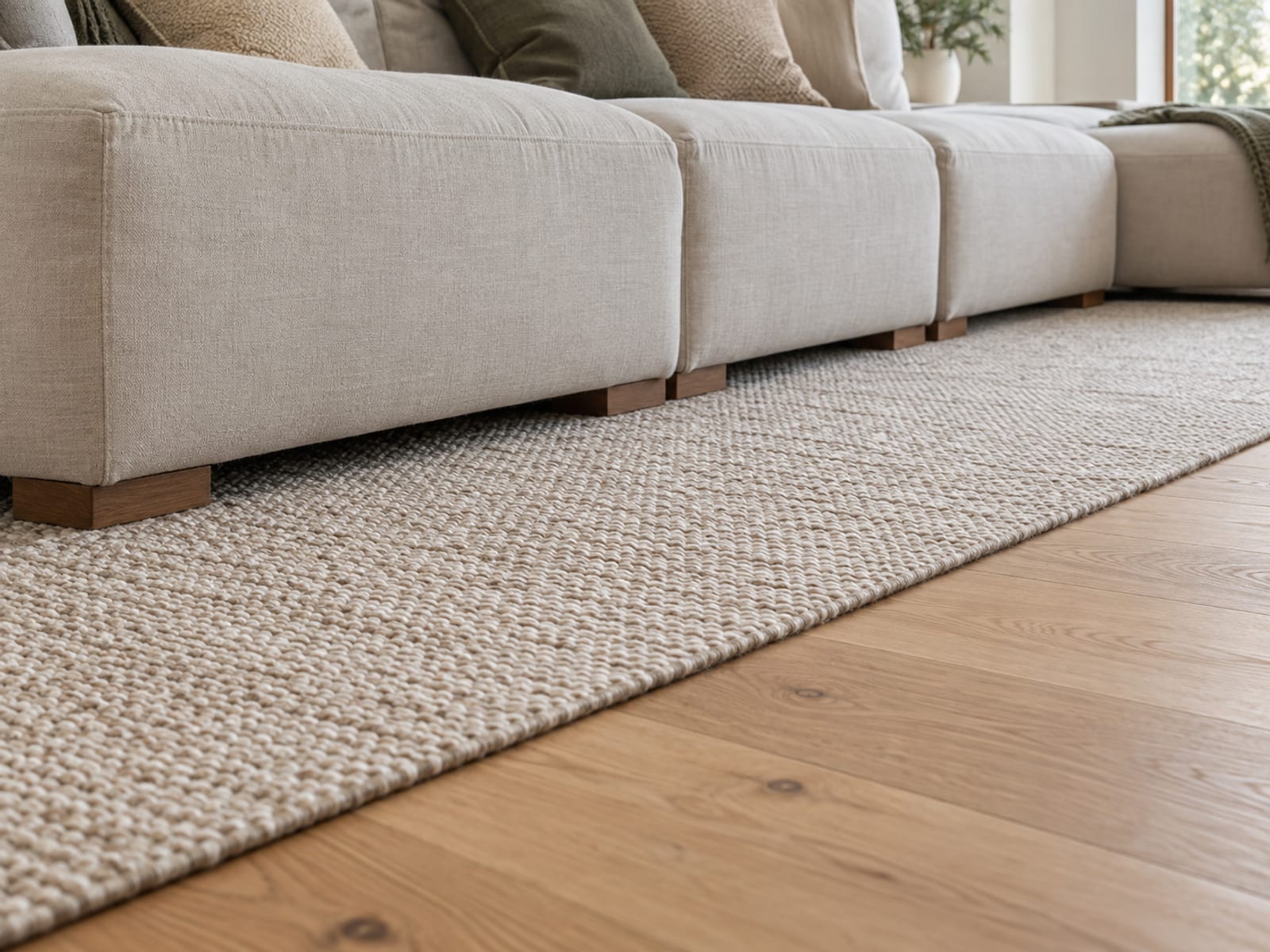
If your floor is wood, tile or vinyl, plan for it before delivery. Koala's guide to taking apart a sectional lists hard floors, a rug that is too small and uneven feet as common causes of gaps, and suggests non-slip rubber pads under the legs, a rug under the front legs of every module, and checking that any connectors are fully engaged. A rug big enough to reach under the front of all the modules is the simplest version of that, and it costs nothing to check the size against your layout now.
The seat numbers, line by line
Once the pieces stay together, a modular seat is judged the same way as any other: how deep it is from front edge to back cushion, how high it sits off the floor, and what is inside the cushion. How those numbers suit different bodies and ways of sitting is covered in how a seat and back have to agree. The modular lines themselves publish the figures below.
Monvane lists a 27.5-inch seat depth on both the L-Shaped and U-Shaped Modular Couch, and 27.56 inches on the 8, 10 and 12-seat U-shaped couches. The L-Shaped listing adds a 16.5-inch seat height and "High-density 30D foam (1.87 lb/ft³)," with a boneless, glue-free build. As of September 2026 on monvane.com, the L-Shaped was $519.99 on sale against a regular $799.99, and the six-seat U-Shaped was $749.99 on sale against a regular $1,119.99.
IKEA's JÄTTEBO modular loveseat with headrest lists a 27 1/8-inch seat depth and an 18 1/8-inch seat height, and it was $1,740 on ikea.com as of September 2026. Its seat cushion is built differently from the boneless lines: IKEA's JÄTTEBO material details for the two-seat version list highly resilient cold foam at 35 kilograms per cubic meter, which works out to about 2.2 pounds per cubic foot, over a pocket spring unit.
Lovesac sells two seat sizes. A Standard Seat is 29 inches deep, 35 inches wide and 18 inches high, and a Deep Seat is 35 inches deep, 29 inches wide and 18 inches high, per its Deep Seat listing. Lovesac describes its Standard Foam as three high-density layers with a supportive central layer, and its Lovesoft option as a fiber-filled top cushion over a foam base. It does not publish a numeric foam density.
At the lower end of the range, Wayfair lists the Latitude Run boneless three-seat modular at $619.99 as of September 2026, with a 26.77-inch seat depth, a 14.57-inch seat height and all-foam construction described as high density. That seat height is the lowest here, about two inches below Monvane's 16.5, which matters if getting up off the couch is already an effort.
Hover or tap a row to highlight it.
| Line and piece | Seat depth | Seat height | Cushion fill | What holds modules together | Returns |
|---|---|---|---|---|---|
| Monvane L-Shaped Modular Couch | 27.5 in | 16.5 in | 30D foam, 1.87 lb/ft³ | Anti-slip base | 30 days, eligible items |
| Monvane U-Shaped Modular Couch, six seats | 27.5 in | Ask Monvane | 30D foam | Non-slip base | 30 days, eligible items |
| Lovesac Sactionals, Standard Seat | 29 in | 18 in | Three high-density foam layers, or fiber over foam | Steel clamps, shoes and feet | 60-day home trial |
| Lovesac Sactionals, Deep Seat | 35 in | 18 in | Same fill choices | Steel clamps, shoes and feet | 60-day home trial |
| IKEA JÄTTEBO loveseat with headrest | 27 1/8 in | 18 1/8 in | Cold foam, 35 kg/m³, over pocket springs | Ask IKEA | 365 days |
| Wayfair Latitude Run three-seat | 26.77 in | 14.57 in | High-density foam, no figure | Ask the seller | 30 days, most items |
| Burrow Range three-piece | Ask Burrow | 16 in, per Dweva | Selectable, no density | Ask Burrow | About 30 days, with fees, per Dweva |
Seat depth is where these lines agree most. Four of them sit between about 26.8 and 29 inches, within about two inches of each other. Lovesac's 35-inch Deep Seat is the outlier and the one built for lying down. If you want a sense of which depth suits which way of sitting, the most comfortable couch for how you actually sit sorts depths by sitting, settling back and lying down.
Where they differ more is the fill. A foam density figure lets you compare two foams, but it does not tell you how soft a cushion feels, because the thickness of the foam and what sits under it change the sit as much as the density does. Monvane owners show how wide the reactions can be on one line. James O., who described himself as over six feet tall, called the U-Shaped's foam plush but supportive and said he could stretch across three modules. On the 8-Seat U-Shaped, C.Carter reported no sag or indentations after four months of family use and sleepovers, while Marcella Ohton wrote that some pieces were sturdy and others squished down right away with no support. Those are single owners, but they are a reason to sit on every piece within the return window, not just one.
Whether the back and arms hold you up
Backs and arms are where modular construction changes the most, and they are the least published part of the listings.
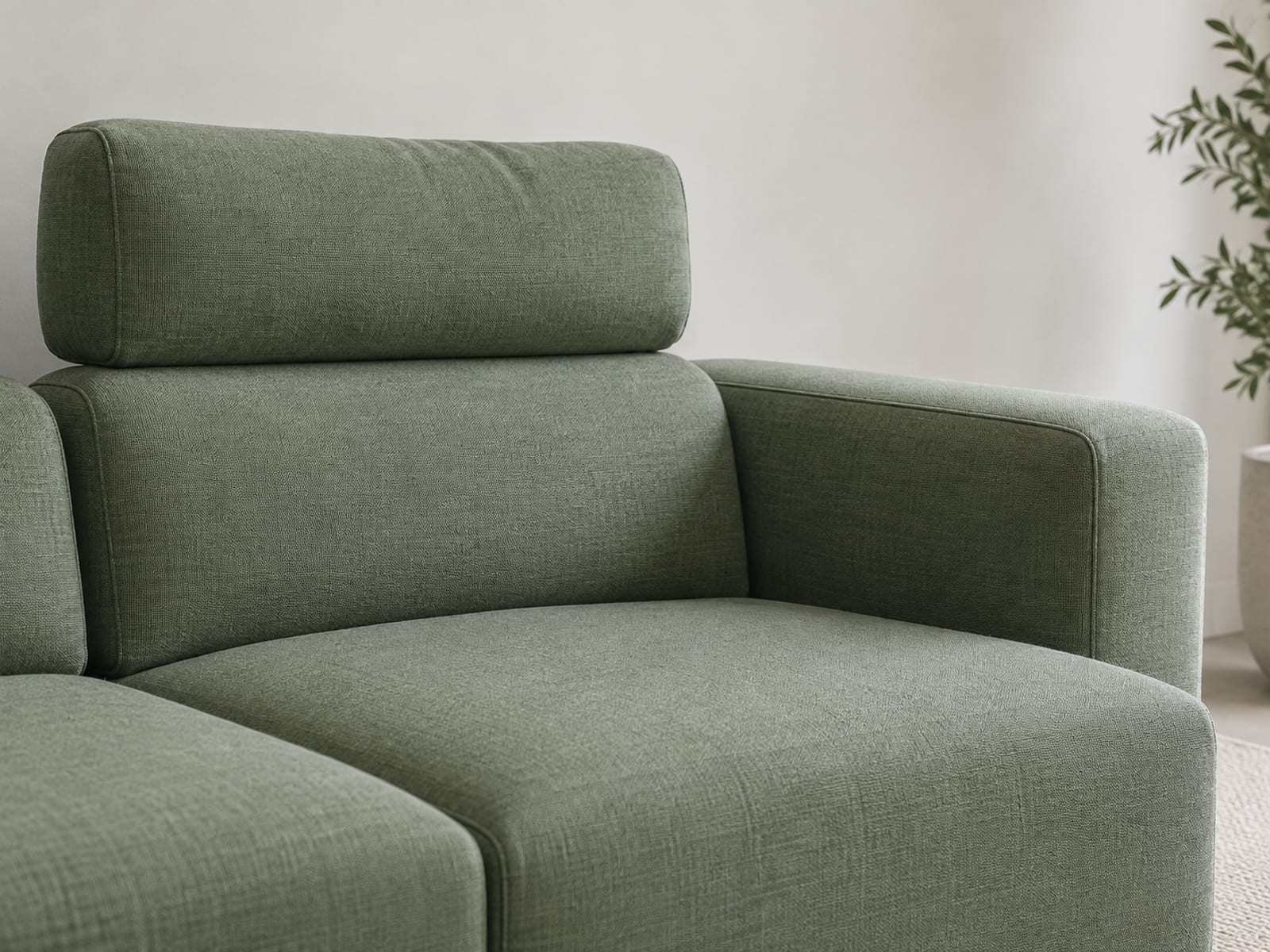
On a one-piece sofa, the back is part of the frame. On many modulars, the back is a separate cushion or bolster resting on or against the seat module, and the arm is a separate piece standing beside it. That makes them easy to rearrange and also easier to push out of place. On the Monvane U-Shaped page, owner Ethan G. said the back was a bit short and could fold backward when someone leaned on it if the couch was not against a wall. On the 8-Seat U-Shaped, Faith reported that the armrest had nothing, such as hook-and-loop, to keep it from falling to the floor, and a reviewer at Homes & Gardens found the Cozey Gaia's back and arm cushions were not attached to the frame and tended to slide.
I have dealt with back pain since I was 18, and on a modular the back is the part I would ask about first, because it is the part the listing is least likely to spell out. Lovesac is the one line here that publishes a figure you can use. Its Standard Side is 35 inches long, 6 inches wide and 28.5 inches high, and Lovesac says Standard and Angled Sides can serve as either a back or an arm. Deep Sides, 29 inches long and also 28.5 inches high, are backs only. The Roll Arm Side is 26 inches high with a 9-inch rolled arm, and the Swept Arm Side is 29 inches high with a 25-inch front height. Keep in mind that each of those is the height of the piece itself, which is not the same as how far it rises above the cushion you sit on, so ask for that figure if you are tall or need support between your shoulders.
Monvane's modular pages publish a 10-inch armrest width and no back height. IKEA lists separate armrests 9 7/8 inches wide and separate headrest cushions on JÄTTEBO, and an overall height of 34 1/4 inches for the loveseat, but not the height of the back above the seat. Burrow's Range back came in low in Dweva's review, where a six-foot reviewer got mid-back support rather than support for the neck or head and reached for a throw pillow. By contrast, David Kaufman at Architectural Digest found the same line "far cozier" than he expected in his Burrow sectional review, which is a fair reminder that a low back suits some sitters and not others.
If you nap on the couch, the back and the seams matter together. A low back leaves your head unsupported when you lie along the seats, and a long body lying across several modules crosses every join. Monvane owners Kimberly N. and Rebecca A. both reported good naps on the U-Shaped within the first days, and Sarah M., on the same page, wrote that her body still hurt after sleeping on it. For someone who plans to sleep on it regularly, Lovesac's 35-inch Deep Seat gives the most published room to lie across a single module rather than a join.
The return window is the last comfort check
How a particular fill feels to your body is something you only learn by living with it, so the return terms are part of the comfort decision.
Lovesac offers a 60-day home trial that its Sactionals page describes as "Total Comfort, or your money back," which is written to cover a setup that does not feel right. The IKEA JÄTTEBO page says "Return within 365 days for a full refund" and does not limit that to defects, subject to IKEA's full terms. Monvane's modular pages list 30-day returns for eligible items without saying whether finding the couch too firm or too soft qualifies, so ask Monvane that before ordering and get the answer in writing. Wayfair lists a 30-day return for most items on the Latitude Run three-seat, for refund or store credit. For Burrow, Dweva reports that returns generally have to start within 30 days of delivery, with a 10 percent fee in the original packaging and 20 percent without it, capped at $250 per item, and suggests confirming the current terms.
Whatever window you get, use it deliberately. Sit in every seat, including the middle, lie across the joins, lean against the back without a wall behind it, and do it on the floor the couch will actually live on.
Can you judge a modular's comfort before it arrives?
1. You always lie along the full length of the couch. Which part matters most?
2. A listing says the base is non-slip and names no connector. Your floor is oak. What should you plan for?
3. A modular's side piece is listed as 28.5 inches high. What does that tell you?
Pick an answer to begin.
Frequently asked questions
Do modular couches have gaps between the seats?
Some do, and the gap can grow with use. Dweva measured the join on a Burrow Range at about 0.15 inch new and about 0.25 inch after repeated rearranging. A rug or anti-slip pads under the front of every module on a hard floor help keep the join closed.
Are modular couches good for tall people?
A deep seat helps with legroom, but the back height decides whether your shoulders are supported, and few modular lines publish it. Lovesac lists its Side pieces at 28.5 inches high, and a six-foot reviewer at Dweva got only mid-back support from the Burrow Range, so ask for the back height above the seat before ordering.
Is a modular couch less comfortable than a regular sofa?
Not by design. The seat depths on modular lines such as Monvane at 27.5 inches and IKEA JÄTTEBO at 27 1/8 inches are in the same range as deep one-piece sofas, and the difference shows up at the joins, the connectors and the backs.
What is the most comfortable modular couch?
It depends on how you sit. Lovesac's 35-inch Deep Seat gives the most room to lie down, IKEA JÄTTEBO puts pocket springs under cold foam, and Monvane owners describe its 30D foam as plush but supportive. Sit on every piece during the return window, because owners of the same line report different feels.
Terms on a modular listing
Tap a term to see what it means.
Seam. The line where two modules meet. On a modular it runs through the frame as well as the cushions, so it can widen if the modules move.
When you have the seat depth, seat height and back height you want, and a return window long enough to try the joins, the next step is choosing a line and a layout. PlushPick's guide to the best modular sofas sets the modular lines side by side by price and configuration.
Cal Hewitt
Writer at PlushPick. I compare sofa specs, comfort, durability, and value so you can buy with clearer expectations.
About Cal and how the guides are researchedThe latest
- 1:1AnswerPower vs Manual Recliner: Warranty, Repairs, Cost and Fit
- 1:1AnswerHow Much Does a Recliner Cost? Real Prices, $280 to $3,895
- 1:1AnswerHow Much Does a Sleeper Sofa Cost? Prices by Bed and Mattress
- 1:1AnswerHow Much Does a Futon Cost? Frame, Mattress and Full Sets
- 1:1AnswerDoes Medicare Cover Lift Chairs? What Part B Pays, Who Qualifies
 AnswerHow to Keep Couch Cushions From Sliding, by Upholstery Type