

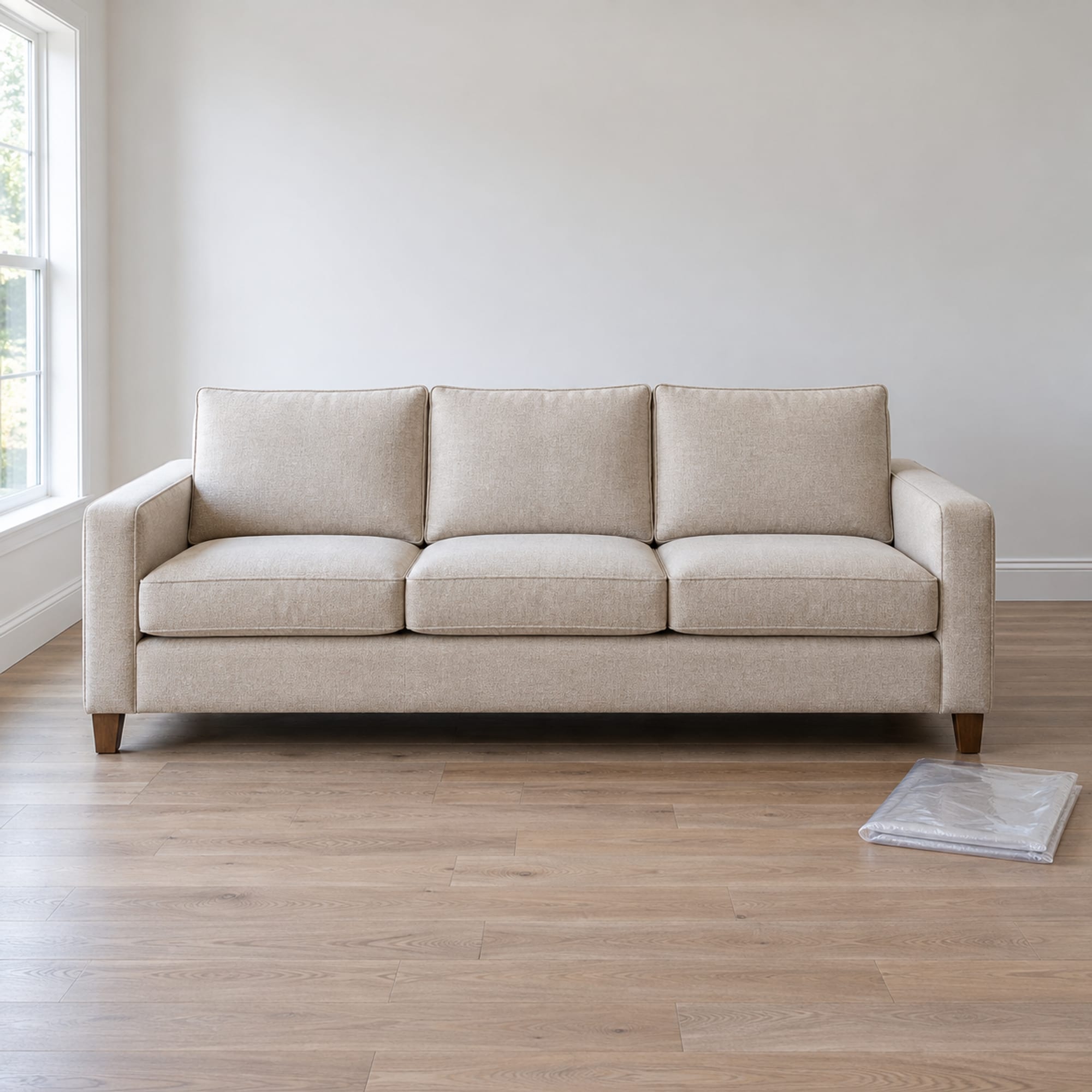
Affiliate disclosure. If you buy through a link on this page, PlushPick may earn a commission at no extra cost to you. That never changes which products are named or what is said about them. As an Amazon Associate I earn from qualifying purchases. How this works
A new couch usually does give a little with daily use, but for an ordinary foam or fiber seat no sofa maker puts a number of weeks on it. The figures that do exist belong to particular materials: a compressed, boxed sofa needs 24 to 72 hours to finish expanding, and Tempur-Pedic says its memory foam pillows soften over a few weeks. So, the date that actually governs your decision is the end of your return window, which is 30 days from the day the couch arrives at Burrow, Article, Monvane, Albany Park and Ashley. Use every seat daily, turn and plump the cushions, and decide a few days before that window closes.
Key Takeaways
Seats soften with use, on no published schedule
Sofology says seat foam may soften and fiber and feathers may flatten over time, without giving a period.
Give a boxed sofa 72 hours before judging it
Couchery, Ultione, Kogan and Overstock all publish expansion times inside 24 to 72 hours, and the firmness you feel after that is the firmness you have.
Memory foam has the only stated softening period
Tempur-Pedic gives a few weeks for its pillows, as the foam responds to body weight and warmth.
The return clock starts at delivery
Thirty days is the common window; Room & Board allows 90 and IKEA 180 for opened products.
Burrow calls firmness a preference and still takes it back
The return has to fall inside its 30-day window, and a fee applies. Ashley's warranty excludes comfort preference.
Read the condition line before you break it in
Ashley's standard-shipping returns must be new and unused, and Room & Board wants like-new.
What each kind of cushion does in the first weeks
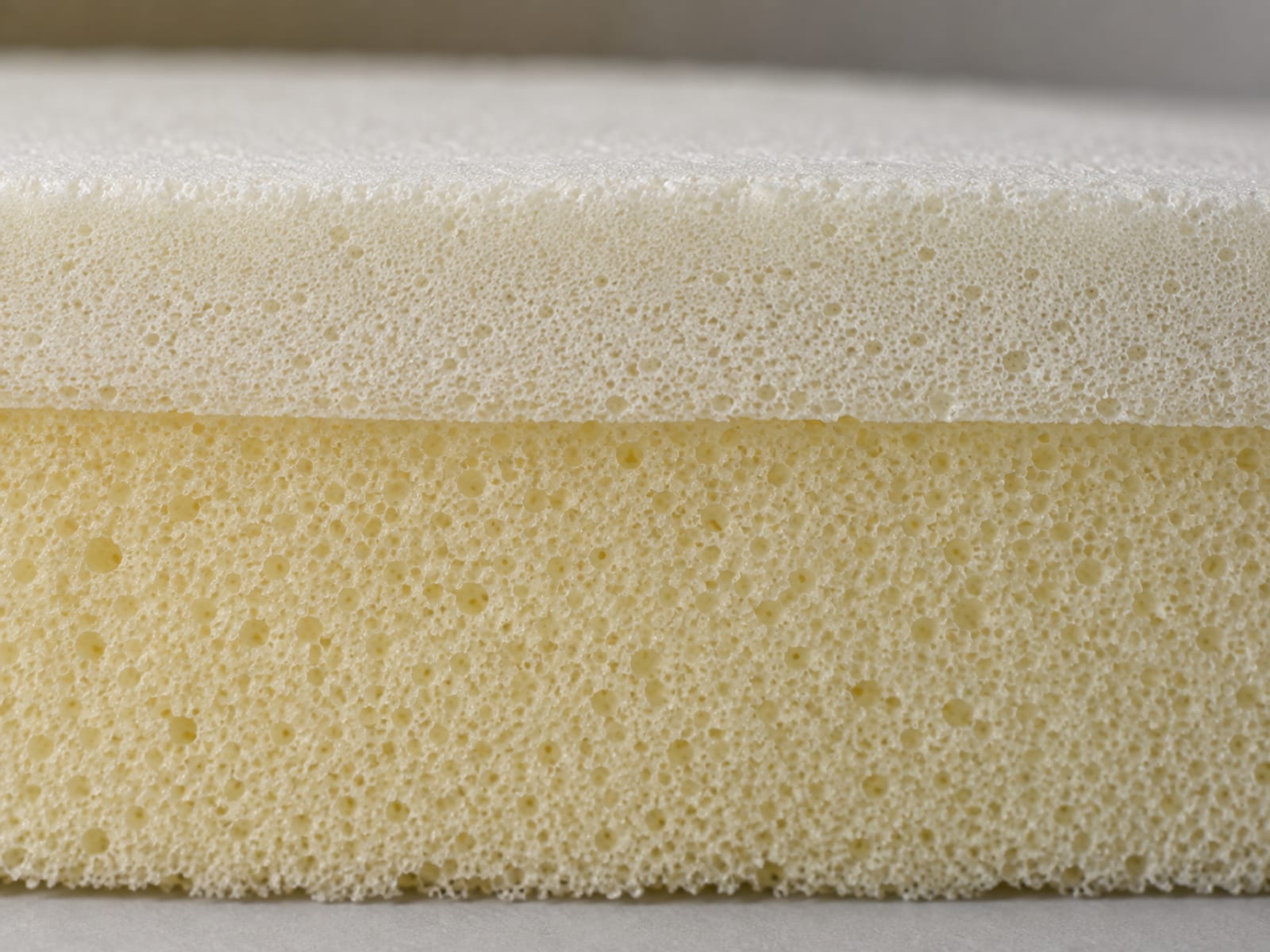
The answer depends on what is inside the seat, so start by finding out. The product listing names the fill, and a cushion with a zipper lets you look. Each common build behaves differently early on.
Hover or tap a row to highlight it.
| Cushion type | What the maker says happens early | Period stated | Source |
|---|---|---|---|
| Compressed or boxed foam | Expands back to shape after unpacking | 24 to 72 hours | Couchery, Ultione, Kogan, Overstock |
| Polyurethane foam, often fiber-wrapped | Foam may soften with normal use | None stated | Sofology, CareCo |
| Memory foam | Firmer at first, softens as it conforms | A few weeks, for pillows | Tempur-Pedic |
| Down and feather blend | Flattens and needs frequent fluffing | None stated | Article, Sofology |
| Pocketed coil or spring-down | No early change described | None stated | Ask the seller |
Compressed or boxed sofas
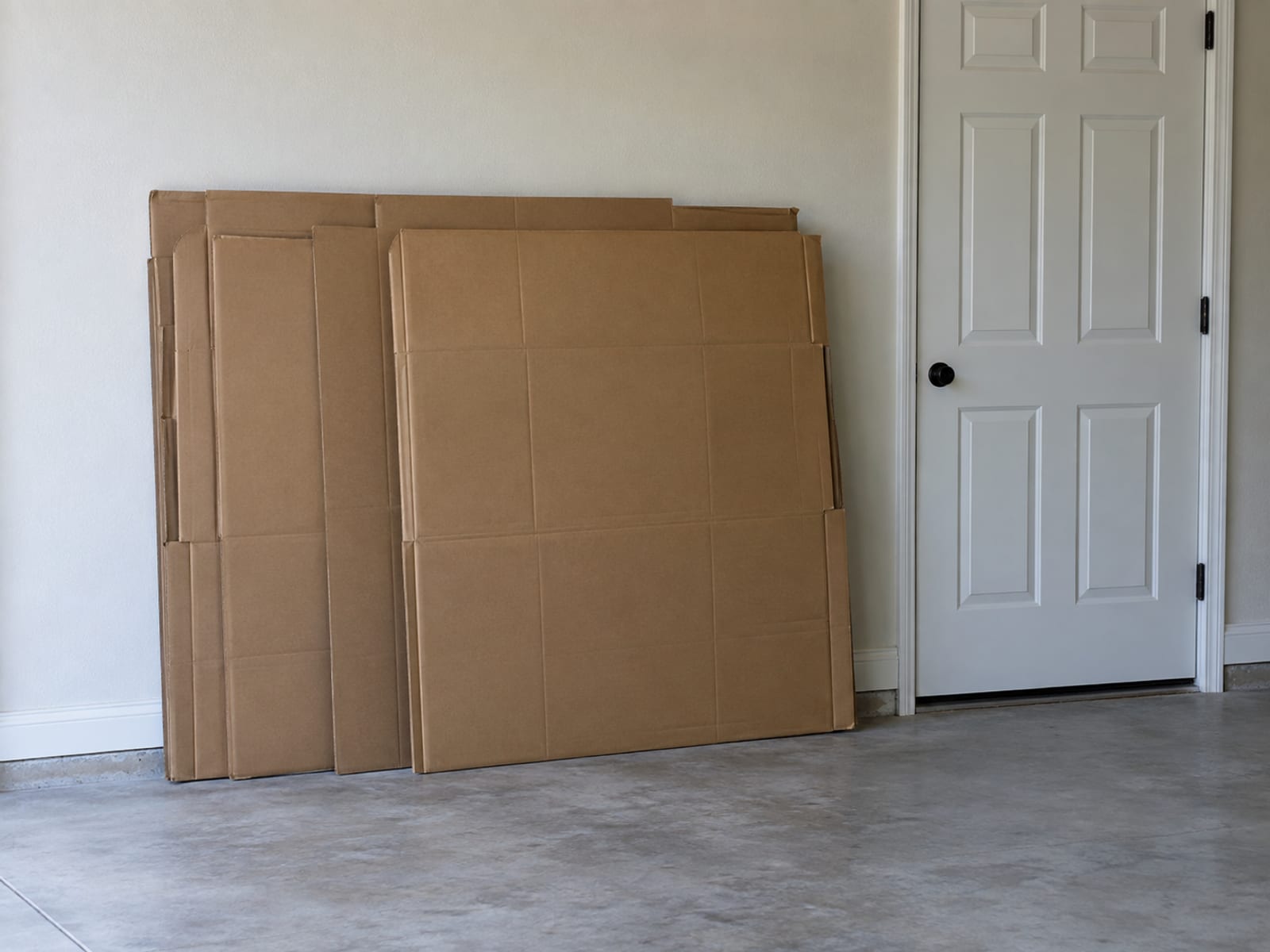
If your couch arrived rolled or vacuum packed, the first days are expansion rather than break-in, and they are not a fair test of anything. Couchery's compressed-sofa guidance gives 24 to 72 hours to expand fully and says that once it has, the firmness you feel is the firmness the sofa keeps. Ultione gives the same 24 to 72-hour window and says to contact customer help if a section is still seriously misshapen after 72 hours. Kogan's compressed-sofa manual says 48 to 72 hours, and an Overstock product manual says up to 72.
One IKEA STOCKSUND owner reported that the paperwork suggested up to 72 hours for the vacuum-sealed cushions, and that some cushions felt flat and uncomfortable before then. That matches the published figures. It also means a creased, flat cushion on day one tells you nothing yet. What a boxed sofa looks like on delivery day covers the unboxing itself; for the couch in your living room, day three is the first day to start judging.
Polyurethane foam seats
Most sofa seats are a polyurethane foam core, often wrapped in a layer of fiber. Sofology's care guidance says that with normal use "the foam may soften and the fibre and feathers may flatten over time," which leaves cushions less plump and the cover slightly looser. CareCo's fabric care booklet says new padding will gradually soften and contour to your body. Neither gives a number of days or weeks.
The Polyurethane Foam Association describes flexible foam as a cellular structure that compresses and recovers, with properties that can be measured and specified very precisely. The figure that describes firmness is IFD, sometimes written ILD, and it is a separate number from density. That matters for a firm seat you already own, because IFD describes how firm the foam was made to be. If the product listing gave an IFD, it tells you what the seat was designed to feel like once the newness is gone. If it did not, ask the seller for it before you decide to wait.
Memory foam
Memory foam is the one material with a published softening period, and it comes from a pillow. Tempur-Pedic says its memory foam pillows may feel firmer at first and soften over a few weeks as they conform, because the foam responds to body weight and temperature and the cells open with use. That describes how the material behaves. It is not a sofa figure, but if your seat has a memory foam layer, it is the best guide to what the first few weeks will do.
Down, feather and fiber-filled cushions
Loose fill settles with use, and it needs help to keep its shape. Article's cushion care page says down and feather blend cushions need more frequent fluffing because they are soft, and recommends rotating reversible cushions weekly. Sofology groups fiber with feathers as the fills that flatten over time, so fiber-filled back cushions settle where you lean and come back with plumping. If your complaint is that the back cushions feel too full and upright, these are the cushions the makers expect to change.
Pocketed coil and spring-down seats
No maker in the sources here describes an early change in feel for coil-core or spring-down cushions. If you have one and it feels firm, ask the seller directly whether they expect it to change and over what period, and keep the reply.

What to do while it breaks in
Before you sit on it at all, find the condition line in your seller's return policy. Some sellers accept a used sofa in the window and some do not, and the answer decides whether breaking it in is safe. Ashley's return policy requires standard-shipping items to be new and unused. Burrow asks for usable condition, and Room & Board wants like-new. If yours says new and unused, contact the seller before you spend two weeks sitting on it.
Then the care pages agree on the basics:
- Wait out expansion first on a compressed sofa, a full 72 hours, before judging the firmness.
- Sit in every seat, not just your favorite. One FRIHETEN owner said the seat cushions softened with daily use and regular sleeping on the sofa. That is one owner's account, and it squares with the makers' "soften over time".
- Turn, rotate and plump. Sofology says to "regularly turn, rotate and plump your cushions," and Scapa's care instructions say to swap cushion positions so they wear evenly.
- Fluff down and feather more often, and rotate reversible cushions weekly, per Article.
Skip jumping on the cushions: a sofa you might return has to meet the condition line. Everyday sitting is the method.
What break-in will not change
A seat that sits too high, a back that feels too upright or a seat that is too deep for your legs are measurements of the frame and the cushions, and none of the makers here describes break-in changing seat height or back angle. One owner who found a new sofa "extremely uncomfortable compared with the showroom" asked whether it would soften after a few weeks; that is worth sorting before you wait. If the complaint is the feel of the foam, time can help. If the complaint is where your knees and back land, it is a fit question, and how the seat and back have to agree for your body is where to check it against your own measurements.
The same line runs the other way later. A cushion that drops and stays dropped years from now is sagging, a separate problem with its own two-minute test.
How long your return window gives you
The return window is the one deadline every seller here states in days. These are the windows as of September 2026.
Hover or tap a row to highlight it.
| Seller | Window | Starts | Condition | Cost to return |
|---|---|---|---|---|
| IKEA US | 365 days unopened, 180 days opened | Not stated; keep proof of purchase | Opened products accepted | Pickup details vary; ask |
| Room & Board | 90 days | Receipt, or shipment for UPS items | Like-new | Free return pickup in the 48 contiguous states; original delivery not refunded |
| Burrow | 30 calendar days | Receipt | Usable condition | 10% with original packaging, 20% without, capped at $250 per item |
| Albany Park | 30 days | Delivery | No questions asked, per its FAQ | A fee equal to 20% of the original price |
| Ashley | 30 days, standard shipping | Delivery | New and unused | Return shipping or pickup fees may apply |
| Article | 30 days | Delivery | Ask before using | Ask before using |
| Monvane | 30 days | Delivery | Ask before using | Ask before using |
Two lines in that table change the answer for some buyers. Ashley's White Glove and Doorstep deliveries cannot be returned unless the item is damaged or defective, so for those orders there is no comfort return at all. And IKEA's return policy is long enough, at 180 days opened, to allow months of daily use before you decide. For Burrow, Albany Park, Article and Monvane, the 30-day window runs about as long as the few weeks Tempur-Pedic gives memory foam, so on those orders the window can close while the cushions are still changing.
For Article and Monvane, ask two things before you start using the couch: whether a sofa that has been sat on is still returnable, and who pays the return freight. On a large sofa that second answer can be a meaningful part of the price.
Is firmness a reason to send it back?
Yes, inside the window, and usually at a cost. Burrow's policy says the "level of firmness" is "a matter of preference and not a defect," and it still accepts a return for that reason within 30 days, with its return shipping fee applied. At Burrow, then, a seat that is too firm is a comfort return, and the fee is yours.
After the window closes, the warranty will not help. Ashley's warranty lists "Comfort preference" among its exclusions, while providing a remedy for a material manufacturing defect in an unattached cushion. For the other sellers here, ask whether the warranty covers a loss of cushion resilience in the first year before you count on it. A CertiPUR-US label on the foam is not a comfort promise either; CertiPUR-US certifies content, emissions and durability.
If you already know you would return it for firmness, the fee is the number to weigh. On a Burrow order that is 10 percent with the original packaging, which makes keeping the boxes for 30 days worth the closet space.
Custom and made-to-order sofas
A made-to-order couch can remove the comfort return altogether. Ashley excludes special orders and personalized items from ordinary returns, except for damage or defects reported within three business days of delivery. Room & Board is the exception in this group: it charges no cancellation fee even on custom pieces made for you, and its 90-day return still requires like-new condition for a full refund. If you are about to order a custom fabric or size, ask the seller whether a firmness return is possible on that order before you pay, because you will be breaking it in with no way back.
Setting your decision date
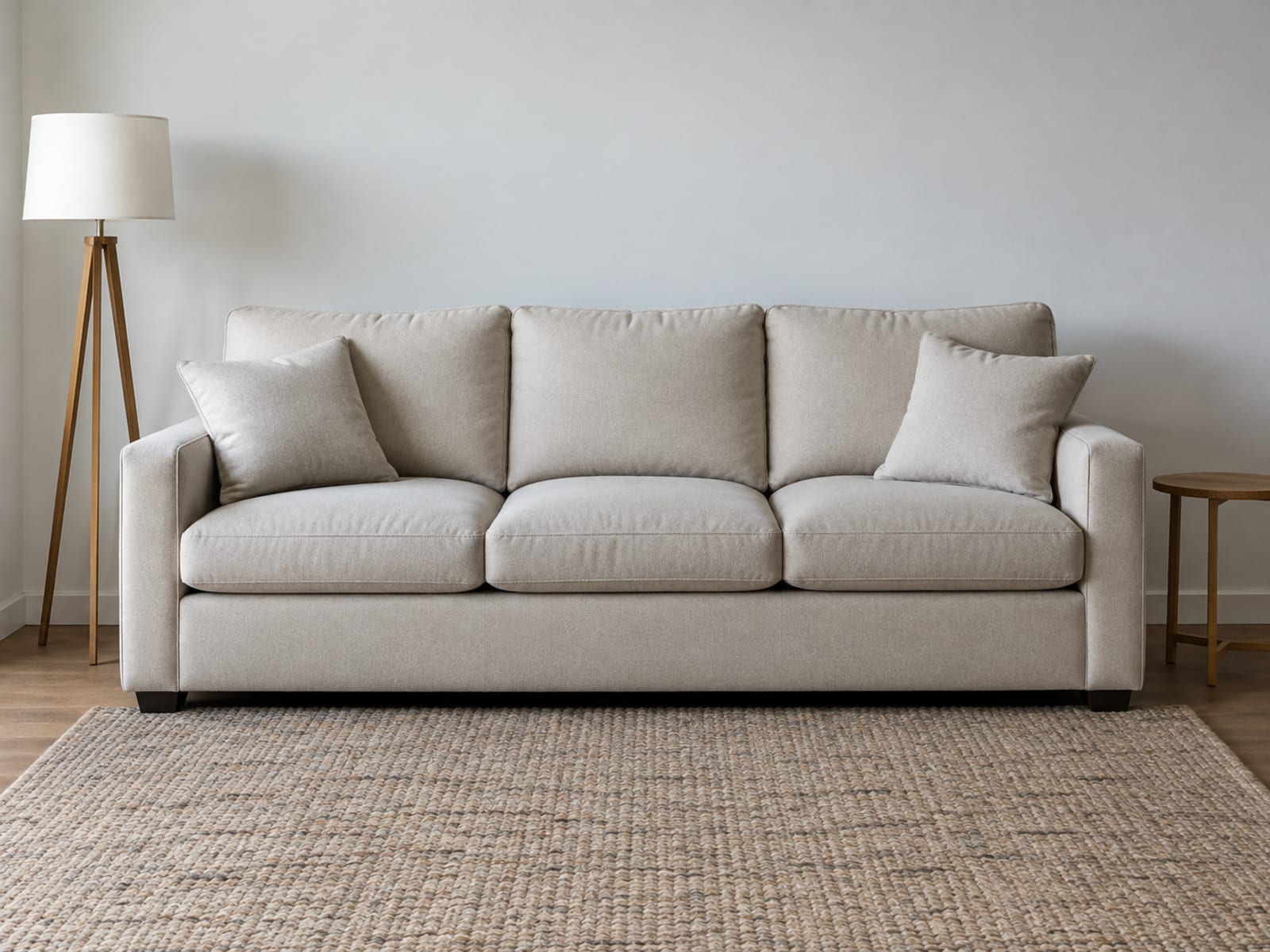
On the day the couch arrives, count forward to the last day of your window and put it in your phone. I would set the reminder a few days early, because a return has to be requested and a pickup arranged before the window closes, and a sofa is not something you drop off at a counter.
From delivery day to your decision, using the published figures
- 1
Delivery day
The return clock starts here at Article, Monvane, Albany Park and Ashley, and on receipt at Burrow and Room & Board. Read the condition line now.
- 2
Days 1 to 3
A compressed sofa is still expanding; Couchery, Ultione and Kogan all publish up to 72 hours.
- 3
The first weeks
Sit in every seat, turn, rotate and plump the cushions, and fluff down blends often. Tempur-Pedic gives memory foam a few weeks.
- 4
A few days before day 30
Decide on a 30-day order, leaving time to request the return and book the pickup.
- 5
Day 90
Room & Board's window closes, like-new condition required.
- 6
Day 180
IKEA's window for opened products closes.
If it has softened enough by then, keep it and stop checking. If it has not, a return while the window is still open costs a known fee, and after that date the warranty will not treat firmness as a fault.
Keep it or send it back?
1. Your boxed sofa arrived yesterday and the seat feels flat and creased. What should you do?
2. Burrow describes a seat that is too firm as what?
3. Your seat sits too high for your legs. Will breaking it in fix that?
Pick an answer to begin.
Frequently asked questions
Do new couches soften over time?
Most do, somewhat. Sofology says seat foam may soften and fiber and feathers may flatten with normal use, and CareCo says new padding gradually contours to the body. Neither gives a period, so judge by the feel inside your return window.
Can I speed up breaking in a couch?
Everyday use in every seat is the method the makers describe, along with turning, rotating and plumping the cushions. No seller recommends jumping on them, and heavy abuse can count against you if you later return the sofa.
How long does a compressed couch take to expand?
The published range is 24 to 72 hours, from Couchery, Ultione, Kogan and Overstock. Ultione says to contact customer help if a section is still seriously misshapen after 72 hours.
Will a warranty cover a couch that is too firm?
Not at Ashley or Burrow. Ashley's warranty excludes comfort preference, and Burrow treats firmness as preference rather than a defect, so the return window is the only remedy for a seat you do not like.
Does sitting on a new couch void the return?
It depends on the seller. Ashley requires standard-shipping returns to be new and unused, Room & Board wants like-new condition, and Burrow accepts a sofa in usable condition, so read your policy's condition line before the first week of use.
Terms for the first month with a new couch
Tap a term to see what it means.
Break-in. The early period in which a new cushion loses some of its initial firmness through use. No sofa maker here publishes its length for an ordinary foam seat.
Once the date is in your phone and the cushions are in rotation, the rest is sitting on it. If the question turns out to be fit rather than firmness, PlushPick has the seat depths and seat heights that decide comfort for a given body, which is the place to start before a replacement is ordered.
Cal Hewitt
Writer at PlushPick. I compare sofa specs, comfort, durability, and value so you can buy with clearer expectations.
About Cal and how the guides are researchedThe latest
- 1:1AnswerPower vs Manual Recliner: Warranty, Repairs, Cost and Fit
- 1:1AnswerHow Much Does a Recliner Cost? Real Prices, $280 to $3,895
- 1:1AnswerHow Much Does a Sleeper Sofa Cost? Prices by Bed and Mattress
- 1:1AnswerHow Much Does a Futon Cost? Frame, Mattress and Full Sets
- 1:1AnswerDoes Medicare Cover Lift Chairs? What Part B Pays, Who Qualifies
 AnswerHow to Keep Couch Cushions From Sliding, by Upholstery Type