

Affiliate disclosure. If you buy through a link on this page, PlushPick may earn a commission at no extra cost to you. That never changes which products are named or what is said about them. As an Amazon Associate I earn from qualifying purchases. How this works
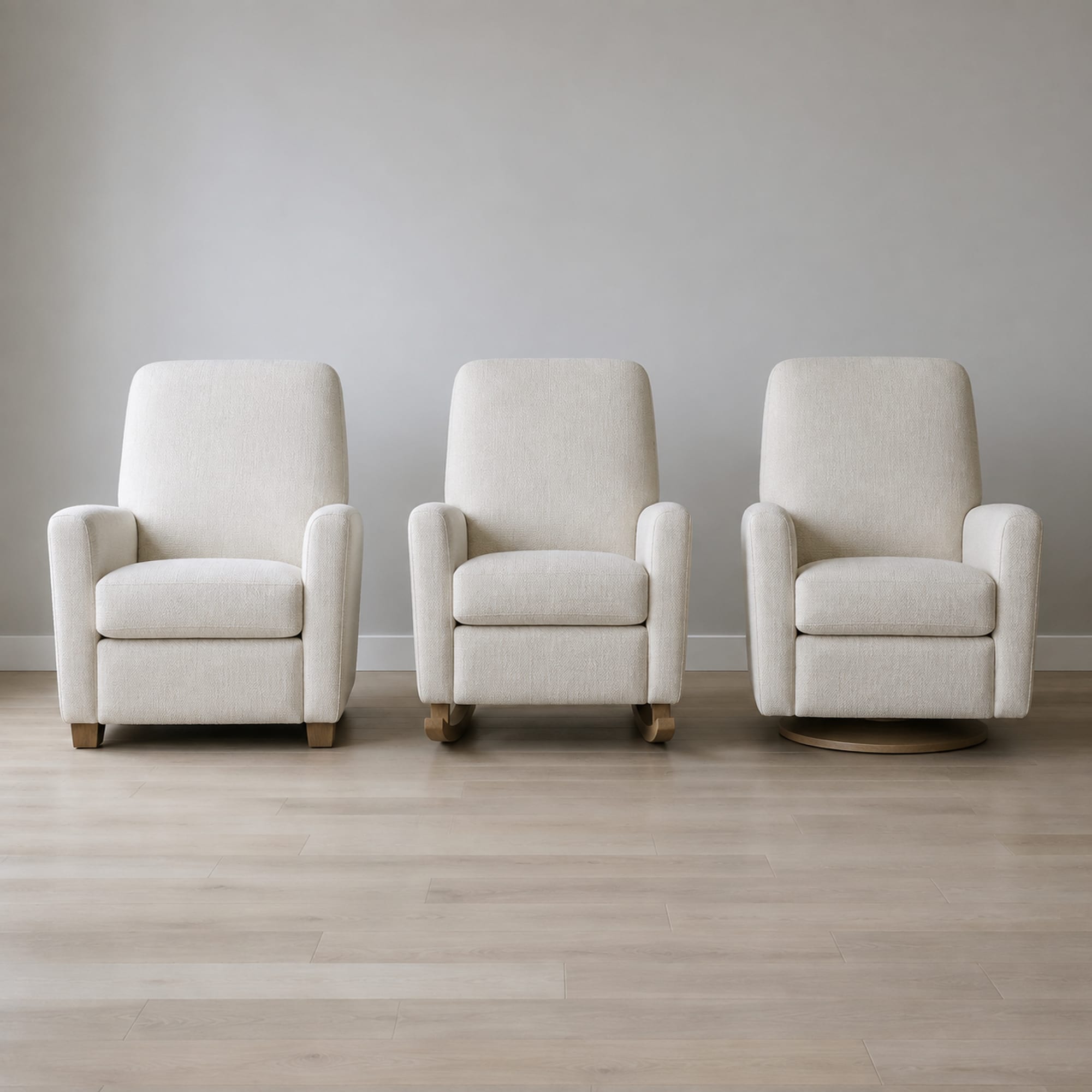
Every list of recliner types gives you the same seven words in a flat row: traditional, rocker, glider, wall hugger, push-back, swivel and lift. They are not seven separate chairs sitting in seven separate aisles. They describe two different things at once, and a single chair can carry several of them. One choice is what the base does, whether it sits still, rocks, glides or swivels. The other is how the chair opens, whether by your own weight, a lever, a motor, or a lift mechanism that stands you up. Once you read the words that way, the shopping filters start making sense, and so does the fact that IKEA sells a chair it calls a recliner, rocker and swivel armchair.
Key Takeaways
The seven names describe two things
What the base does, and how the chair opens. They stack rather than compete.
One chair can hold three of the names
IKEA's SKULNÄS is published as a recliner, rocker and swivel armchair.
The type name carries no clearance
SKULNÄS asks for 18 inches behind it; a Pride power lift recliner asks for 30.
A lift recliner is a regulated device
Pride classifies its power lift recliners as FDA Class II medical devices.
Lift chairs are sized to a person
Pride publishes height-fit bands from 5 ft 3 in and below up to 5 ft 9 in to 6 ft 0 in.
Power adds a dependency
One reader in an aging-parents thread describes a relative left stuck when the power failed.
What does the base actually do?
This is the half of the vocabulary that describes the chair standing still, before anything reclines.
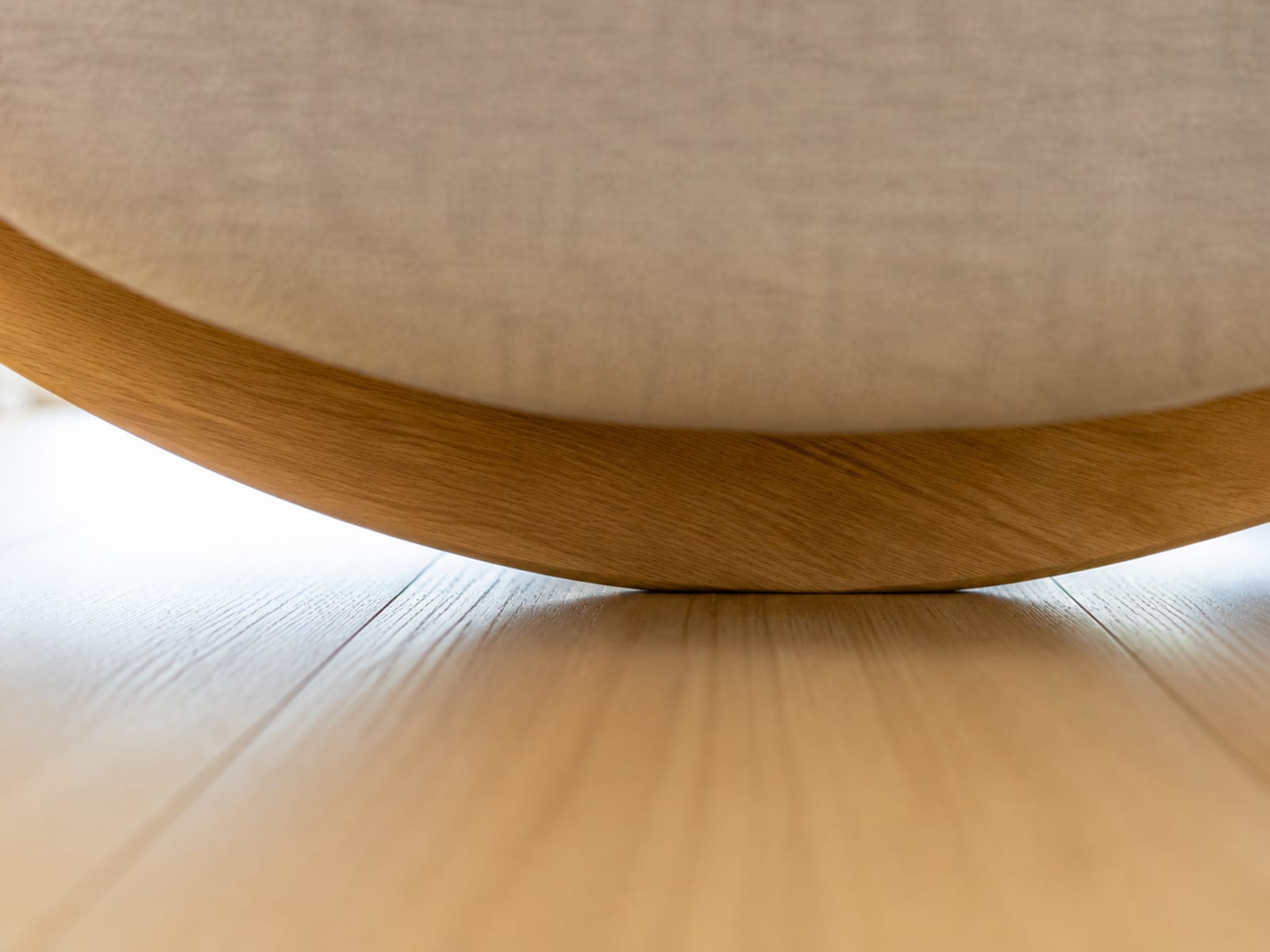
A fixed base does nothing; the chair sits where you put it. A rocker pivots back and forth on a curved or sprung base. A glider moves the same way but travels along a track or linkage, so the motion is level rather than arcing. A swivel turns on the spot, which matters more than it sounds in a room where the chair has to face a window sometimes and a television at others, because turning it means turning it rather than dragging it across a rug.
None of these has anything to do with reclining. A chair can rock and never recline, and a chair can recline and never rock. When a filter offers you rocker recliner as a single option, it is offering you a combination, not a category.
How does the chair open?
This is the other half, and it is the part that has moving parts in it.
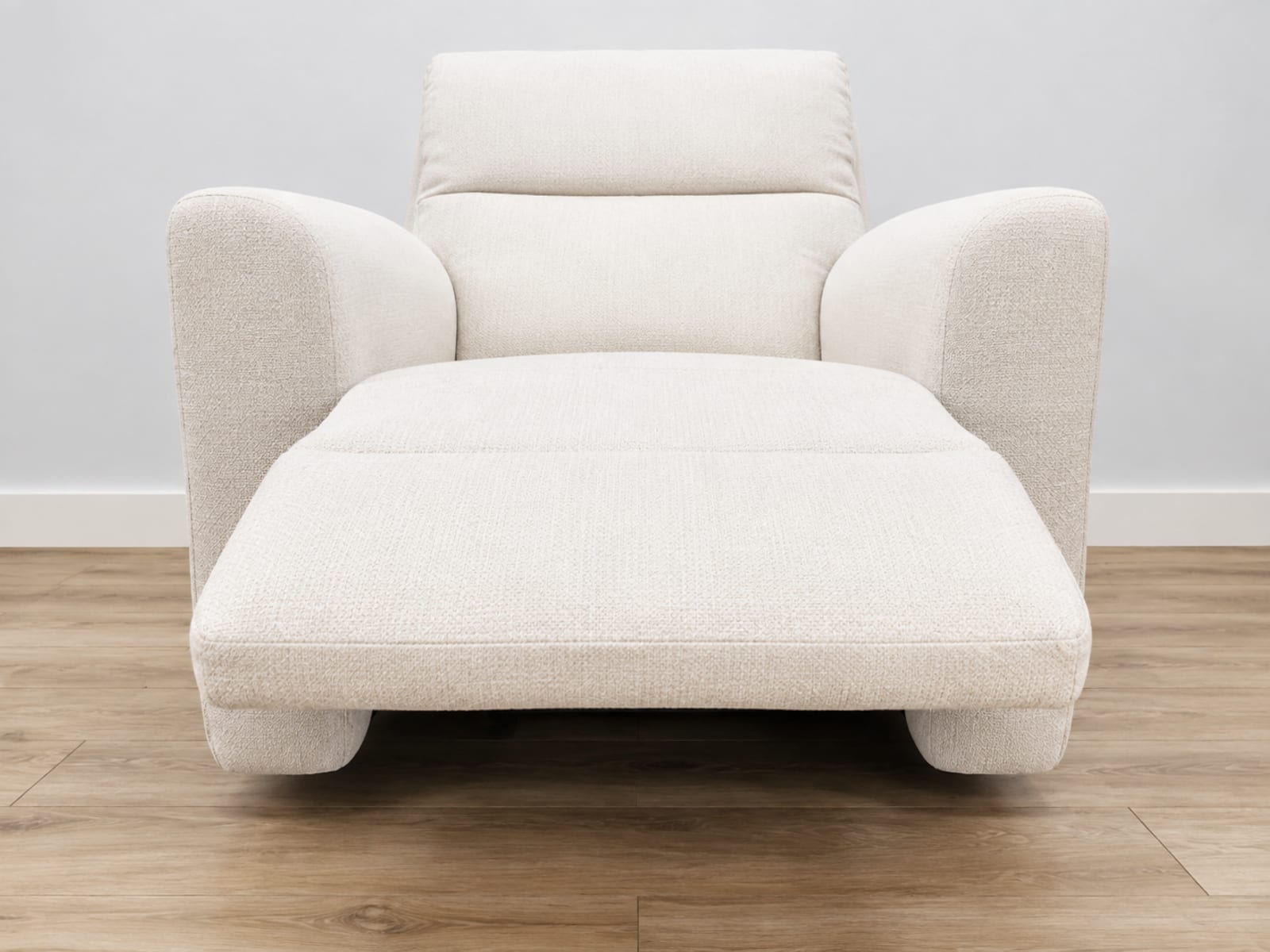
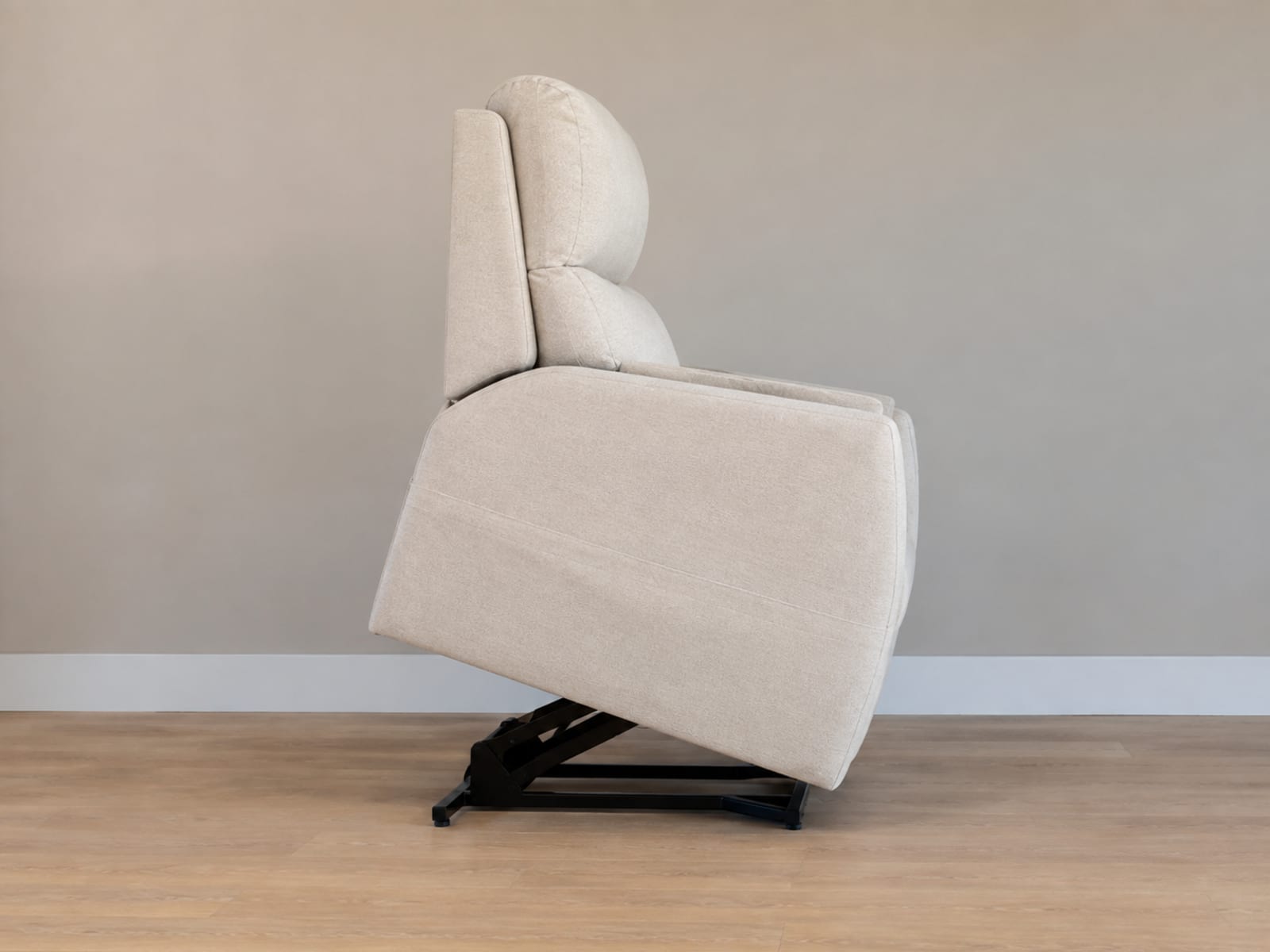
A push-back or manual recliner opens under your own weight or with a lever on the side. IKEA describes the SKULNÄS as having a footrest raised by a lever and a backrest that reclines under body pressure, which is that arrangement exactly. A power recliner uses a motor and a control pad, which buys incremental positioning and costs you an outlet. A wall hugger, sometimes called wall away, is a geometry rather than a power source: the seat travels forward as the back goes down, so the chair needs inches behind it rather than feet. And a lift recliner adds a mechanism that tilts the whole chair forward to help a person to their feet.
Those combine with the base freely. A wall recliner can be manual or powered. A swivel can also rock. What no flat list of seven can express is the chair you probably want, which is some particular combination of the two columns. The full comparison of what a motor costs you against a lever is worked through in the guide to reclining sofas, and it applies to chairs the same way.
The chair that is three of the names at once
IKEA does not describe the SKULNÄS as a recliner. It describes it, in the product name itself, as a recliner, rocker and swivel armchair. Three of the seven words, on one chair, published by the retailer selling it.
The SKULNÄS in Hakebo dark gray was $499 on ikea.com as of September 2026, and it publishes an unusually complete set of figures: 34 5/8 inches wide by 38 1/4 deep by 42 1/8 high, a seat 21 5/8 wide by 21 5/8 deep and 19 5/8 high, and testing for 353 pounds. It also publishes something almost nobody does, which is a fully reclined angle of 130 degrees. That is the number that tells you what the chair is like at the end of its travel, and it is worth looking for on anything you are seriously considering.
So, when a shopping filter makes you choose between rocker and swivel and recliner, remember that at least one real chair on sale right now is all three, and the filter is the thing that is wrong rather than your idea of what you want.
Why does the type name never tell you the clearance?
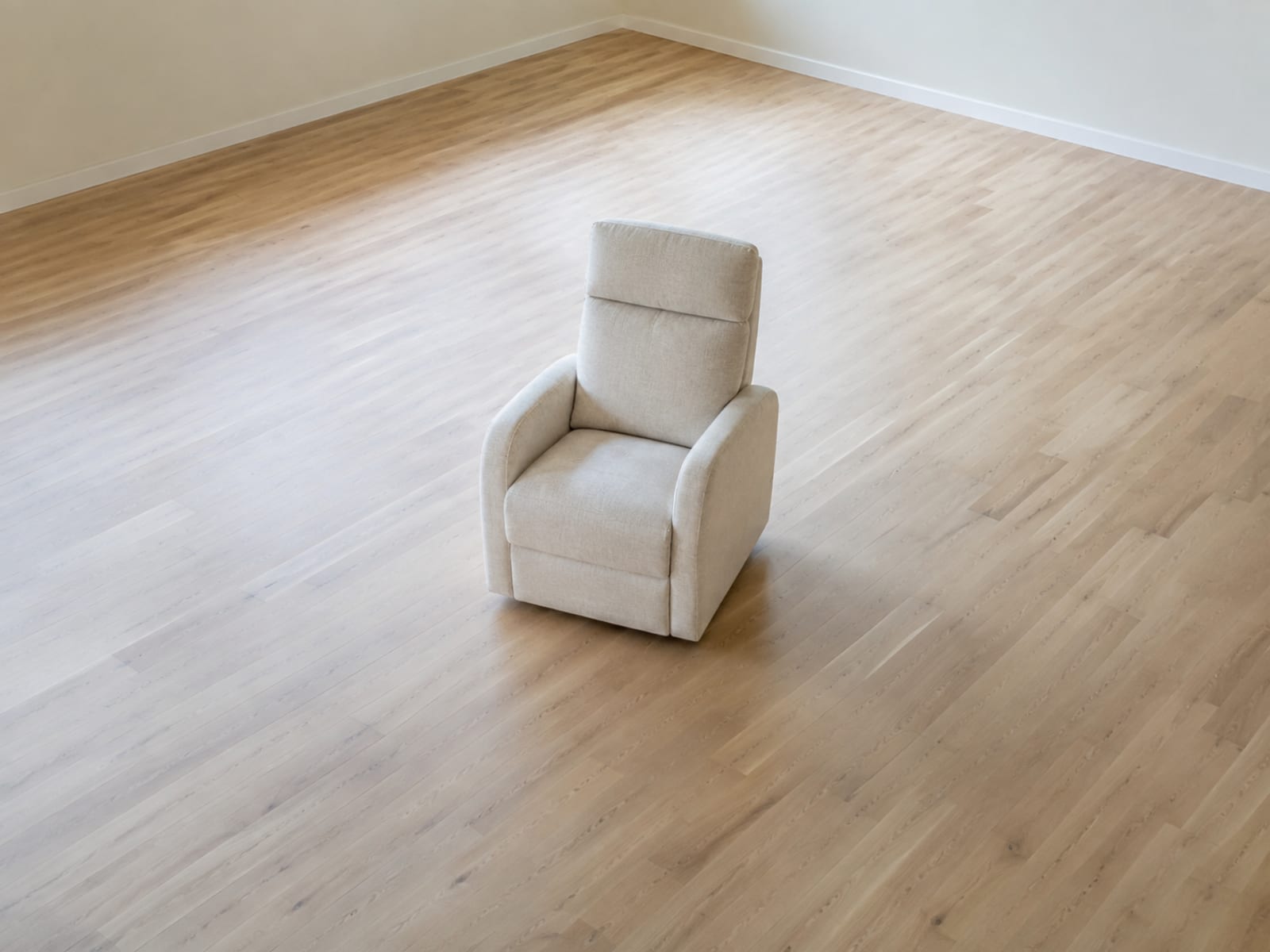
Because clearance is a property of the mechanism as built, and two chairs sharing a category word can be a foot apart.
IKEA tells SKULNÄS owners to leave 18 inches from the headrest to the wall. Pride's owner manual for a power lift recliner says to place the chair 30 inches from the nearest obstruction while seated, and warns that the figure varies by model. Both of those are recliners. The gap between them is a foot of floor, and the word recliner carries neither number.
Wall recliners exist to shrink that figure, and their published depths give you a sense of the footprint before anything moves. La-Z-Boy's wall recliner collection lists the Collage at 29.5 inches wide by 36 deep by 39.5 high from $499, and the Harbor Town at 30 wide by 37 deep by 41 high from $1,199, both as of September 2026.
Take the clearance figure from the model you are actually buying, mark it on the floor behind where the chair will stand, and check it against what is already there. A radiator, a baseboard heater or a deep skirting board can eat the difference.
Hover or tap a row to highlight it.
| Chair | What it is | Published clearance | Price, September 2026 |
|---|---|---|---|
| IKEA SKULNÄS, Hakebo dark gray | Recliner, rocker and swivel | 18 in headrest to wall | $499 |
| Pride power lift recliner | Power lift | 30 in from nearest obstruction, seated | Varies by size |
| La-Z-Boy Collage | Wall recliner | Not published; 36 in deep | From $499 |
| La-Z-Boy Harbor Town | Wall recliner | Not published; 37 in deep | From $1,199 |
Is a lift recliner the same kind of thing as the others?
Not really, and this is the one place where the flat list is genuinely misleading rather than just untidy.
Pride classifies its power lift recliners as FDA Class II medical devices designed to aid people with mobility impairments. Nothing else in the seven names is a regulated device. That shows up in how they are sold, too: a lift chair is fitted to a person rather than to a room. The Pride Infinity collection publishes height-fit bands running from 5 ft 3 in and below up through 5 ft 9 in to 6 ft 0 in, with a seat-to-floor height of 19 to 20 inches, seat depths of 19 to 21 inches, seat widths of 19.5 to 24 inches, and a 375-pound capacity across every listed size. The Large is specified for 5 ft 9 in to 6 ft 0 in with a 21-inch seat depth, a 21.5-inch seat width and a 29-inch measurement from the top of the back to the seat.
Two practical points come from people who have bought one. In an r/AgingParents thread about power lift recliners, respondents name battery backup and independent back and leg control as the things to check, since a dual motor lets the legs come up without forcing the back down; one respondent describes a relative left stuck when the power failed. Pride's own manual says backup capacity depends on user weight and battery condition. Those are individual accounts alongside a manufacturer instruction rather than a safety standard, and they are worth raising with a seller directly.
Access matters too. A named poster in an r/ALS thread advises measuring the radius and side space a patient lift needs with its legs open, before deciding where a lift chair goes. Pride's manual separately warns to keep children, pets, wires, clothing, blankets and tubing clear of the lift and scissor pinch points.
What about reclining sofas and sectionals?
The same two columns apply, spread across more seats. The configurations that actually exist are a reclining sofa with two or three reclining seats, a reclining loveseat with or without a center console, a reclining sectional, and a modular reclining sectional, and each of those can use manual or power seats.
What matters is that a sofa is not a recliner sofa because it looks like one. IKEA's SALTSJÖBADEN 3-seat sofa is 80 3/4 inches wide by 34 5/8 deep with a 21 5/8-inch seat depth and an 18 1/8-inch seat height, at $549 on ikea.com as of September 2026, and nothing on it reclines. Layouts are not interchangeable either: a chaise footprint and a reclining-seat footprint occupy the room differently, which is why IKEA's UPPÅKRA 3-seat sectional with chaise reaches 70 7/8 inches of depth without any mechanism at all.
Would you get this one right?
1. A listing says rocker recliner. What have you been told?
2. You have 20 inches behind the chair. Which recliner fits?
3. What is different about a lift recliner?
4. A chair is described as a recliner but nothing on it moves the footrest. What is it?
Pick an answer to begin.
Frequently asked questions
What is the best type of recliner?
The question has no published answer, because the types are combinations rather than competitors. The useful version is to pick the base motion you want, whether that is still, rocking, gliding or swiveling, then pick how it should open, then take the clearance figure from the specific model rather than from the category. A chair that is right in one room can be unusable in another simply because of what is behind it.
What type of recliner is best for the elderly?
A power lift recliner is the type built for the specific problem of getting out of a chair, and Pride describes its own as FDA Class II medical devices designed to aid people with mobility impairments. It is sized to the person rather than chosen by looks, with published height bands and seat dimensions, so the fit conversation belongs with the seller. Owners in forum threads consistently raise battery backup and independent back and leg control as things to ask about before ordering.
What do you call a recliner that doesn't recline?
An armchair, a lounge chair or an accent chair, since recliner describes a back and footrest mechanism rather than a shape. If it has a separate footstool, it is an armchair and ottoman set rather than a recliner, which is a genuinely different purchase and often a cheaper one. The published seat figures for that kind of chair are collected in the guide to accent chairs.
What are the different types of recliner sofas?
A reclining sofa with two or three reclining seats, a reclining loveseat with or without a center console, a reclining sectional, and a modular reclining sectional. Each of those can be built with manual or power seats, which is the same second column that applies to single chairs.
The words on a recliner listing
Tap a term to see what it means.
Rocker. A base that pivots back and forth. It says nothing about whether or how the chair reclines.
Work out the base motion and the opening mechanism separately, then go and find the clearance figure for the exact model, and the filters stop fighting you. PlushPick keeps the published clearances and seat figures for chairs like these together, so the next tab you open already has the numbers in it.
Cal Hewitt
Writer at PlushPick. I compare sofa specs, comfort, durability, and value so you can buy with clearer expectations.
About Cal and how the guides are researchedThe latest
 "Best-of"Best Furniture Protectors for Pets, by What They Actually Cover
 "Best-of"Best Pet-Friendly Sofa Fabrics: Claws, Hair and Spills
 "Best-of"Best Sofas for Small Spaces: Narrow Doesn't Mean Shallow
 "Best-of"Best Recliner Covers for Dogs: What Actually Stays On
 AnswerSofa vs Sectional: Which One Fits Your Room and Life
 AnswerHow to Measure a Sofa So It Fits Through the Door