

Best Pet Hair Removers for Furniture, by Where the Hair Ends Up
The best pet hair removers for furniture, sorted on the two things listings skip: whether the tool keeps the hair it lifts, and which fabrics its maker rules out.
By Cal Hewitt, (updated )
Affiliate disclosure. If you buy through a link on this page, PlushPick may earn a commission at no extra cost to you. That never changes which products are named or what is said about them. As an Amazon Associate I earn from qualifying purchases. How this works
Lifting the hair is the easy half. What separates these tools is where the hair goes next, and a chamber roller like the ChomChom is the one that keeps it: in a six-tool sofa test run by Emily Henderson, the chamber rollers pulled hair into a closed bin while the toothed scrapers rolled it into a pile that still had to be picked up by hand. The second thing to check before you buy is whether the tool is allowed on your fabric at all, because two of the most recommended ones exclude fabrics by name on their own product pages. Everything below is sorted on those two questions.
At a glance
- Best for keeping the hair it lifts: ChomChom Roller, original sizeSee current price
The chamber roller, and the reason it is a pick is containment rather than pickup: in the one named hands-on sofa test in the research, this and the Black+Decker roller were the two tools that took the hair INTO a chamber instead of pushing it into a pile somebody then had to lift by hand. Manual, no tape and no batteries. Priced on this site only from chomchomforpets.com with the month, never from Amazon. ASIN read off the live listing on 2026-09-04, heading matched word for word.
- Best cheap toothed tool, if you do not mind the pile: Uproot Cleaner Pro OriginalSee current price
The toothed scraper, and it sits on the other side of this guide's argument from the ChomChom: the same named test found it gathered sofa hair well and did not retain it, so the pile came up by hand afterward. Its own page states non-knitted fabrics only and publishes three working angles, 90, 45 and 10 degrees, by hair and fabric type. Priced on this site only from uprootclean.com with the month, never from Amazon. ASIN read off the live listing on 2026-09-04, heading matched word for word.
- Read the pick
- Read the pick
- Read the pick
- Read the pick
Key Takeaways
Gathering and containing are different jobs
Most of these tools lift hair well. Fewer of them keep it, which is the difference between finishing and moving the problem two inches.
The makers publish their own exclusions
Fur-Zoff's page rules its stone out on silk, satin, fine knits, leather, vinyl and plastic. Uproot's page limits its tool to non-knitted fabrics.
Velvet and knits are the fabrics to check twice
The same sofa test found one toothed tool left temporary rake marks on velvet, which came out but were visible at the time.
Embedded hair is a different tool from surface hair
Lilly Brush publishes its Mini Blade for short-to-medium wiry hair worked into the weave, at 3 by 4 by 0.75 inches.
Powered means a runtime and a tank, not just more suction
BISSELL's 2390 publishes 14.4 volts, up to 17 minutes and a 0.7 liter tank at 3 pounds.
Price tracks the mechanism, not the pet label
Manual tools run $15.99 to $26.99 across the picks here; a cordless motorized one is $89.99.
How these were judged
Both of the questions worth asking are answerable before you spend anything. First: when the tool has lifted the hair, where is the hair? In a chamber, on a sticky sheet, in a pile on the cushion, or back in the air. Second: what does the maker say about fabric, and does that include the fabric you actually own.
Everything else follows from those. Working width, weight, runtime and tank size all matter, and they matter as consequences rather than as headline numbers: a 0.7 liter bin is a containment fact, and a 3 by 4 inch blade is a reach-into-the-crease fact.
The strongest single piece of evidence in the category is one hands-on comparison, Emily Henderson's test of six gadgets on a dog-hair-covered sofa, and it is named wherever it settled something.
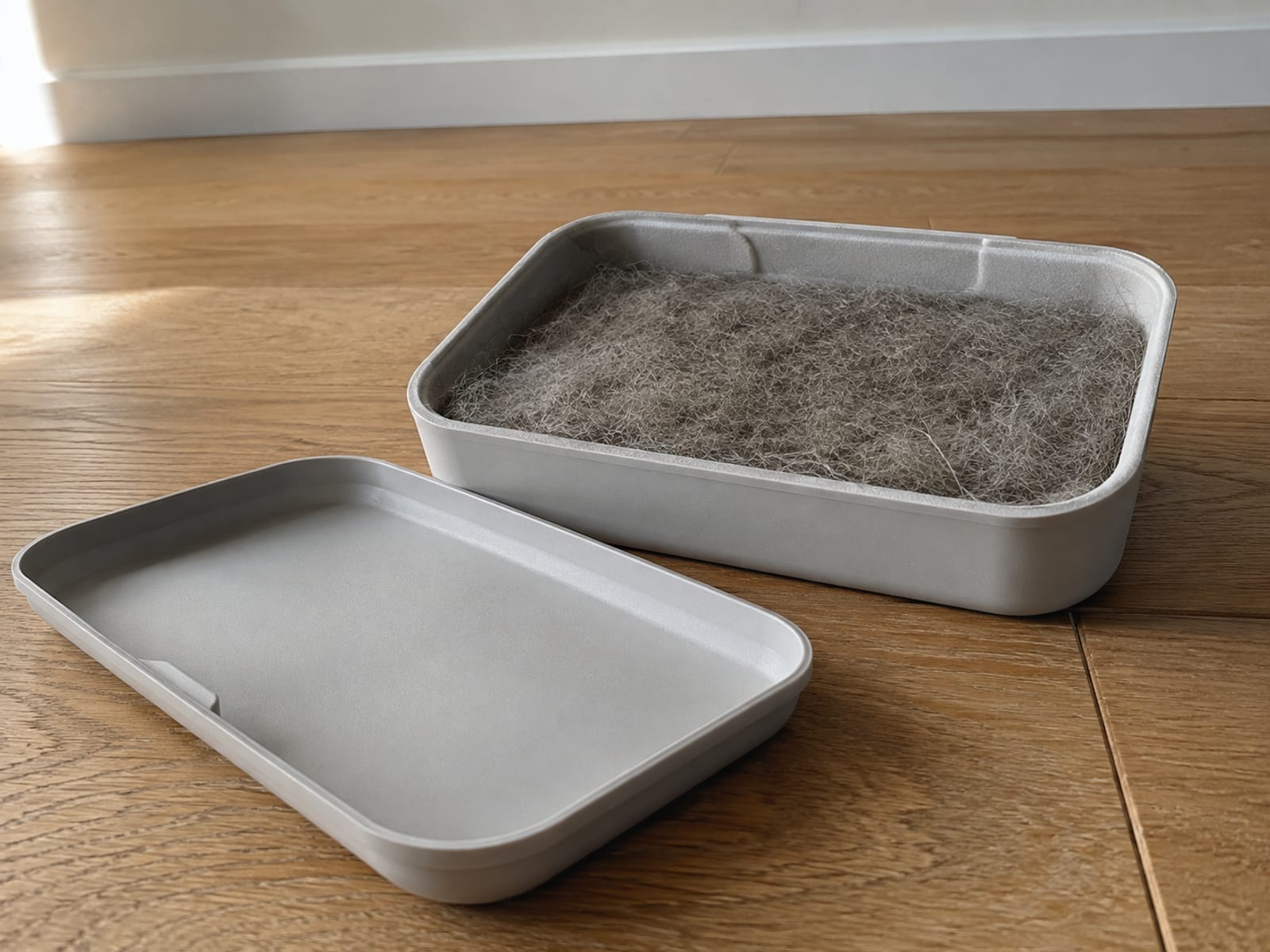
Best for keeping the hair it lifts: ChomChom Roller, original size
This is the mechanism that answers the whole question. A fabric chamber roller works on short back-and-forth strokes, and each stroke sweeps hair into a bin inside the body of the tool, which you then open and empty into the trash. No tape, no refills, no batteries, and nothing left on the cushion when you are done. ChomChom publishes it for couches, chairs, carpets, bedding and car seats.
In the Henderson sofa test, both chamber rollers captured hair into their chambers rather than pushing it around, and the reviewer's overall winner in that trial was a Black+Decker roller working the same way. That is the clearest signal in the whole comparison: the mechanism separated the tools more than the brand did.
It reads $24.99 on chomchomforpets.com as of September 2026, though it was showing sold out there in September 2026, so it is worth checking more than one seller. ChomChom does not publish dimensions, a warranty or a return window on that page.
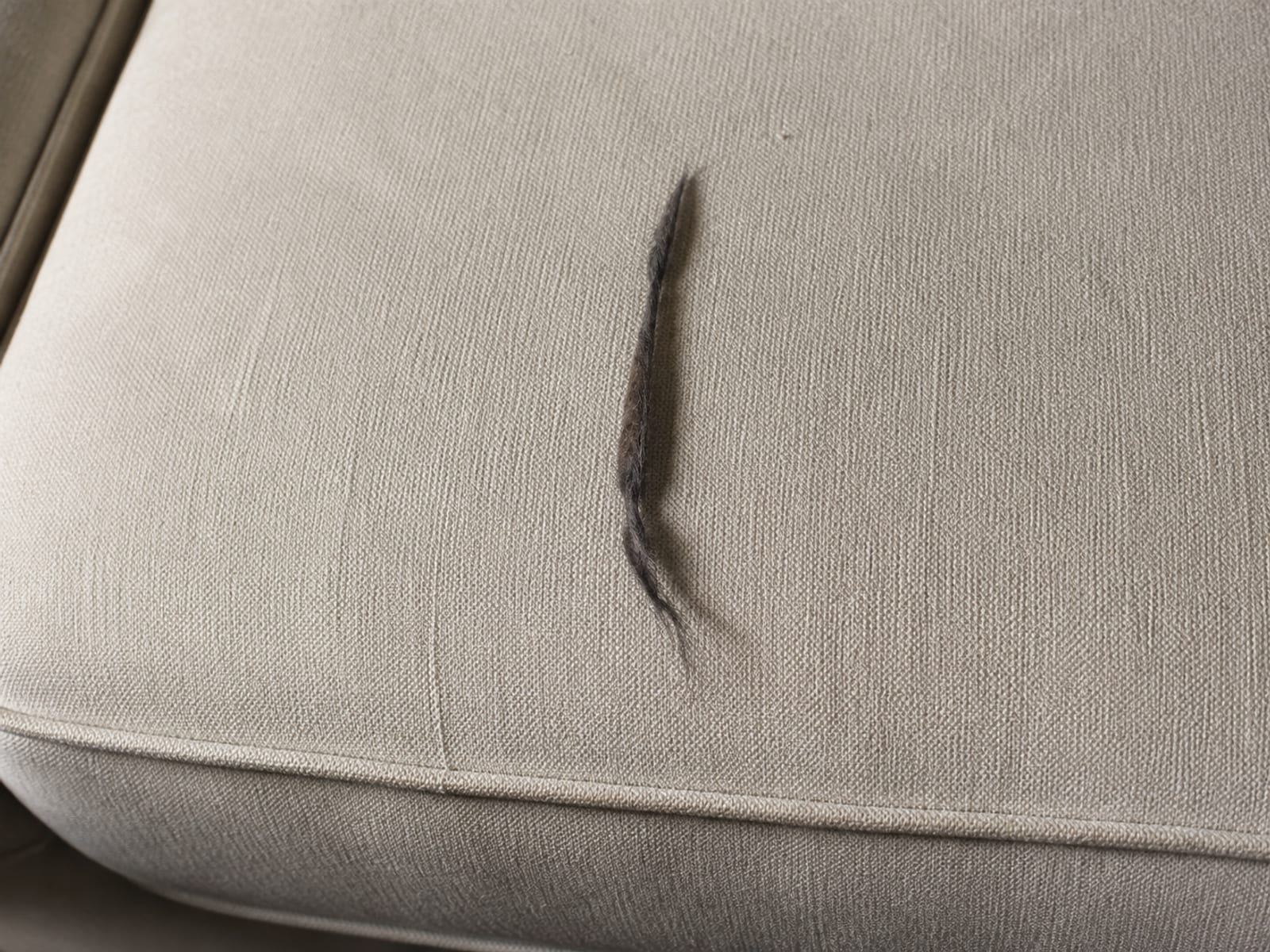
Best cheap toothed tool, if you do not mind the pile: Uproot Cleaner Pro Original
The other half of the argument, and it is a genuinely useful tool as long as you know what it does. A toothed edge in polypropylene and zinc rakes hair up out of a weave, and Uproot publishes three working angles for it, 90 degrees, 45 and 10, chosen by hair type and fabric. On a woven sofa it pulls up hair a roller skims over.
What it does not do is keep it. In the Henderson test it worked just okay: it gathered hair into a pile but did not retain it, so the pile came up by hand and some passes had to be repeated. If your current complaint about a rubber brush is exactly that, this tool will not fix it, and that is worth knowing before rather than after.
Uproot's own page states non-knitted fabrics, which rules out a knit sofa or a knit throw. It reads $17.99 on sale against a $19.99 stated regular price on uprootclean.com as of September 2026, ships in 3 to 5 business days, and carries a free return within 60 days.
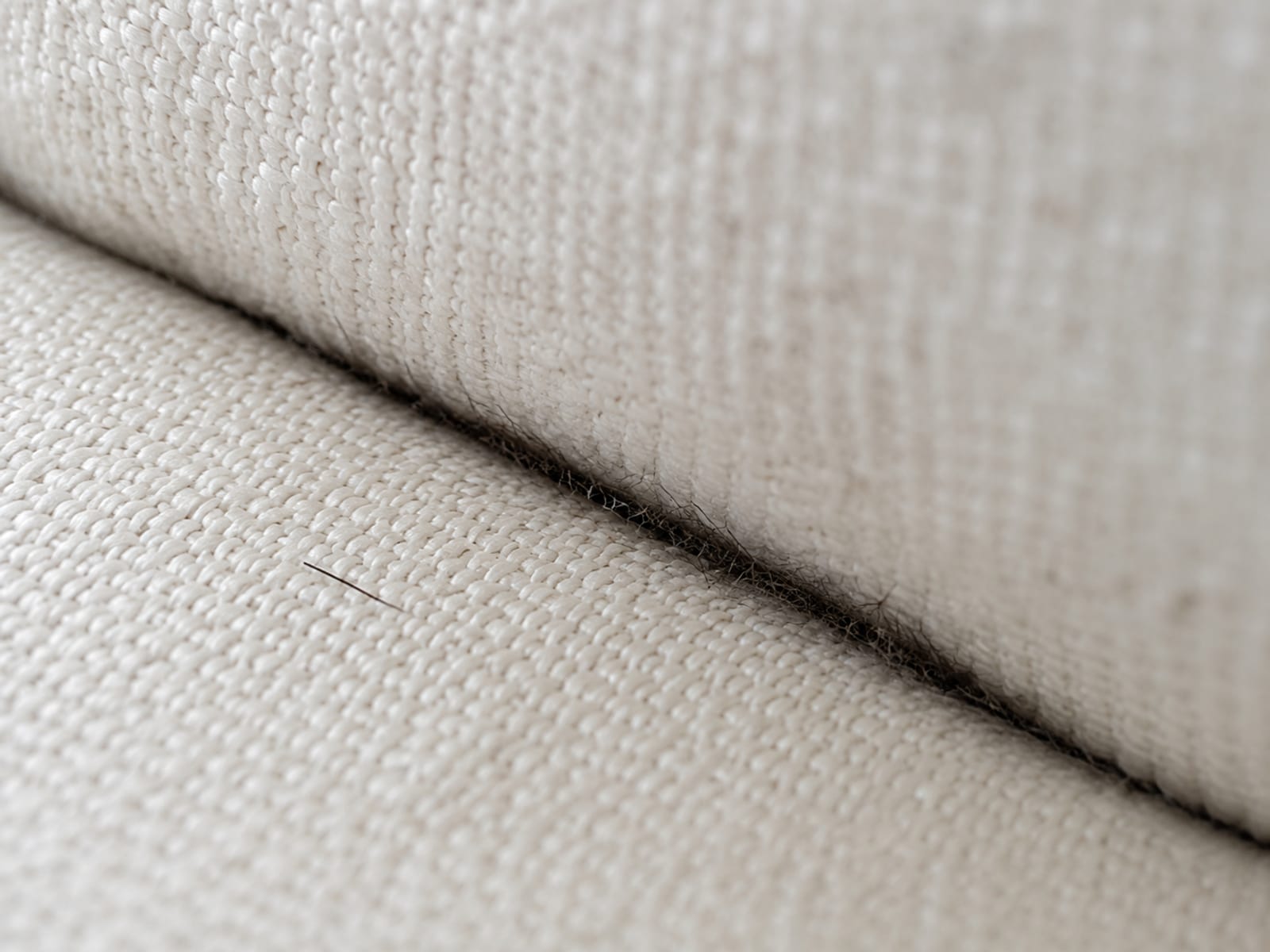
Best for hair worked down into the weave: Lilly Brush Mini Blade
Surface hair and embedded hair are different problems and this is the one built for the second. Lilly Brush publishes the Mini Blade specifically for embedded short-to-medium wiry hair on couches, furniture, pet beds, stairs and rugs, which is the hair a roller passes straight over because it is no longer sitting on top of anything.
Its size is the other reason to own it. At 3 by 4 by 0.75 inches it goes into the crease between a seat cushion and a back cushion, along a piped seam and around a leg, and it rinses clean with mild soap and water rather than needing anything replaced. It is $15.99 on lillybrush.com as of September 2026, shipping in 5 to 7 business days. Lilly Brush does not state a return window or a warranty term on that page.
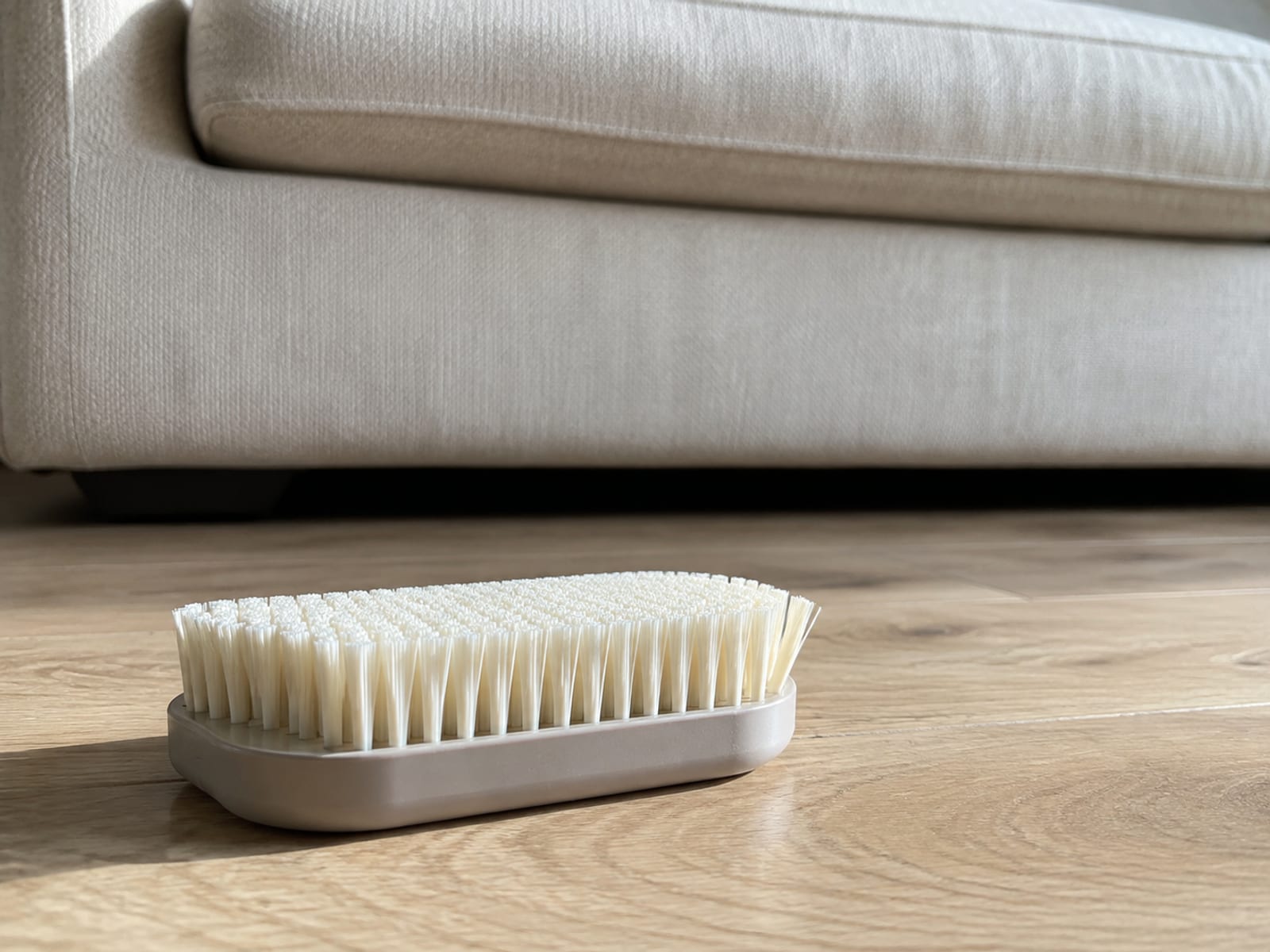
Best self-cleaning brush: OXO Good Grips FurLifter Furniture Brush
A micro-bristle brush that works in both directions, on a pivoting handle so it follows the shape of a cushion rather than skating across it, and its base is the point: you park the brush back in its holder and the base strips the hair off the bristles for you. No refills, nothing to buy again.
It sits between the two mechanisms above. It lifts like a brush and it collects like a chamber, and where a chamber roller is best on a broad flat cushion face, the pivot makes this one easier along a curved arm. It is $26.99 on oxo.com as of September 2026. OXO does not state its dimensions, a return window or a warranty length there.
Best powered option: BISSELL Pet Hair Eraser Lithium Ion, model 2390
If the hair is heavy enough that any manual tool means half an hour, this is the step up, and its published numbers are all containment numbers. BISSELL states 14.4 volts, up to 17 minutes of runtime, a 0.7 liter tank and a 3 pound weight, with a motorized brush that the maker says lifts embedded hair, an upholstery tool, a crevice tool and 3-stage filtration.
Three pounds is the figure that decides whether it stays in use, because this is a tool you hold at cushion height rather than push along a floor. Seventeen minutes is enough for a sofa and not enough for a whole house, which is the honest scope of a hand vacuum.
It is $89.99 on bissell.com as of September 2026, with a 1-year limited warranty, a 30-day return from delivery at $4.95 return shipping, and free standard shipping above $75. Its cheaper sibling, the model 1782, is $69.99 with a 12-minute runtime and a 4.5-inch cleaning path, and the shorter runtime is the trade.
Best on a tough woven couch, with the longest exclusion list: Fur-Zoff stone
A block of foamed glass, 90 percent of it recycled post-consumer material, that drags hair up out of a weave by abrasion rather than by static or teeth. It is published for durable woven couches, automotive carpet and cat trees, and on that kind of surface it does something the softer tools cannot.
Read its own exclusions before it goes near your sofa, because they are unusually specific and the company publishes them itself: not silk, not satin, not fine knits, not leather, not vinyl, not plastic, and test an inconspicuous spot first. That is a maker telling you plainly where its product will do harm, which is more useful than most marketing copy. Fur-Zoff sells through several retailers rather than one storefront, so settle the price and the warranty term with whoever you buy it from.
What the Henderson test actually found
Hover or tap a row to highlight it.
| Tool | What it did with the hair | The catch |
|---|---|---|
| Black+Decker roller | Into the chamber. The reviewer's winner in that test | A powered roller, so it has a battery to think about |
| ChomChom roller | Into the chamber. One or two hairs left after another swipe | Manual, so heavy shedding takes passes |
| Analan mini | Small teeth did best on lifting, and it reached cushion crevices | Left temporary rake marks on velvet |
| FurDozer | Gathered surface hair reasonably well | Took effort, and left a pile to collect by hand |
| Uproot Cleaner Pro | Gathered it into a pile | Did not retain it, so repeat passes and hand pickup |
| Gonzo pet hair lifter | Failed to grab the fur in that trial | Shed yellow crumbs and spread hair around |
That is one test in one household with one dog, so what it is good for is the pattern rather than the leaderboard. The pattern is consistent: the two tools that put hair somewhere finished the job, and the tools that only lifted it made more work.
Does a rubber glove or a squeegee work?
It does lift hair, which is why the advice circulates as widely as it does, and it costs nothing at all if there is already a pair under the sink. It belongs in the gathering column rather than the containing one, though. You get a rope of hair on the cushion and then you pick the rope up, and on a big sofa that is several ropes.
Where it genuinely earns its place is a small job: one cushion, a car seat, the spot the cat sleeps on. For the whole couch on a weekly rhythm, the tools that collect into something are the ones that stay in the cupboard by the door instead of the drawer.
What about the fabric you actually own?
Check this before the price, because it is the one thing that cannot be undone. Fur-Zoff and Uproot both publish their exclusions in their own words. Fur-Zoff rules out silk, satin, fine knits, leather, vinyl and plastic; Uproot limits its tool to non-knitted fabrics. On velvet, the Henderson test found a toothed tool left rake marks that faded but were plainly there at the time.
So, the safe order is: find out what your cover is, read the tool's own exclusion list, and try it somewhere nobody looks before you take it across the middle of a seat cushion. How much hair a cover holds in the first place is a property of the weave, and the sofa fabrics that let hair go rather than hold it is the version of this question you answer once, at the point of buying. Fur-Zoff says exactly that on its own page, which is a fair signal that it matters.
Would you get this one right?
1. A toothed scraper rolls the hair off your sofa into a neat gray pile. Has it finished the job?
2. Which of these does Fur-Zoff rule out on its own product page?
3. Uproot publishes three working angles for its tool. What are they chosen by?
4. BISSELL publishes 17 minutes of runtime for the 2390. What does that number actually tell you?
Pick an answer to begin.
Frequently asked questions
What is the best thing to remove pet hair from furniture?
For ordinary surface hair on a flat cushion, a reusable chamber roller has the strongest evidence here: in Emily Henderson's six-tool sofa test the two chamber rollers were the ones that captured hair rather than gathering it, and a Black+Decker roller was that reviewer's winner. For hair worked down into a weave, a bladed tool like the $15.99 Lilly Brush Mini Blade is published for that job instead.
Do rubber brushes work better than lint rollers?
Neither wins outright, and it depends on whether your hair is sitting on the surface or embedded in it. In that same test the rubber and toothed tools gathered hair into a pile that needed collecting by hand, while the chamber rollers took it into a bin. A disposable sticky roller contains the hair perfectly and runs out, which is the trade in the other direction.
How do you get embedded dog hair out of a couch?
Use a tool whose own page claims embedded hair rather than a general one, and test a hidden patch first. Lilly Brush publishes the Mini Blade for embedded short-to-medium wiry hair, and BISSELL's 2390 has a motorized brush the maker says lifts embedded hair, at $89.99 on bissell.com as of September 2026.
Will any of these damage my sofa?
They can, and the makers are the ones saying so. Fur-Zoff's page excludes silk, satin, fine knits, leather, vinyl and plastic and asks for a hidden-spot test; Uproot's page states non-knitted fabrics only; and a toothed tool in the Henderson test left temporary rake marks on velvet. Read the exclusion list against your own cover before the first pass.
Is a pet hand vacuum worth it over a manual tool?
It buys you speed and containment on heavy shedding, at four to five times the price of a manual tool. BISSELL publishes 14.4 volts, up to 17 minutes, a 0.7 liter tank and 3 pounds for the 2390, which is a sofa-sized job rather than a whole-house one, and it adds a battery and a filter to look after.
The words on a pet hair tool's page
Tap a term to see what it means.
Chamber roller. A reusable roller whose strokes sweep hair into a bin inside the tool, emptied by opening the body. It is the mechanism that contains rather than gathers.
Work out what your cover is before you order anything, because two of these tools publish a list of fabrics they will damage and the list is the part nobody reads. If it turns out the hair is only half the problem and the couch needs a wet clean as well, the portable machines compared by how far they reach is where PlushPick picks it up.
Cal Hewitt
Writer at PlushPick. I compare sofa specs, comfort, durability, and value so you can buy with clearer expectations.
About Cal and how the guides are researchedRelated
All guides- "Best-of"
Best Furniture Protectors for Pets, by What They Actually Cover
A cover marked waterproof still leaves an exposed arm bare. The best furniture protectors for pets, sorted by what they cover and what they stop.

- "Best-of"
Best Pet-Friendly Sofa Fabrics: Claws, Hair and Spills
Worried your dog or cat will ruin a new couch? Find the best pet-friendly sofa by fabric: claw resistance, hair pickup, stains and removable covers.

- "Best-of"
Best Sofas for Small Spaces: Narrow Doesn't Mean Shallow
Best sofas for small spaces, compared by outside width and seat depth together, because a narrower sofa can have a deeper seat than a wider one.

- "Best-of"
Best Recliner Covers for Dogs: What Actually Stays On
A recliner moves, so a sofa cover will not stay put. The best recliner covers for dogs, sorted by measured seat width, from one chair to a three-seat sofa.
